British 1854 Pattern Scots Guards Officer's Sword of Lieut-Col Sir Ernest Edward de Winton Wills, 4th Bart. Hazelwood, Commander of the Guard at Balmoral Castle 1944
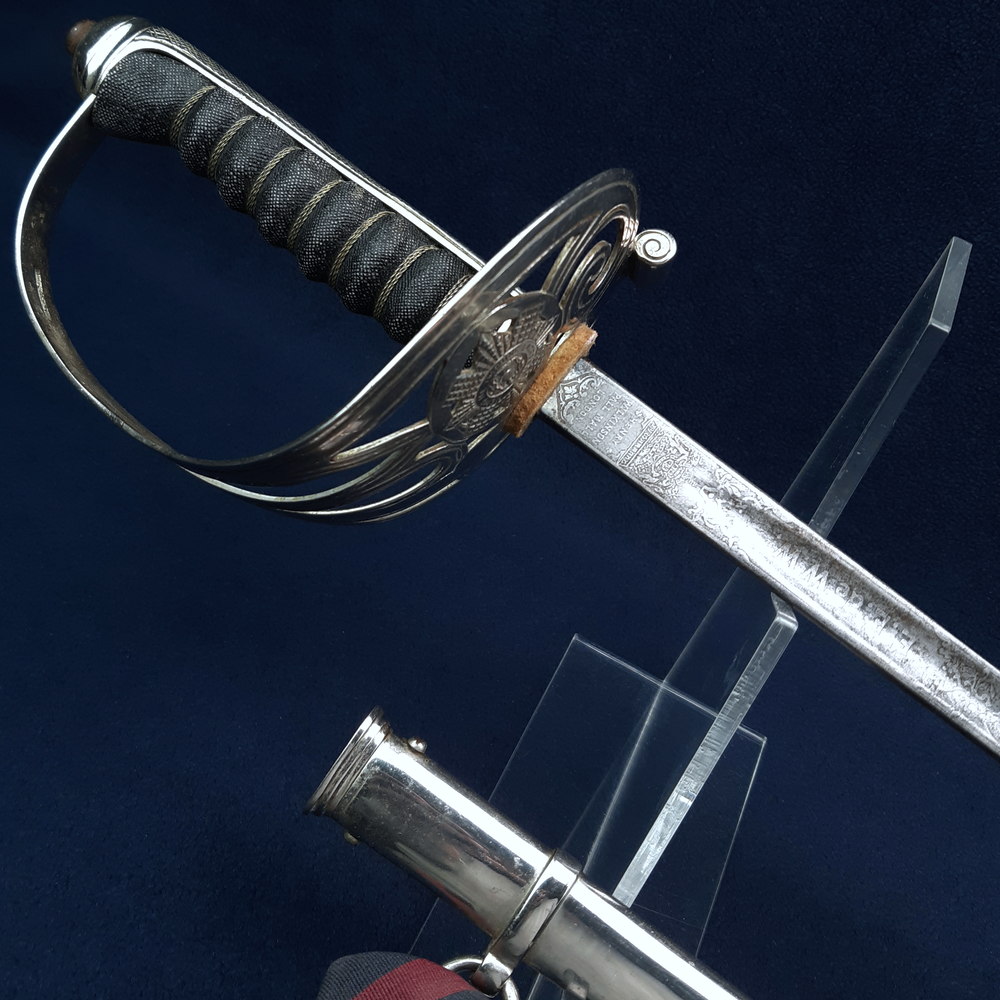
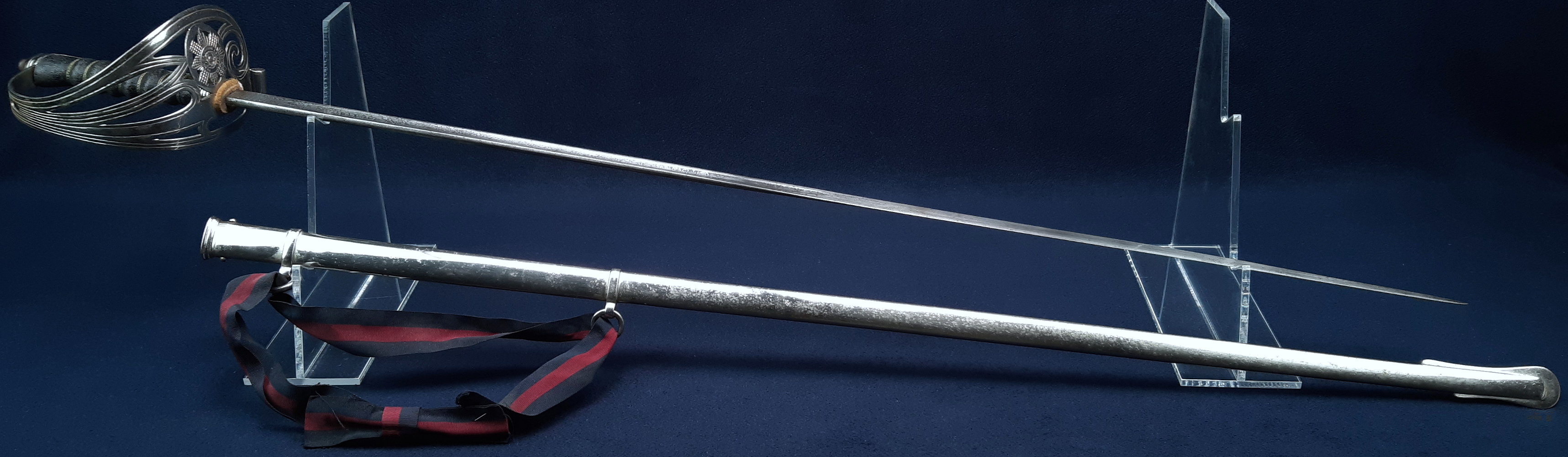
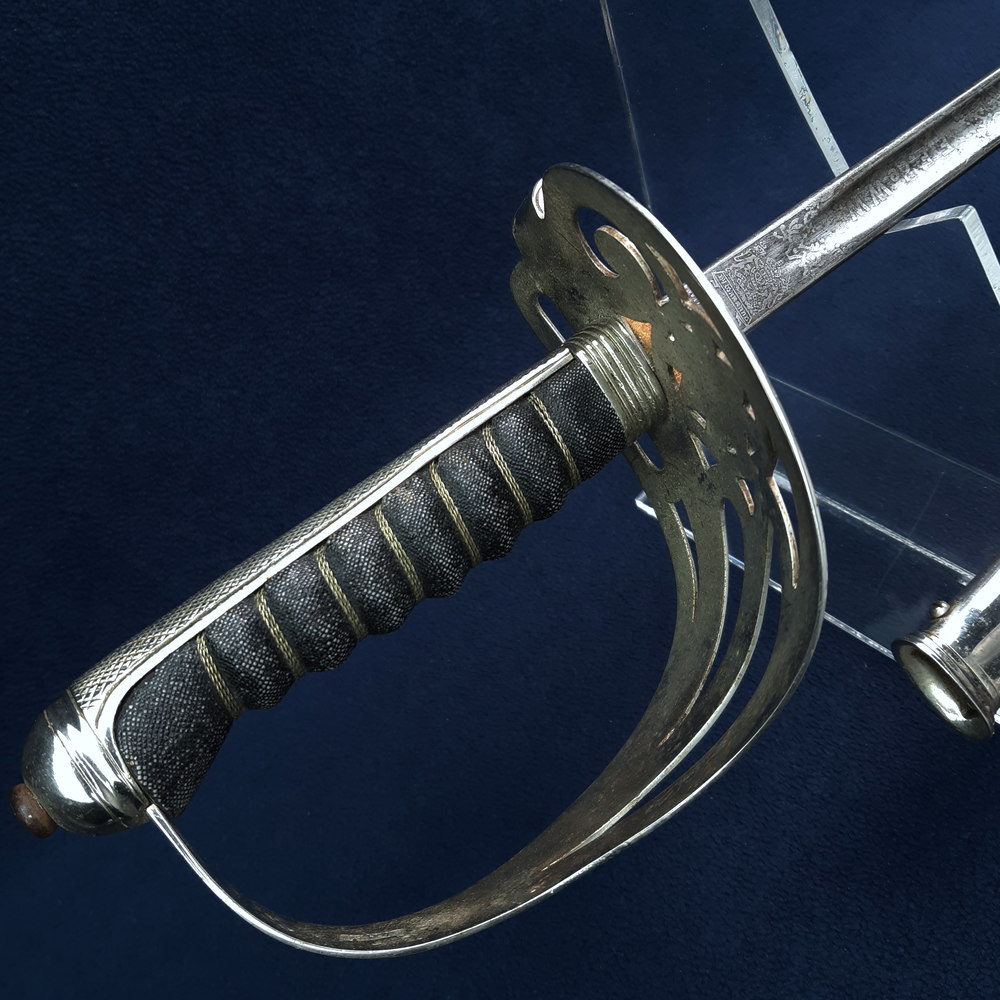
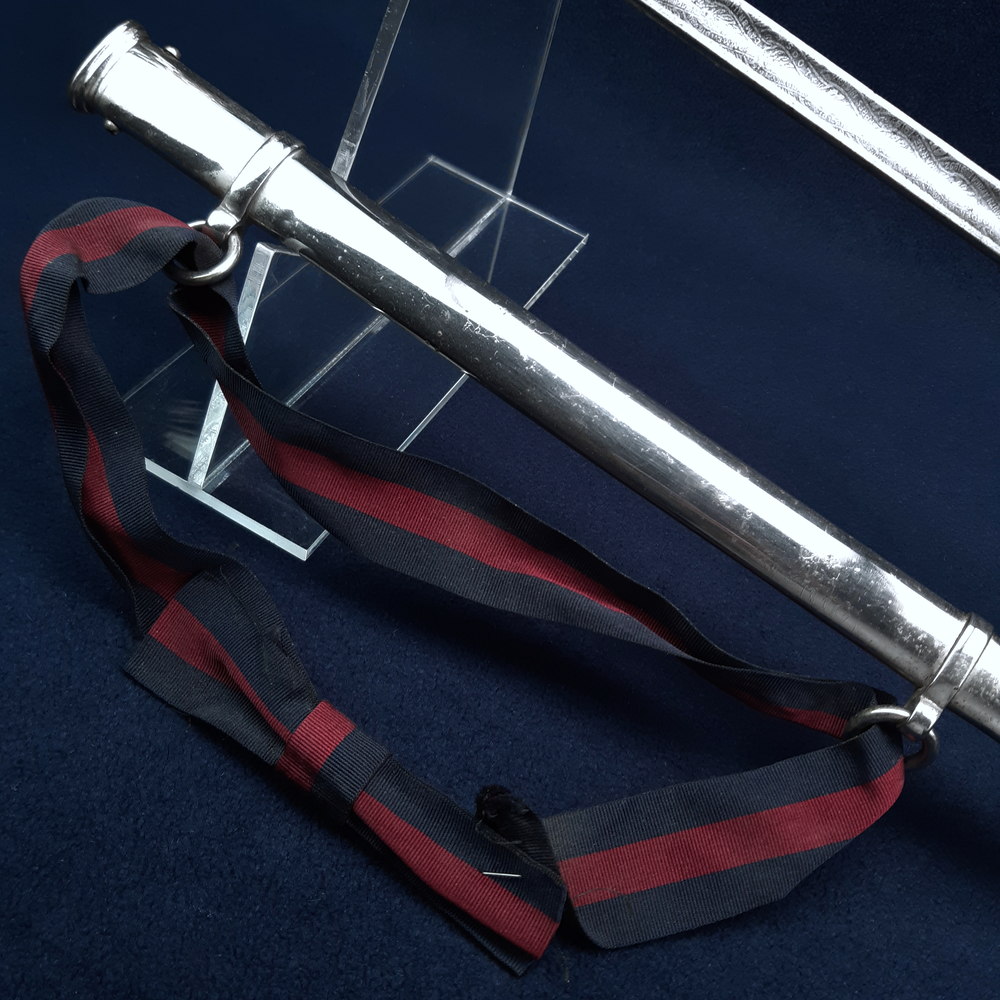
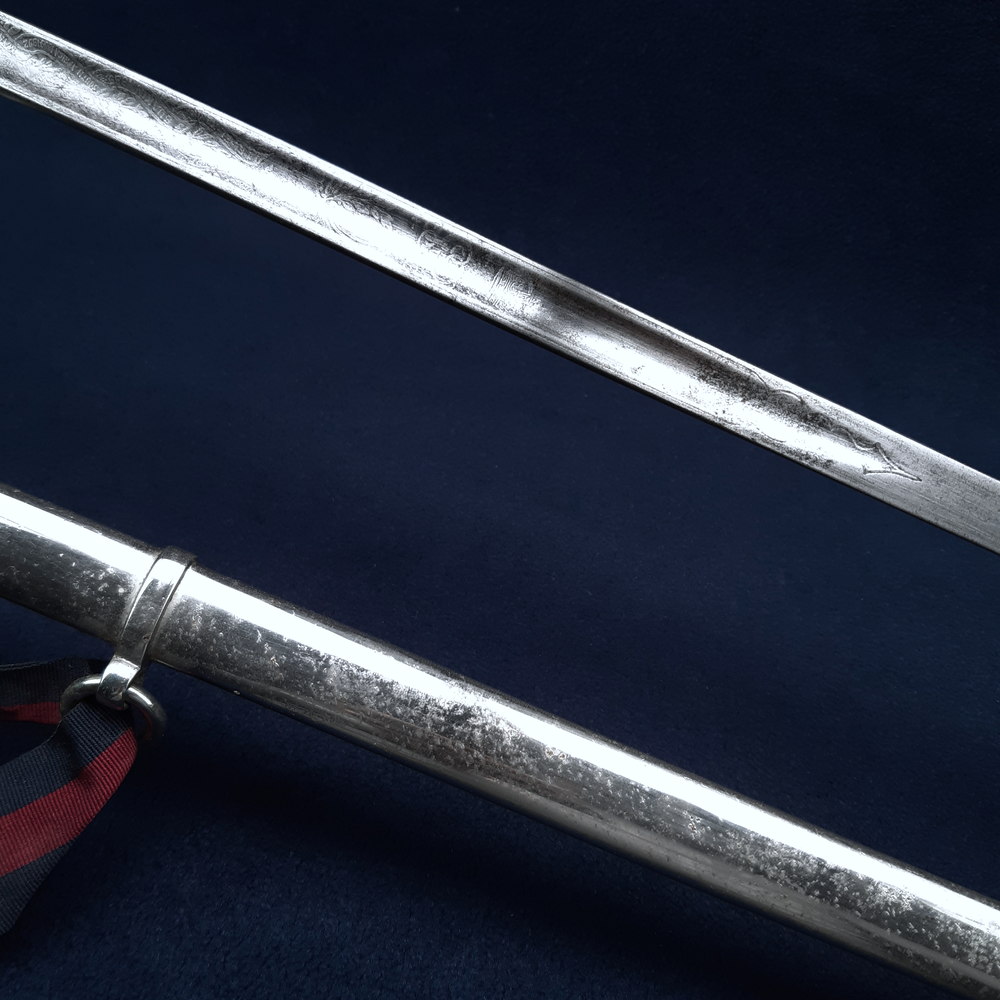
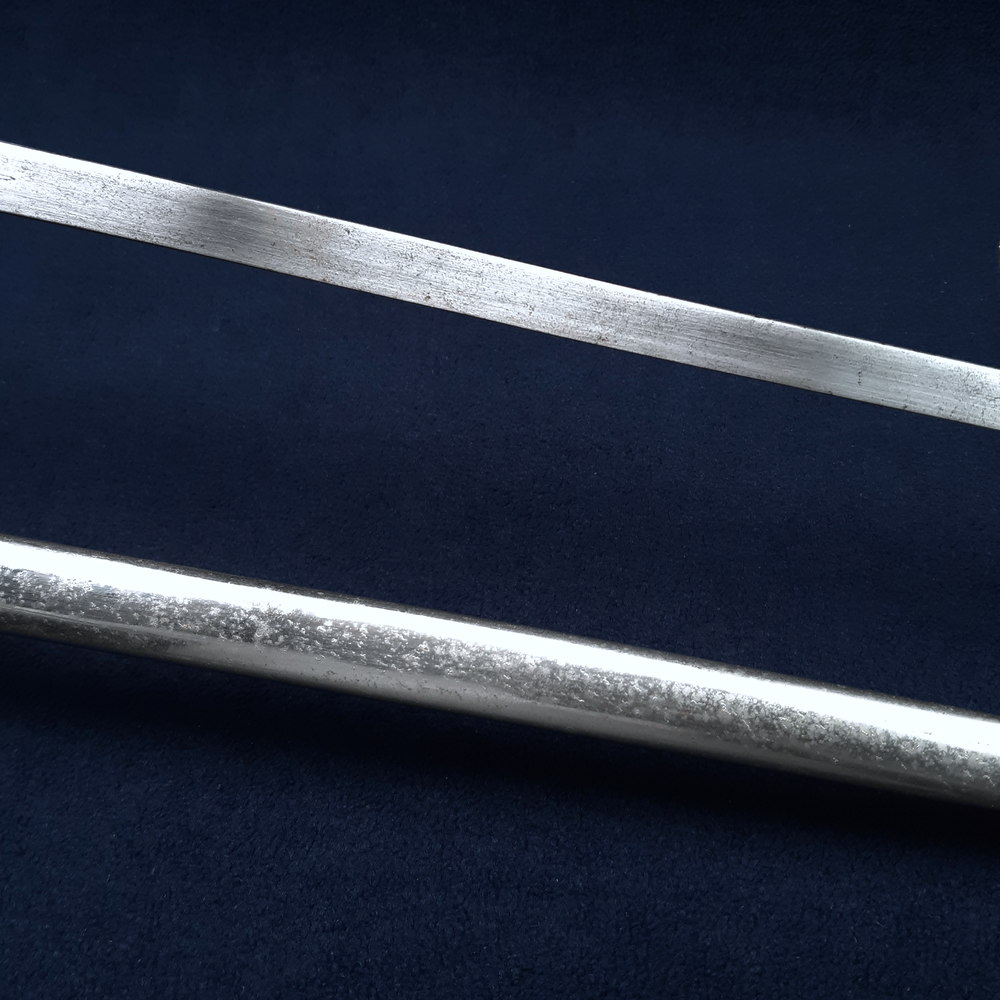
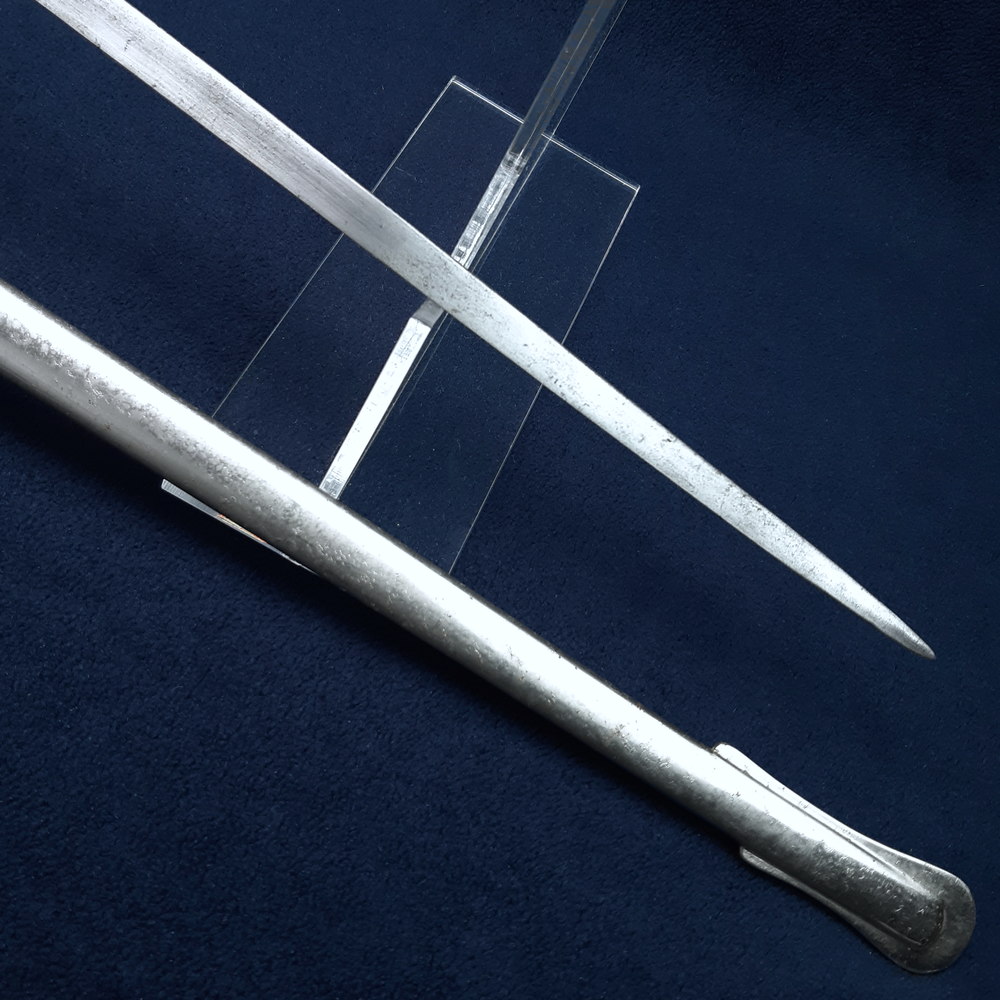
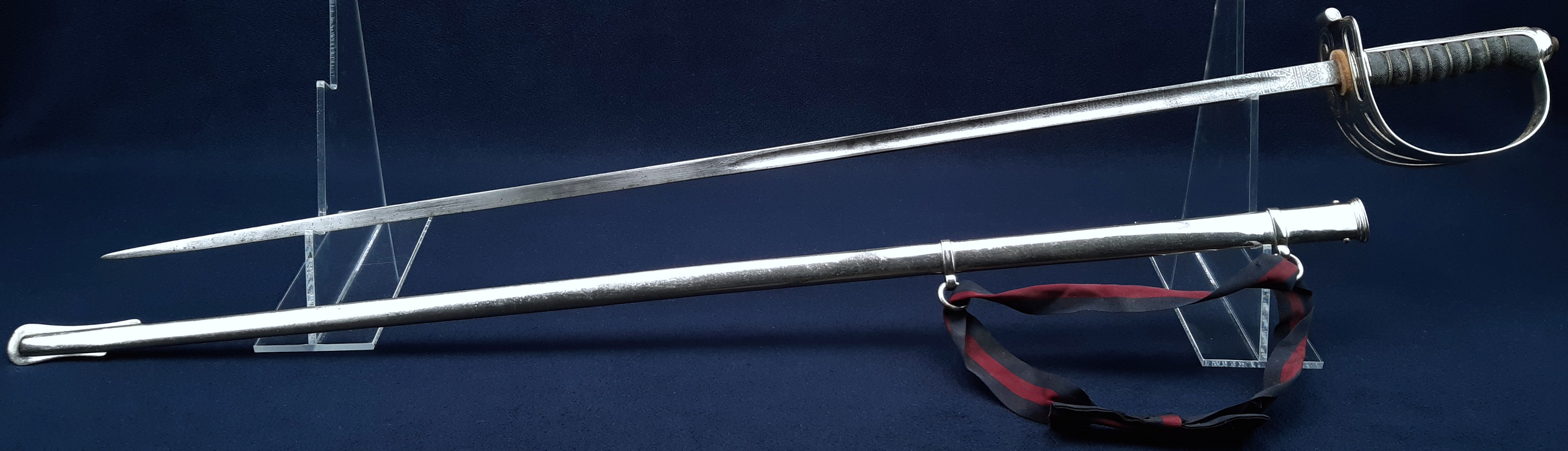
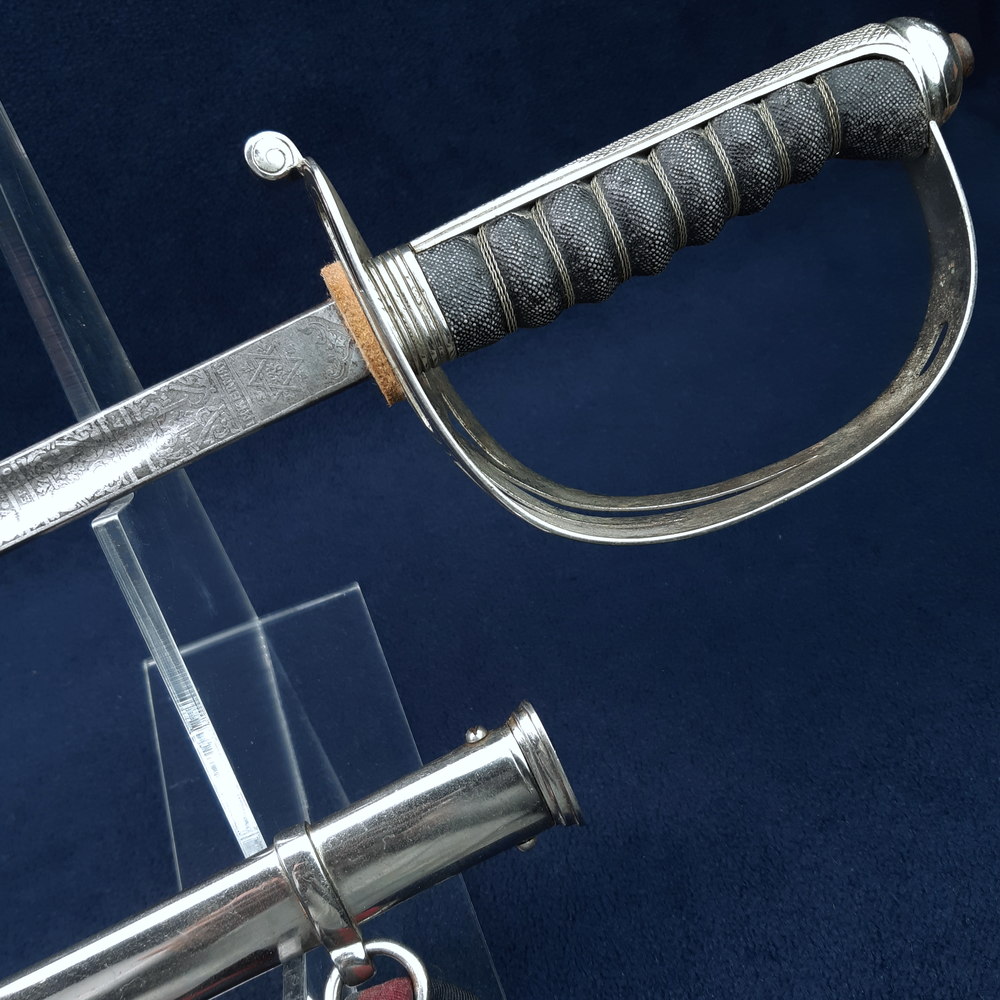
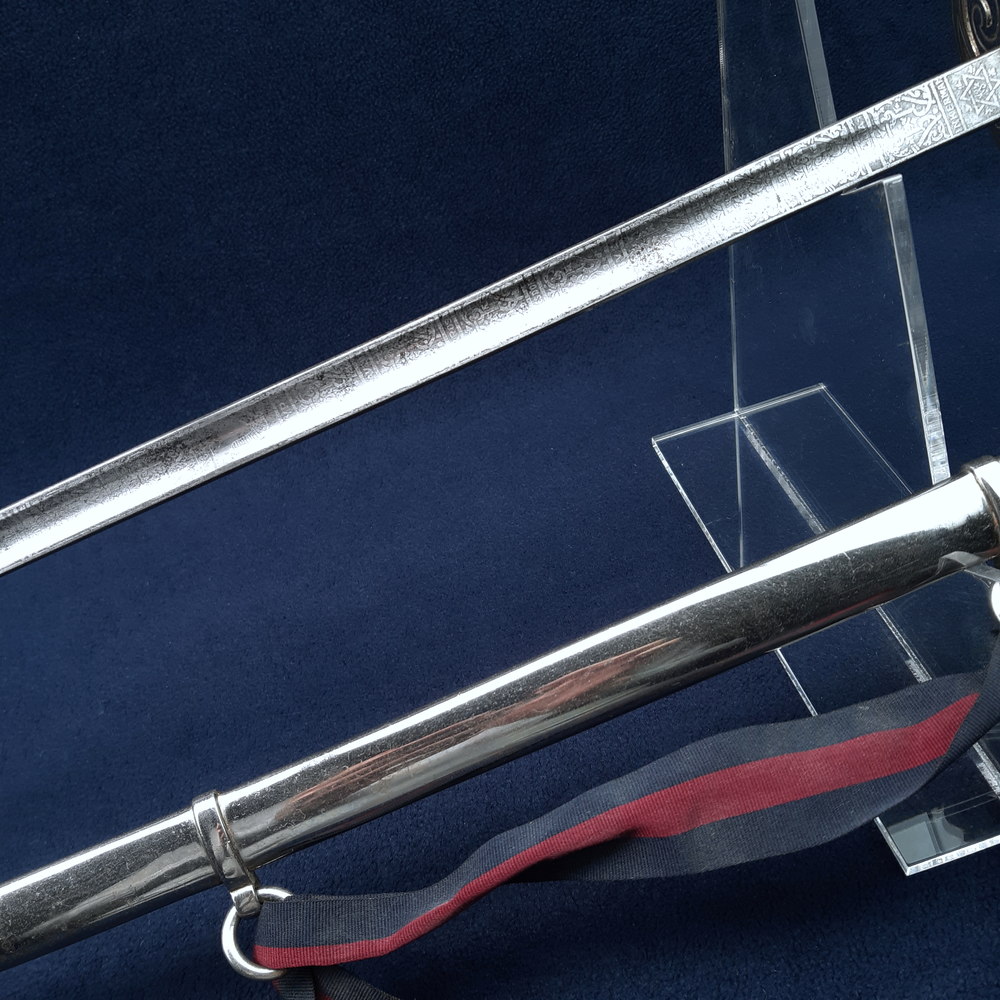
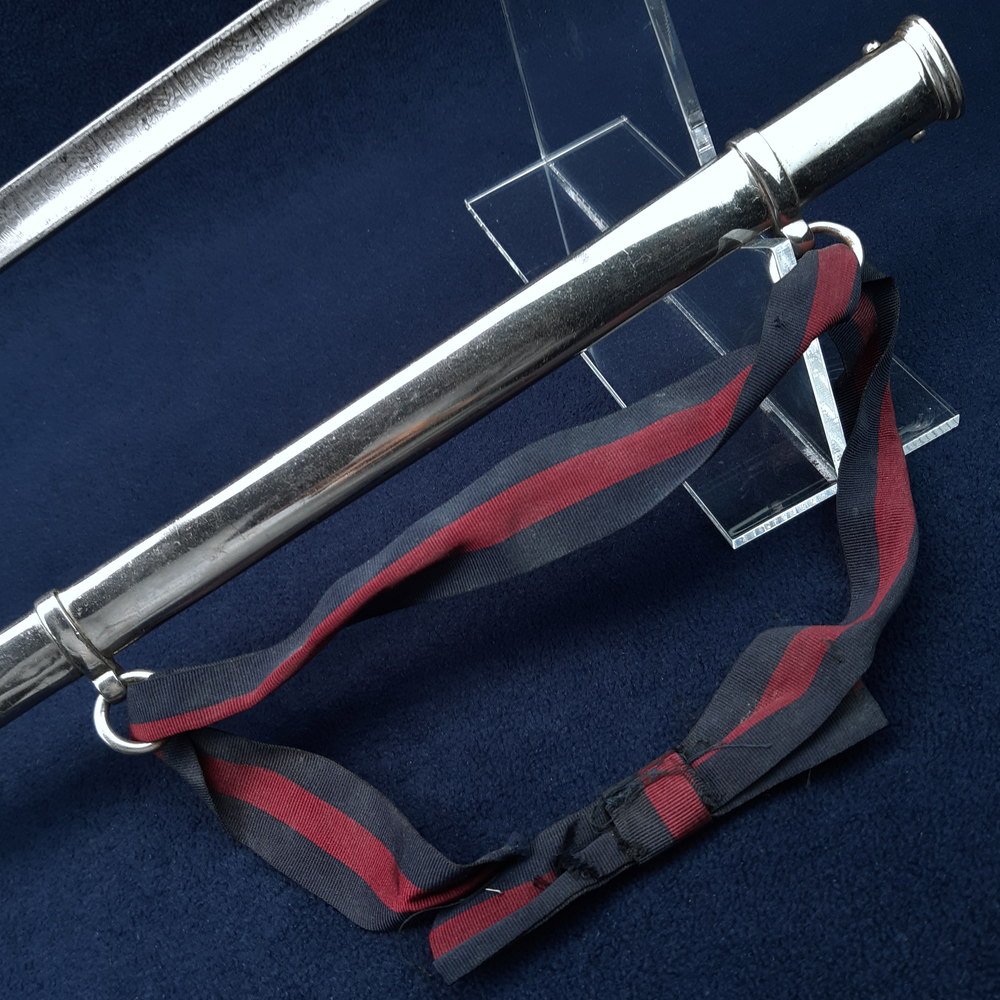
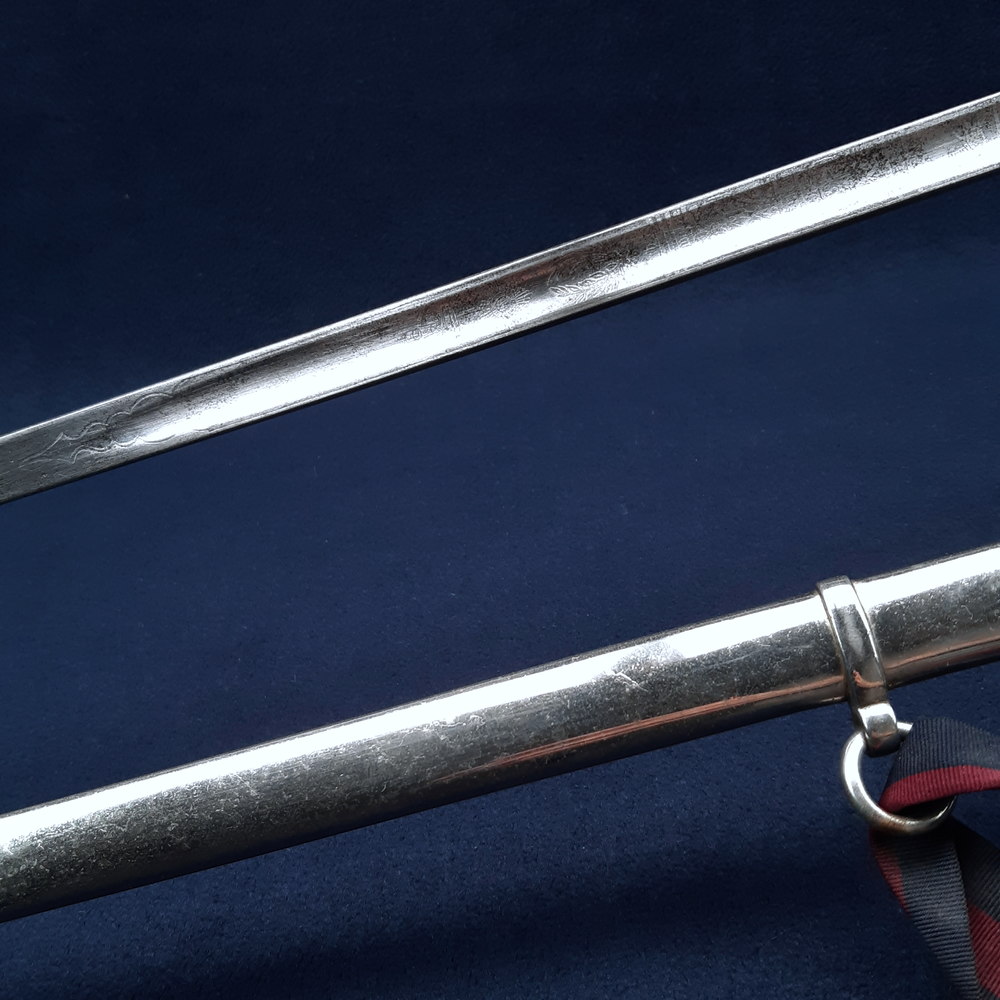
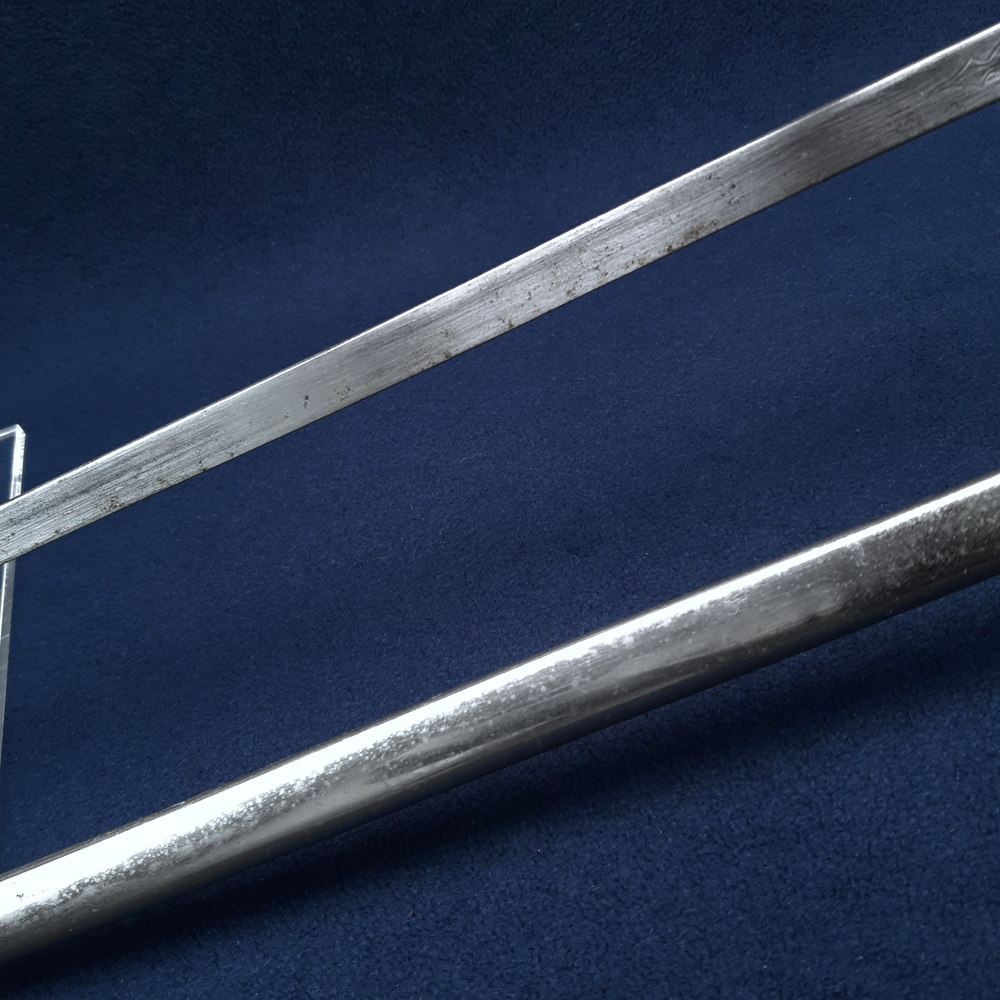
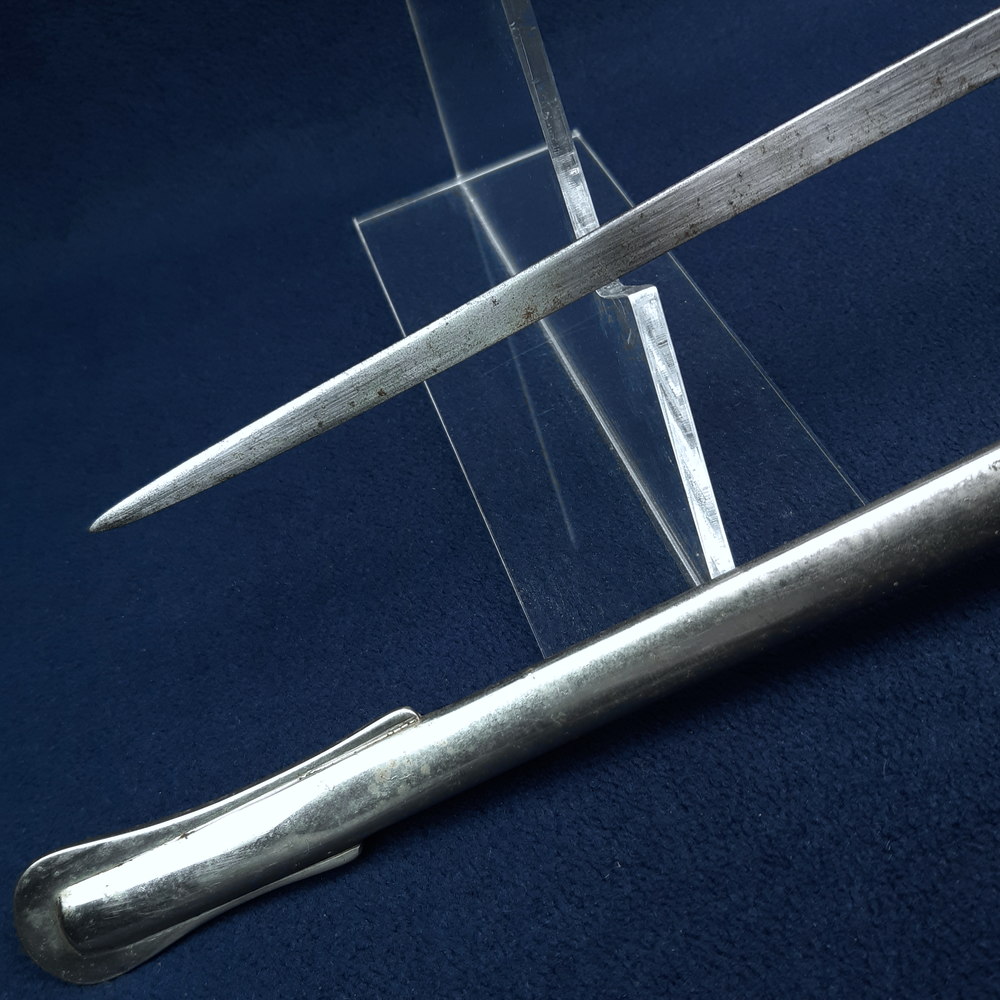
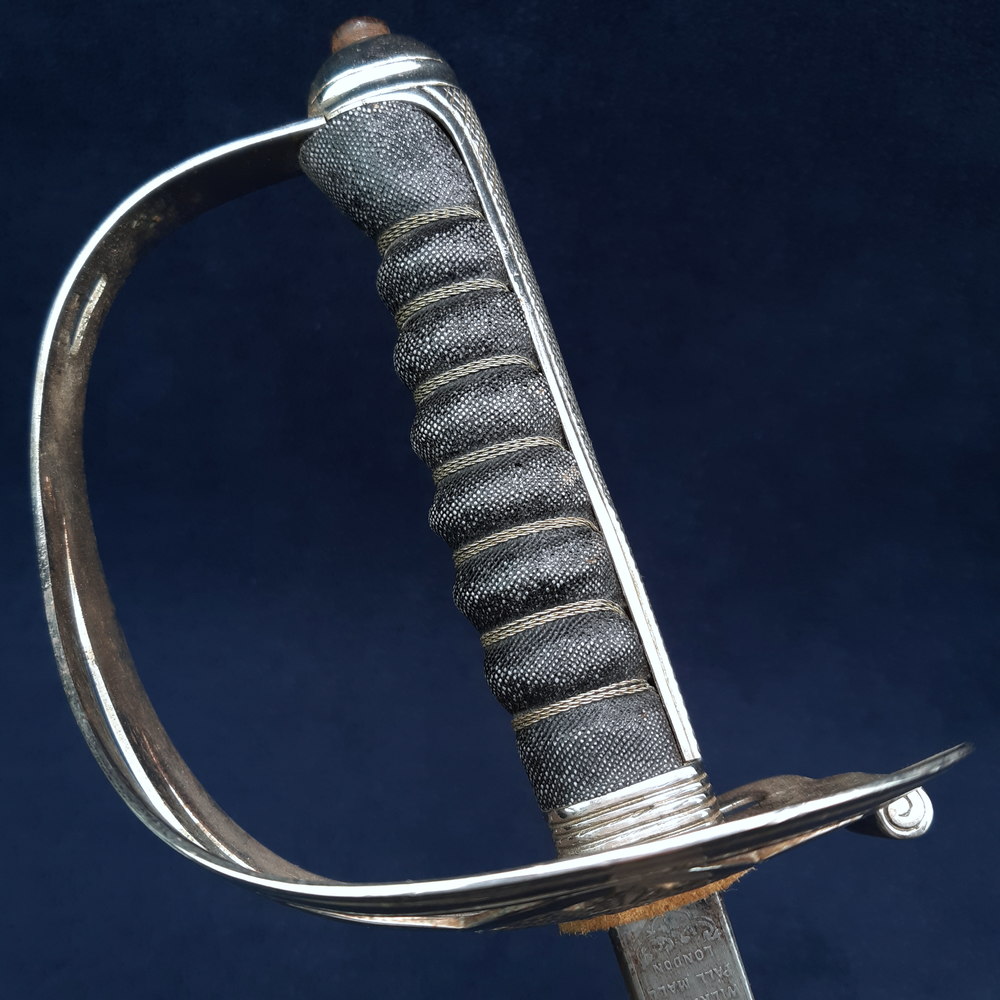
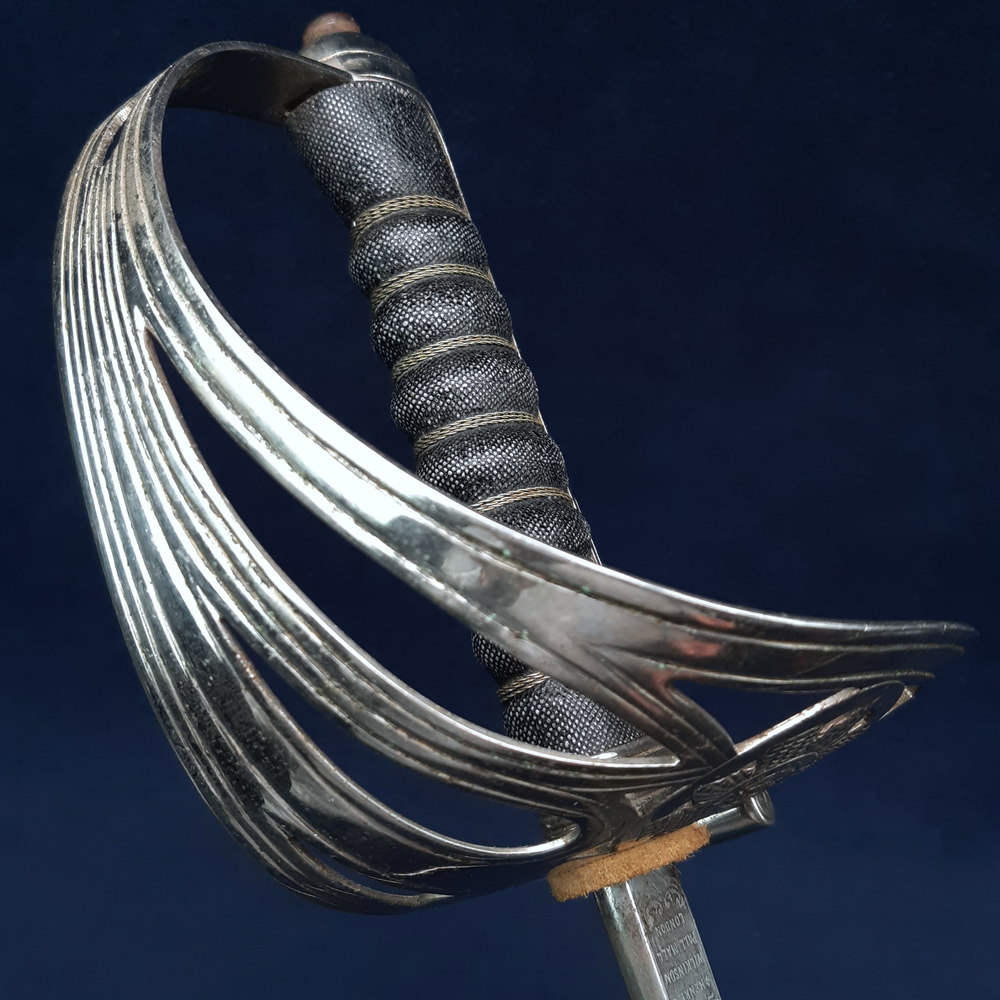
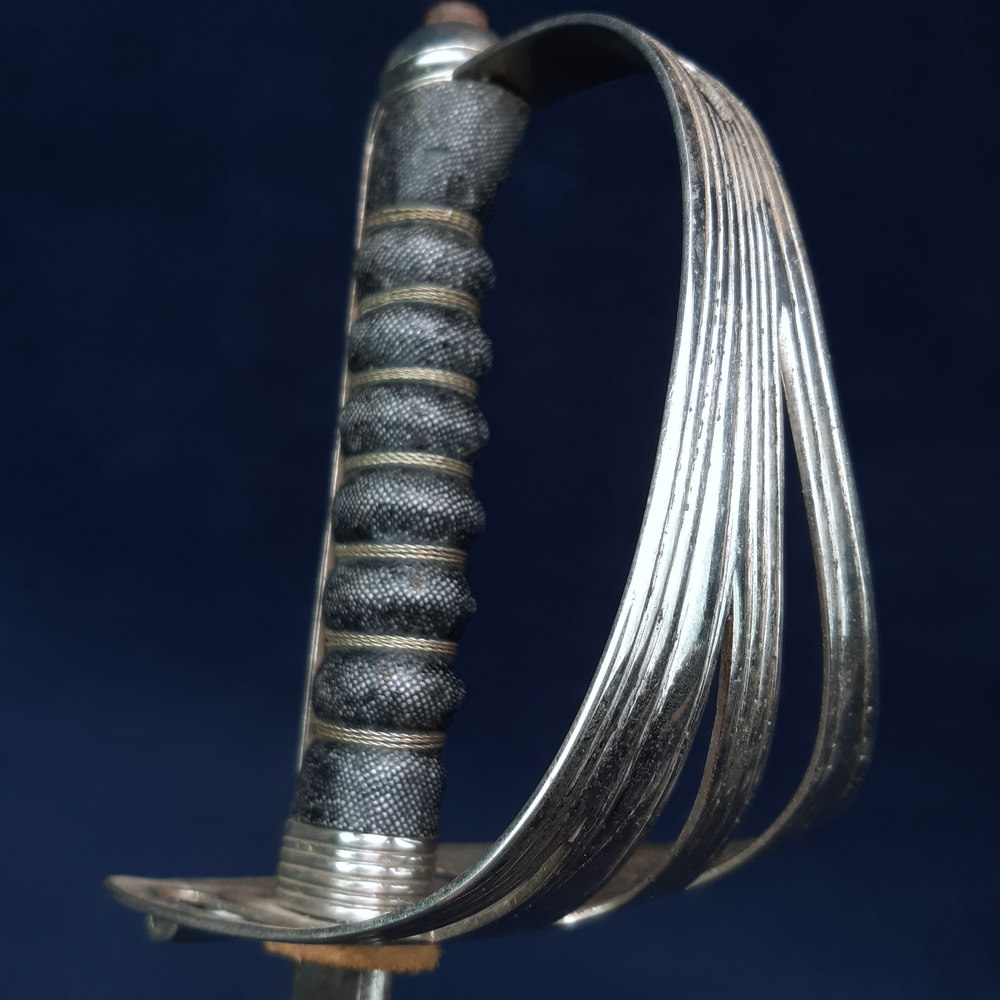
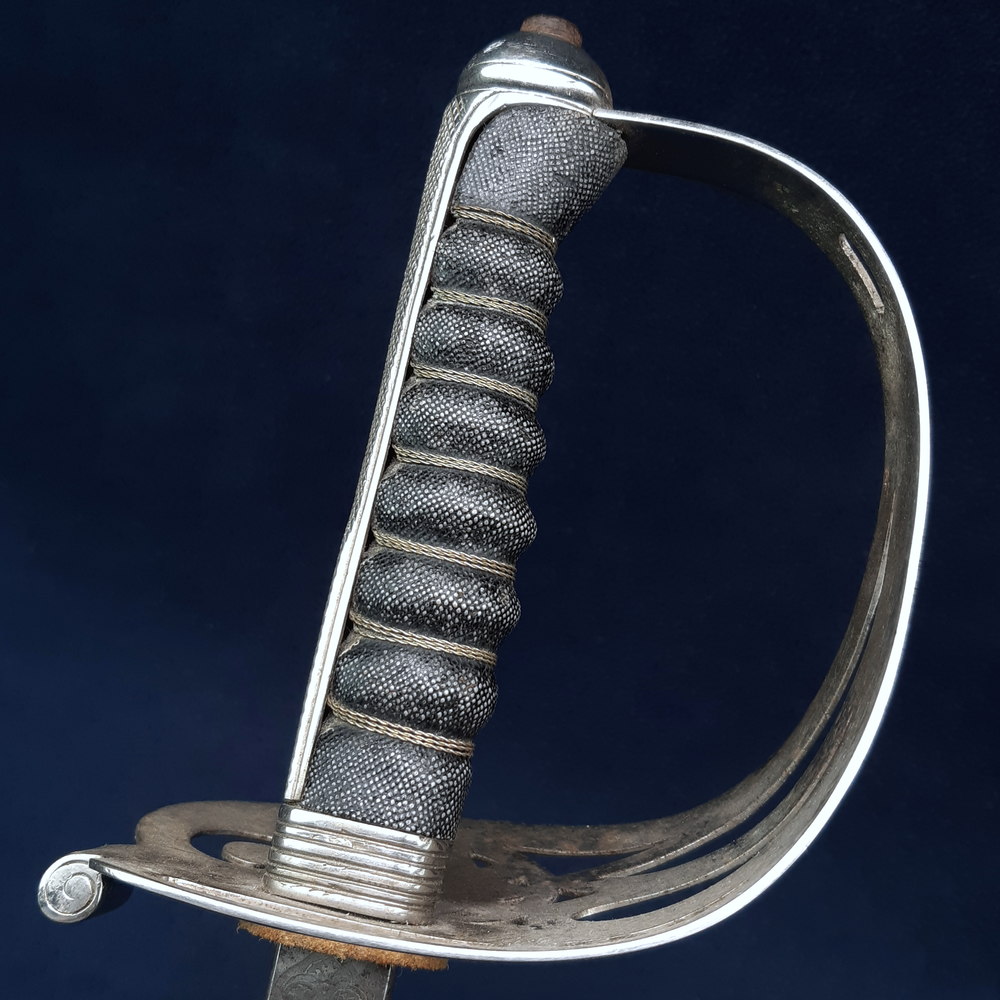
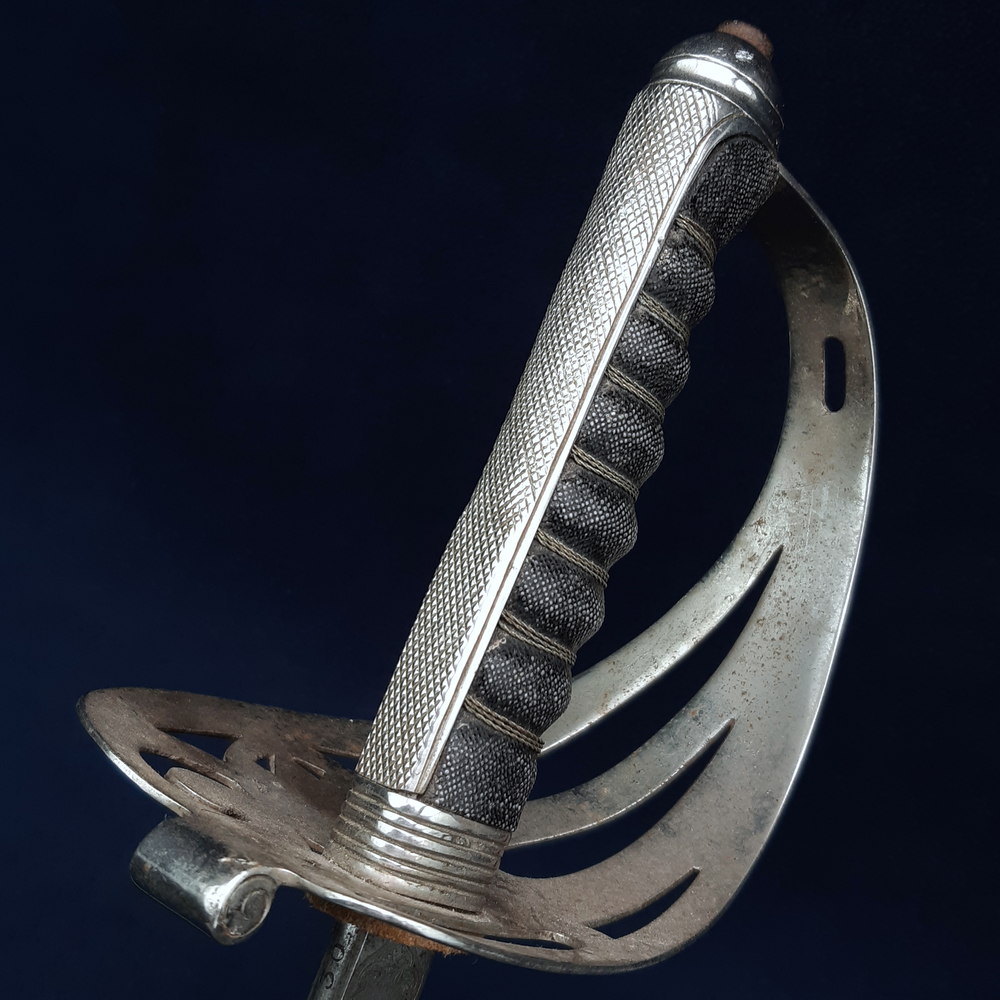
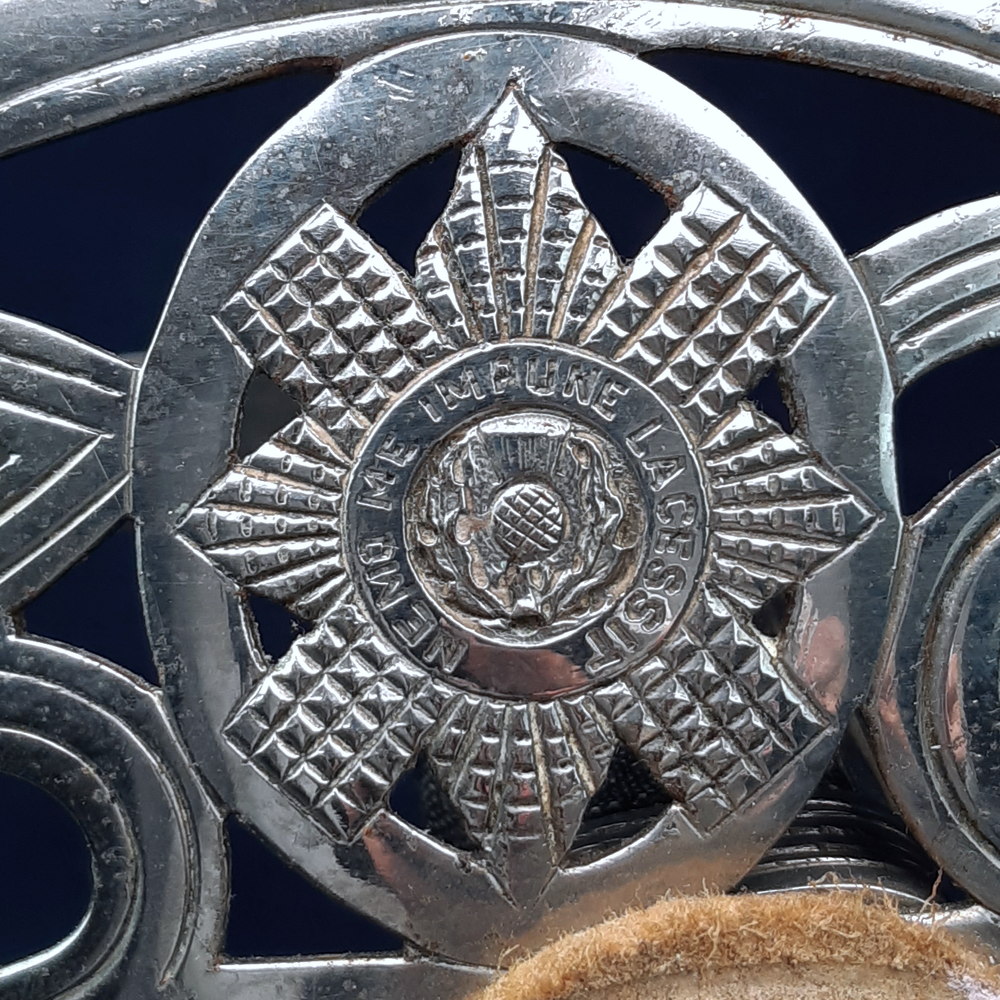
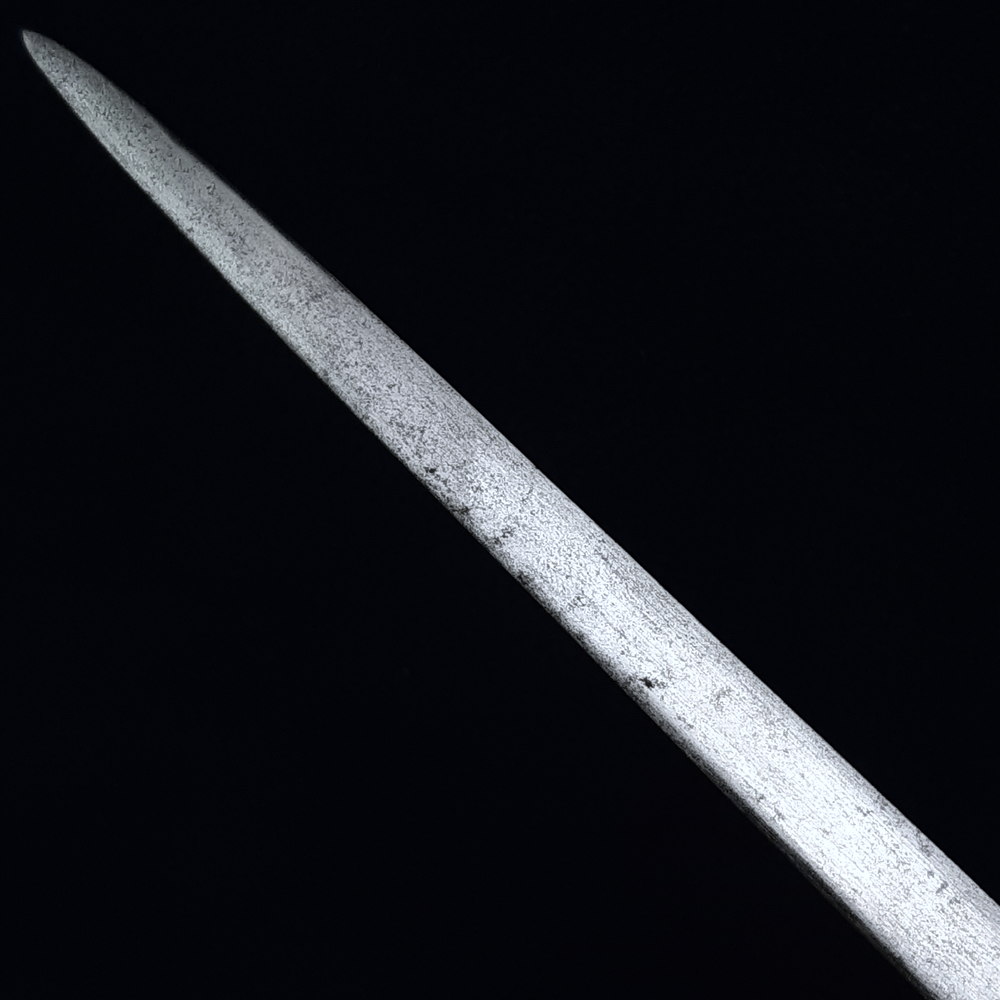
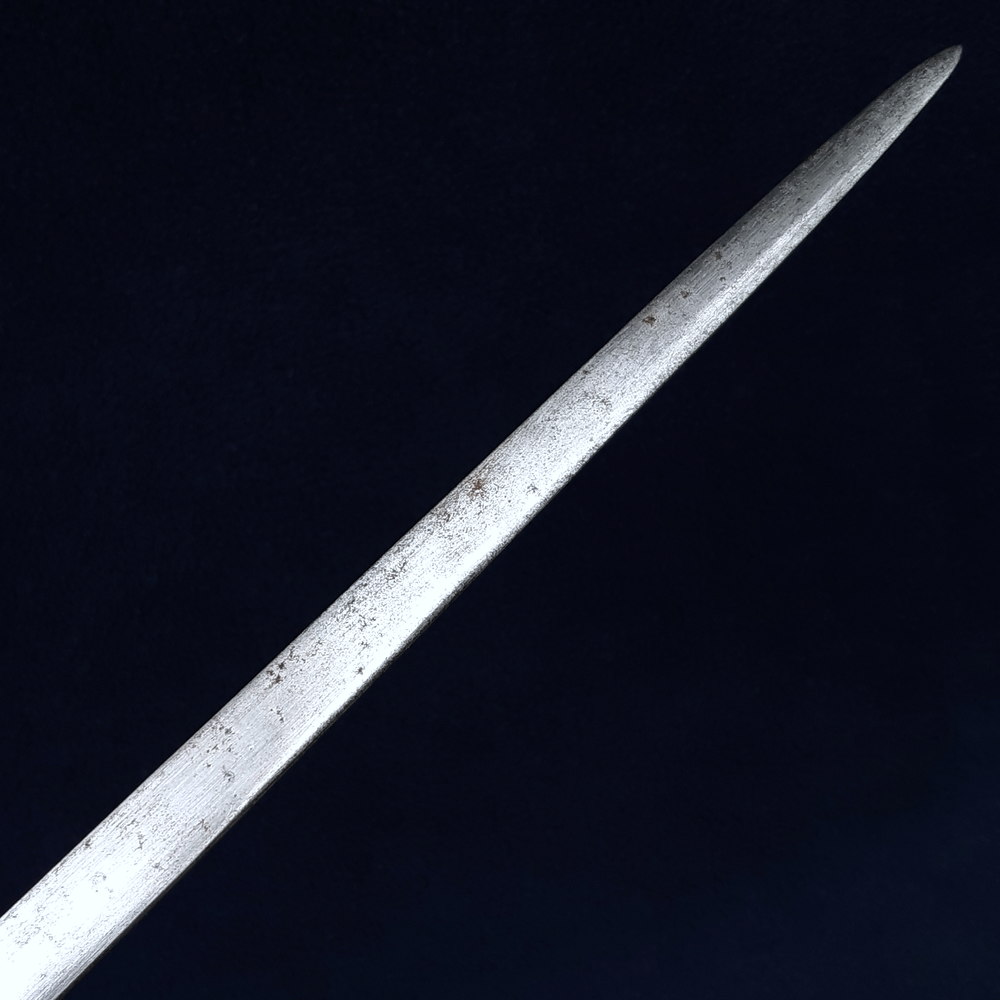
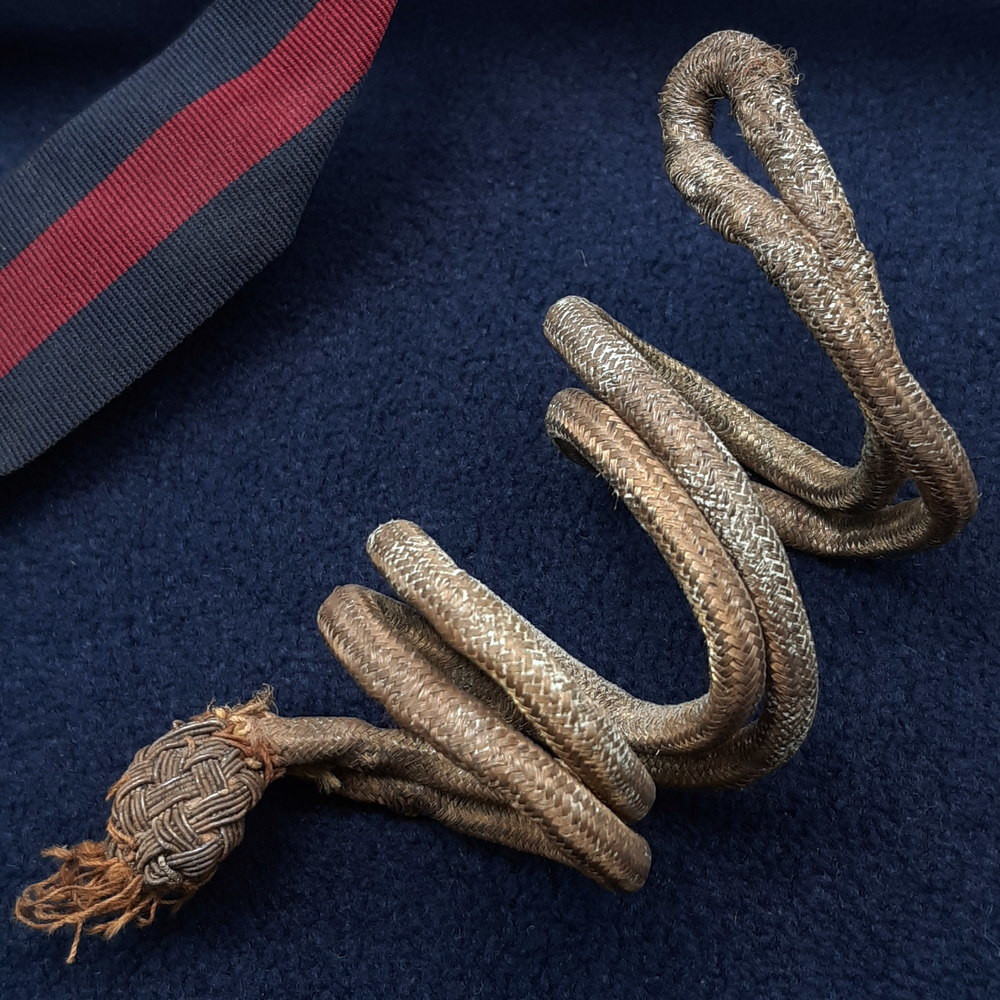
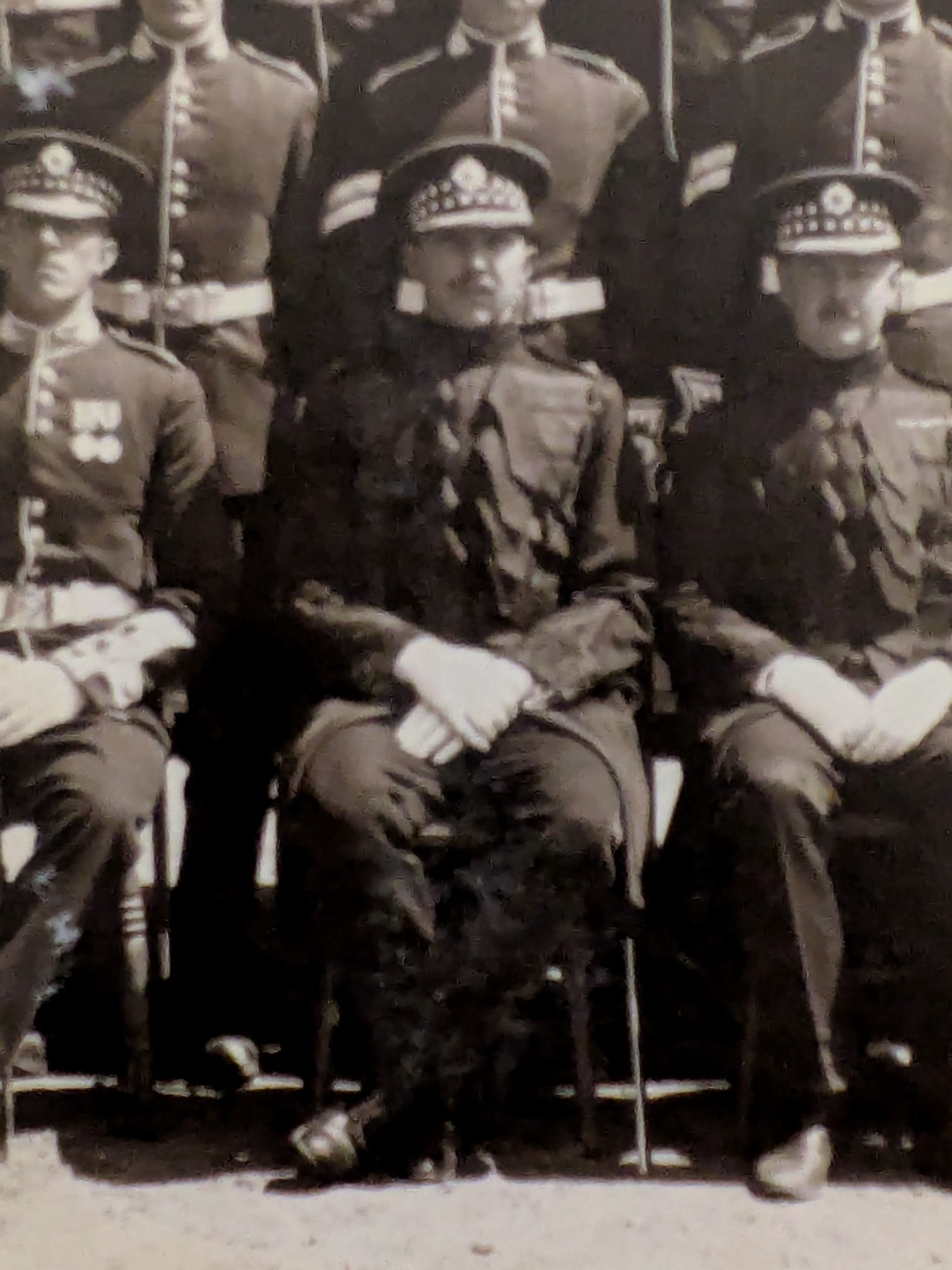
Straight spear-pointed picquet weight blade with central fuller. Pierced steel hilt of ‘Gothic’ style with inset regimental badge of the Scots derived from the badge of the Order of the Thistle: a St Andrew's cross overlying a multi-rayed star with a central circlet bearing the motto of the Stuarts ‘Nemo Me Impune Lacessit’ (No one provokes me with impunity) enclosing a thistle. Steel ferrule, chequered backstrap and oval pommel cap. Wire-bound black shagreen grip. Steel parade scabbard with two hanging rings. The metal parts of the hilt and scabbards have all been nickel-plated. Remnant of a parade knot. A fabric strap runs through the hanging rings of the scabbard, its colour maroon edged with blue, tied into a bow to secure it (with a staple added on one side, possibly later). I am unsure if this is an original part of the sword as worn, although the maroon & blue pattern matches the stable belts worn by the Household Division.
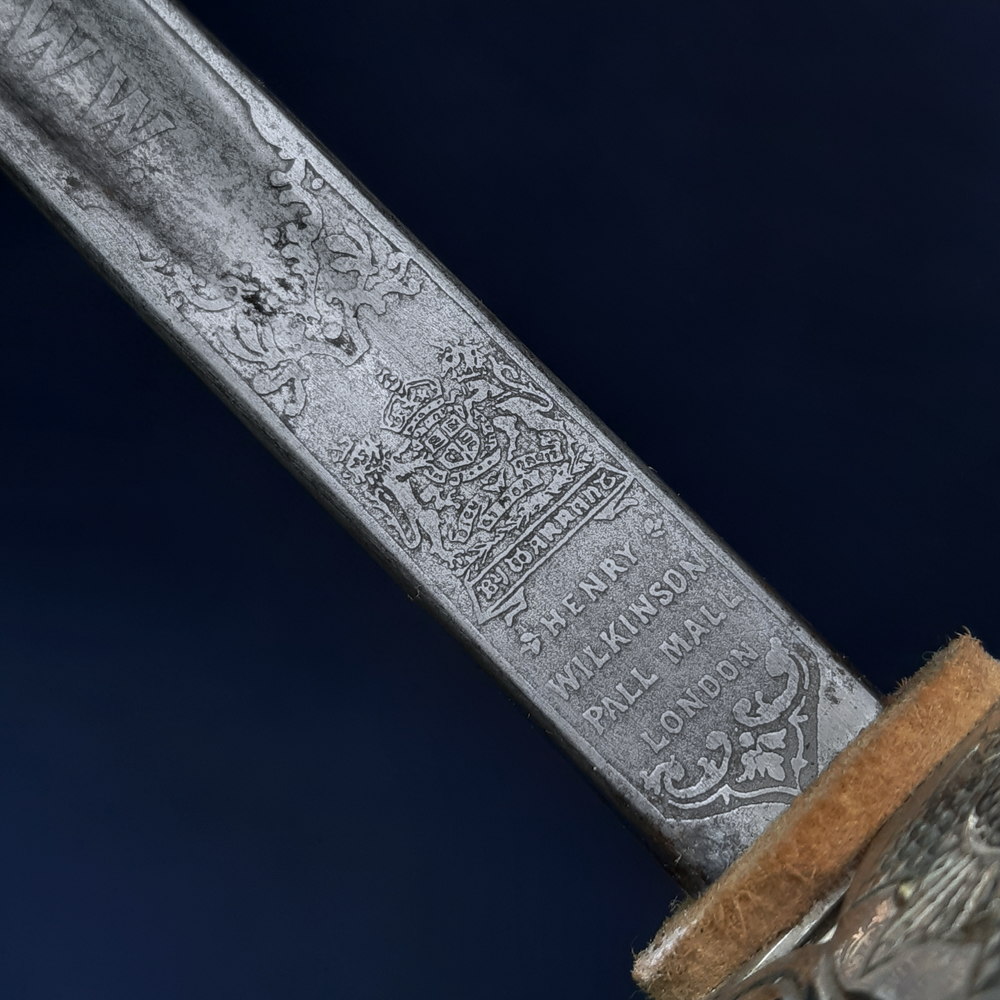
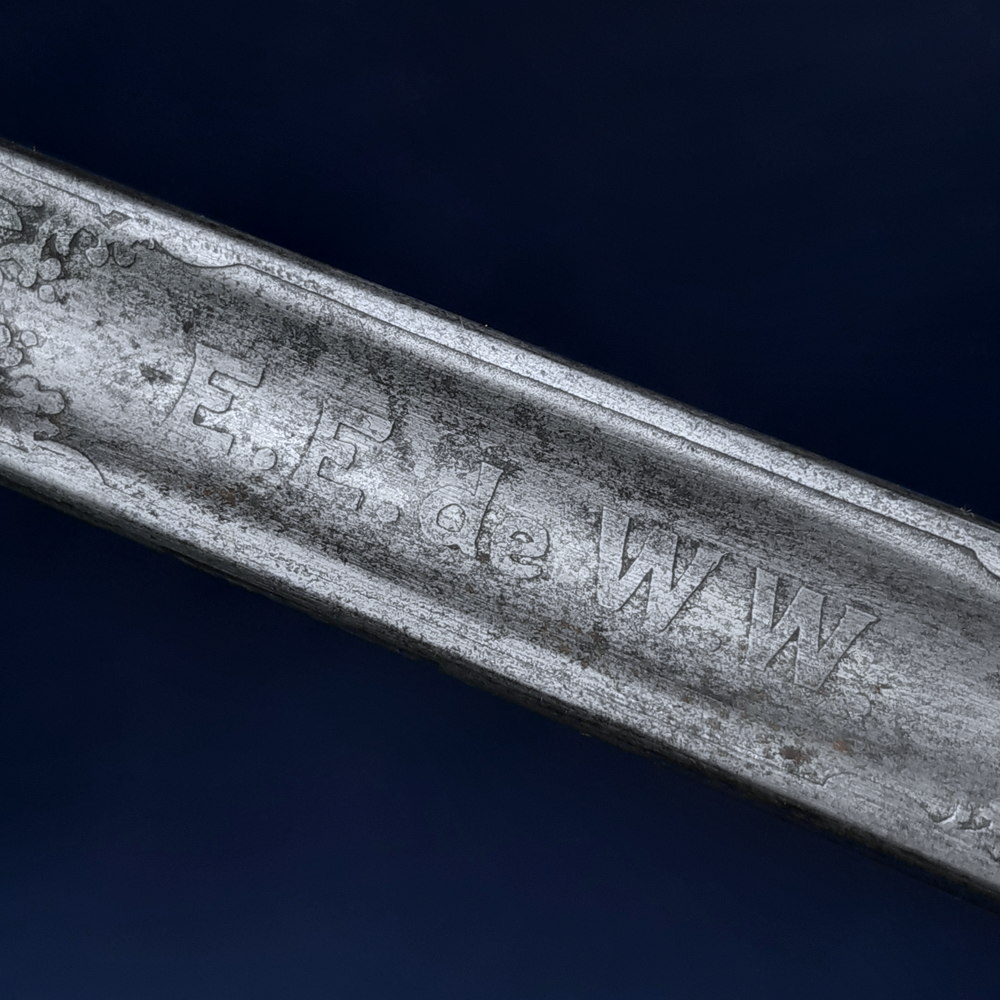
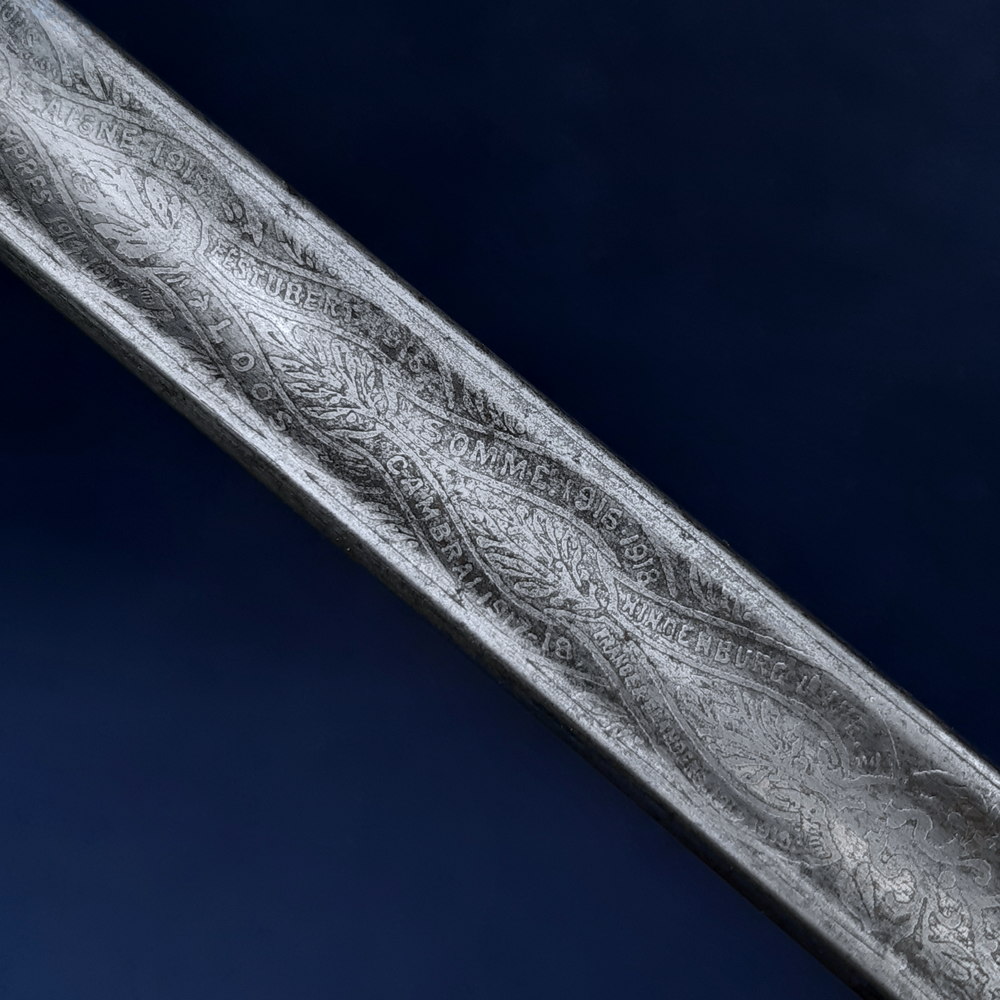
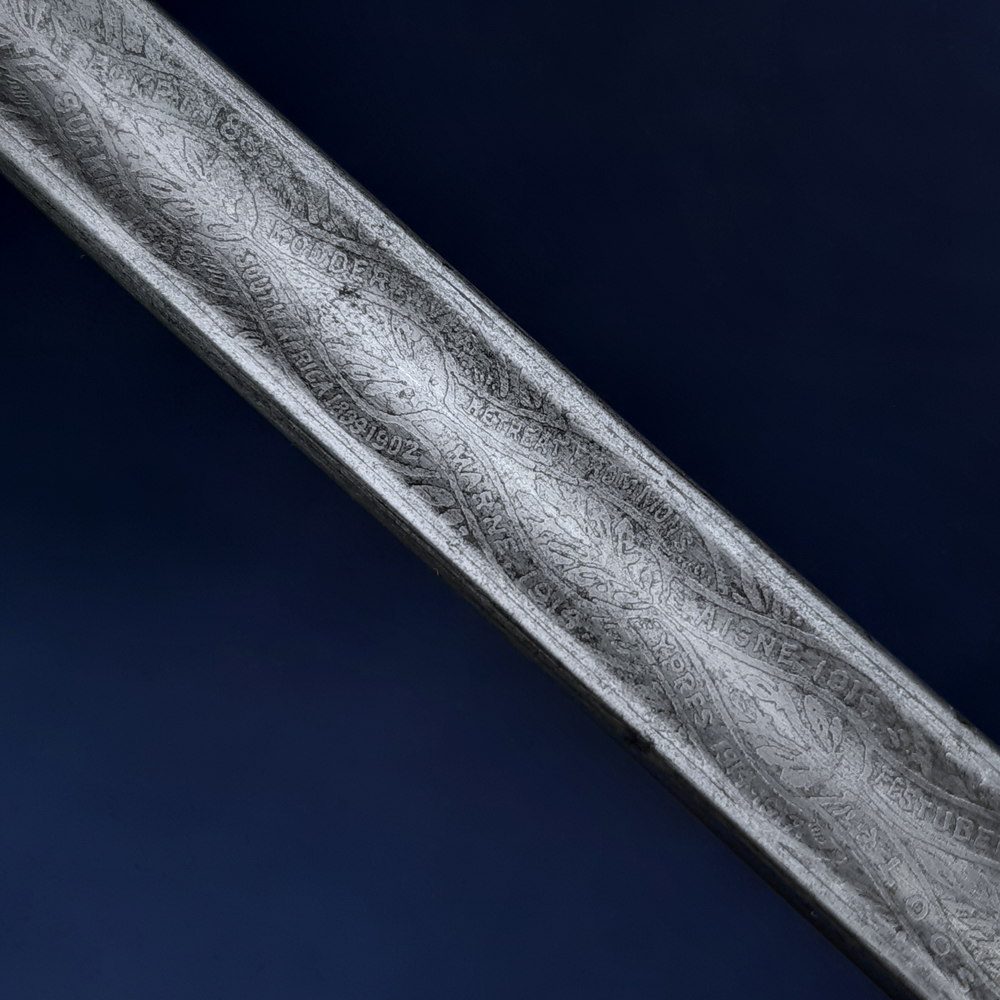
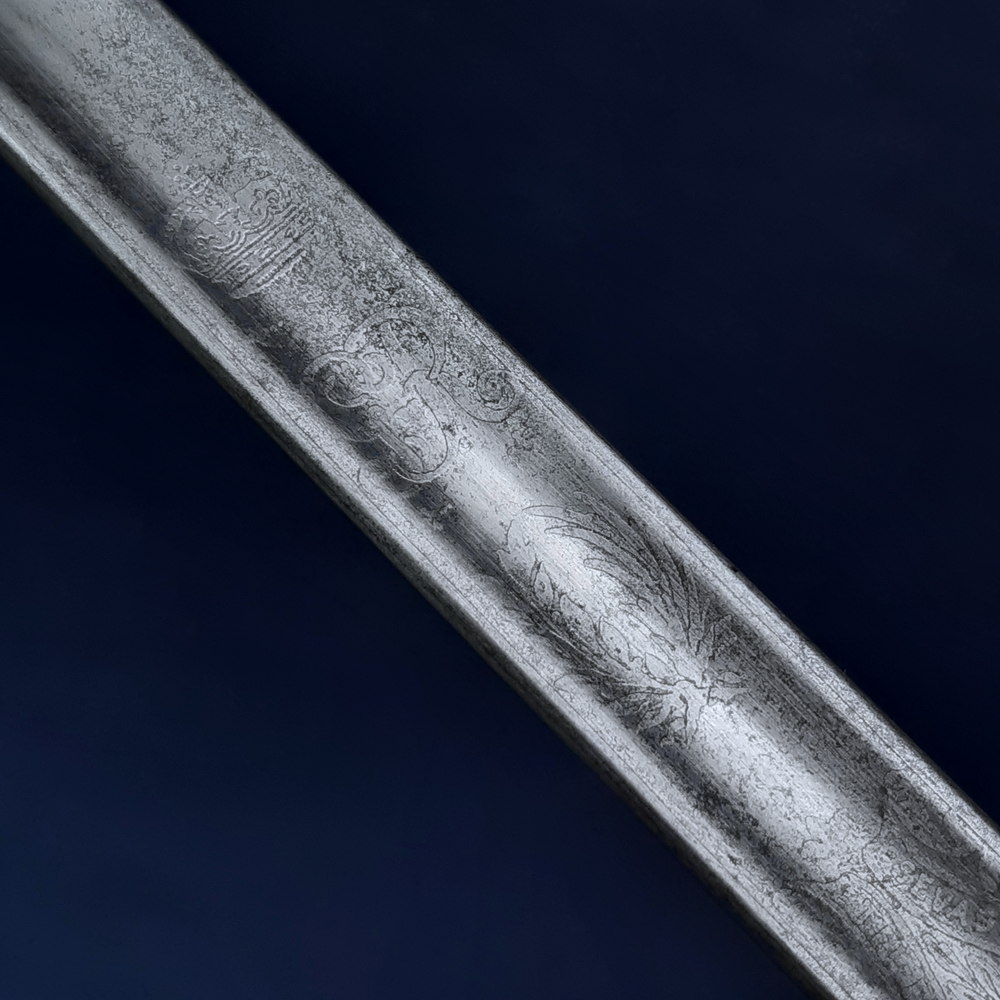
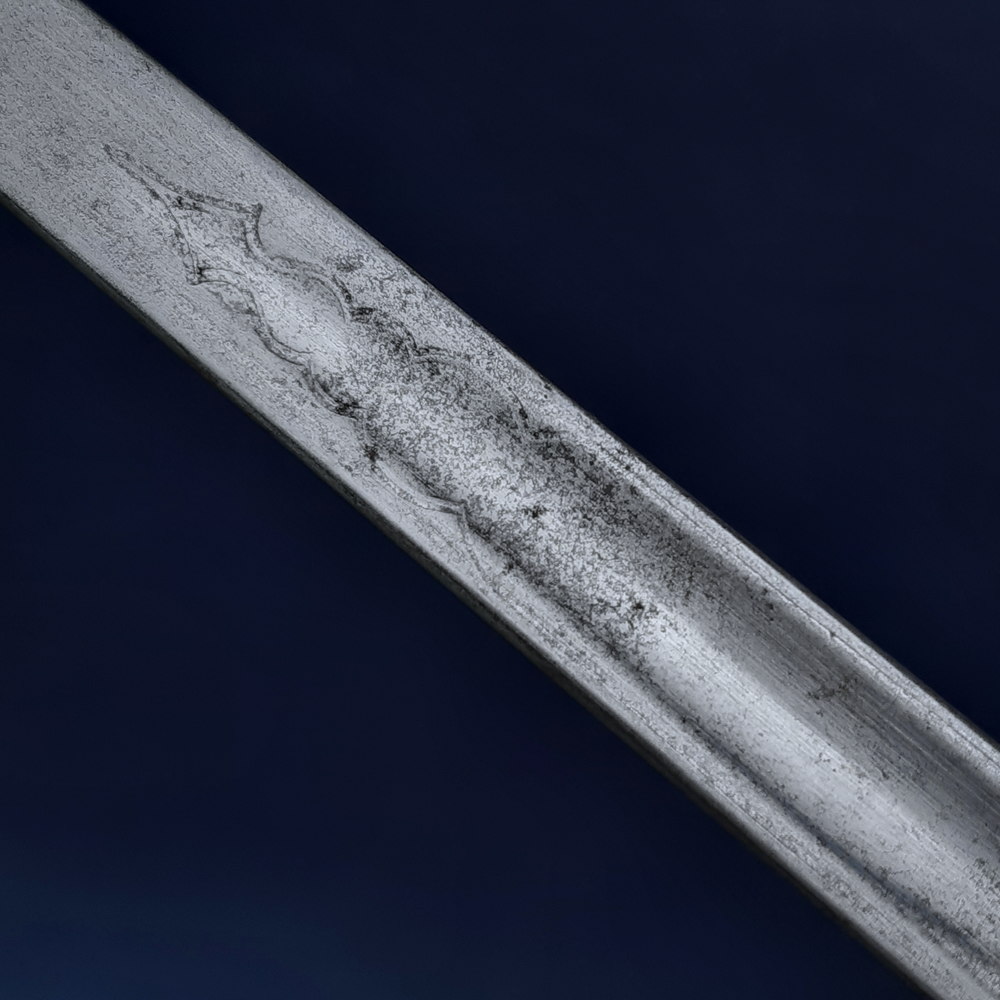
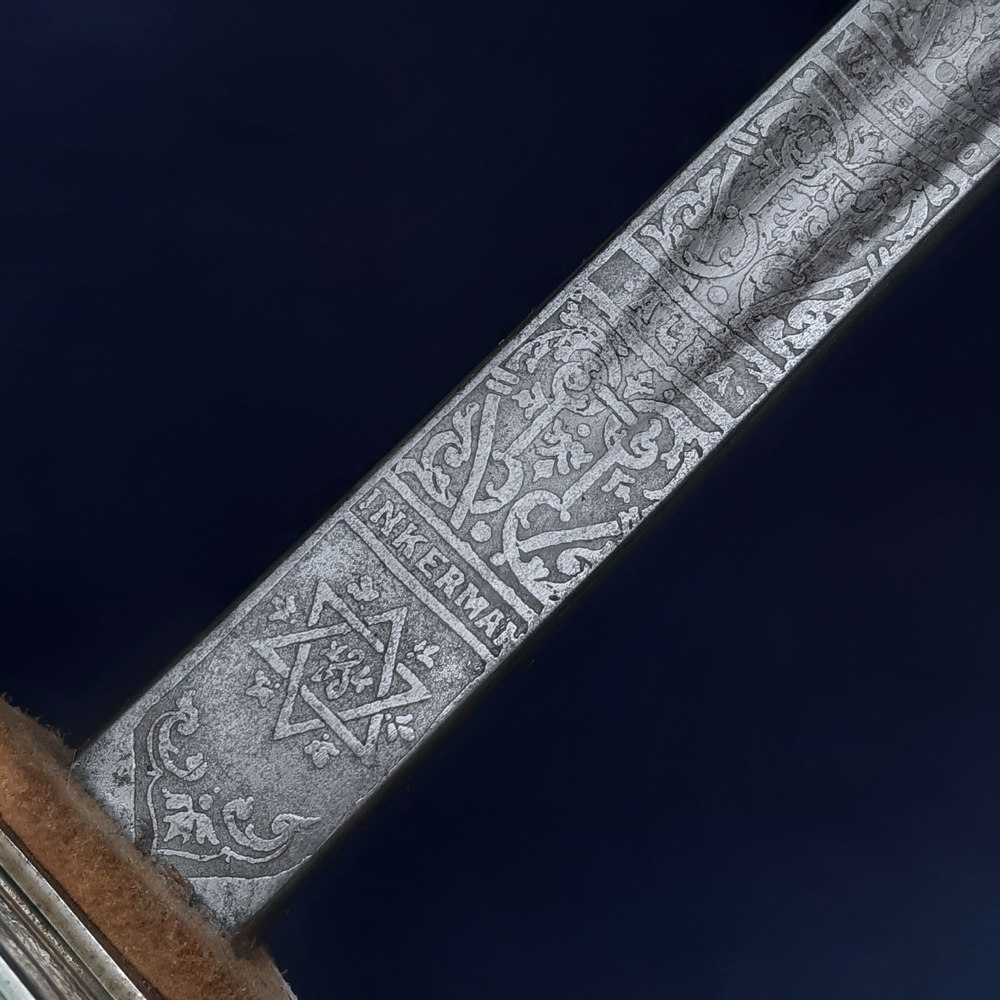
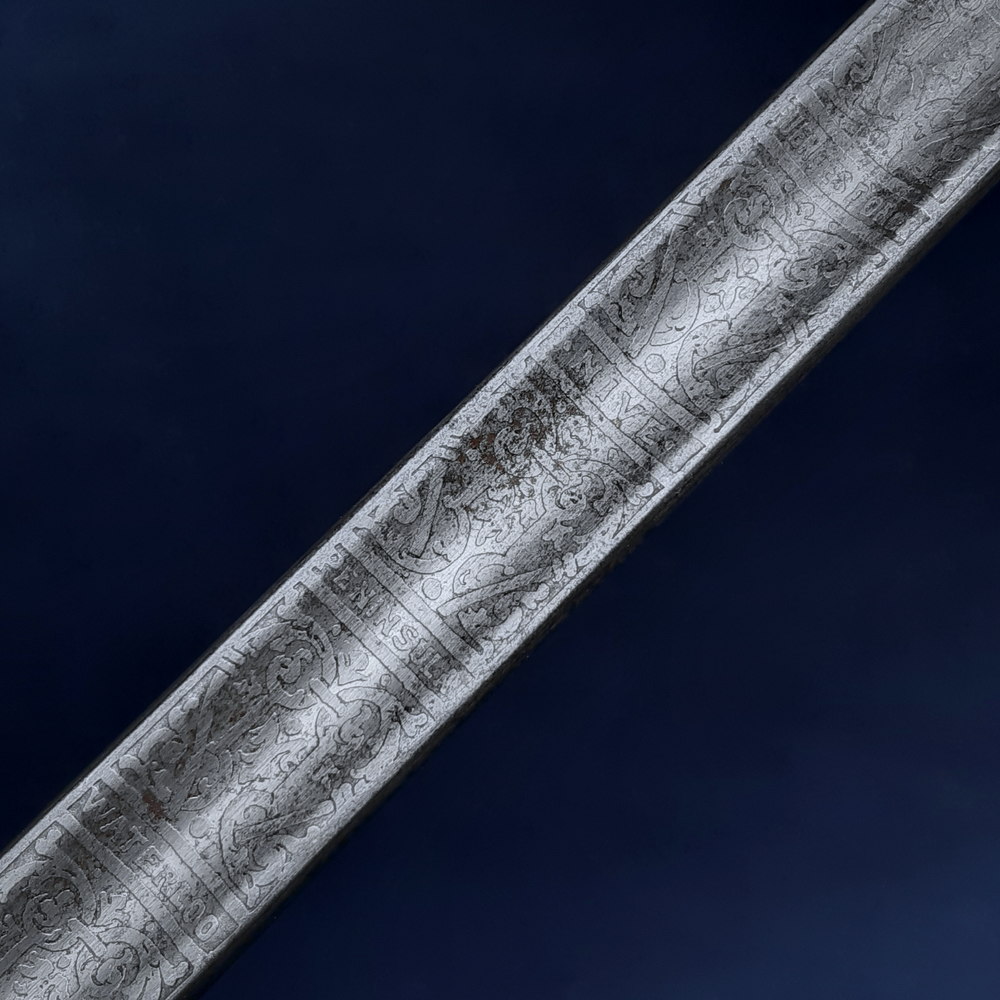
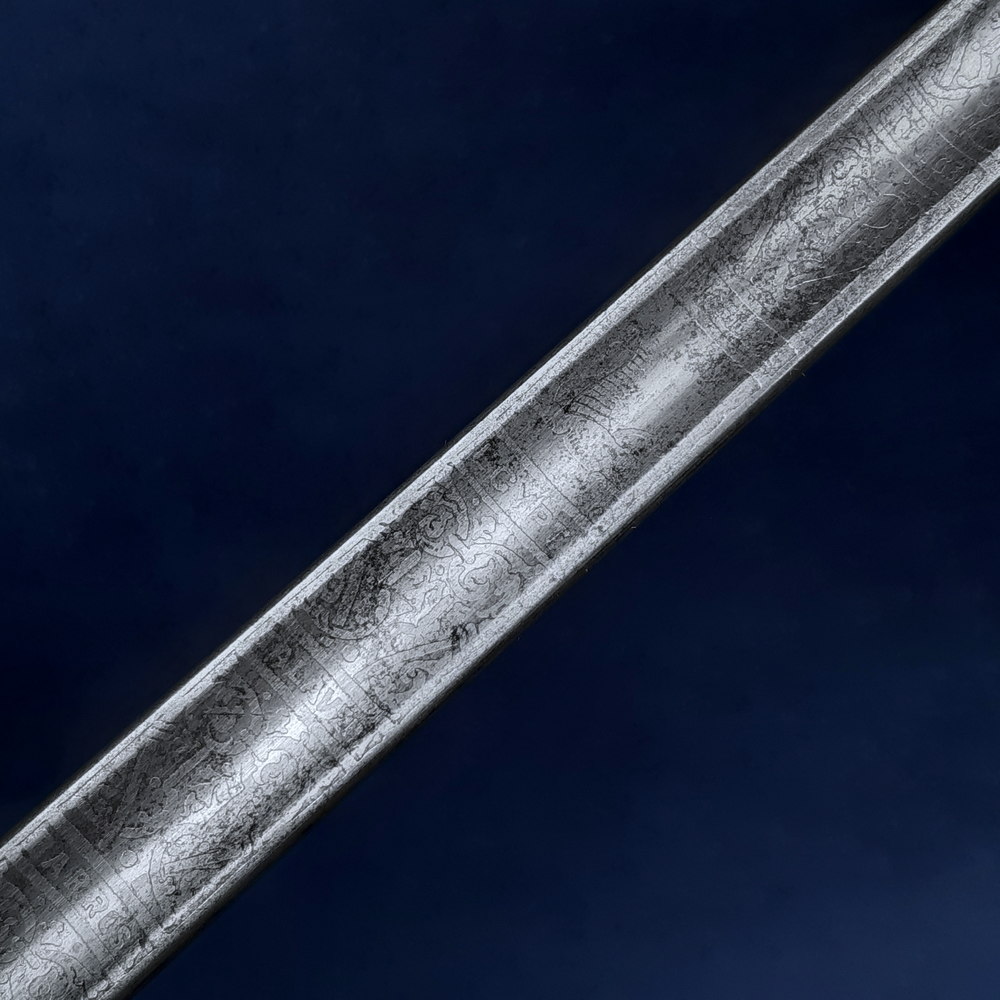
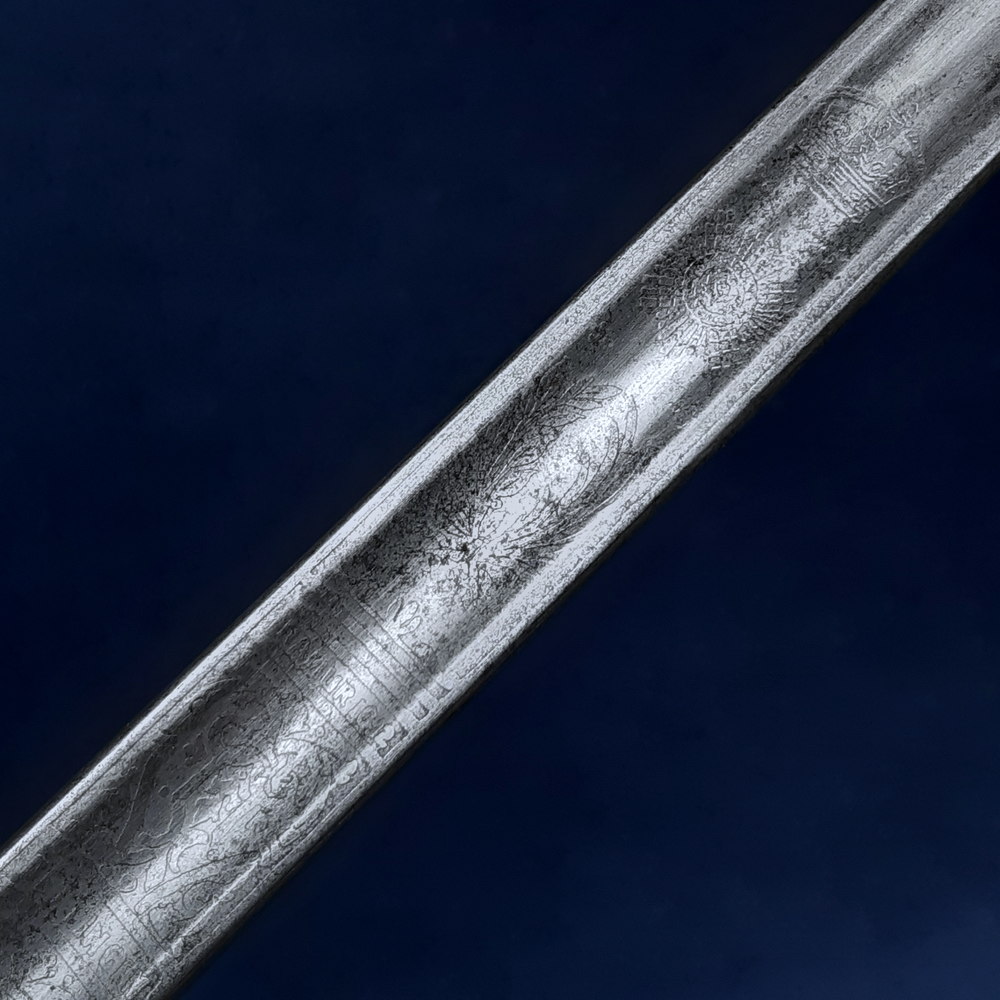
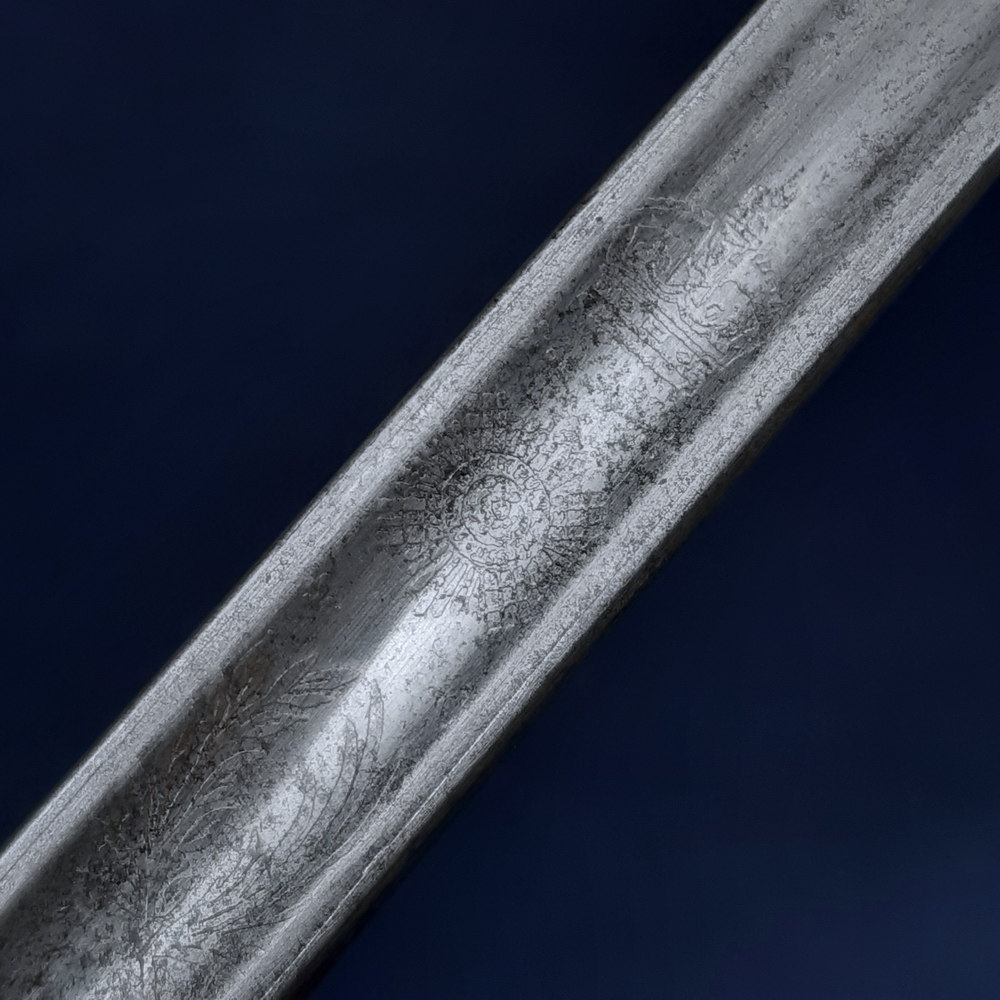
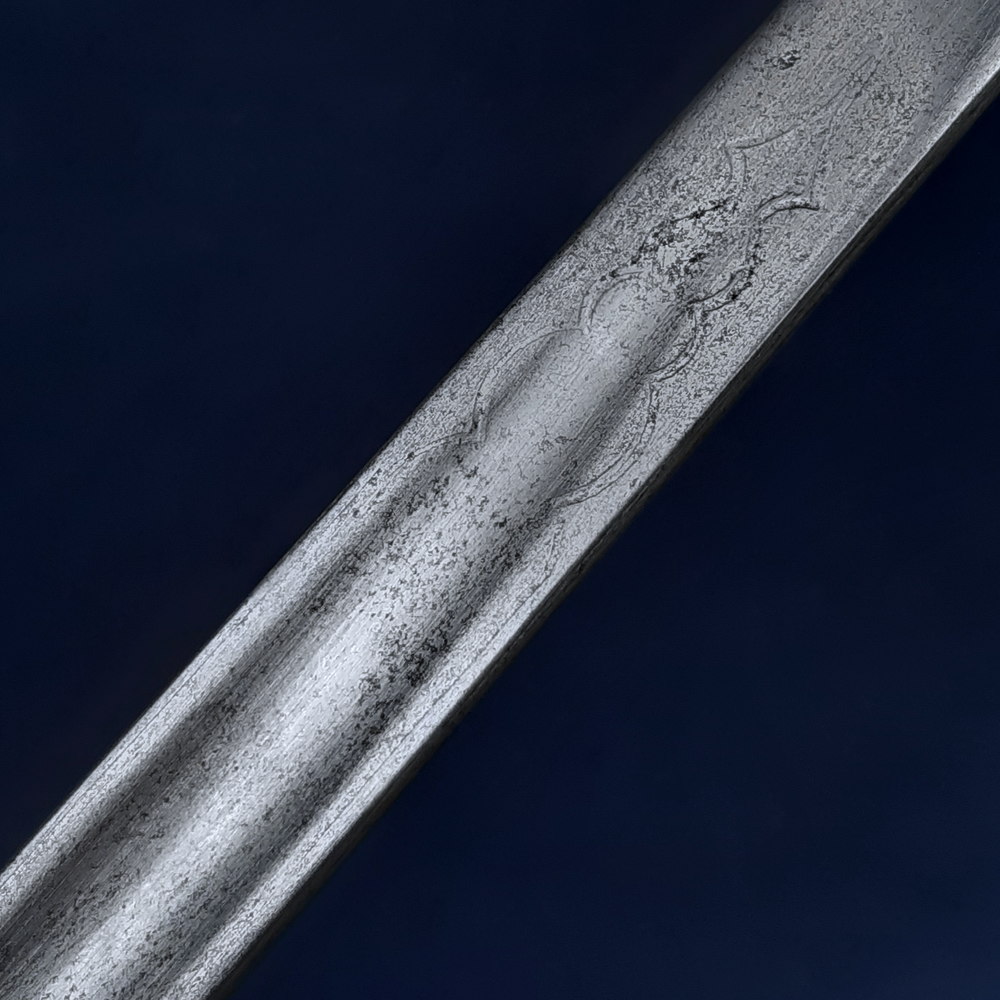
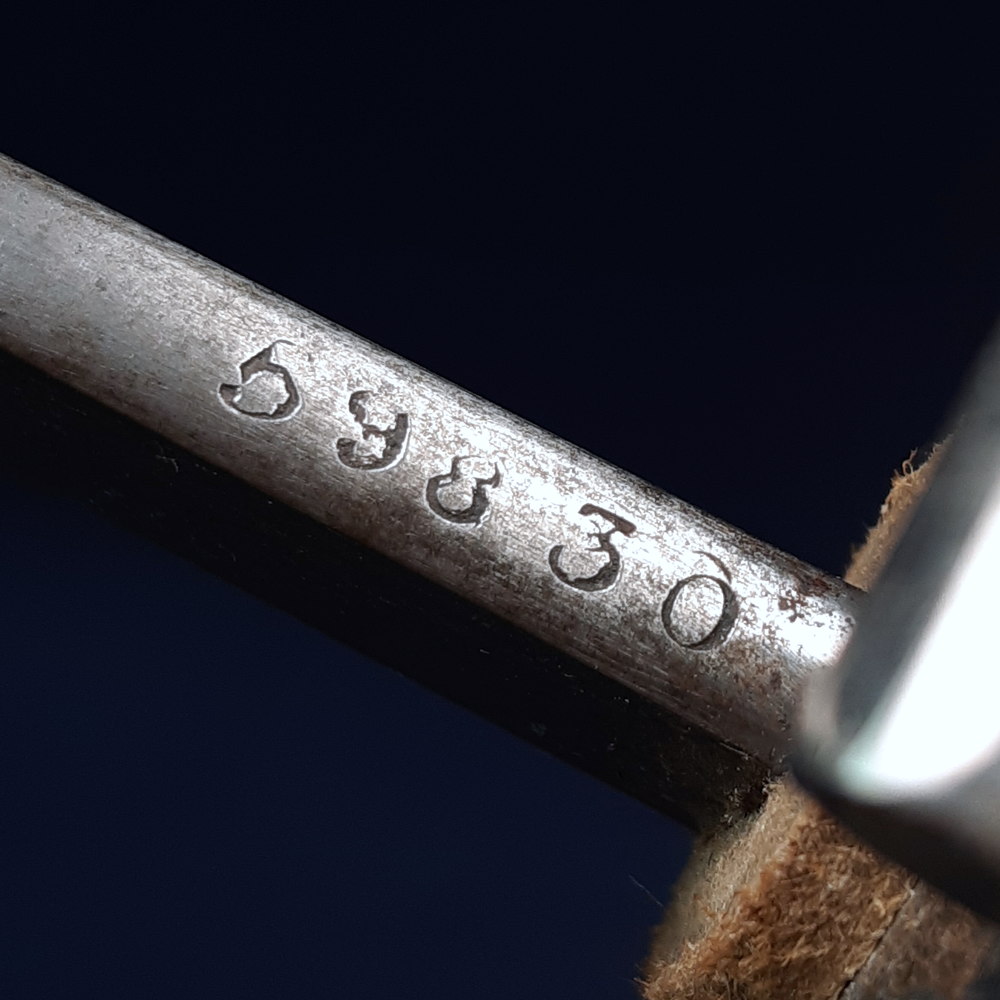
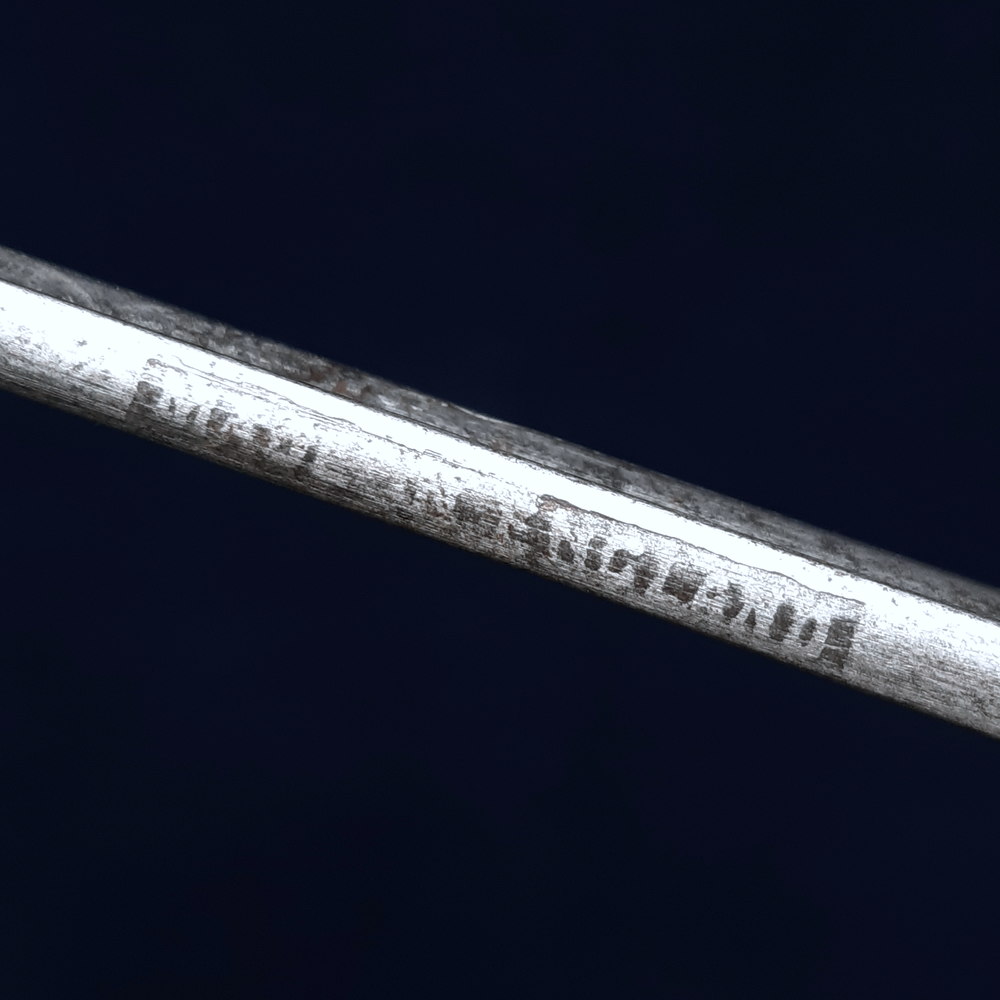
The blade is etched on both sides with the royal crown and cypher of George V, the badge of the Scots Guards, a wreath of laurel and palm, and most prominently the battle honours of the Scots Guards within scrollwork, from ‘Namur 1695’ to ‘France and Flanders 1914-18’. At the forte on one side is etched the maker’s mark ‘HENRY WILKINSON PALL MALL LONDON’ with the royal coat of arms and scroll reading ‘BY WARRANT’ above. There is a space for the optional etching of the owner’s initials, which has been filled with ‘E. E. de W. W.’. The blade has no brass proof slug, instead being etched at the forte on the other side with a stylised ‘W’ inside a six-pointed star. The spine of the blade is stamped at the forte with the Wilkinson serial number ‘59830’, which indicates that it was made in the year 1923. The spine is also etched with ‘MADE IN ENGLAND’.
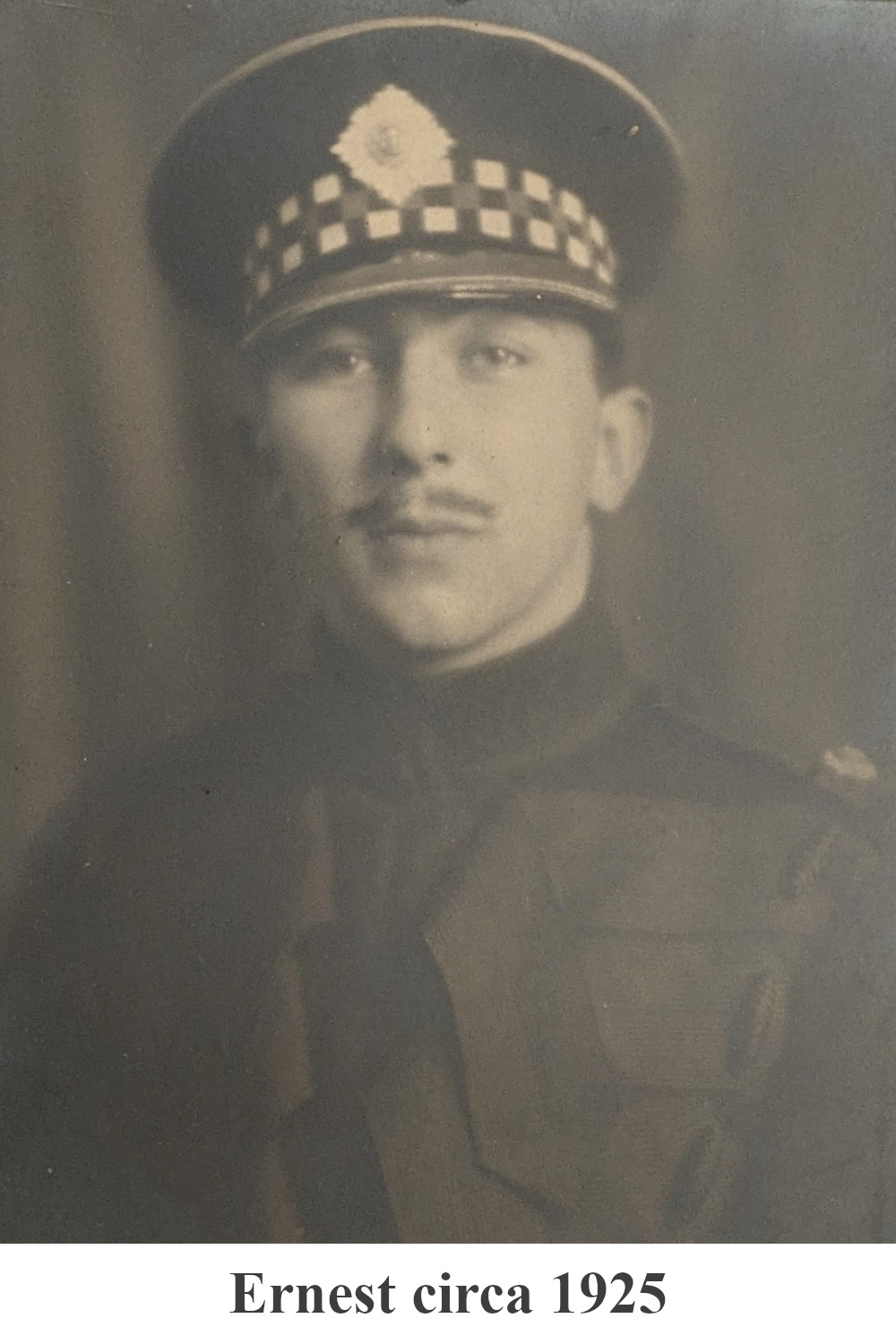
Ernest Edward de Winton Wills was born in December 1903 at Clevedon, near Bristol. He appears to used Edward as his first name day-to-day but for consistency with his formal documents I will refer to him here as Ernest. The Wills family was extremely wealthy, their riches derived from ownership of the tobacco company W.D. & H.O. Wills. Originally founded by Ernest’s great-great-grandfather in 1786, this was by the late 19th century the largest tobacco company in Britain.
The extended Wills family became highly influential in their home city of Bristol and were responsible in large part for establishing Bristol University and the Bristol Art Gallery. They eventually rose into the ranks of the aristocracy: Edward Payson Wills, Ernest’s grandfather, was granted a baronetcy and became the 1st Baronet of Hazelwood.
In 1901 W.D. & H.O. Wills merged with twelve other British tobacco manufacturers to form the Imperial Tobacco Company, the second largest tobacco company on earth (after the American Tobacco Company, which Imperial was formed specifically to compete with).
Ernest’s father, Ernest Salter Wills, the 3rd Baronet, sat on Imperial’s board of directors and owned five houses: three English manors one of which was his main residence at Littlecote, plus Meggernie Castle in Perthshire, Scotland, and a chateau on the French Riviera.
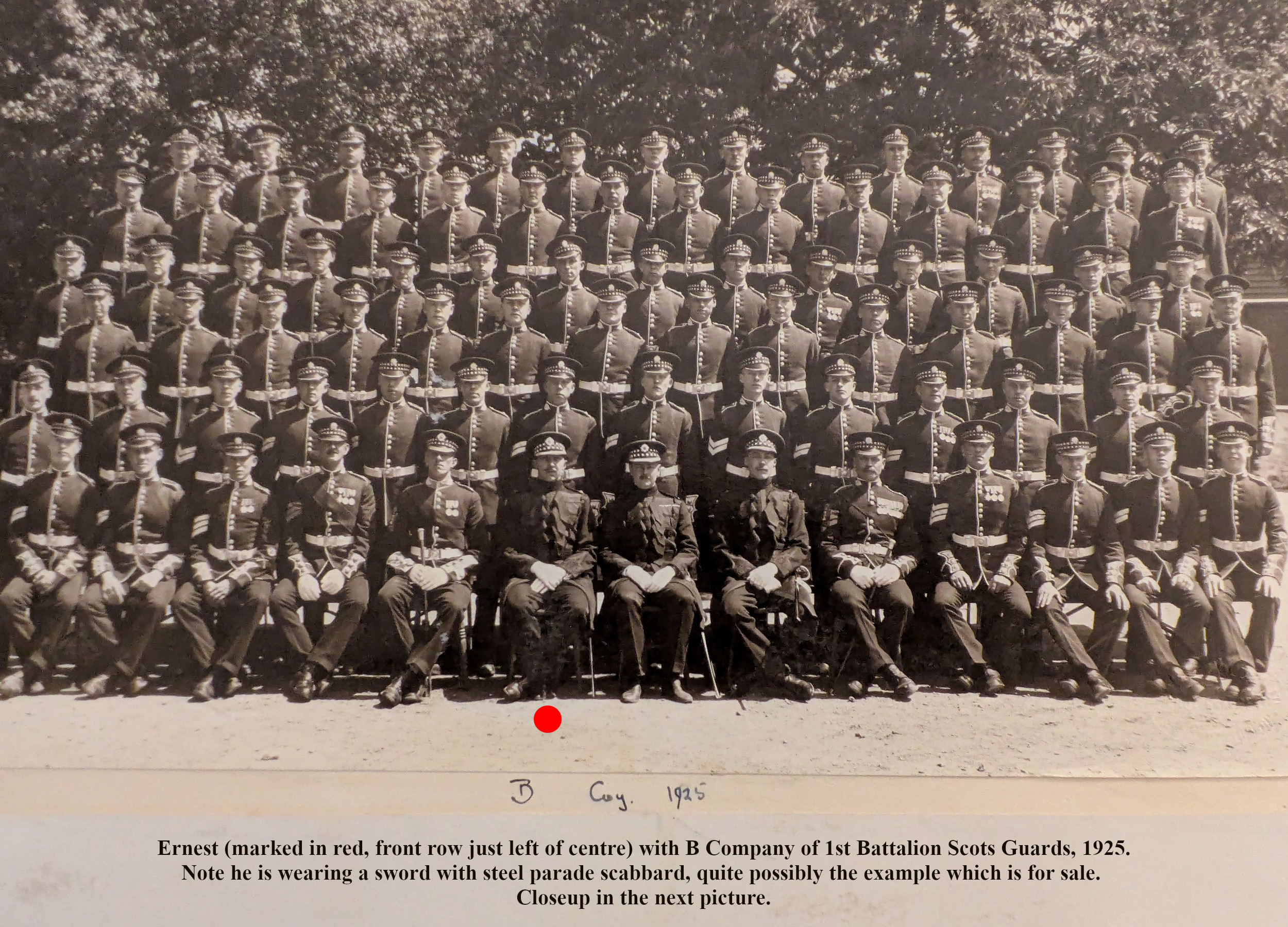
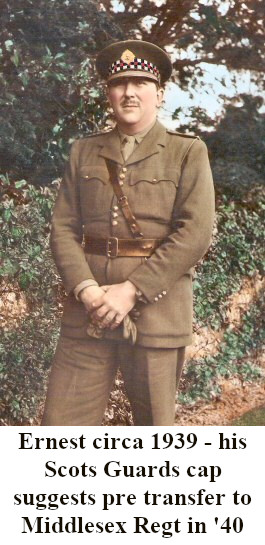
The younger Ernest attended Stone House School at Broadstairs, Kent, then Eton College, where he served with the Eton College Contingent of the OTC (Officer’s Training Corps), reaching the rank of Cadet Corporal. After leaving school he gained a commission as a 2nd Lieutenant with the Scots Guards in August 1923. He was attached to their 1st Battalion, although he was placed on the Reserve List of officers.
During the 1920s due to budget cuts and an oversupply of officers commissioned during WW1, officers would often be shuffled between Active and Reserve Lists (or half-pay) – this meant a large pool of officers were available for callup while only putting on the full payroll those that were required for deployment, who would receive temporary active duty commissions.
Ernest’s date of commission matches perfectly with this sword’s purchase date – a sword being part of a new officer’s uniform one would usually be purchased immediately upon gaining a commission.
‘Picquet weight’ or ‘levee’ swords like this one were made slightly scaled down, with noticeably slimmer blades than specified in their Pattern, making them lighter and easier to wear off duty including in ‘frock coat order’ – a high level undress order used by the Foot Guards for formal but non-parade settings like state events, courts-martial, or when in attendance on Royalty.
Ernest married Sylvia Ogden, the only daughter of the late tobacco magnate William Barker Ogden, in January 1926. In February he moved from the Reserve to full regular service with the 1st Battalion of the Scots, receiving training as a machine gunner. In May the 1st Battalion was deployed to safeguard food supply during the nationwide General Strike, including men posted at Deptford Cattle Market and convoys escorting food shipments by road.
He was promoted to Lieutenant in February 1929. He resigned his regular commission and returned to the Reserve of Officers in September 1931.
As of 1933 Ernest and his wife lived at the country house of Beenham Court, Headley with their daughters Venetia and Edwina (born 1927 & 1933). They sold Beenham Court just a year later to the Cheam School, a private prep school which educated Prince Philip and King Charles III. While out of the Army, Shire horses were a particular hobby of Ernest’s – both he and his father bred them on the family estate at Littlecote and he won a number of prizes at agricultural shows in the 1930s.
With tensions rising in Europe Ernest was called back to service with the 1st Battalion in June 1939 ‘for training’. After the formal declaration of war in September 1939 he was posted to 164 Officer Cadet Training Unit as an instructor. In January 1940 he was transferred to the Middlesex Regiment at the rank of Lieutenant, but with pay of an Acting Captain. In December 1940 he successfully applied for a transfer to the 2nd Battalion of Princess Louise’s Kensington Regiment, on the grounds that they were a machine gun battalion and such was his specialty (their official role was heavy fire support including mortars, anti-aircraft and machine guns). He quickly rose to command this unit.
In December 1942 he applied to return to the Scots Guards, as his unit was to be merged with another Battalion, but this was refused with apologies as the Guards had a surplus of officers and no machine guns. He kept pressing on the grounds that he felt wasted in his role.
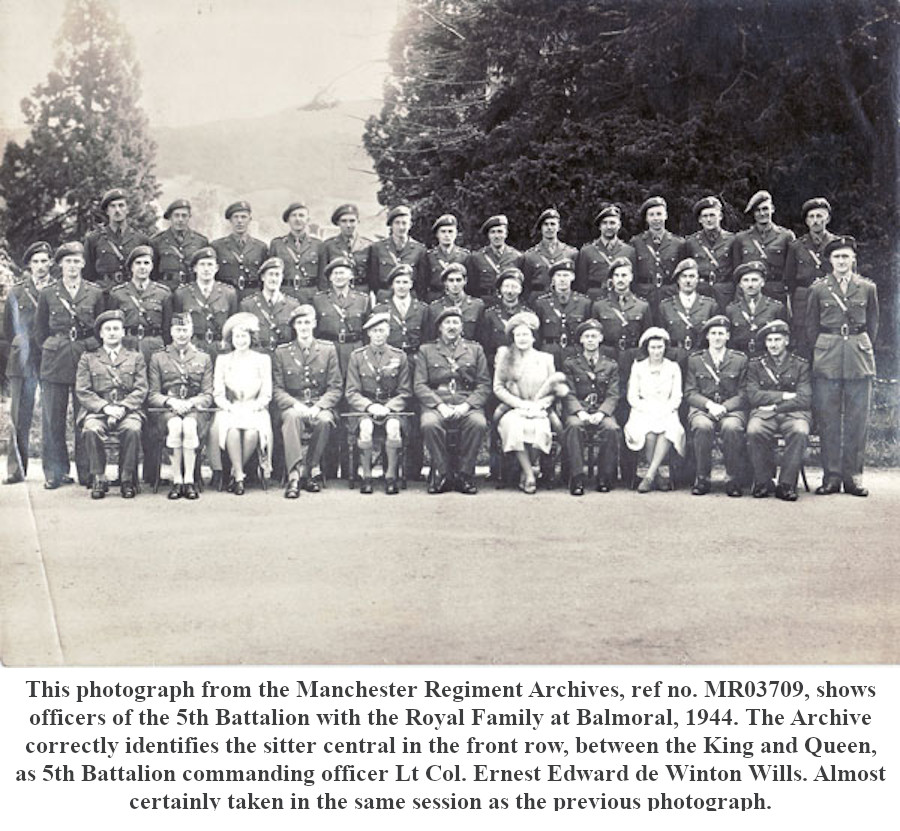
He did not make it back to the Guards, but by December 1943 Ernest was in command of 5th Battalion Manchester Regiment instead. Recruited mainly from Wigan and surrounding settlements, this infantry battalion deployed to France in 1940 and fought there until successfully evacuated at Dunkirk. It was converted into the 111th Regiment, Royal Armoured Corps and the men trained on tanks, but this was reversed in November 1943. It reverted to the Manchester Regiment as infantry, but in the role of a dedicated machine gun battalion.
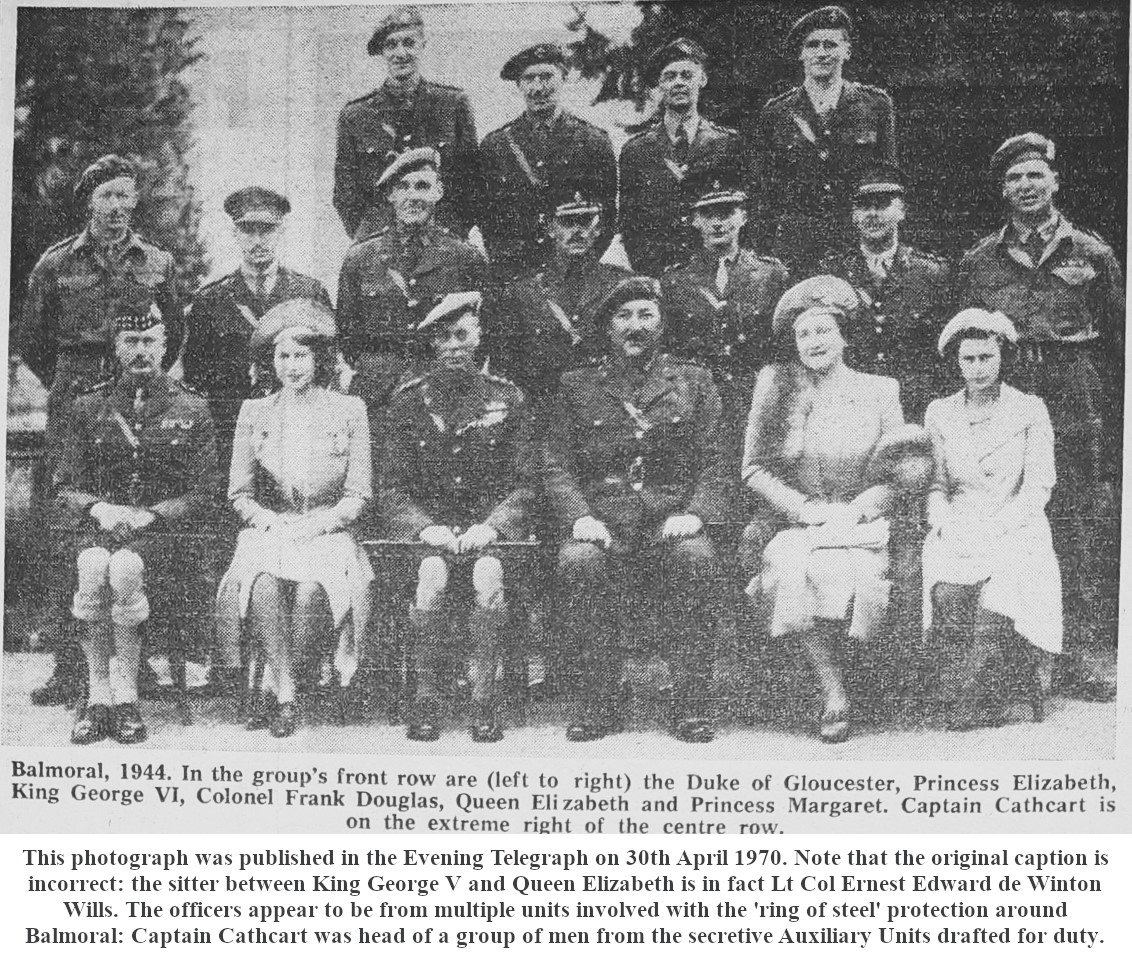
Ernest would have been a natural fit to train and command these machine gunners. In the summer of 1944 however their role changed once again to a quite special duty: the battalion was dispatched to Scotland to guard King George VI and the Royal Family in residence at Balmoral Castle for the summer. This duty put Ernest in direct contact with royalty as the head of their house bodyguard, referred to in since declassified documents as a ‘ring of steel’ around the monarch – the fact that he was originally a Guards officer probably helped with this role. Later that year most of the men were moved to another post but 'D' Company of the battalion followed the royals to a different residence, Sandringham House in Norfolk.
Ernest appears to have retired from the Army again after WW2, though I cannot find the notice of exactly when. The 5th Battalion of the Manchesters were dispatched to Malta from November 1945, and he may have accompanied them as he was abroad when his wife Sylvia died in January 1946, of an infection following appendicitis. He remarried in 1949 to Juliet Graham-Clarke.
He is also said to have been consulted by King Hussein of Jordan to recommend suitable officers to supervise the training of officers of the Jordanian army – I can find few details on this, but if this consultation did take place then given historical context it must have been between 1952 and 1956.
Hussein came to the throne in 1952. At that time Jordan’s army, the Arab Legion, was led by British senior officers with Jordanians as junior officers. The young King, sensing political danger in this subservient-looking position, unilaterally ordered the British officers to be replaced with Jordanians in 1956. This delighted his people but came as a shock to the British, briefly endangering the British-Jordanian alliance until the affair was smoothed over diplomatically.
Ernest’s father died in 1958, leaving him to inherit the Hazelwood baronetcy as well as a share of his father’s estate. While the elder Ernest had sizeable debts the net amount was valued at more than £131,000 (more than £2.7m today). After inheriting, Ernest and his wife appear to have resided primarily at Meggernie Castle.
Ernest died in August 1983, aged 79. Between his two daughters he had eleven grandchildren, including the 9th Marquess of Ailsbury.
The blade is undamaged with light rubbing wear and light patination in places, it sheaths and draws smoothly. The sword is solidly peened with no movement to its parts. The shagreen grip is good with very light handling wear. Its wire binding is intact and tight, fractional movement to the loop nearest the hilt. All metal parts except the blade are nickel-plated, with some frosting to the plating, light wear on the inside of the hilt and around the sword knot slit. The sword knot is stiff and missing its acorn, with some abrasion to its wire and fray to the broken end. A small blob of paint (or Blanco?) on the washer.