British c1889 ‘Lead Cutter’ Cutlass for Sword Exercise, with Brass Grip
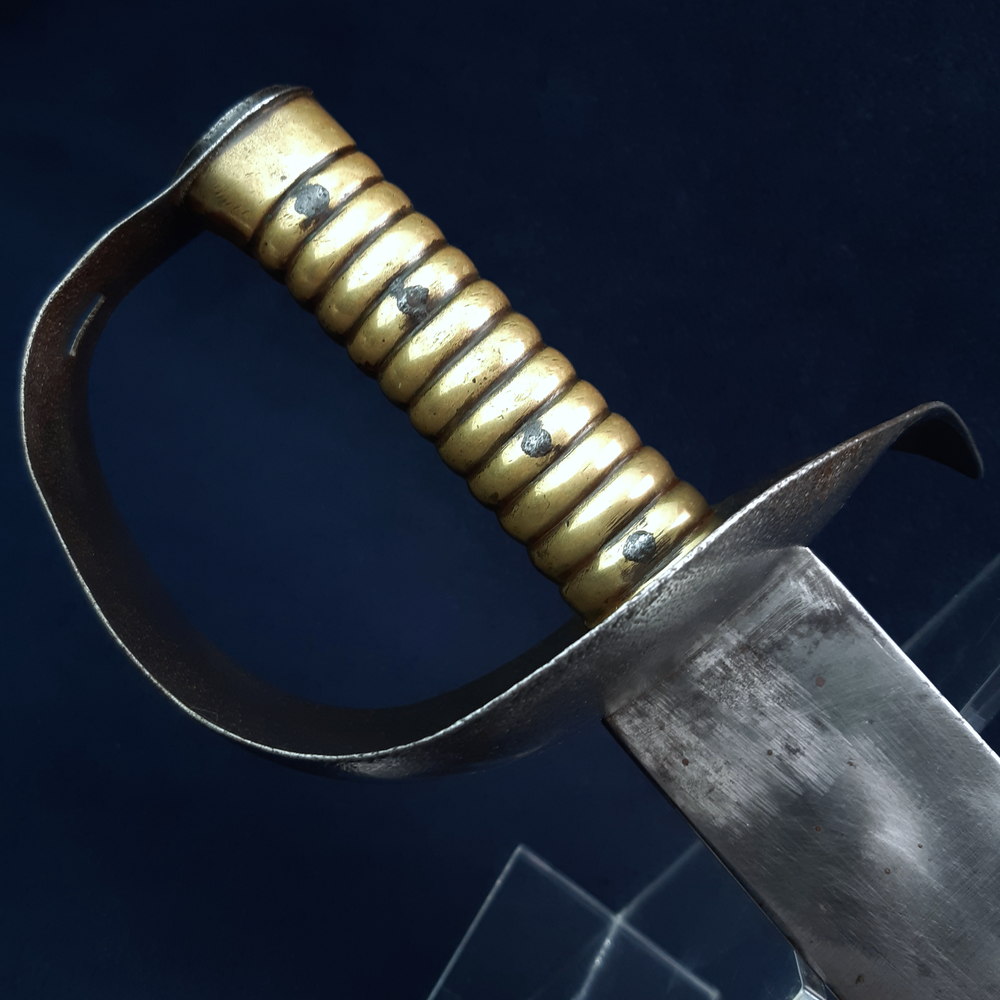
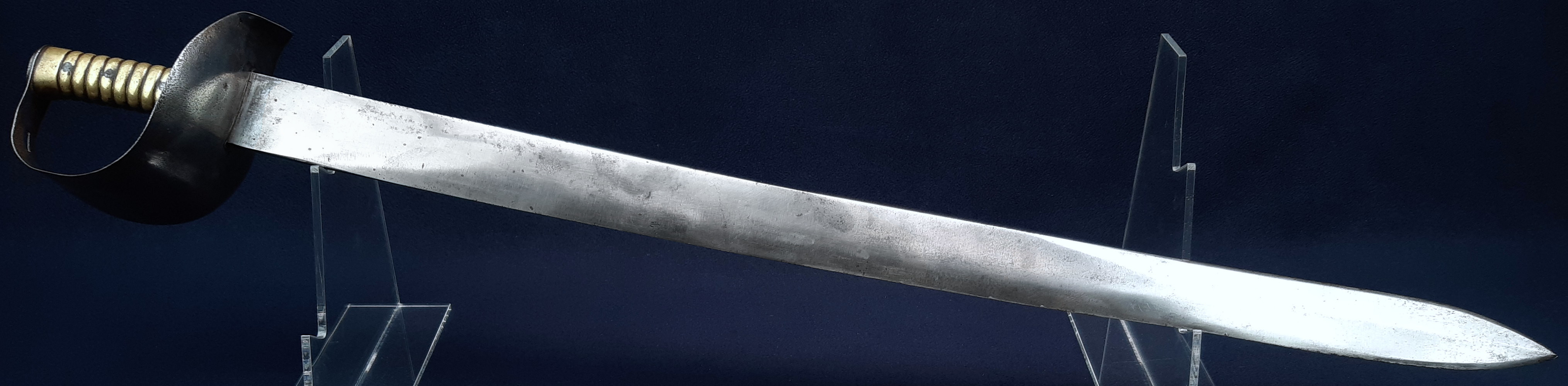
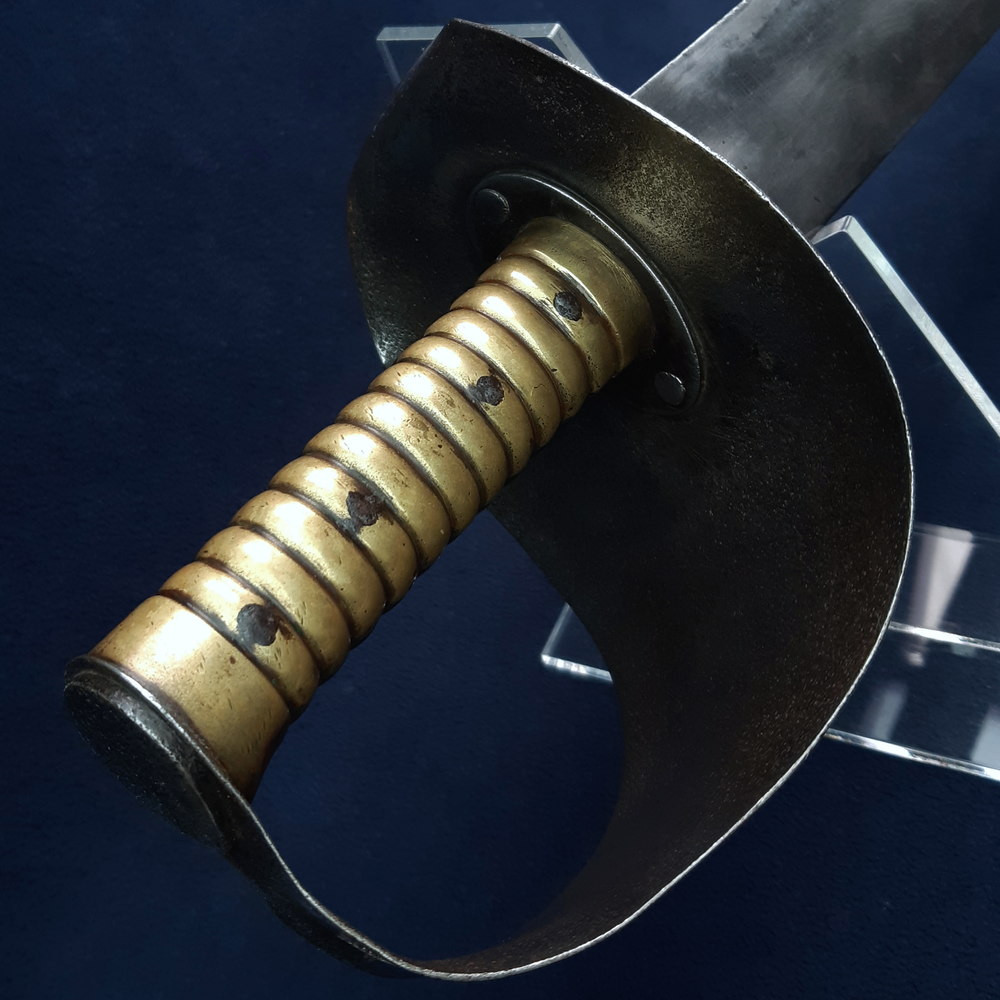
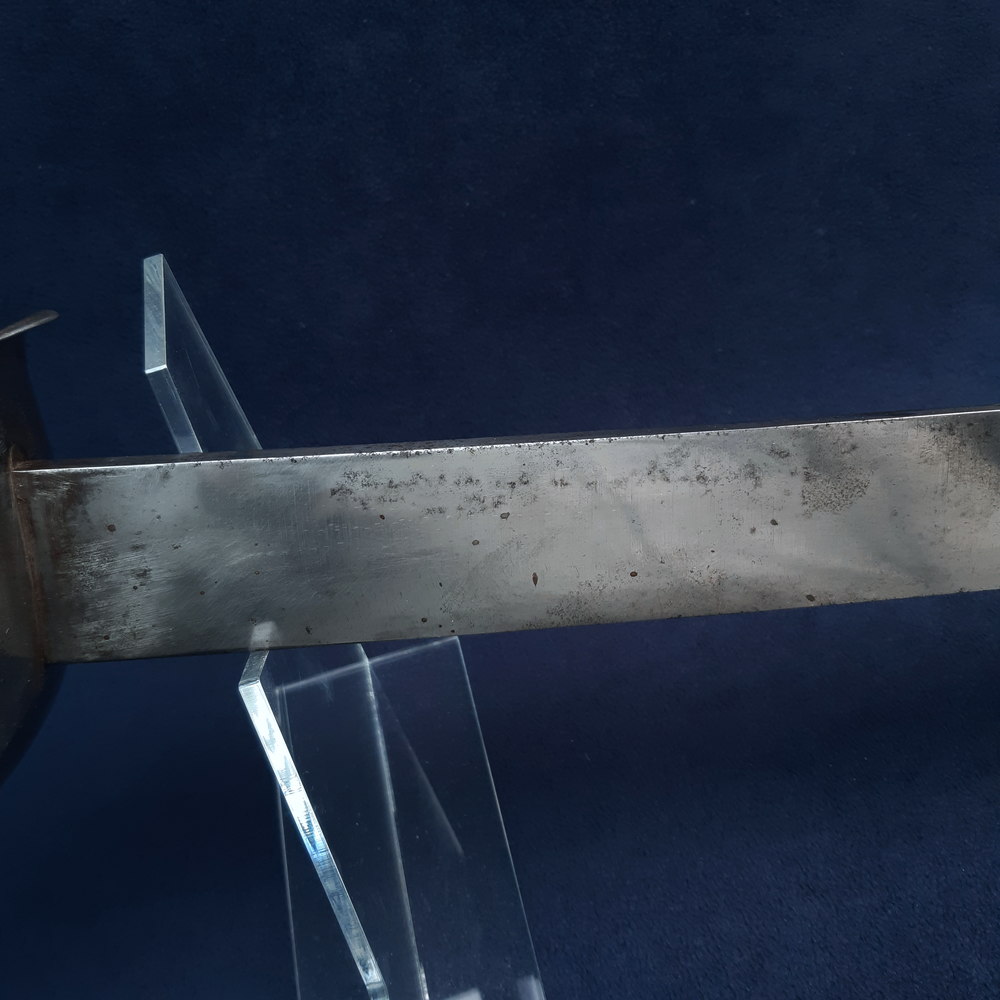
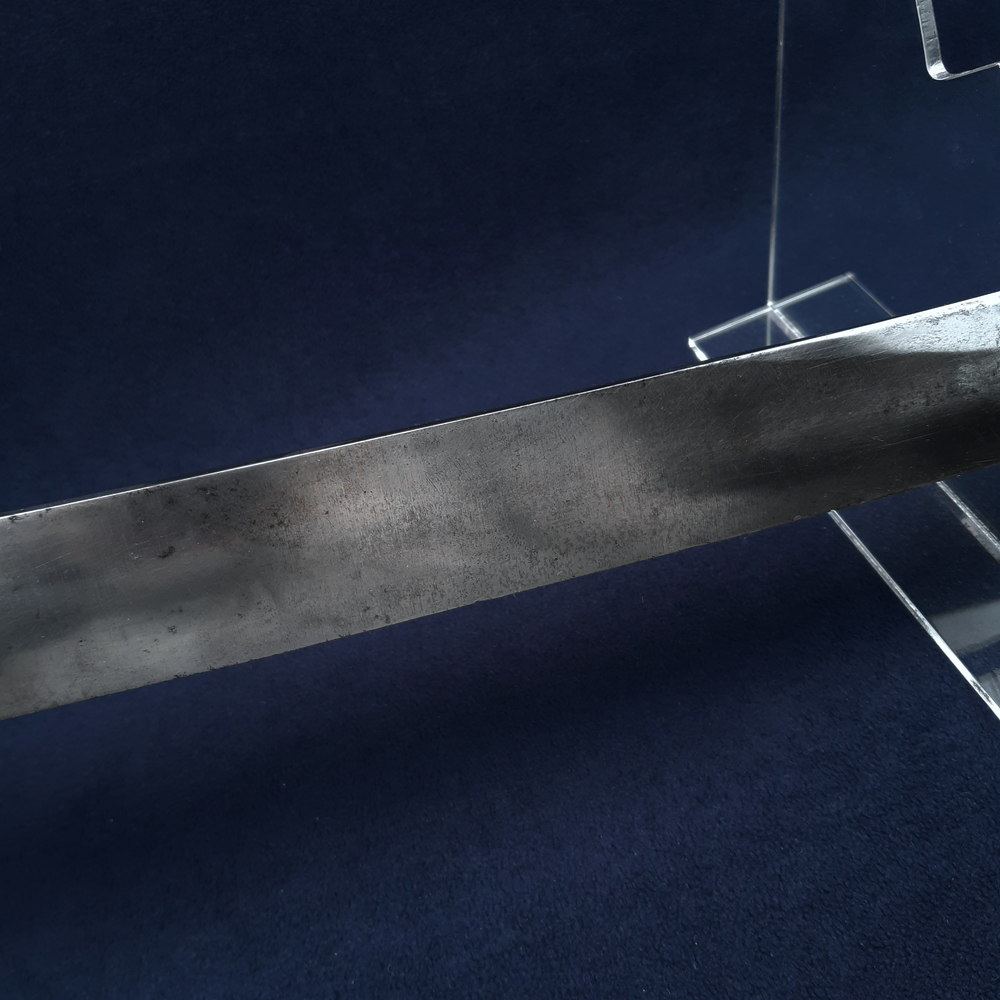
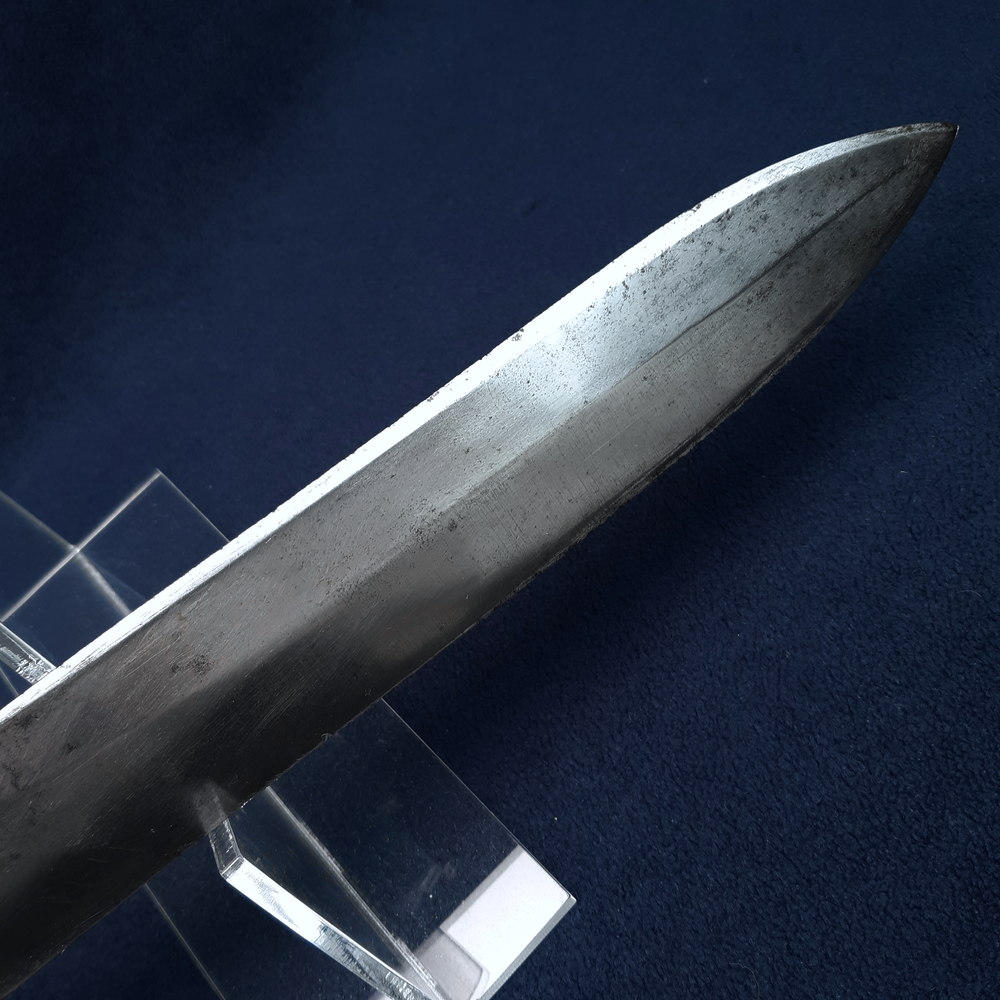
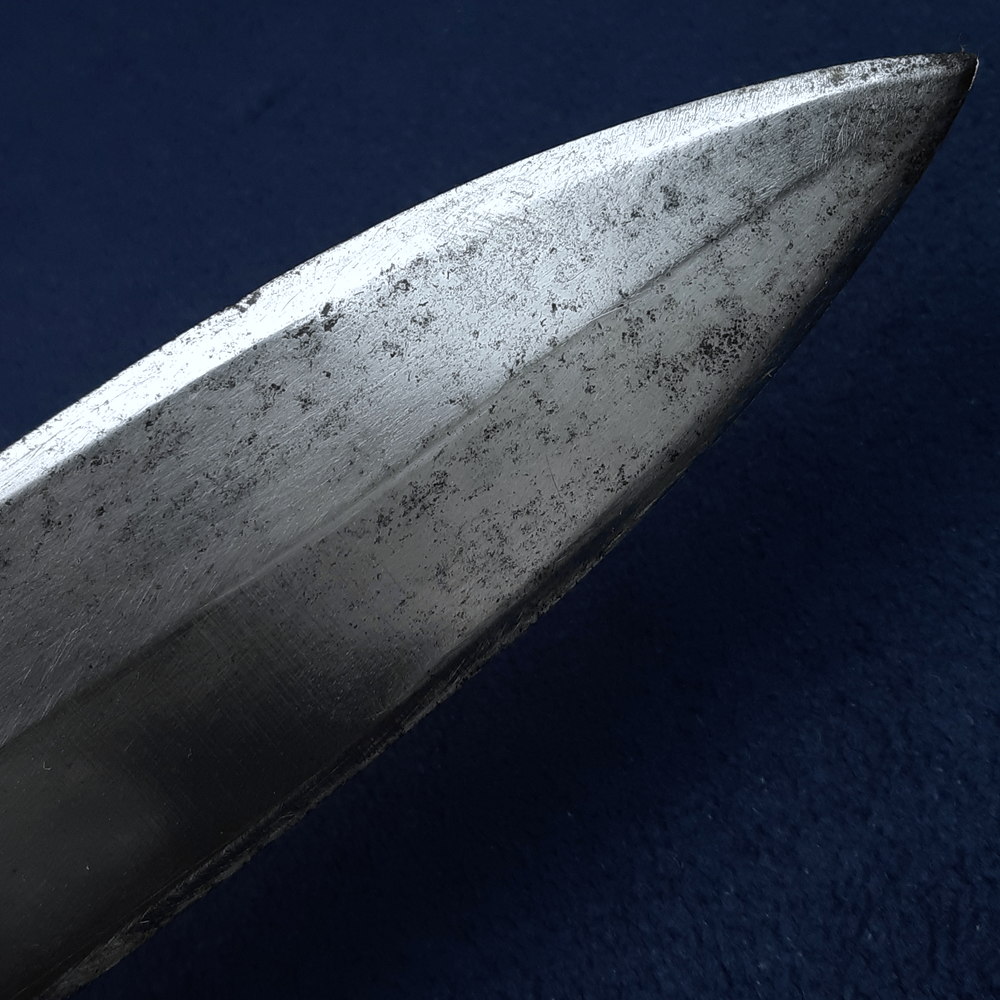
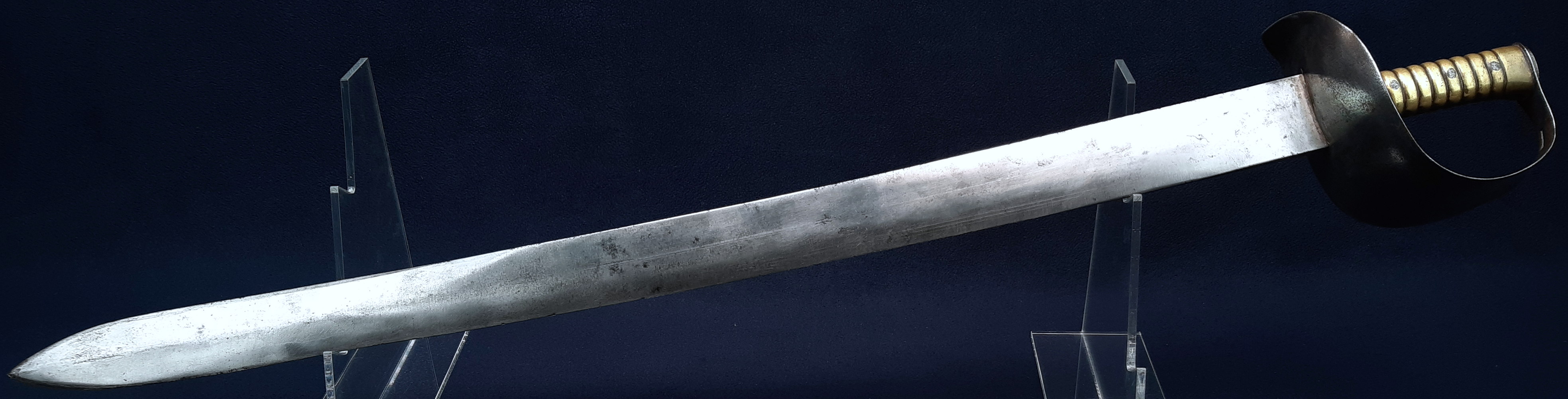
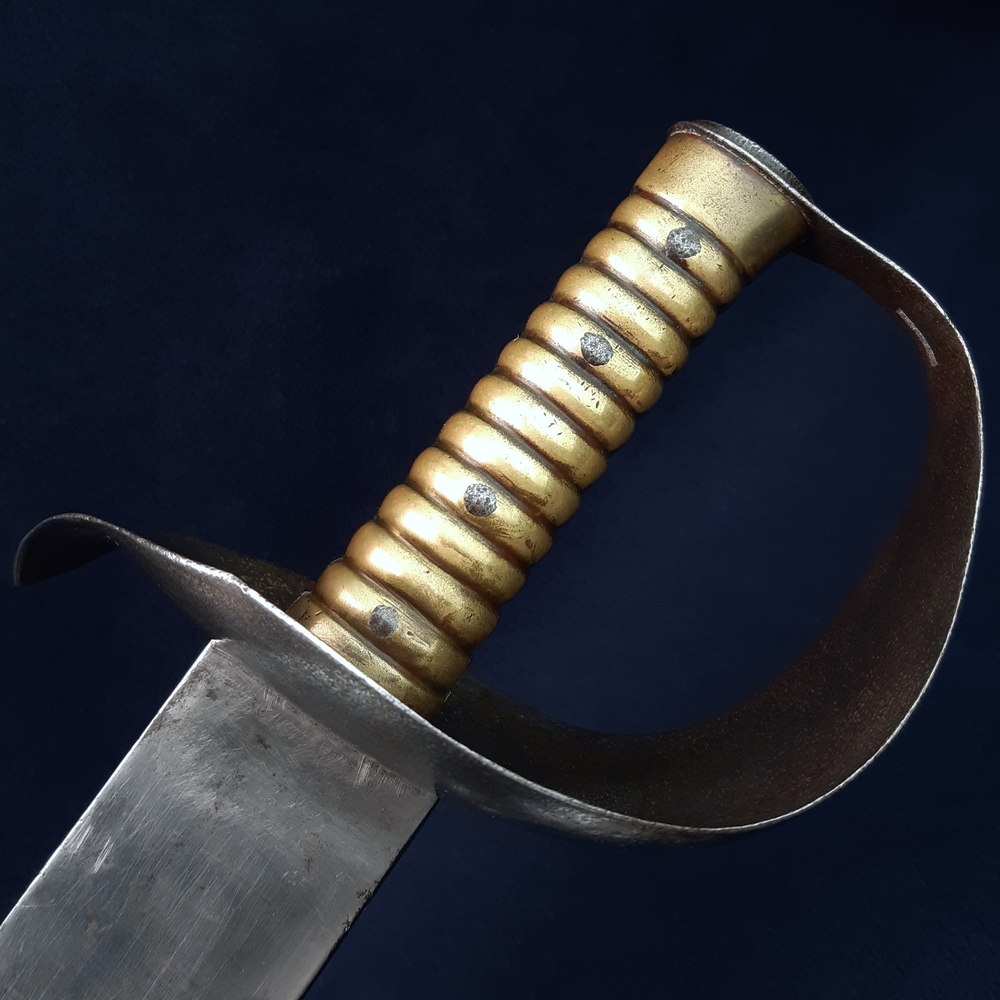
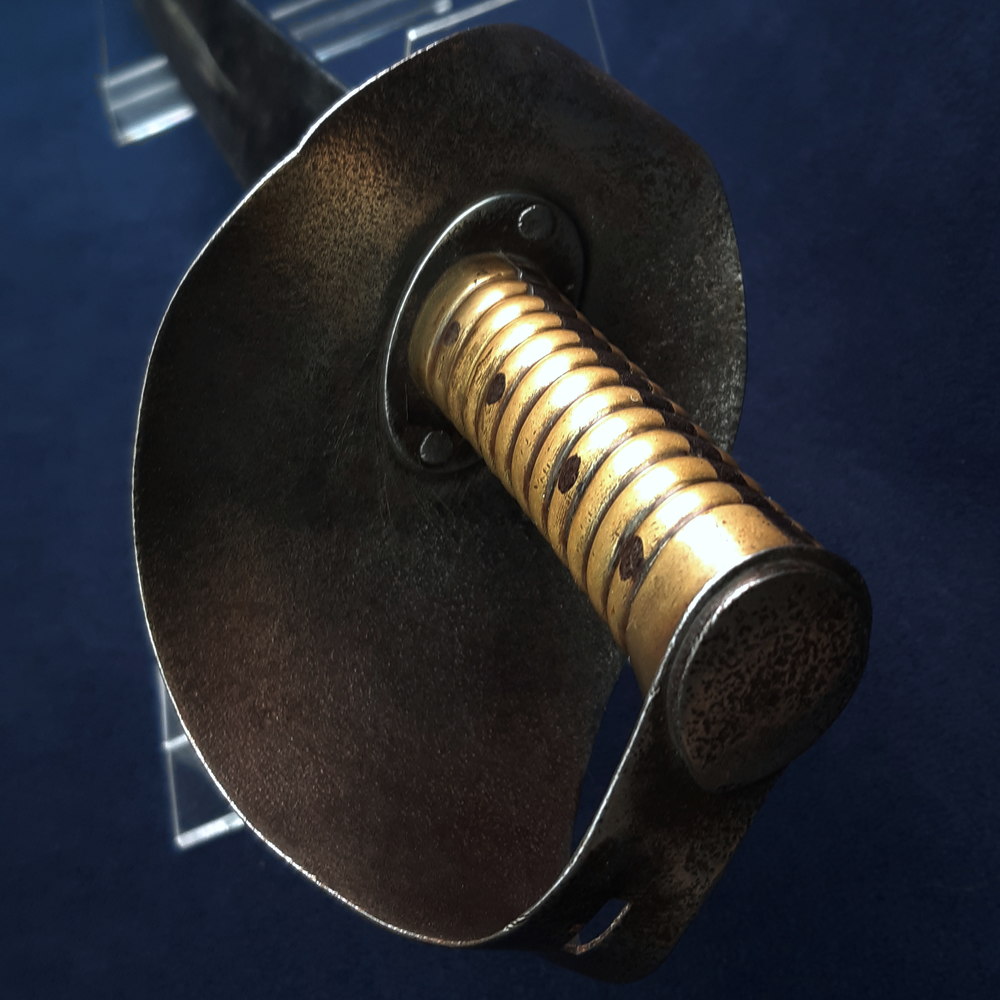
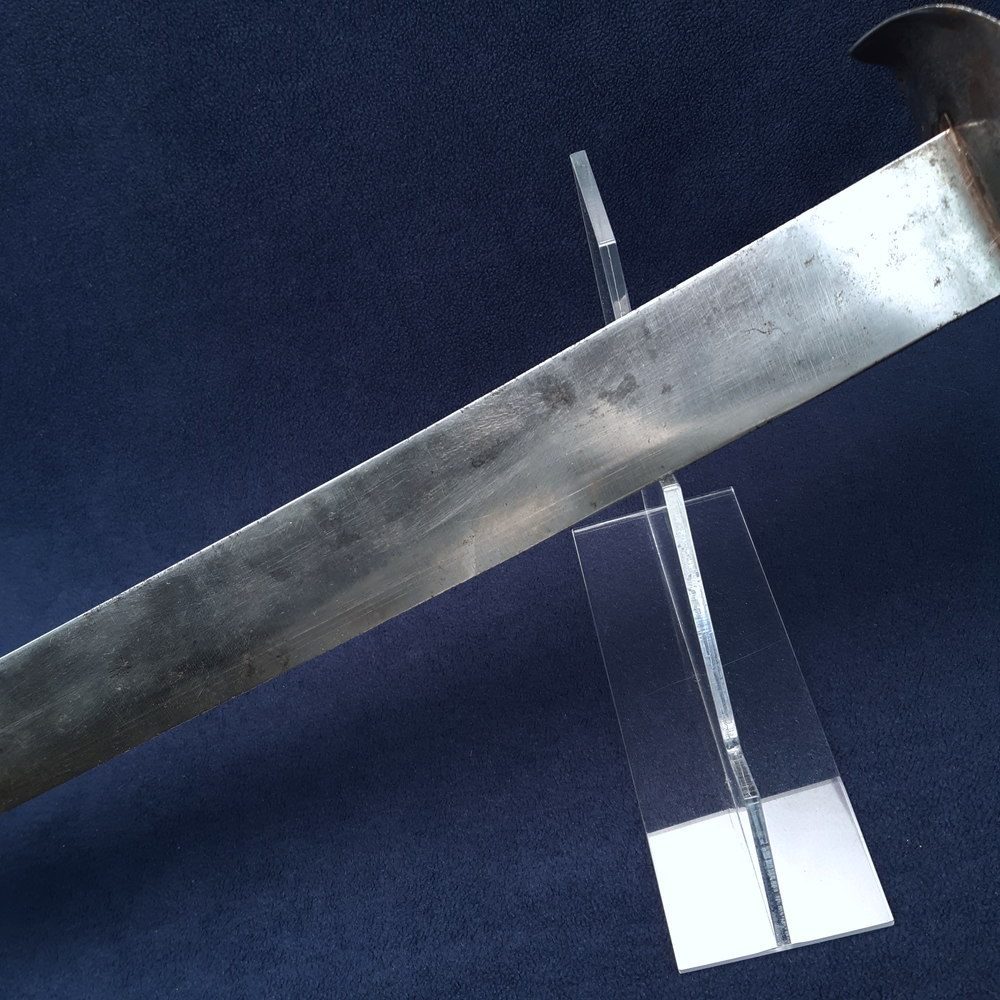
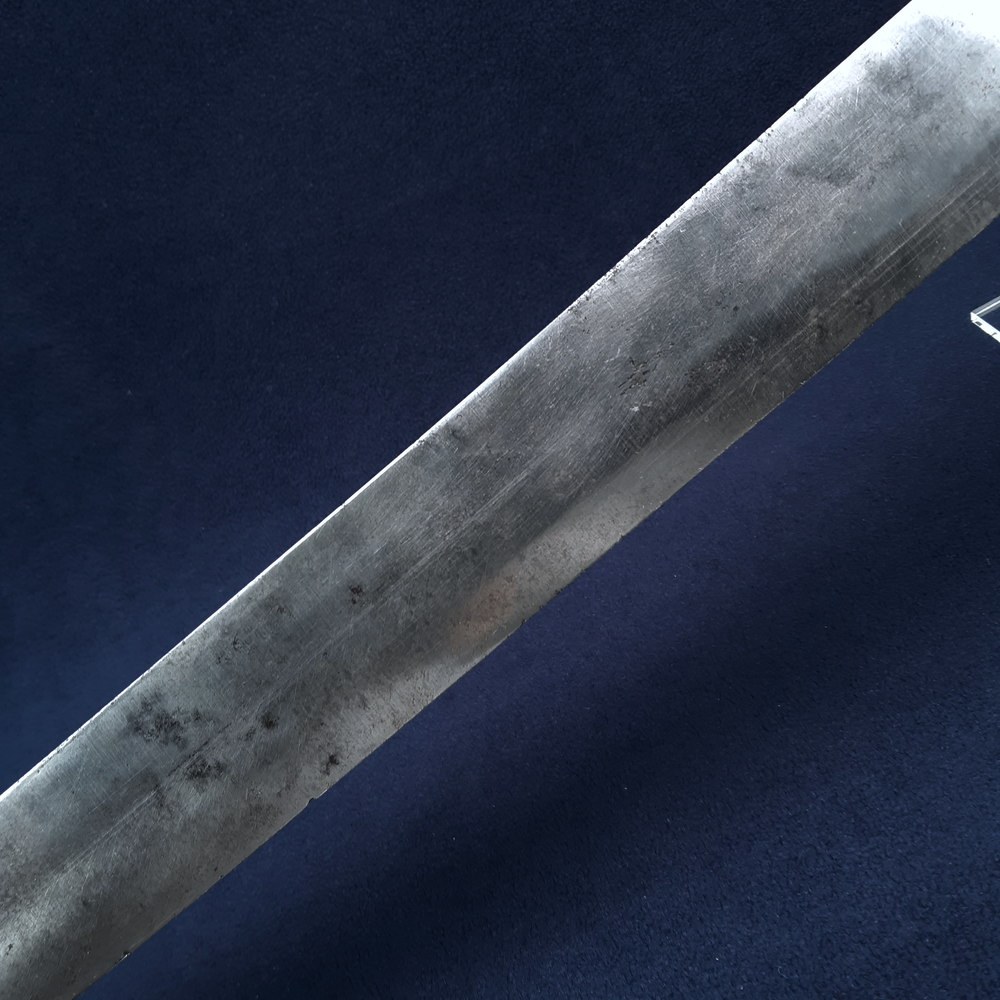
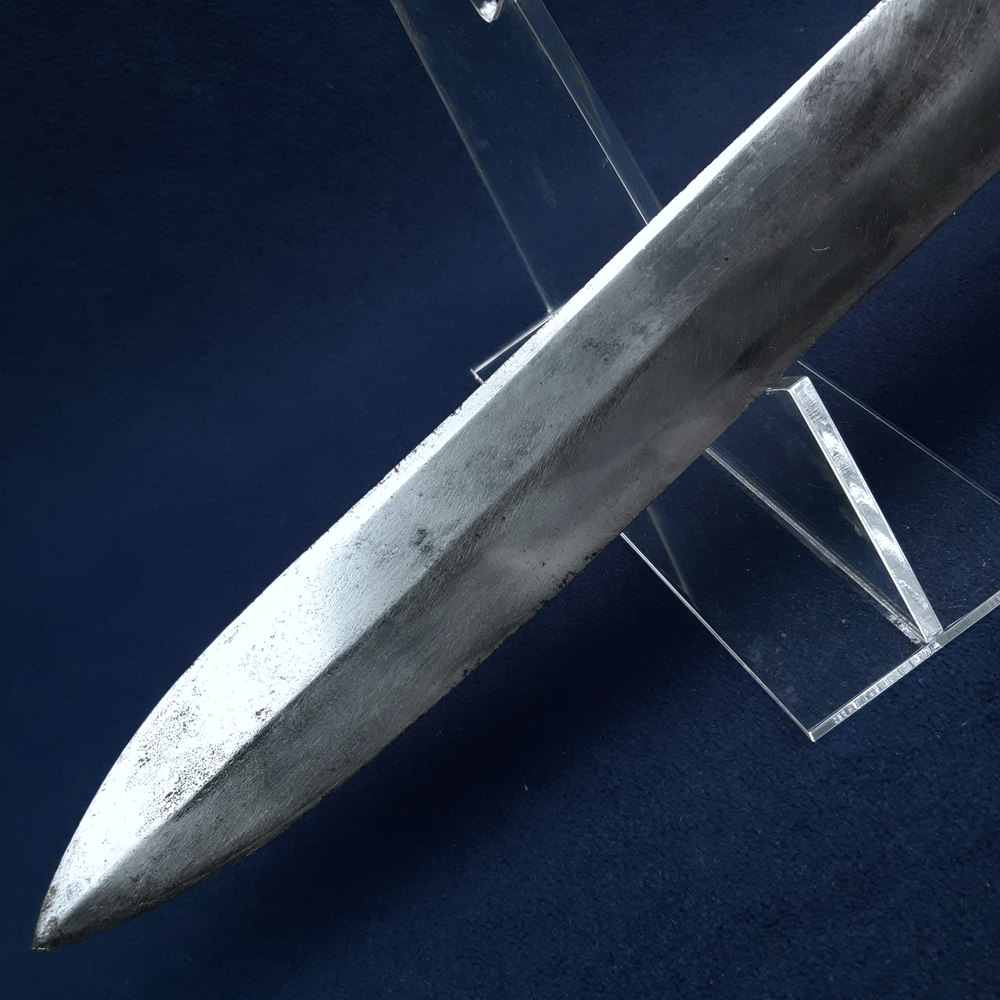
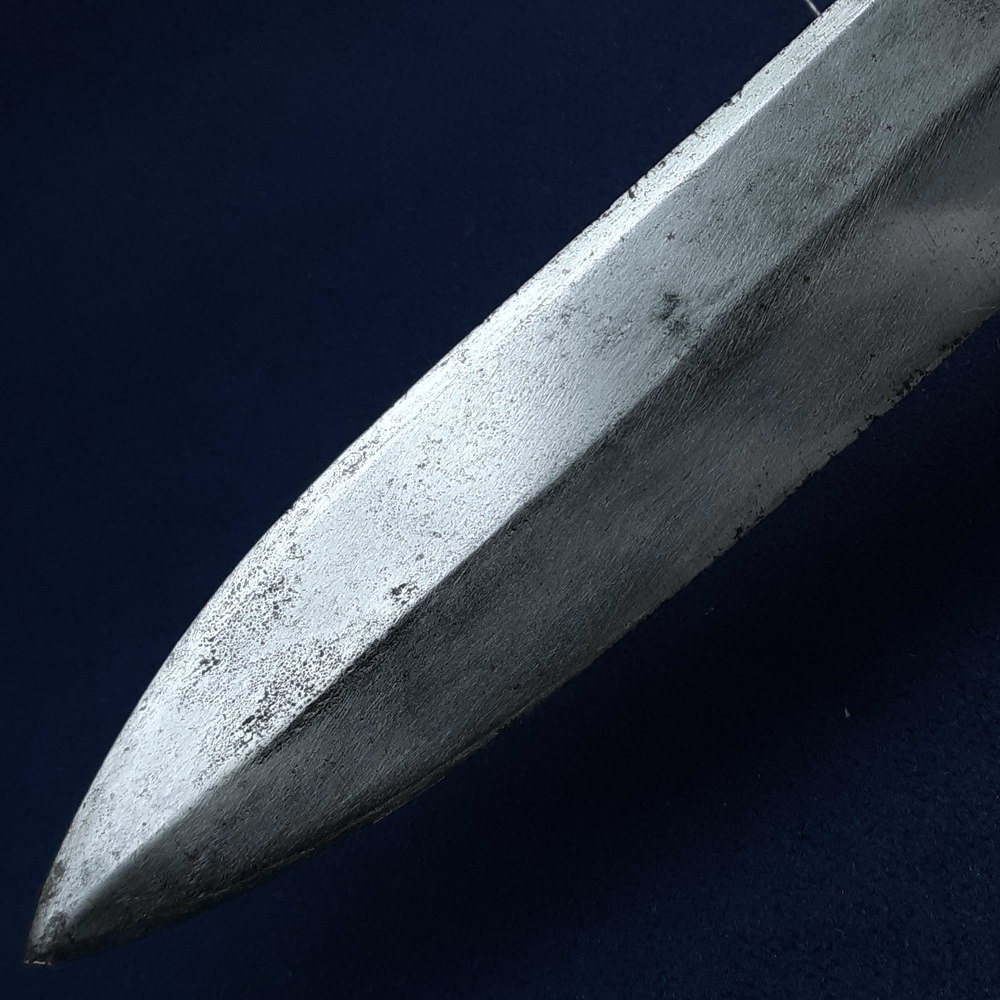
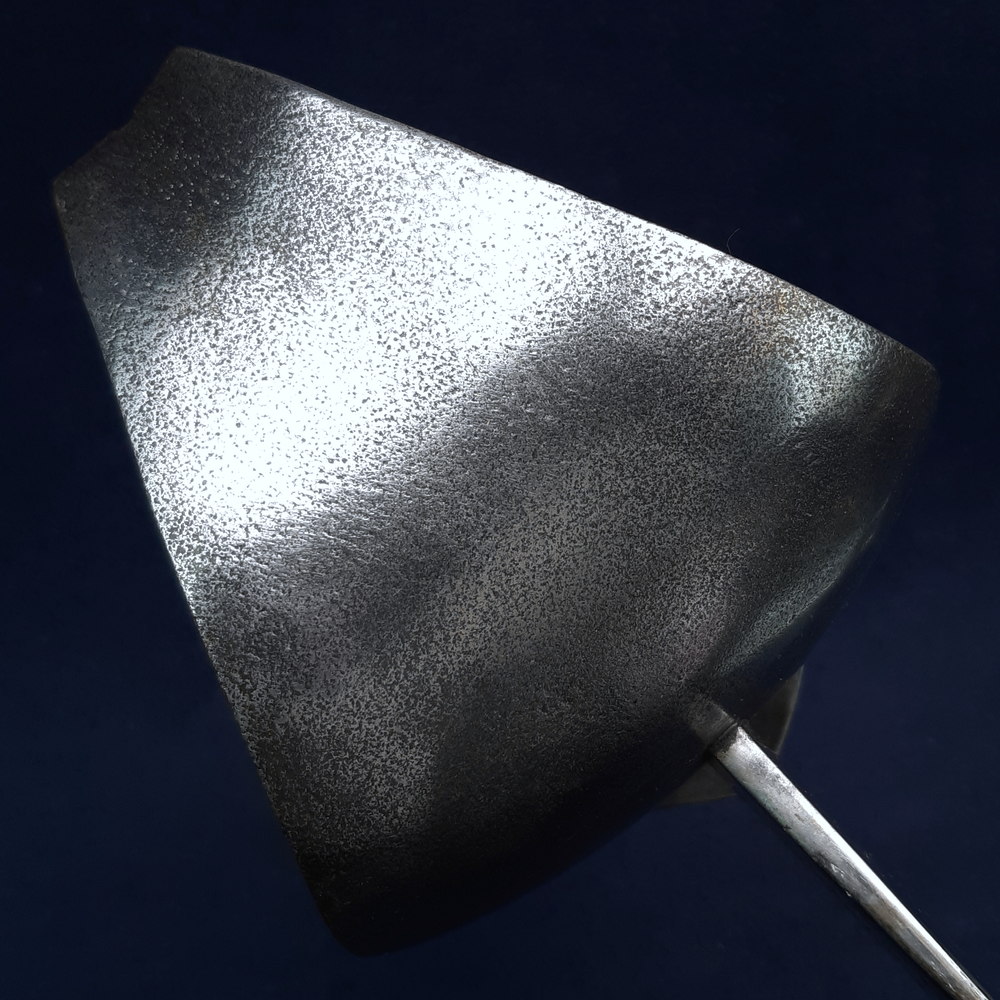
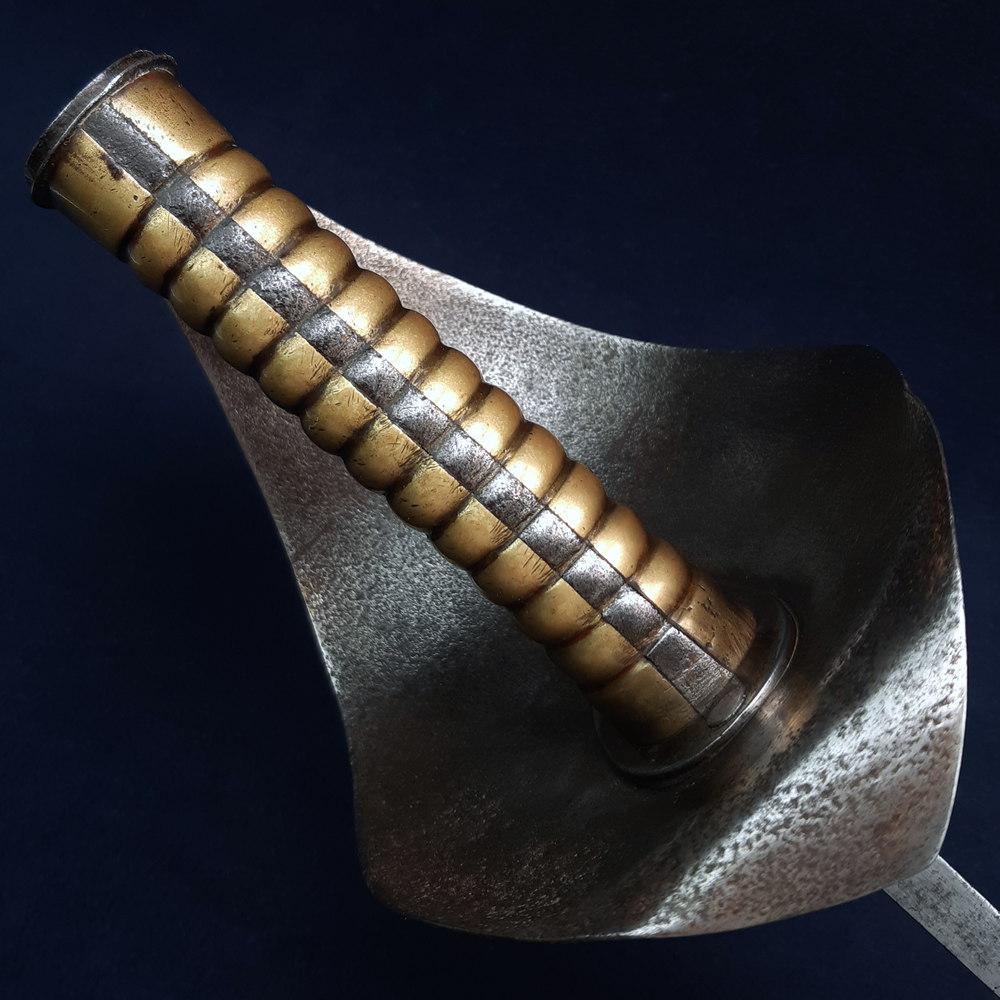
Unfullered, slightly curved blade with spear point. Plain steel basket hilt similar to the 1845 Pattern naval cutlass, with sword knot slit. Oval steel strengthening piece at the top of the grip, riveted to the inside of the guard. Ribbed slab grips of brass secured to a full-width tang by four flush steel rivets, the tang also incised to continue the ribs around the full grip circumference. Blade 31 inches in length, 1.77 inches wide at the midpoint, 1.85 inches wide at the shoulder, the false edge 10 inches long, the sword 36 inches in length overall and 1.92kg in weight (4.23lb).
Lead cutters were specialised swords developed for ‘sword feats’, specific cutting exercises developed in Britain in the late 19th century. Sword feats developed out of military training and conditioning, each being intended to help develop specific aspects of swordsmanship, but over time also became their own form of quasi-sport and demonstrations were held for public entertainment at events known as ‘assaults at arms’.
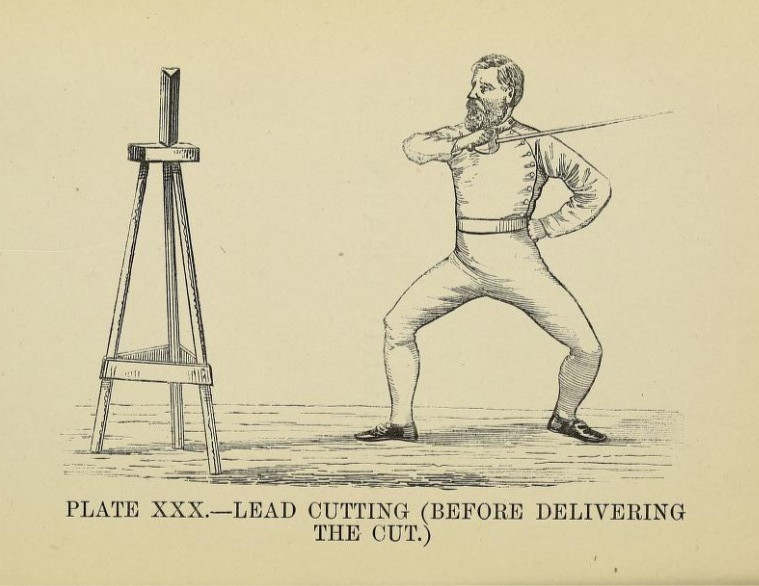
The feat of ‘lead cutting’ entailed cutting cleanly with a single stroke through a triangular bar of solid lead, 1.5 inches on each side (thinner bars may have been used for beginners), either suspended or stood on a stool/table to raise it to near shoulder height.
This was intended to demonstrate and improve the shoulder strength of a swordsman, who would have to maintain speed and edge alignment through the cut to ensure his sword sheared through the metal rather than pushing the bar to the side. It was sometimes called the ‘Coeur de Lion’, in reference to an apocryphal feat of Richard the Lionheart in which he cut through an iron mace handle with his broadsword.
A standard naval cutlass of the 1845 Pattern would most likely have been used in the earliest lead cutting, and lead cutters resembled this cutlass but with broader and longer blades. Despite their name they were actually multi-purpose, also being used for other heavy cutting feats such as cutting sheep carcasses, legs of mutton and broomsticks. They may also have been used simply to increase the difficulty of non-contact sword drills.
The maker Wilkinson produced a line of lead cutters in multiple sizes, these being numbered 1 to 4. This example is not obviously by Wilkinson but is almost exactly a number 2 in sizing (the standard No. 2 blade would be 31 inches long, 1.75 inches wide).
The brass grips on this example are unusual but a known variation. They are near-identical in form to the ribbed steel grips first used on the 1889 Pattern naval cutlass (which are likewise very occasionally seen in brass) so I would be quite confident in dating it to the same period. It may have been an attempt to update or improve the lead cutter in line with the new generation of cutlass.
Both edges are sharp, with a number of nicks to the true edge, some small spots of cleaned pitting towards the tip which slightly impact the true and false edges in places. The tip itself is slightly chipped. The blade looks to be distally straight with no obvious bend or twist. The blade has previously been given a mirror polish with old polishing marks, on top of this are scattered spots of patination and a few small areas of frosting and cleaned pitting. The hilt, exposed tang, rivet heads and pommel cap have peppered cleaned pitting overall, heavier on the inside of the guard than elsewhere. One very small dent to the outside of the guard and a few spots of light staining. The brass grips have an even light patina, heavier in the grooves of the ribs.
I am aware some enthusiasts like to put antique lead cutters to use in their training or practice cutting – while I am not a fencing or HEMA expert this example would seem quite viable for that, perhaps with some resharpening to clean up the nicks from the edge. The deepest nick is 1mm and if the blade lost a little breadth it would still be very near the standard No. 2 cutter. The sword is rock solid in the hand with no movement to any parts. Its full-width riveted tang is probably even more durable than the standard one-piece iron grip with peened tang.