British 1879 Pattern Martini Henry Artillery Carbine Bayonet, Royal Artillery Marked

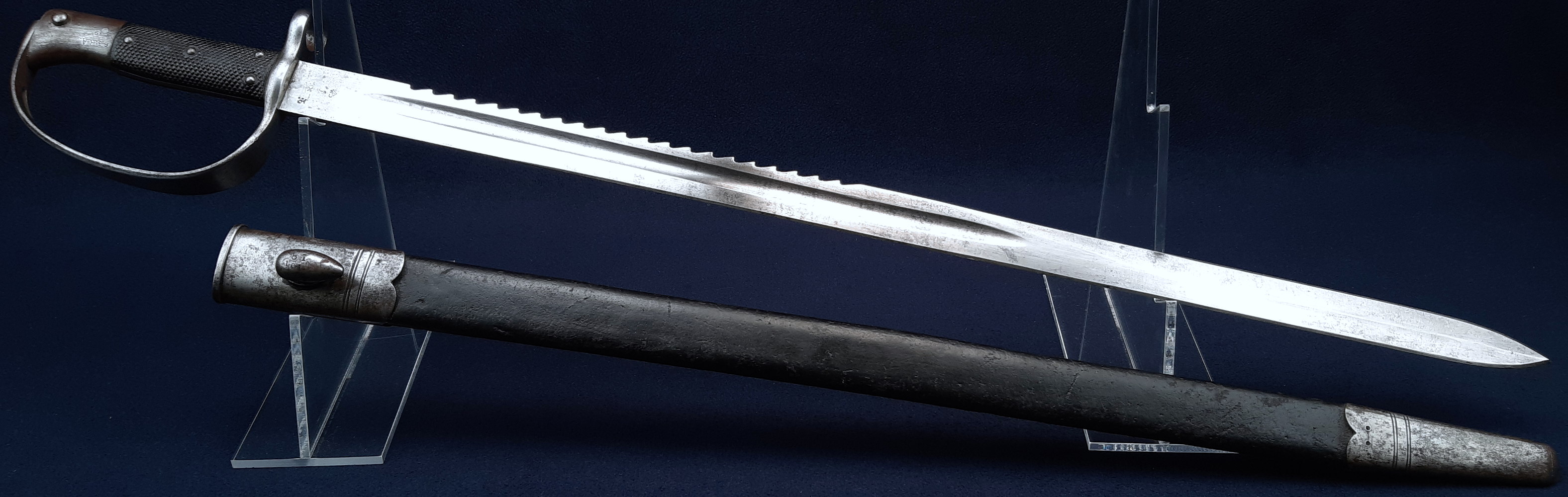
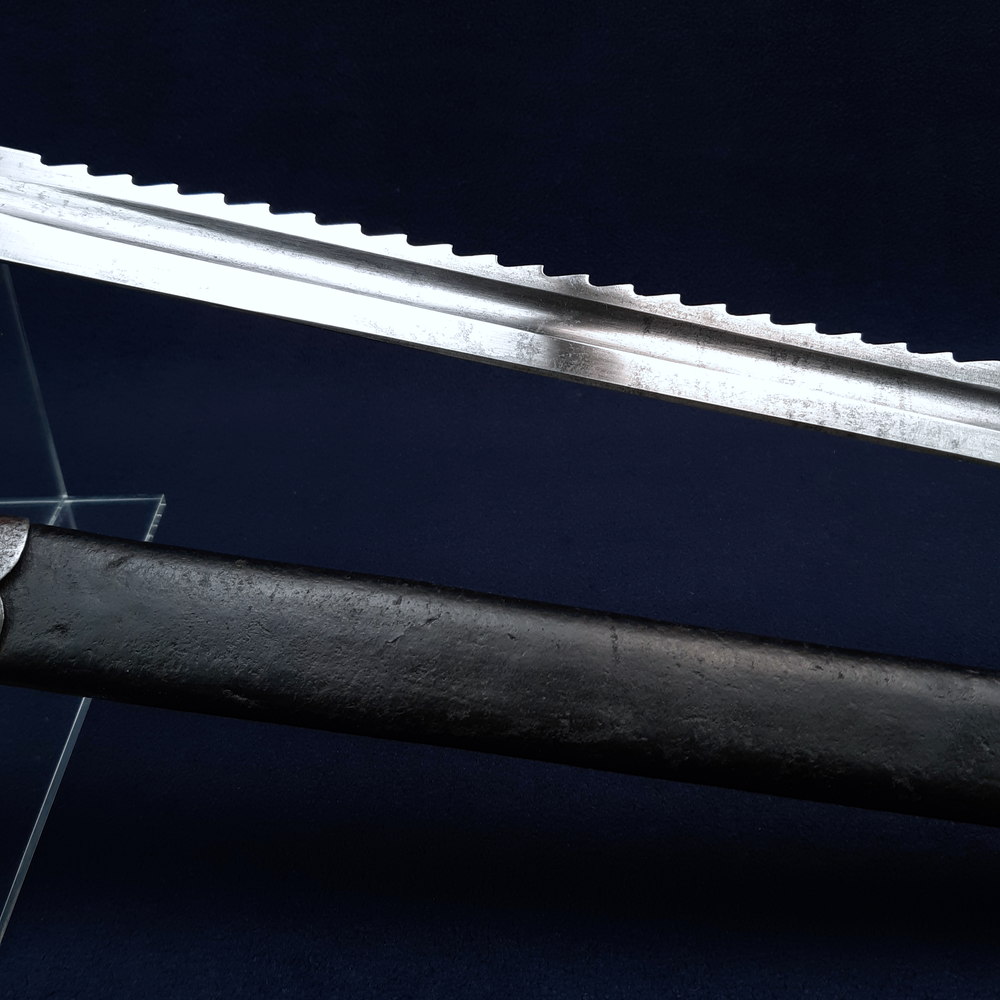
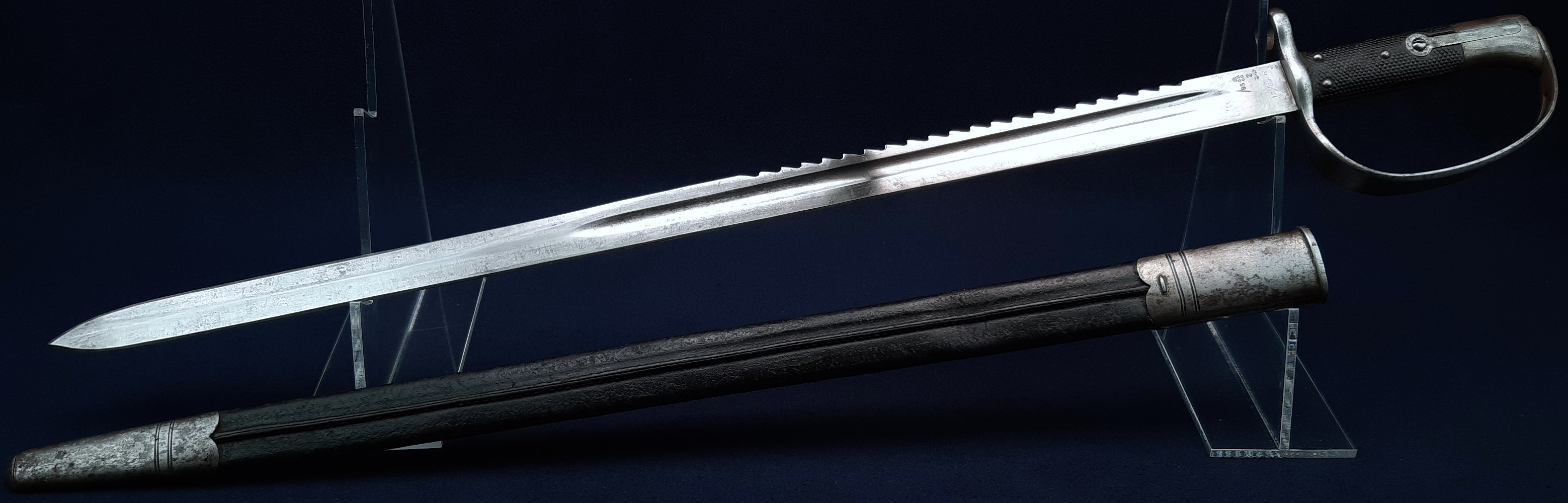
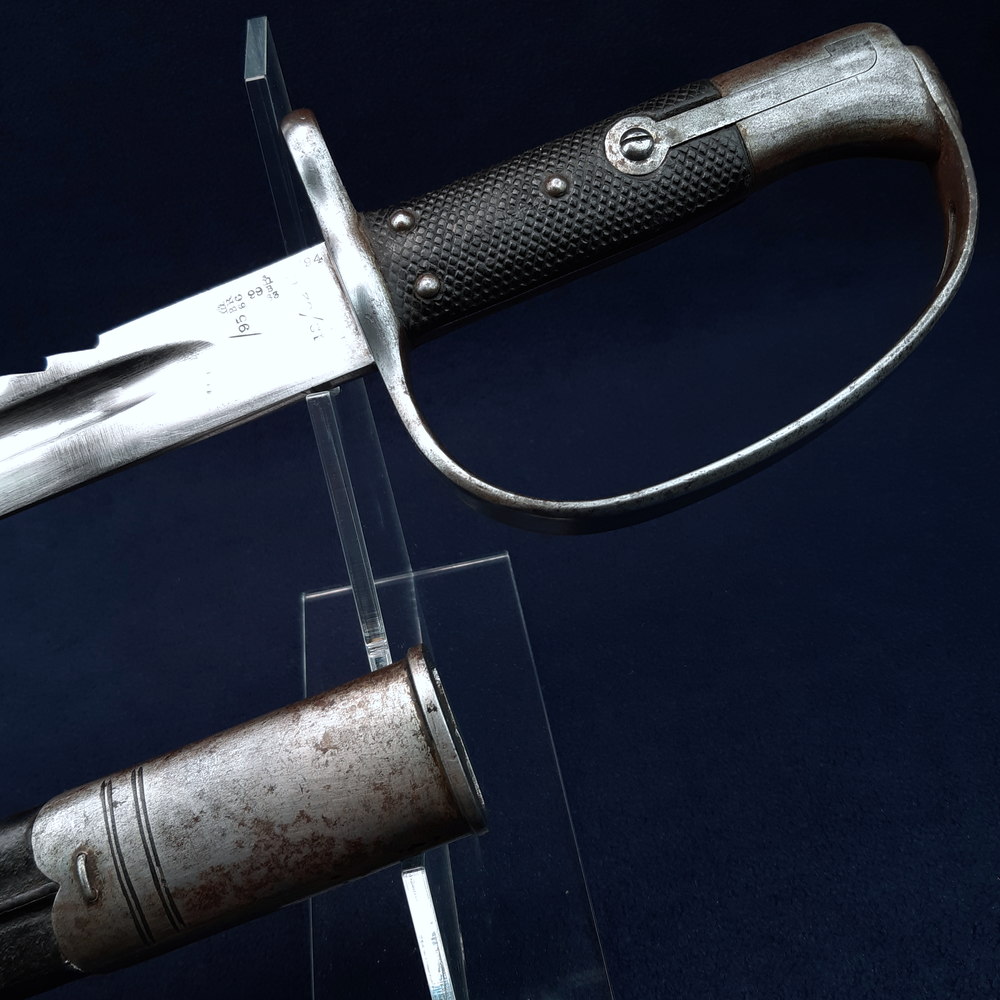
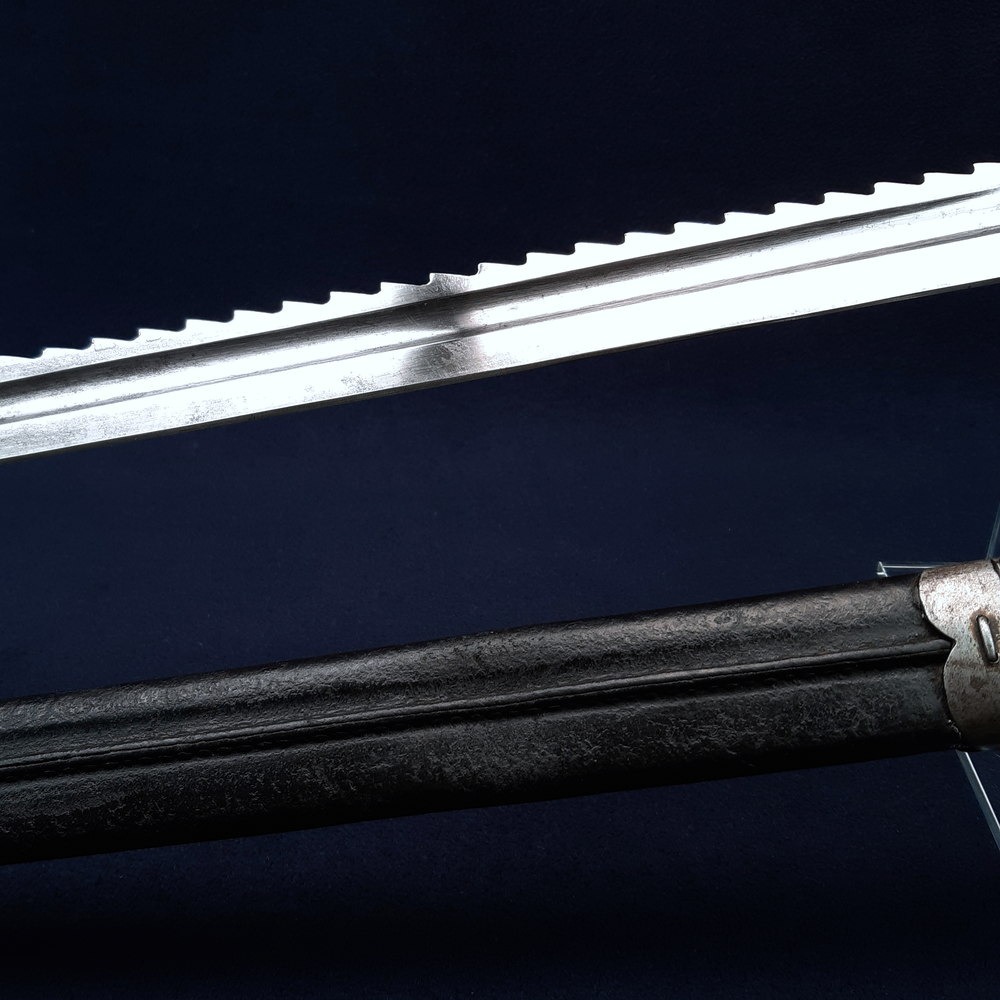
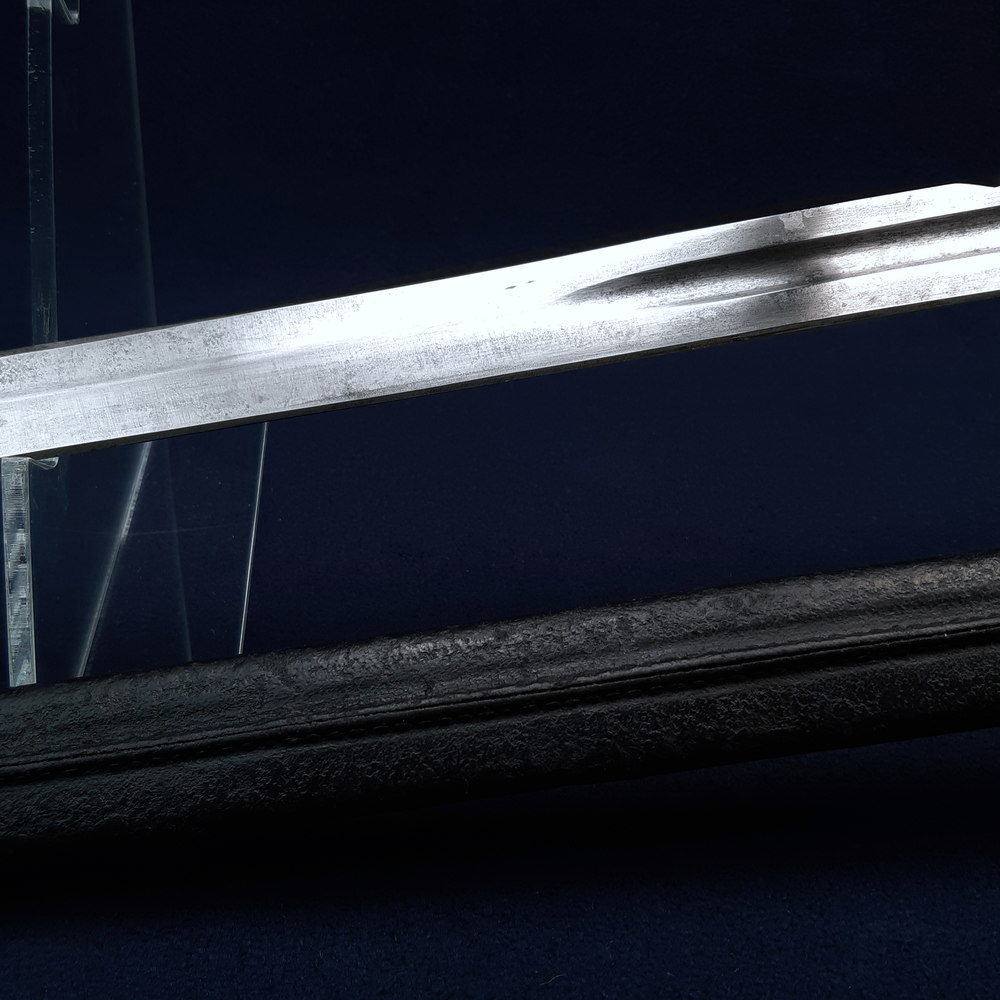
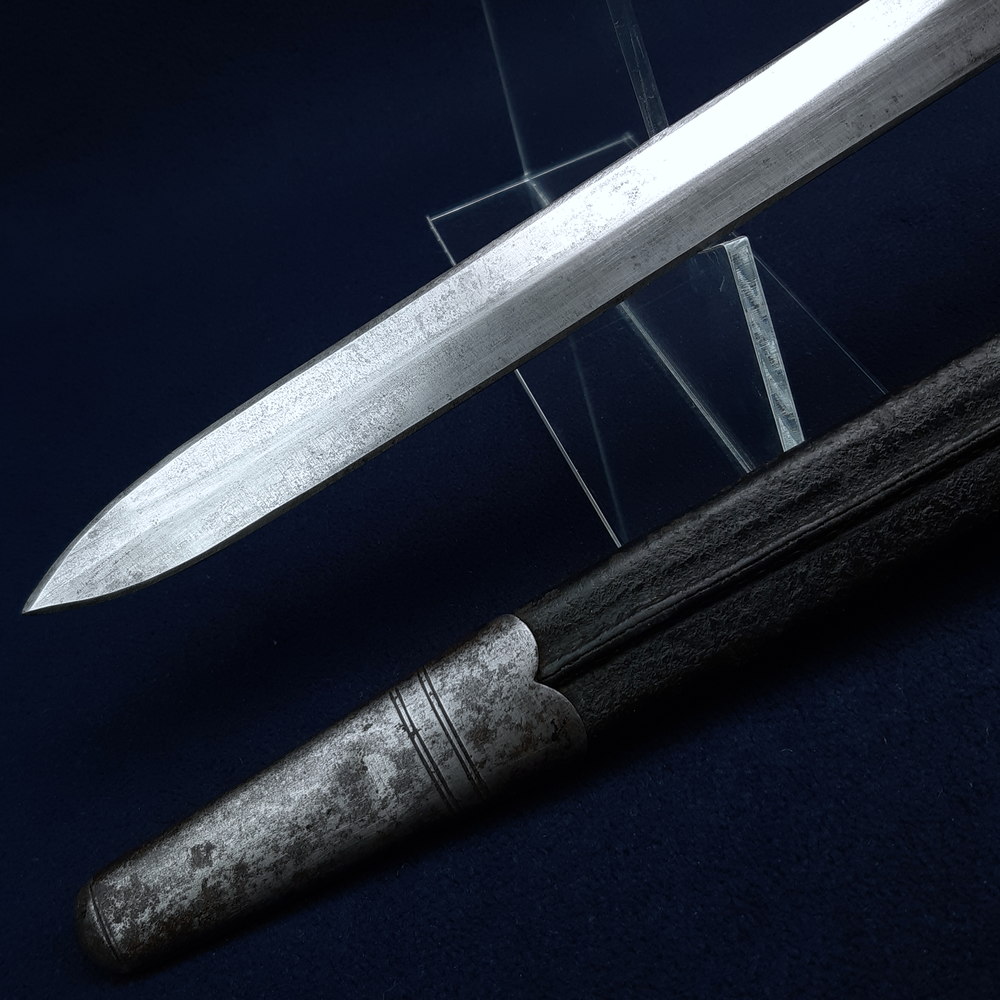
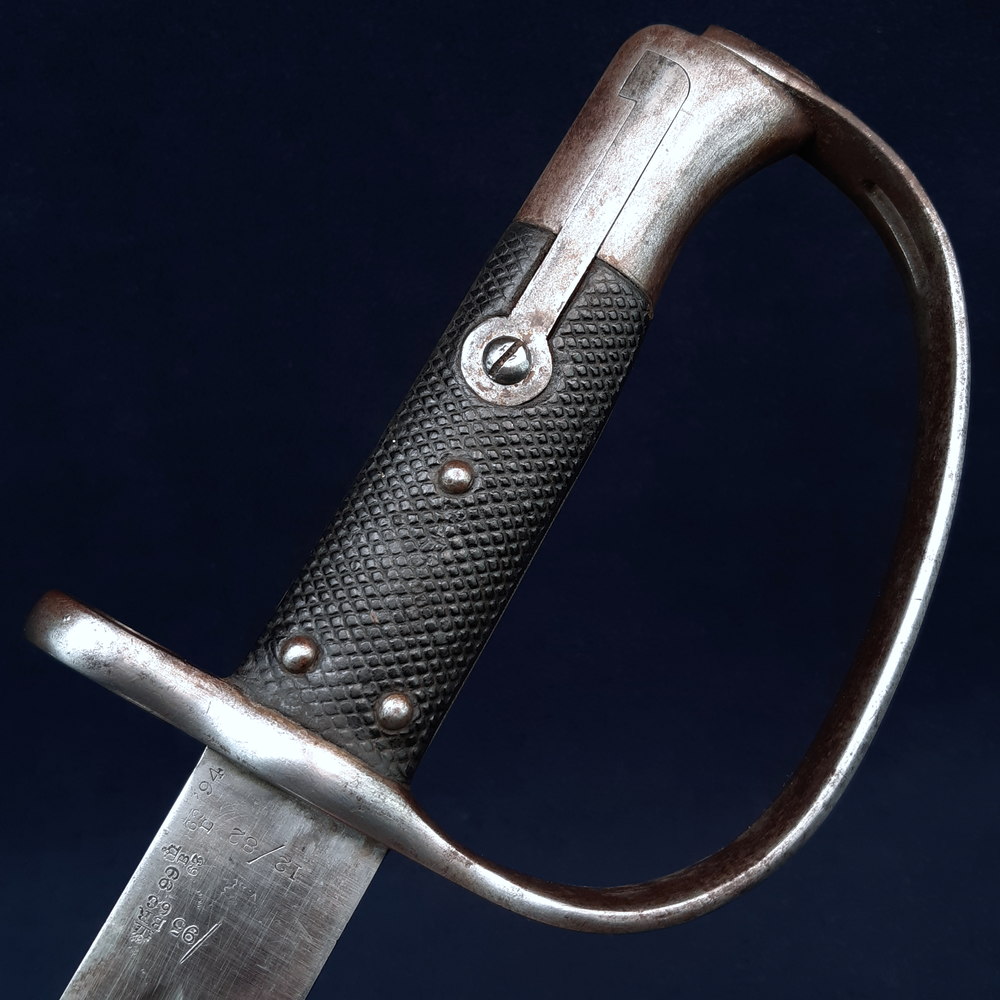
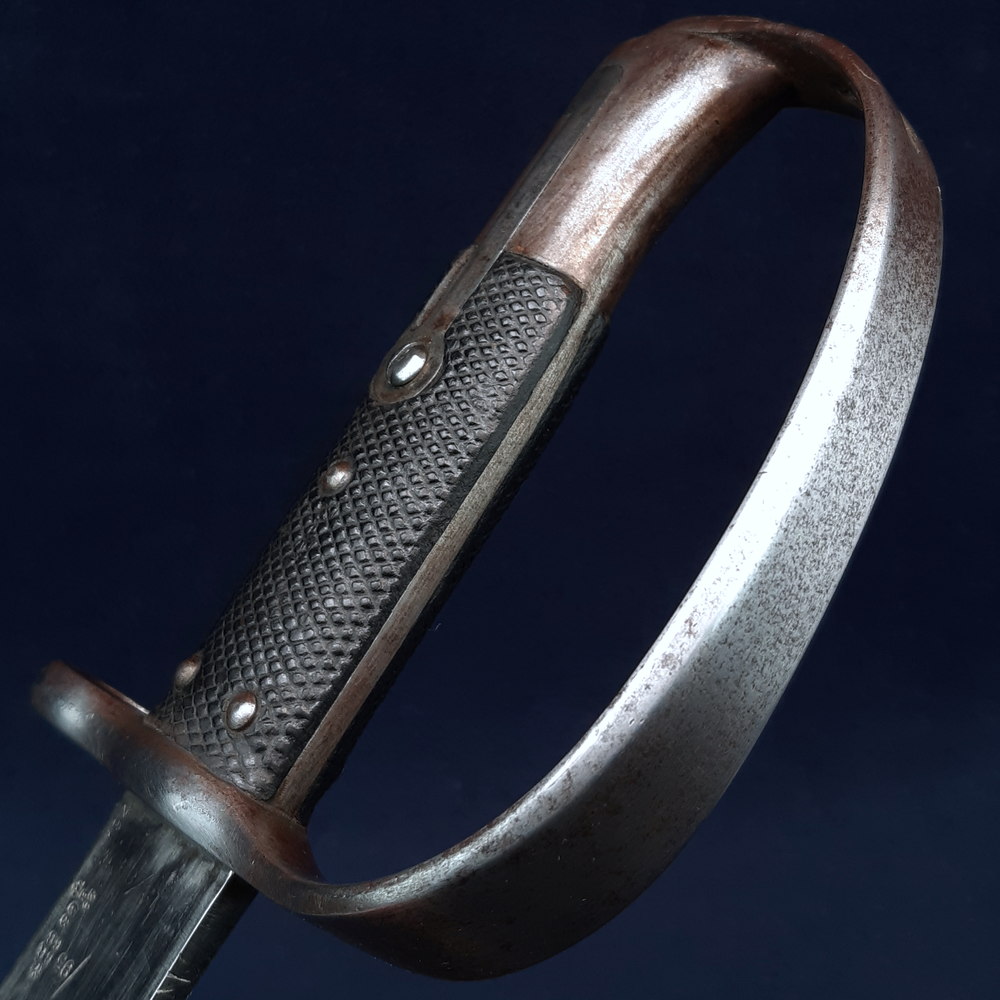
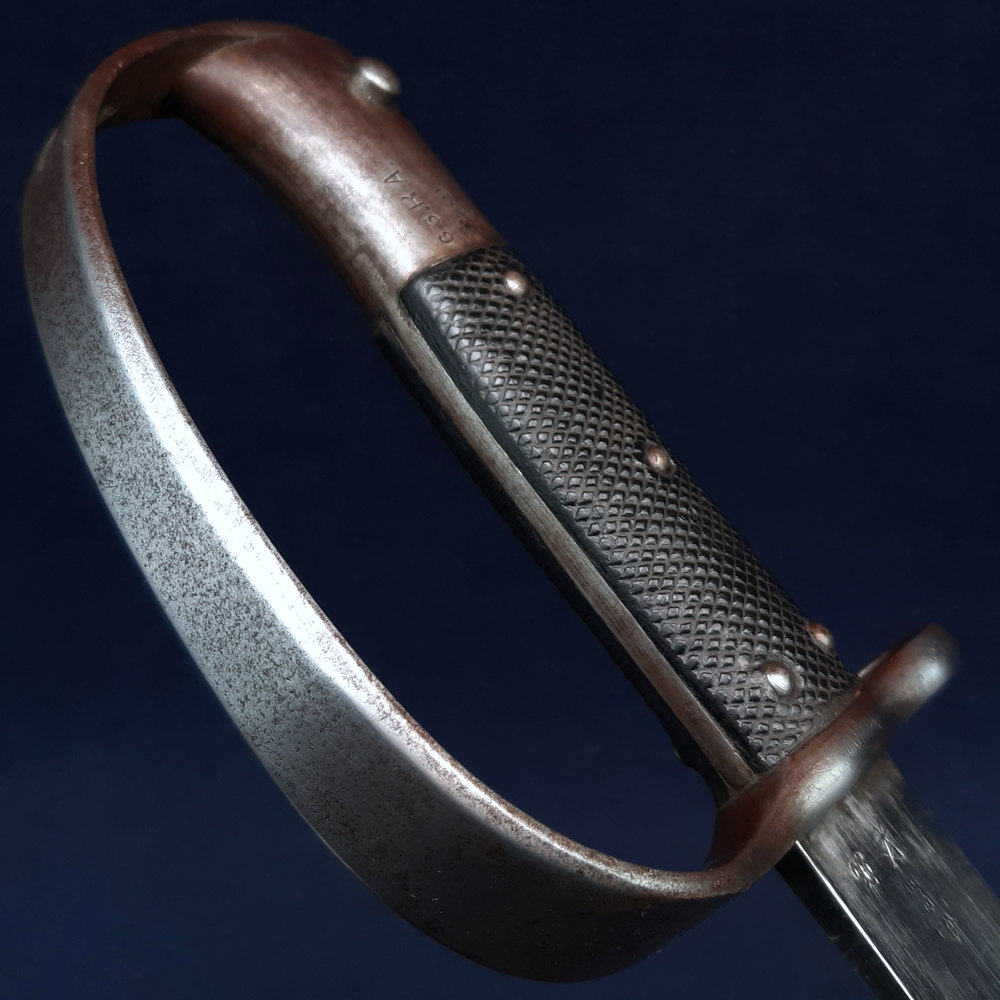
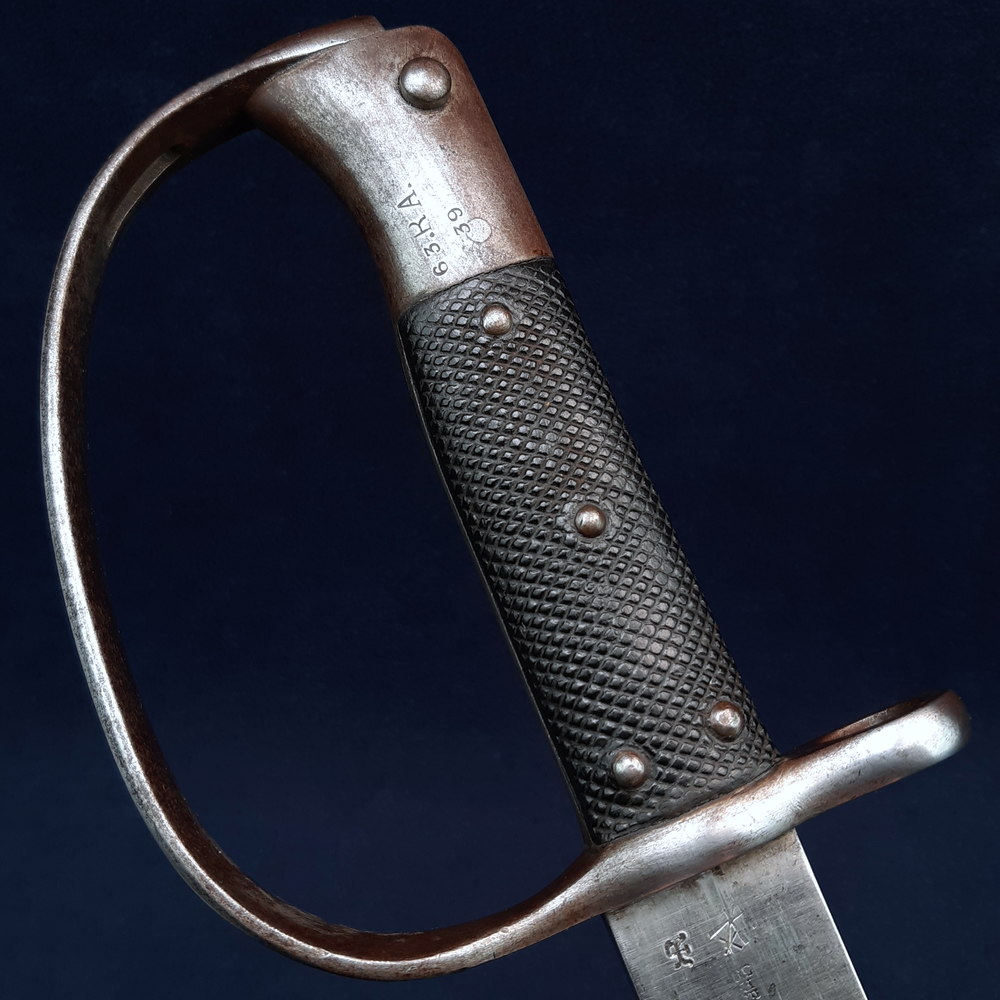
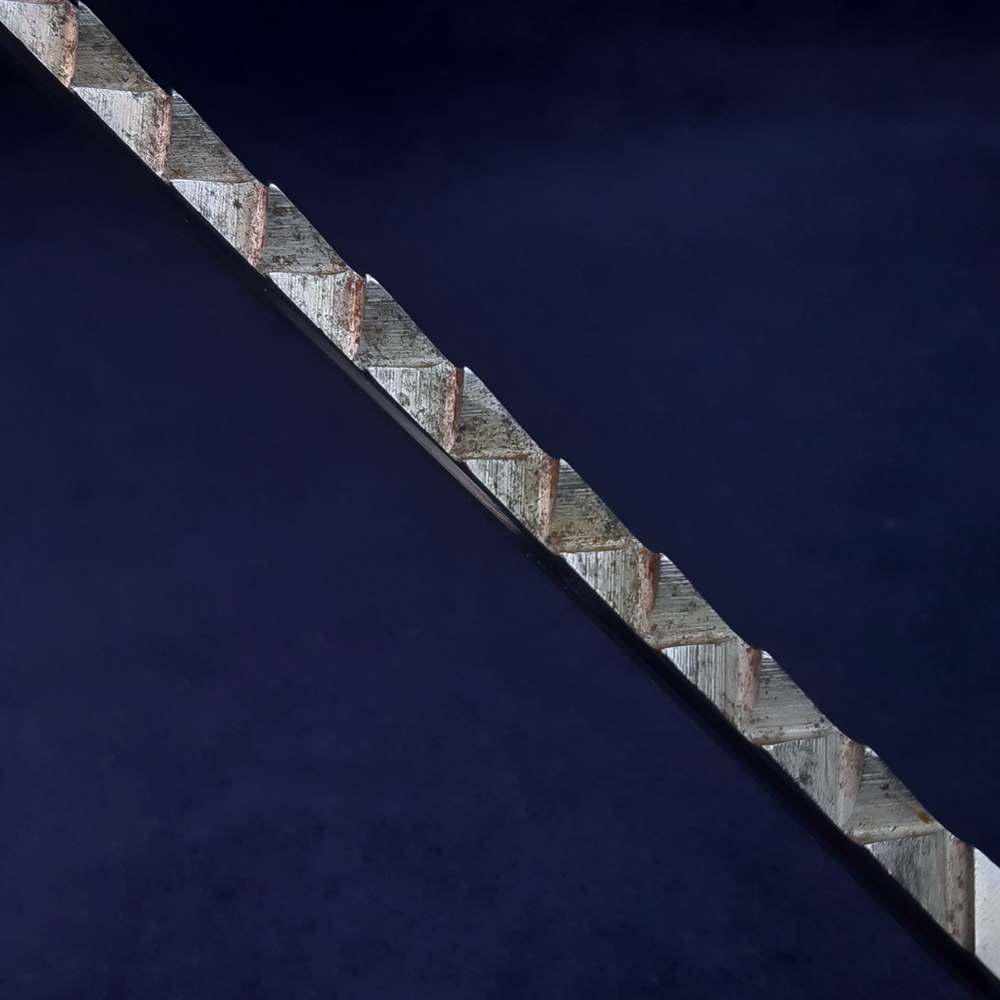

Straight single-fullered blade with sawback, steel knucklebow hilt with slit for sword knot and muzzle ring. Black pressed leather grips with chequering (technically, knurling), steel pommel with external leaf spring. Black leather scabbard with steel chape and throat with teardrop frog stud. Blade 25 3/4 inches in length, the bayonet 31 1/4 inches overall, muzzle ring 0.65 inches in diameter (1.65cm).
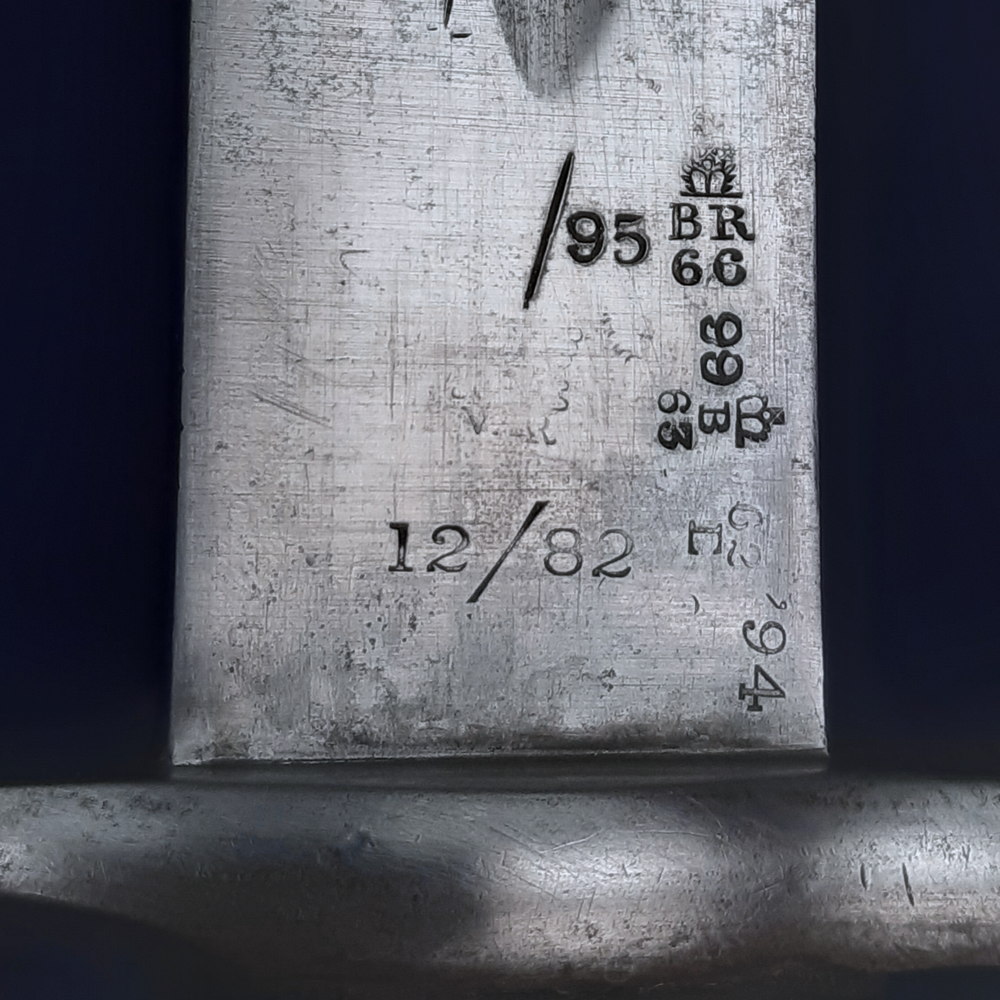
The blade is profusely stamped on one side of the ricasso with a crown over ‘V.R.’ (Victoria Regina), this mark quite rubbed, the manufacture date 12/82 for December 1882, /95 which probably indicates the bayonet was retested in 1895, a Birmingham repair/refurbishment mark of a crown over ‘BR’ over ‘66’, two crown inspection marks with ‘E’ indicating the Royal Small Arms Factory at Enfield, and reissue dates ’94 and ’99. All marks pre-1895 are notably fainter than those post.
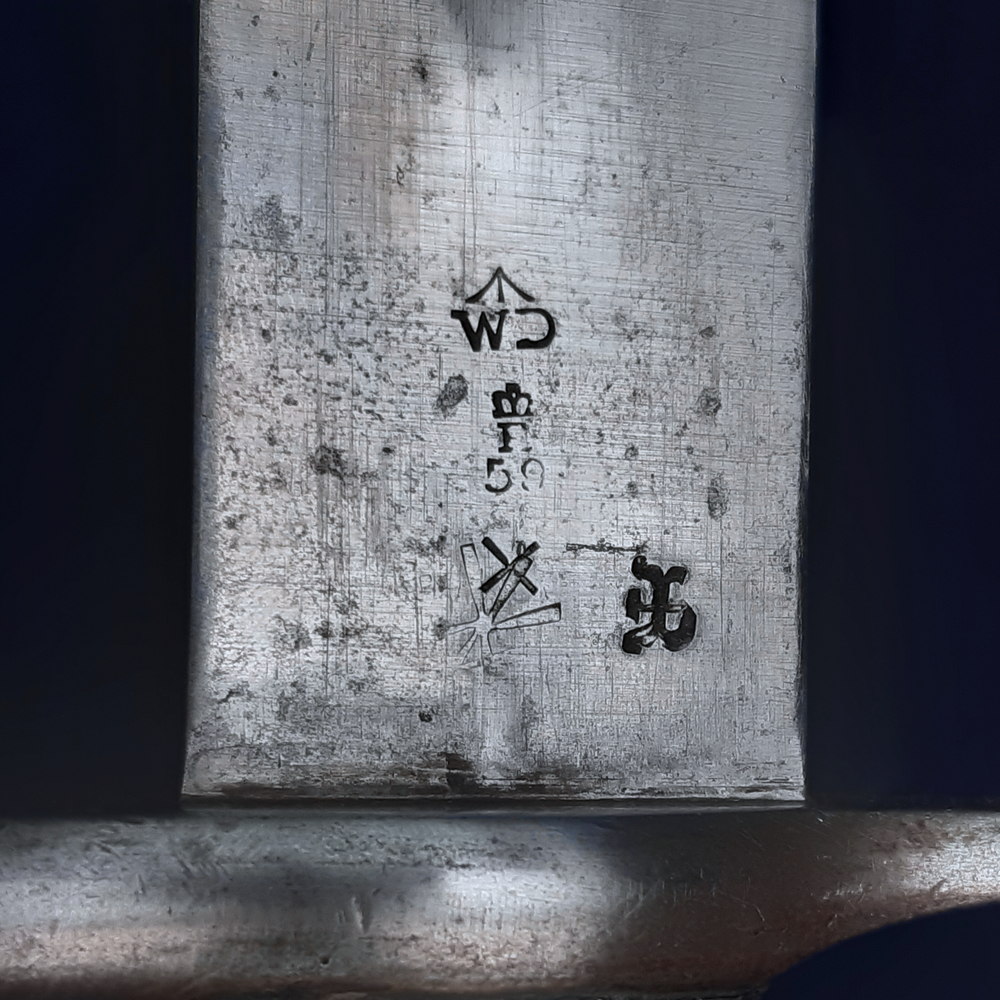
On the other side it is stamped with a broad arrow atop ‘WD’, meaning War Department property, another crown inspection mark with ‘E’, an ‘X’ which indicates that the blade passed a manufacturer’s bending test, two broad arrows point to point indicating a weapon which was obsolete or to be sold off, and a mark of two letter ‘R’s back-to-back, indicating a condemned weapon – one that had failed inspection or was otherwise deemed unfit for further military service.
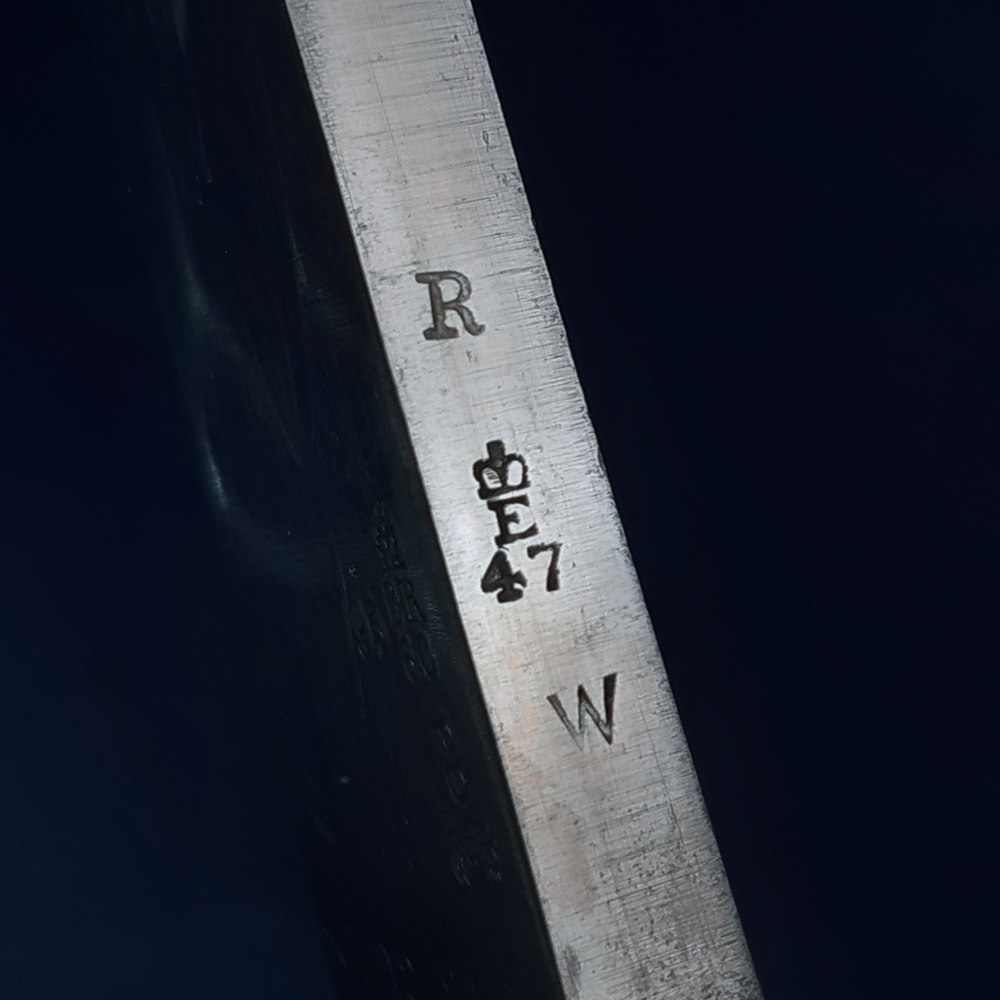
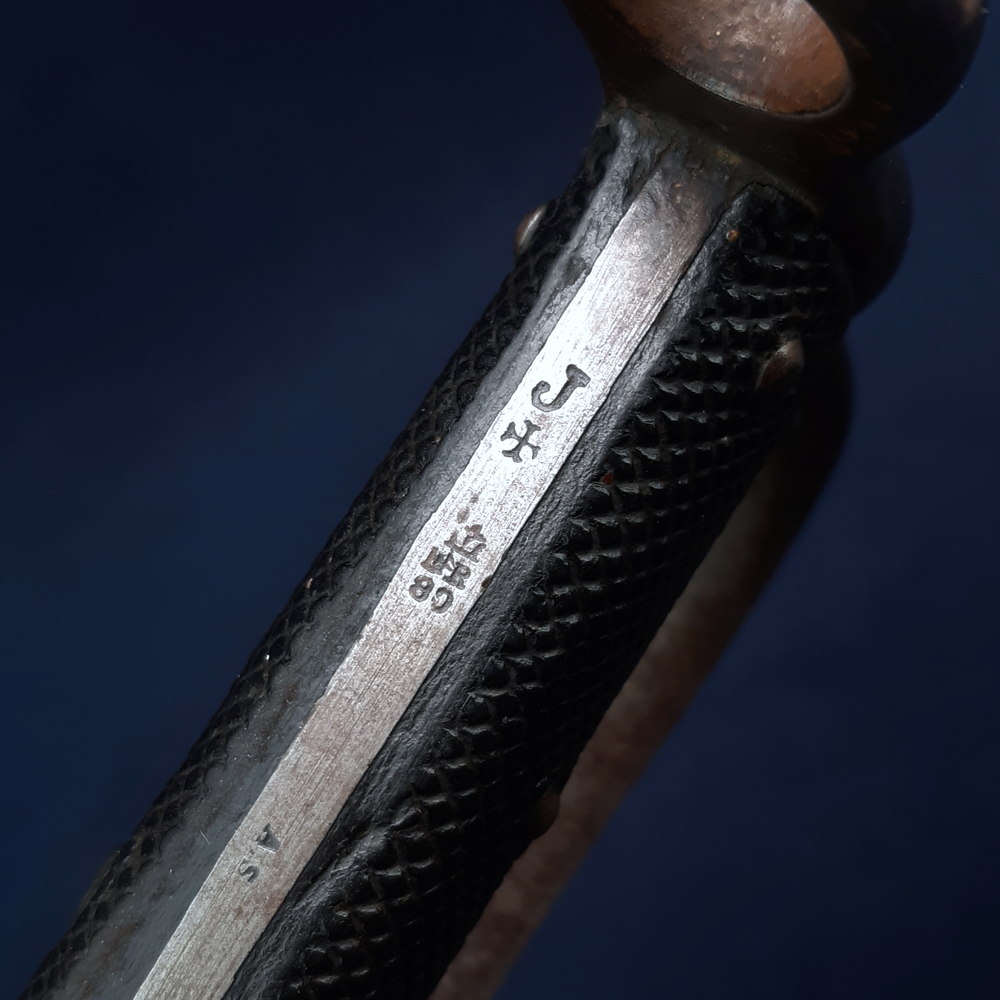
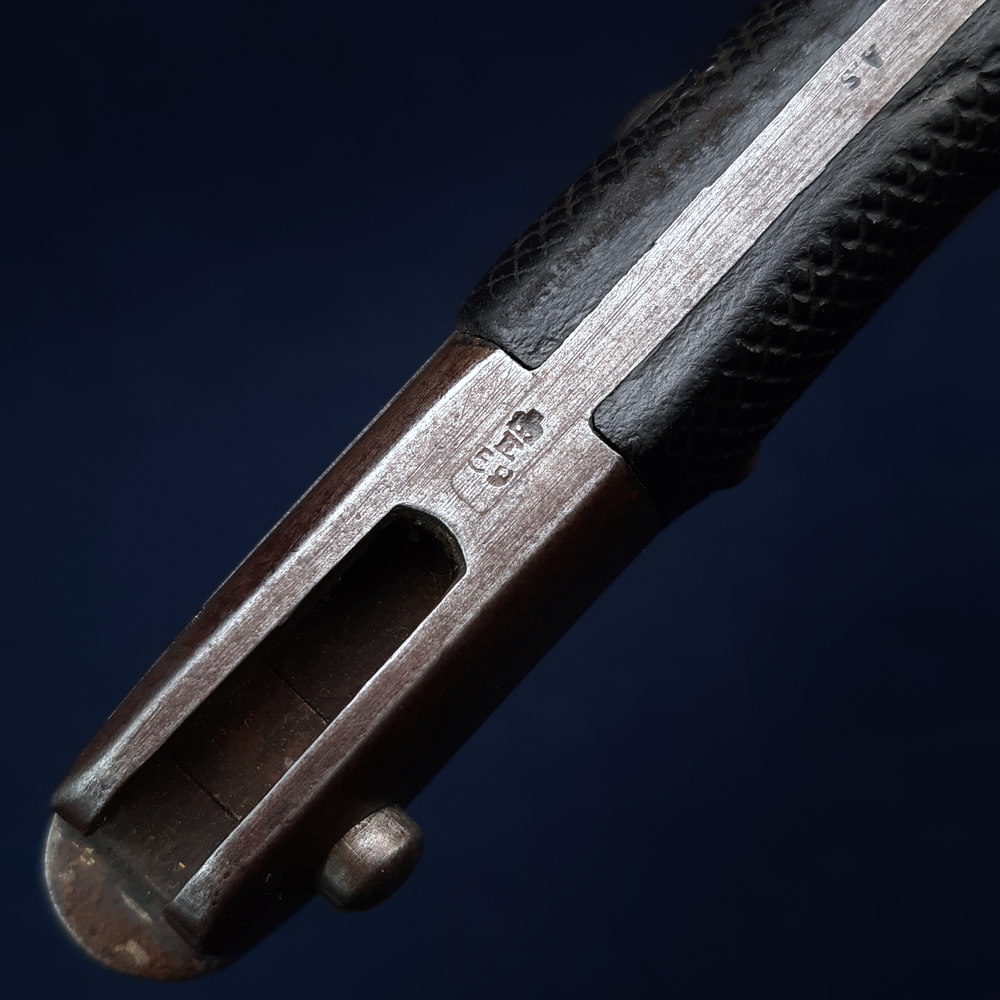
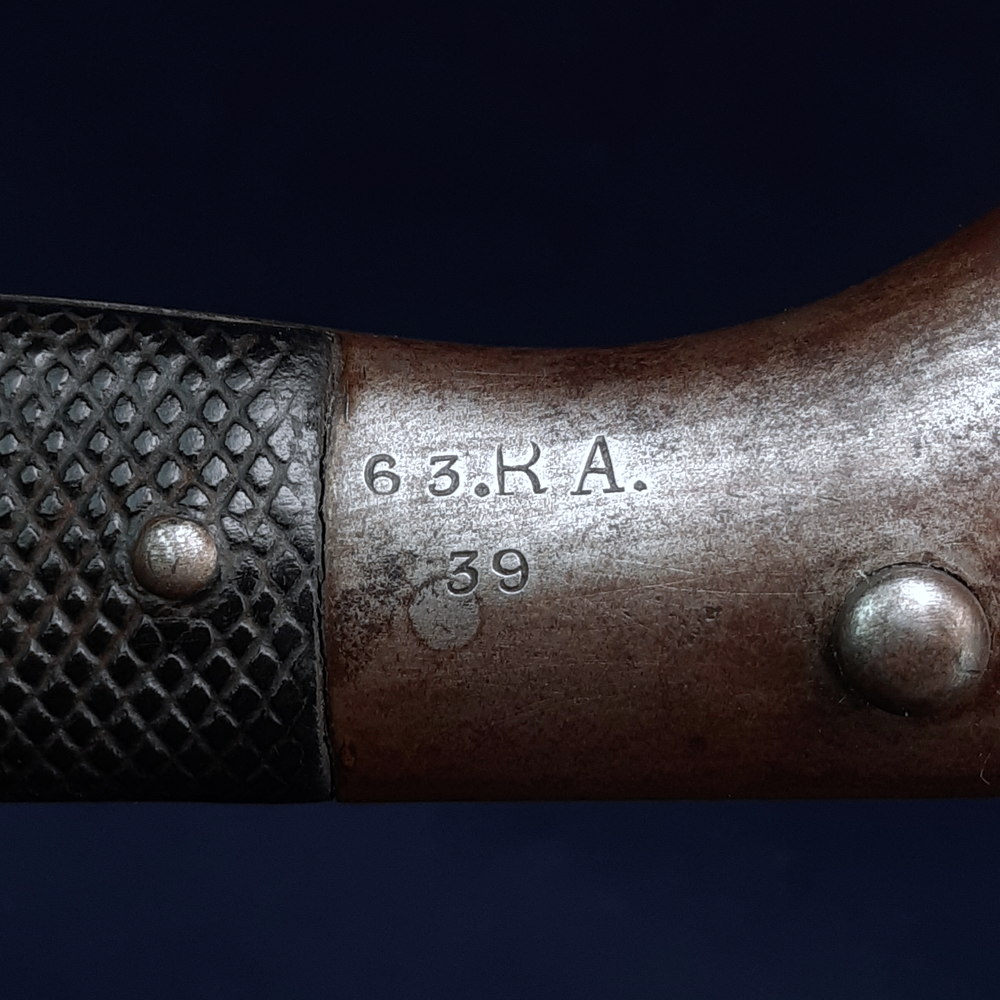
The spine of the blade has another Enfield stamp, a letter ‘W’ and an ‘R’. The exposed tang has another Birmingham repair stamp, ‘J’, a Maltese cross, ‘A.S.’, ‘B’ and ‘P’. The pommel is stamped near the mortise slot with another Enfield crown inspection mark, and near the locking button with the unit mark ‘63. RA.’ over ‘39’, which I believe indicates this was weapon number 39 issued to 63 Battery Royal Artillery. The Royal Artillery had 93 active field batteries as of 1898.
In 1899 the Royal Field Artillery was established as a separate arm of the artillery and 63 Battery was transferred into it, retaining its same unit number. 63 Battery R.F.A. served in the Boer War, and it is interesting to note that this bayonet was still evidently in service as 1899, when the Boer War broke out. 63 Battery sailed for South Africa near the end of 1899, losing their artillery pieces in the sinking of the SS Ismore and requiring a refit, but were ready to fight in time for the Battle of Spion Kop in January 1900.
I believe it is unlikely that they brought this bayonet with them to South Africa however, as the Martini-Henry artillery carbine had been replaced by the Magazine Lee-Metford carbine as the standard rifle for the RFA by that date. Single-shot Martini rifles were antiquated by comparison and while some Martini type rifles were used in the Boer War by volunteer units and colonial troops, including artillery, these would have been .303 chambered Martini Metfords and Martini Enfields which could not have accepted the 1879 Pattern bayonet.
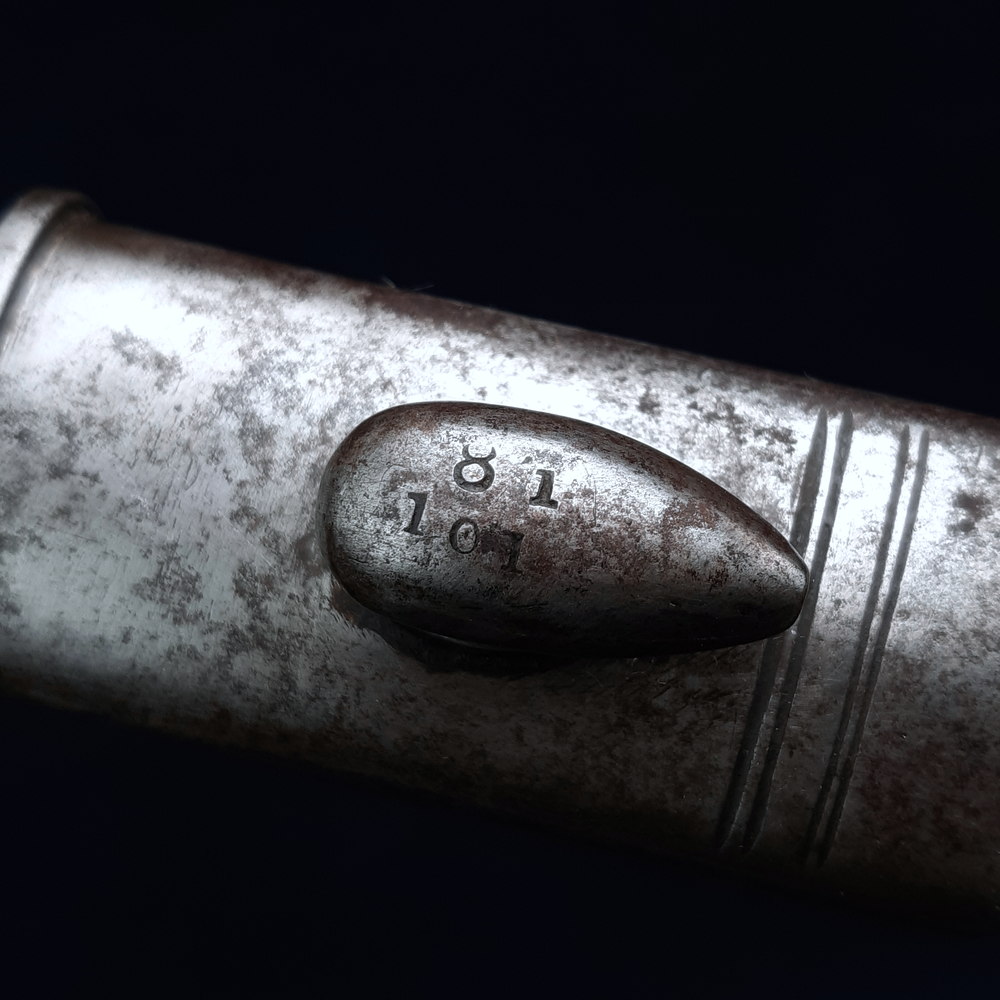
The frog stud of the scabbard is stamped with ‘81’ and ‘101’. No legible markings to its leather section.
When mounted to a carbine-length Martini Henry rifle the 1879 Pattern bayonet gave a soldier good overall reach, and with its substantial hilt it could also serve as a fighting sword. Its saw-toothed back would have found use in brush-cutting, like other similar designs popular during the 19th century. Production of the bayonets at Enfield continued until 1890.
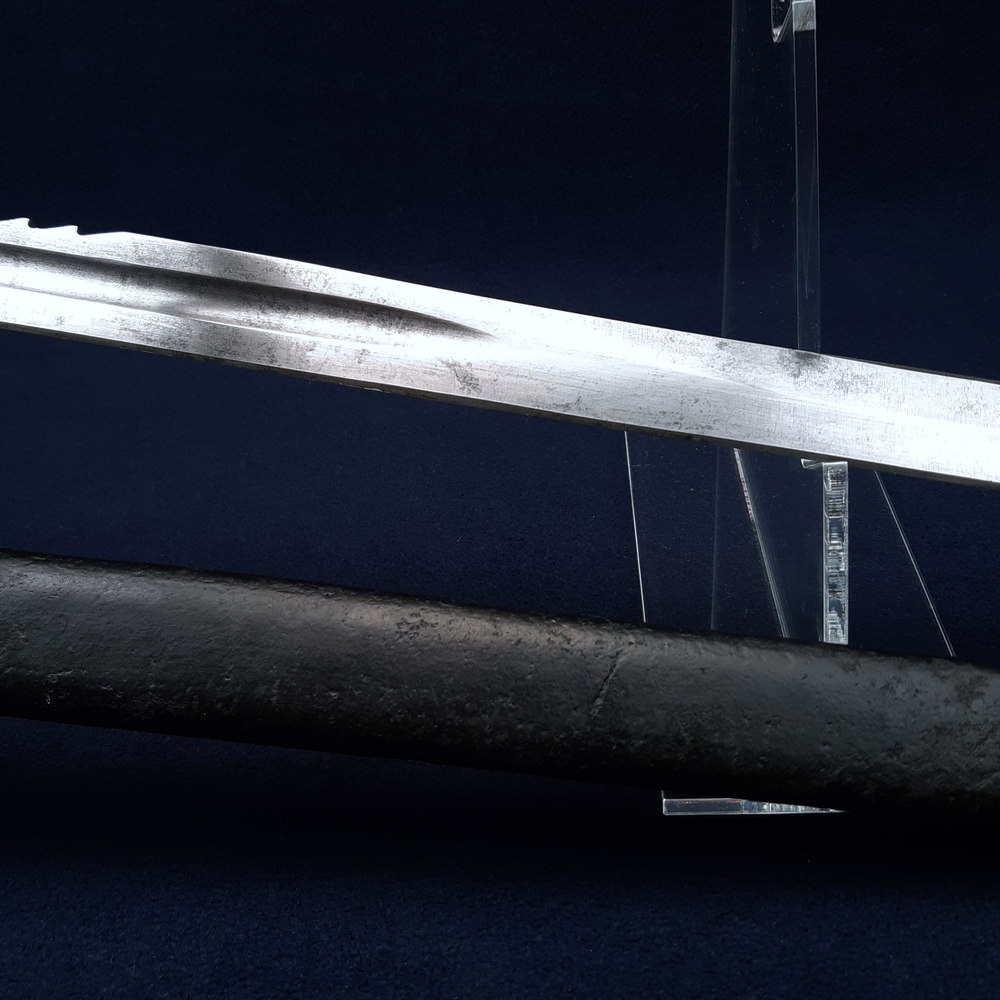
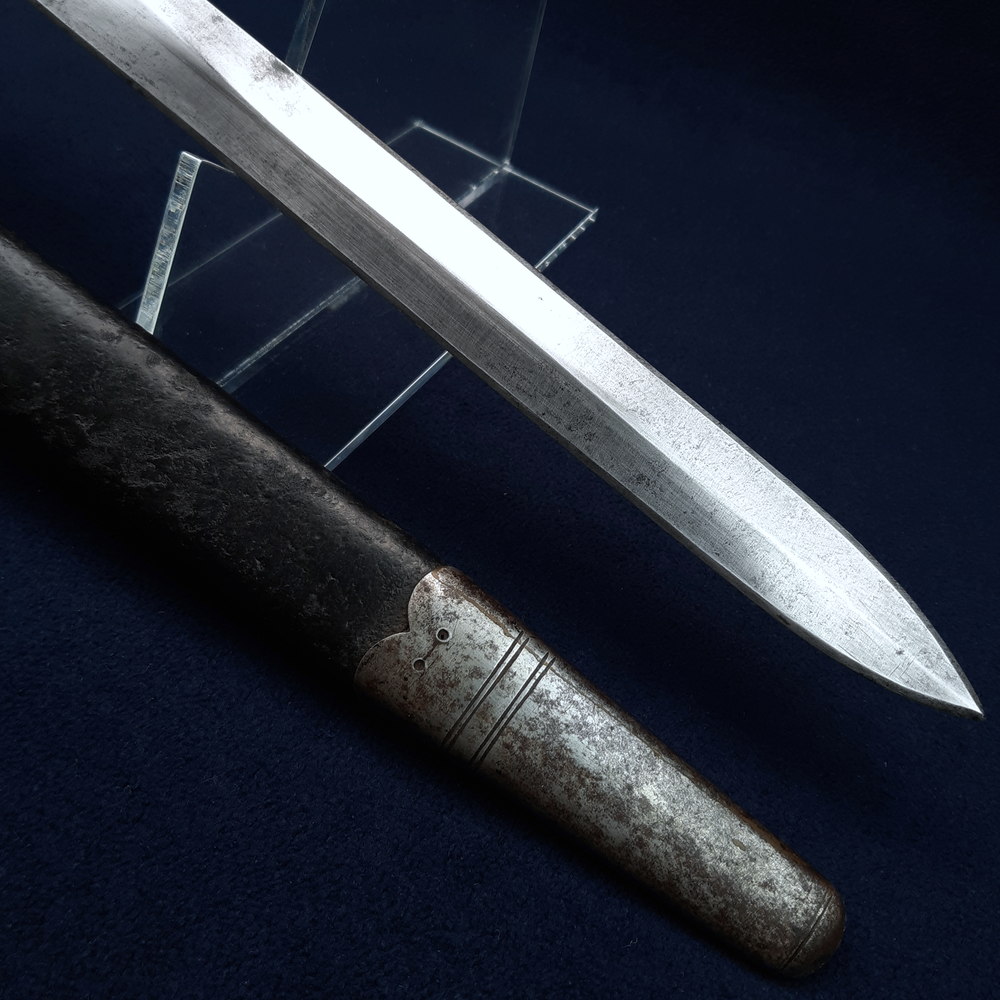
The blade is bright with some frosting in the fullered section and small patches of light patination. Both its true and false edges have been sharpened, with no edge or tip damage. The sawblade is good, with signs of light use, some tip wear to the teeth but no breakages. The leather grips have very little handling wear, one small dent to the edge of one of the scales where it contacts the exposed tang. The hilt, tang and pommel pieces are bright in places and moderately patinated in others, dependent of wear and possibly service polishing, e.g. the inside of the hilt is darker than the outside.
The steel pieces of the scabbard have mottled light patination over a bright finish. The throat piece of the scabbard can move ~3mm up and down, but remains attached to the leather section by its staple. The chape piece has some dents, it has lost its staple but remains firmly attached by some other means. The bayonet sheaths and draws smoothly.