British 1879 Pattern Martini Henry Artillery Carbine Bayonet

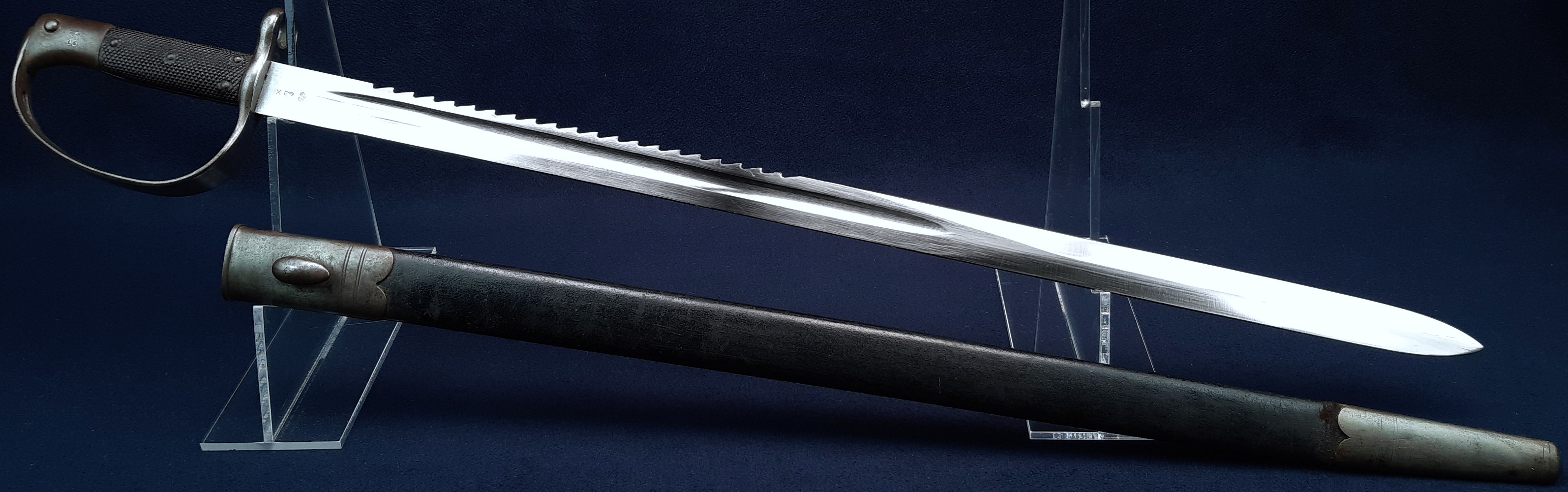
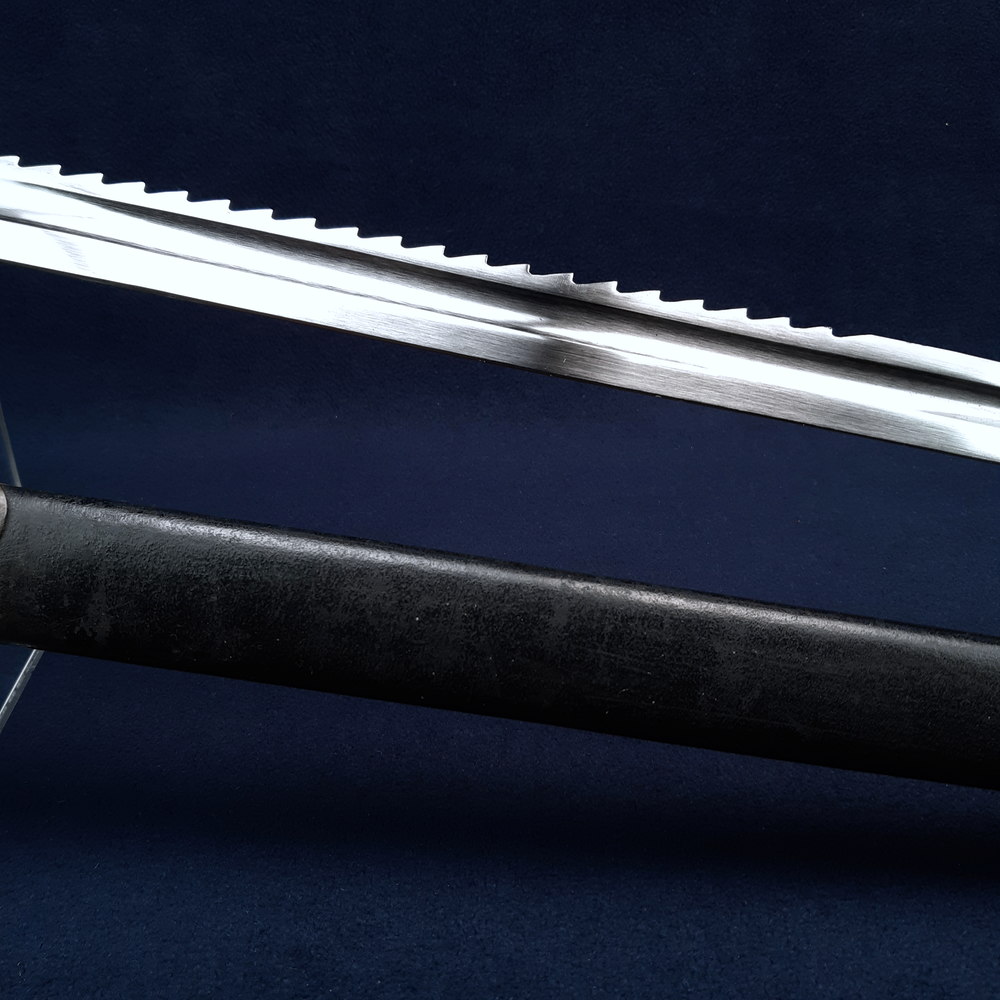
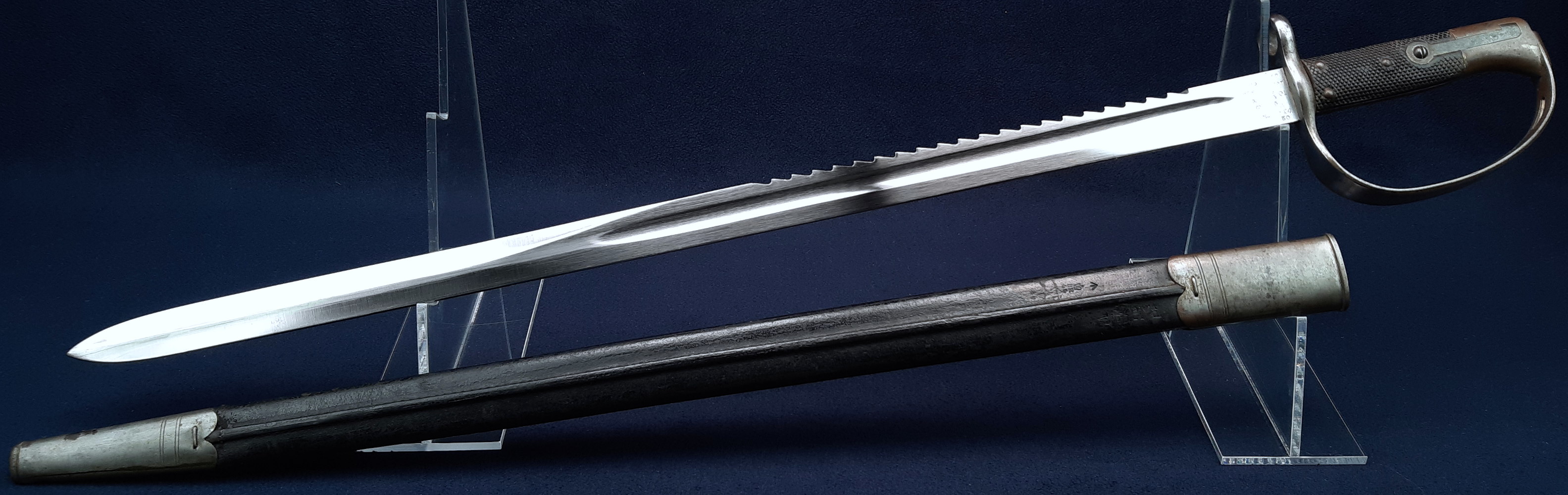
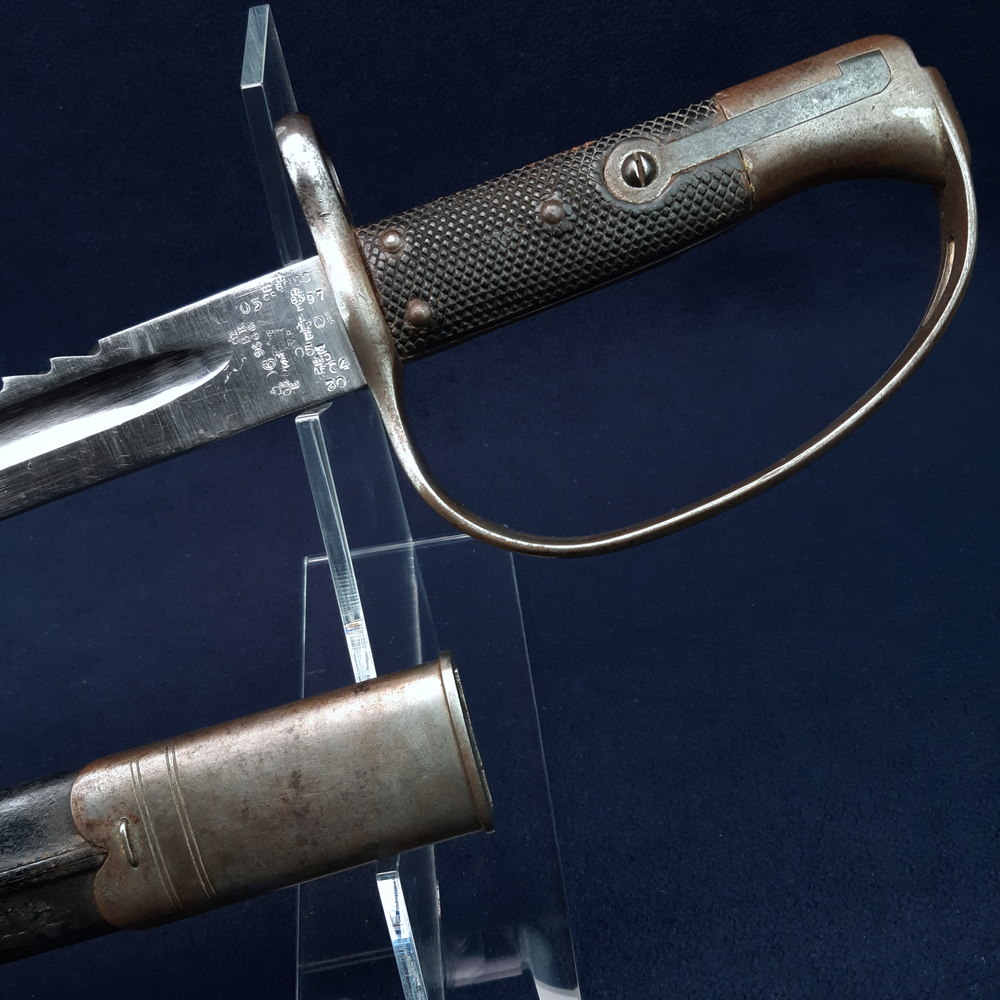
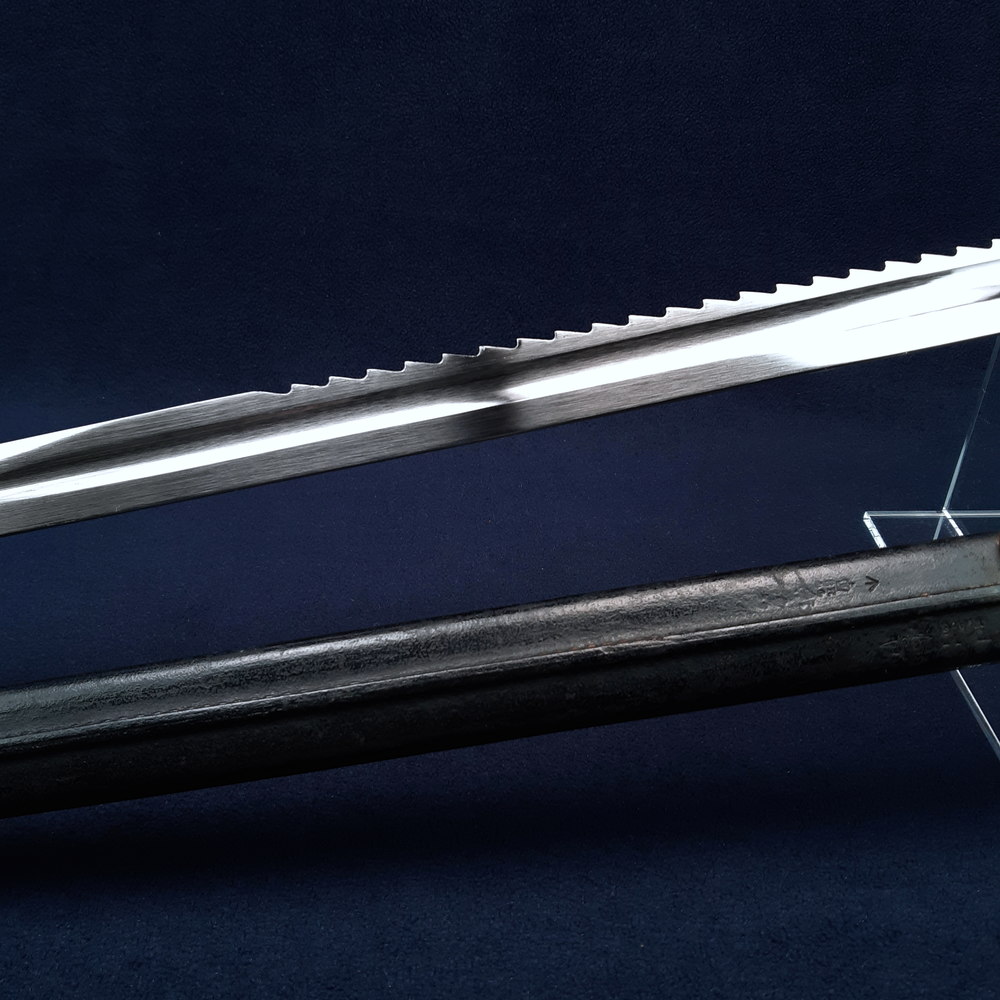
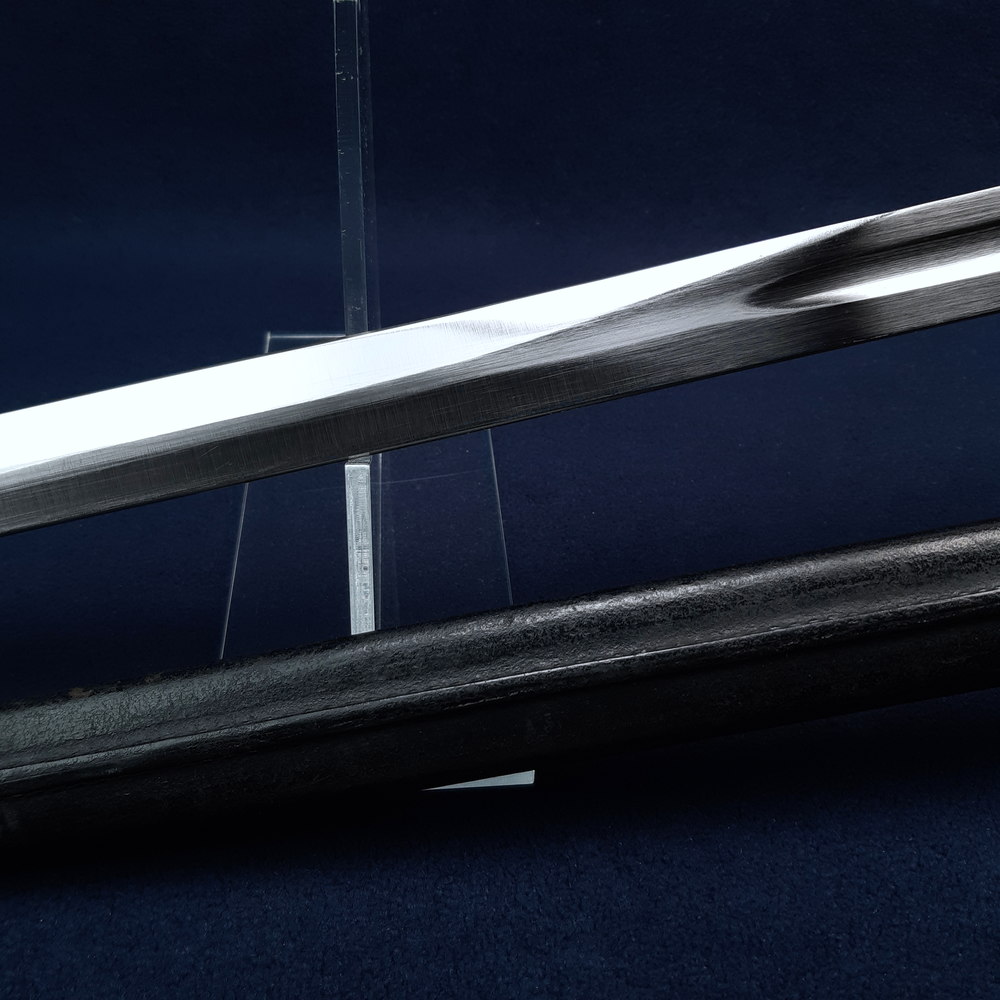
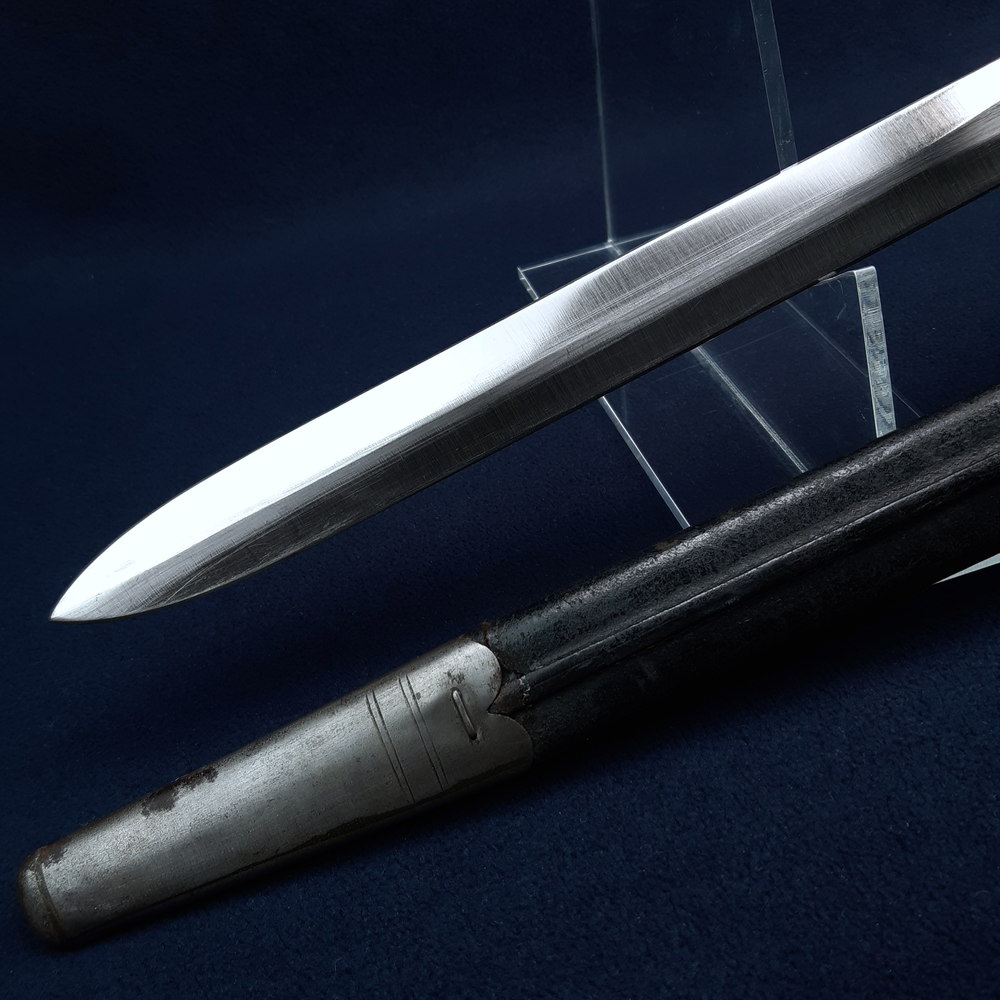
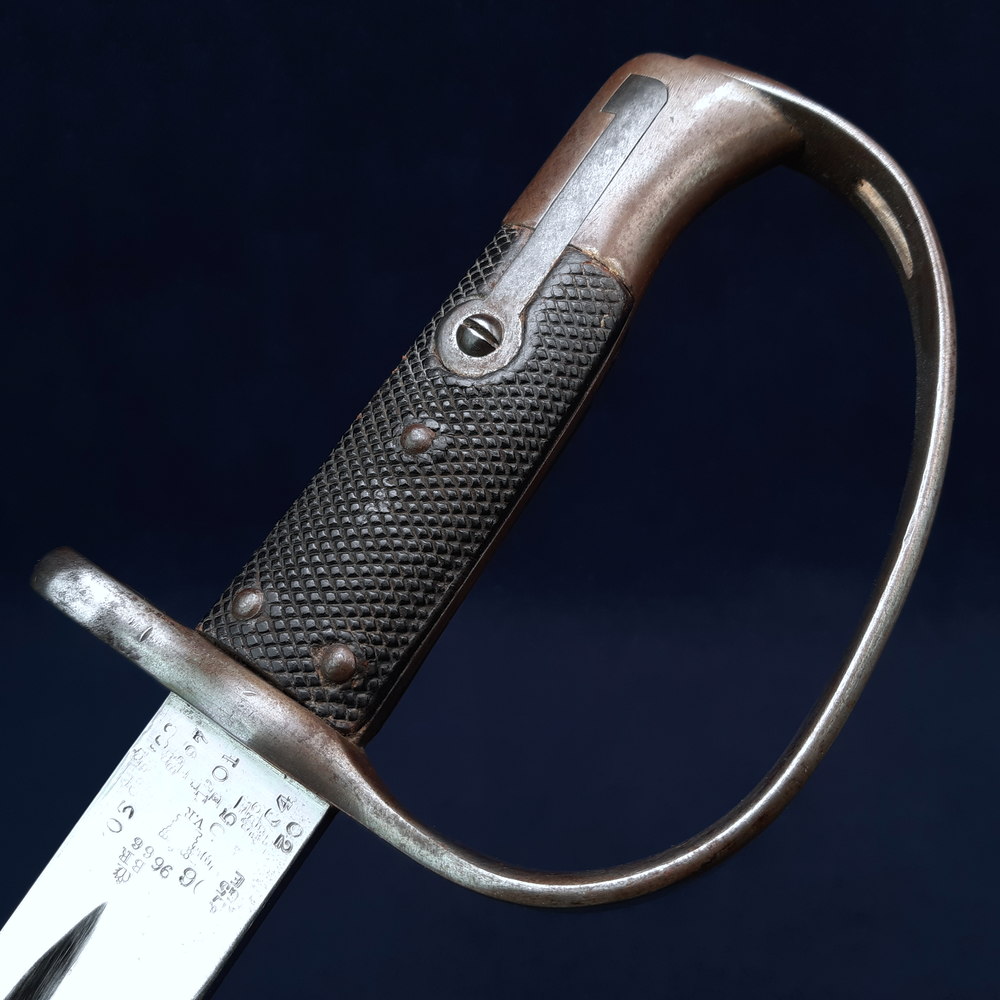
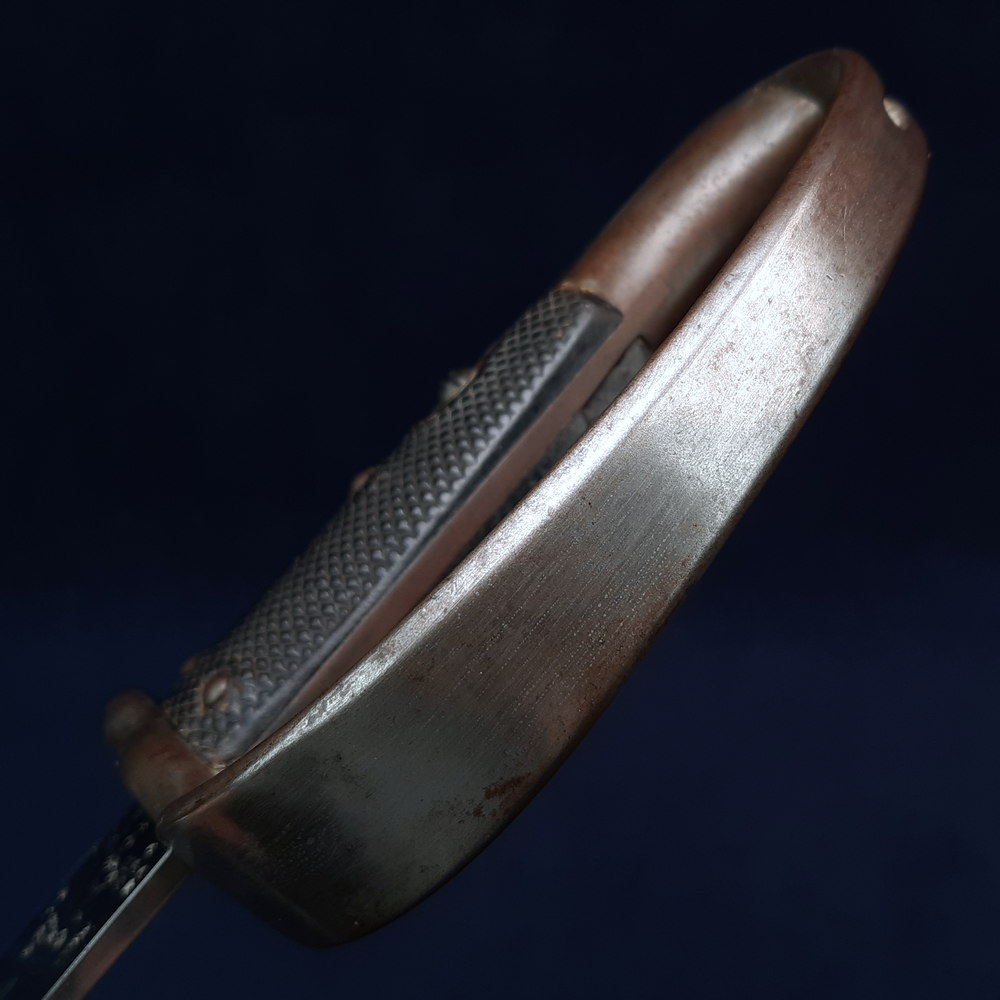
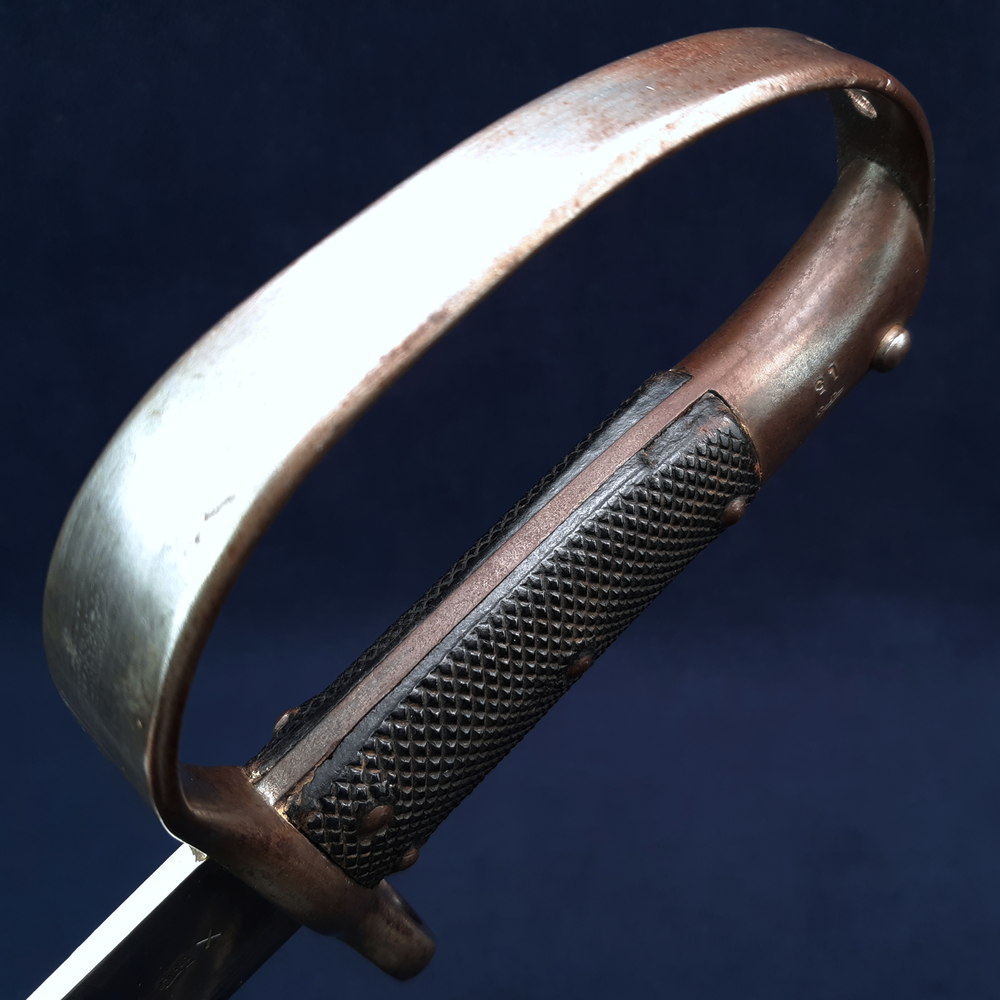
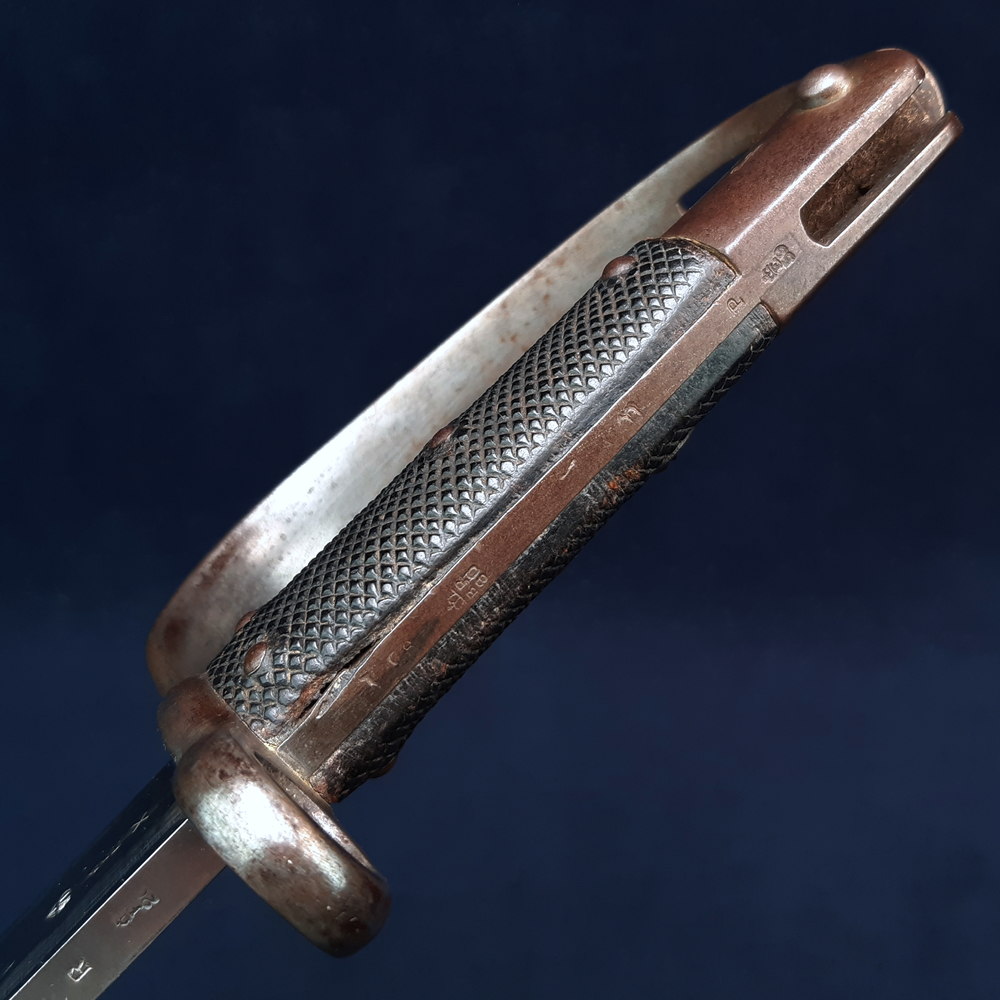
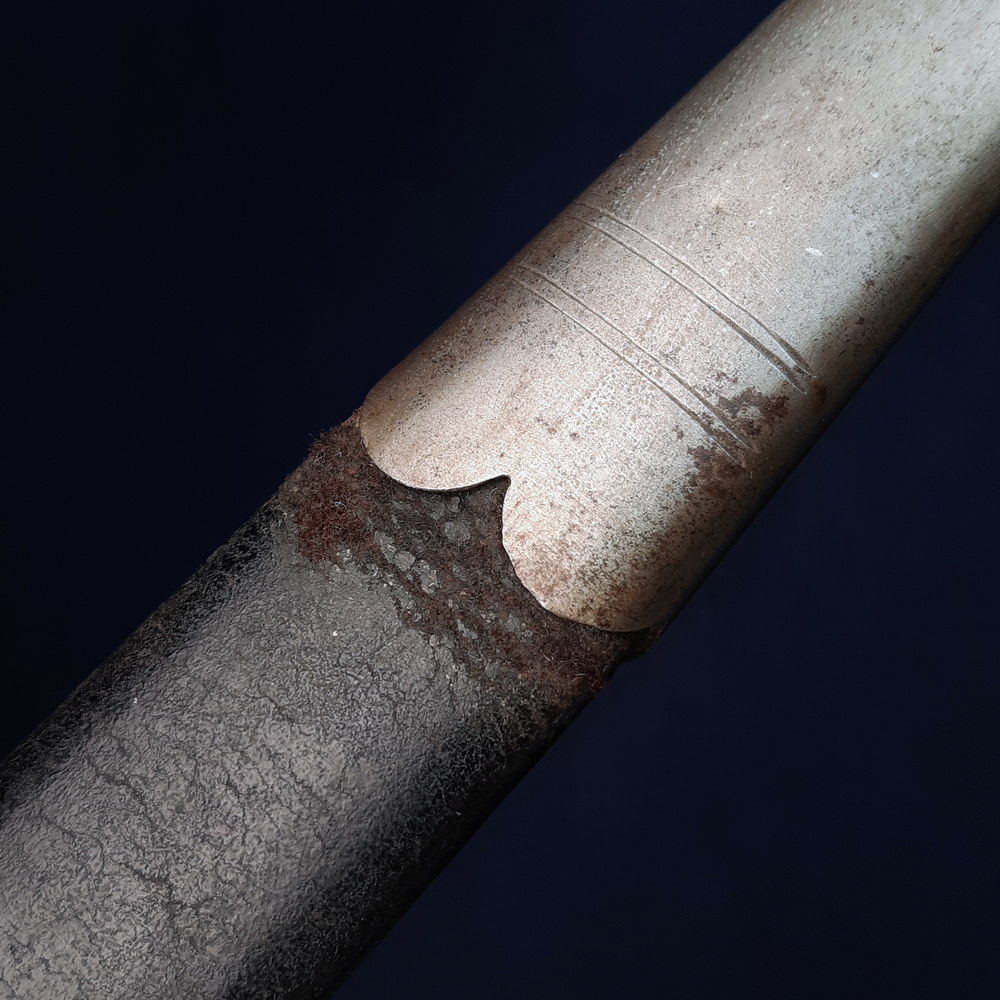
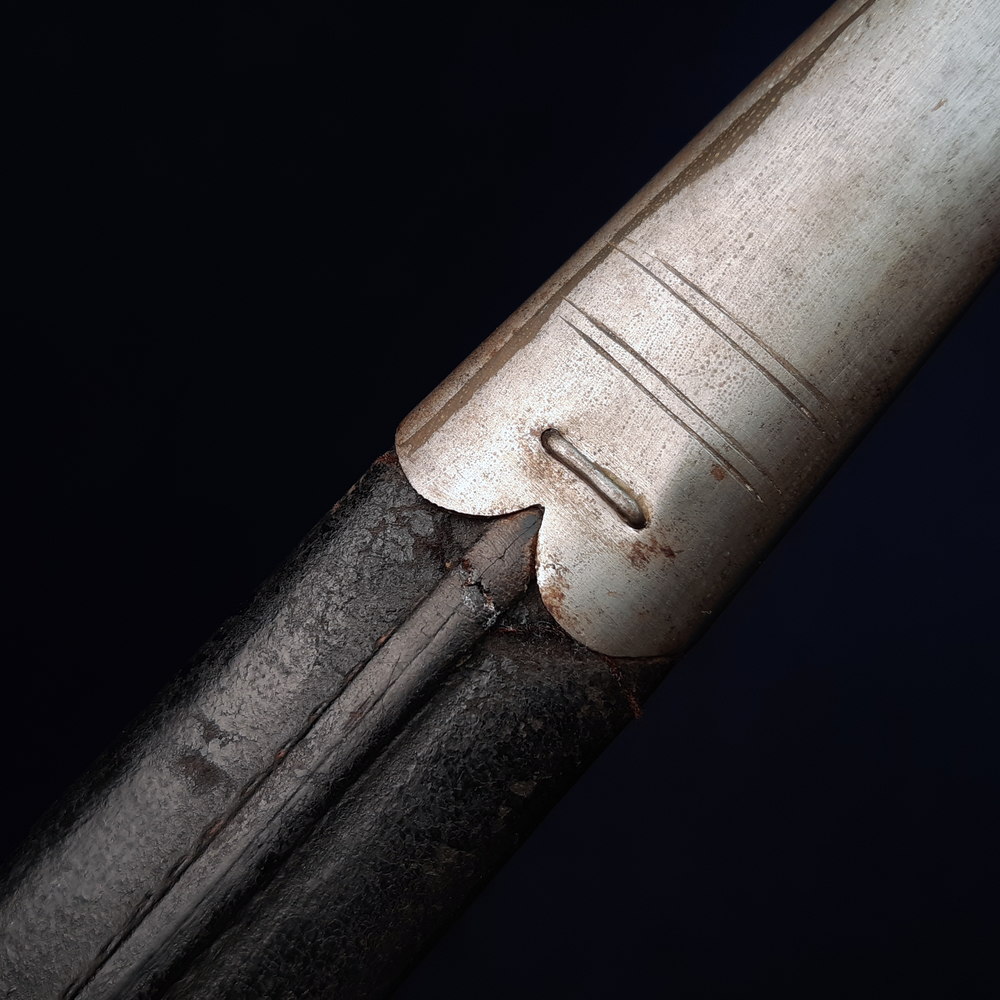
Straight single-fullered blade with sawback, steel knucklebow hilt with slit for sword knot and muzzle ring. Black pressed leather grips with chequering (technically, knurling), steel pommel with external leaf spring. Black leather scabbard with steel chape and throat with teardrop frog stud. Blade 25 3/4 inches in length, the bayonet 31 1/4 inches overall, muzzle ring 0.65 inches in diameter (1.65cm).
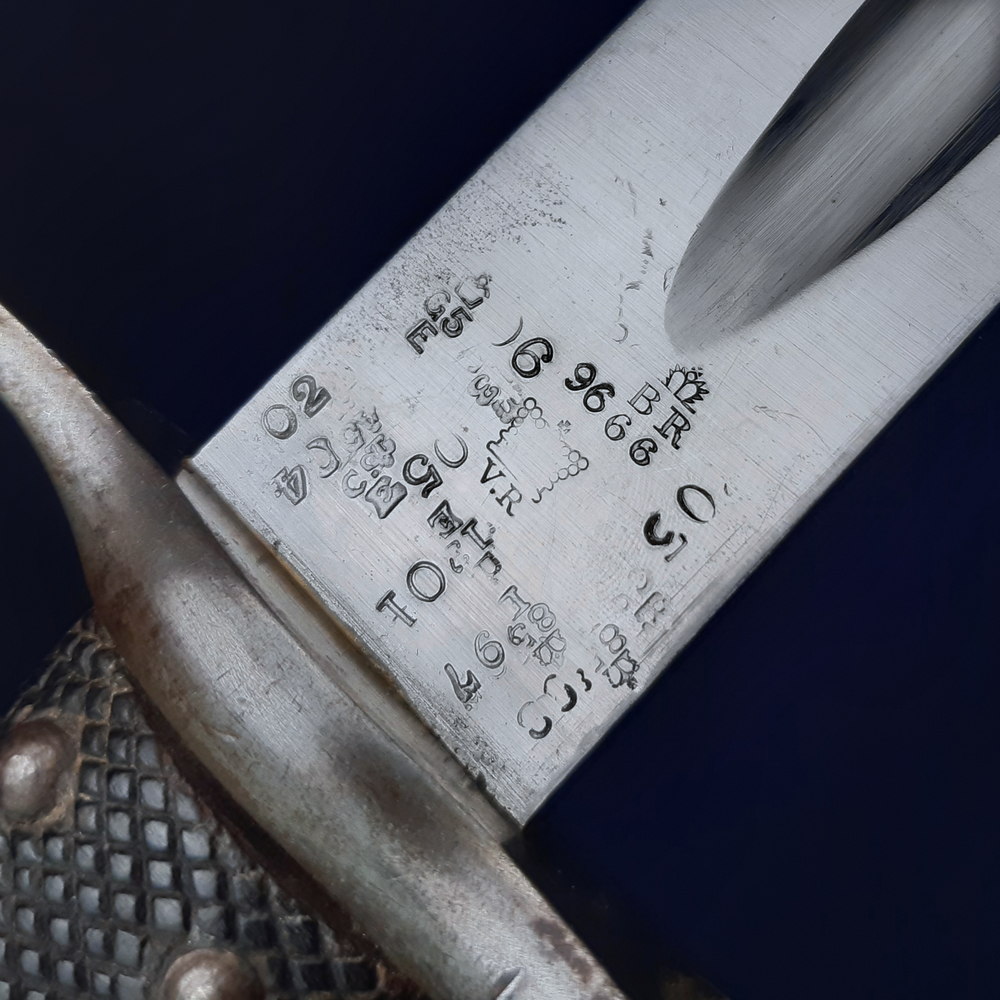
The blade is profusely stamped on one side of the ricasso with a crown over ‘V.R.’ (Victoria Regina), a Birmingham repair/refurbishment mark of a crown over ‘BR’ over ‘66’, seven crown inspection marks with ‘E’ indicating the Royal Small Arms Factory at Enfield, and reissue dates ’96. ’97, ’99, ’01, ’02, ’03, ’04, ’05, ‘06 for 1896 etc.
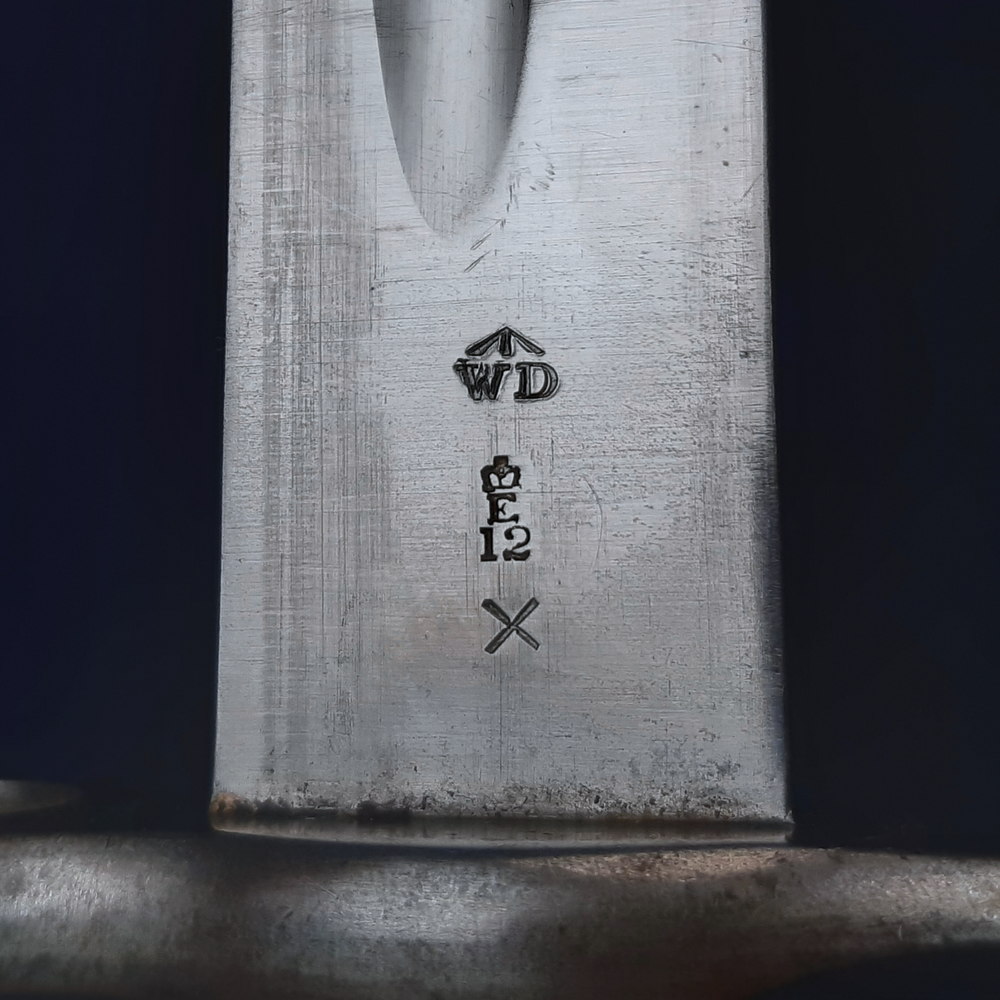
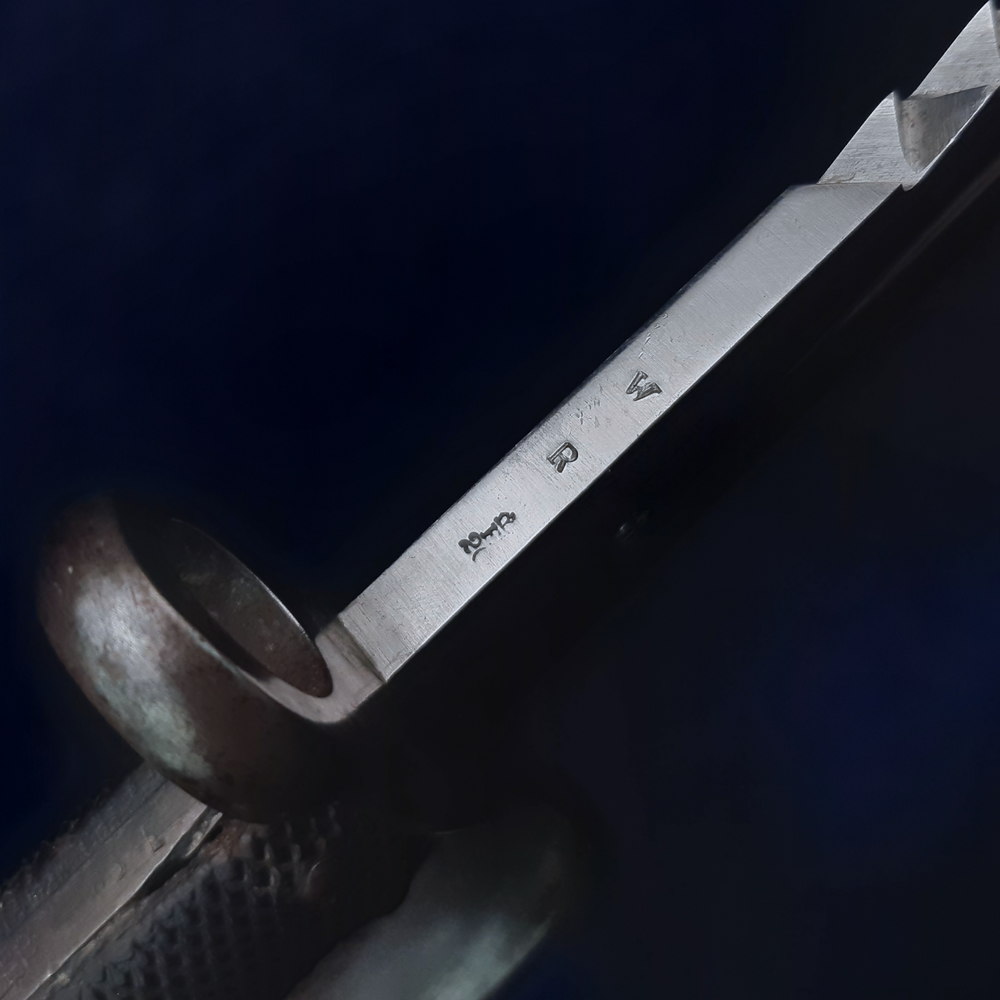
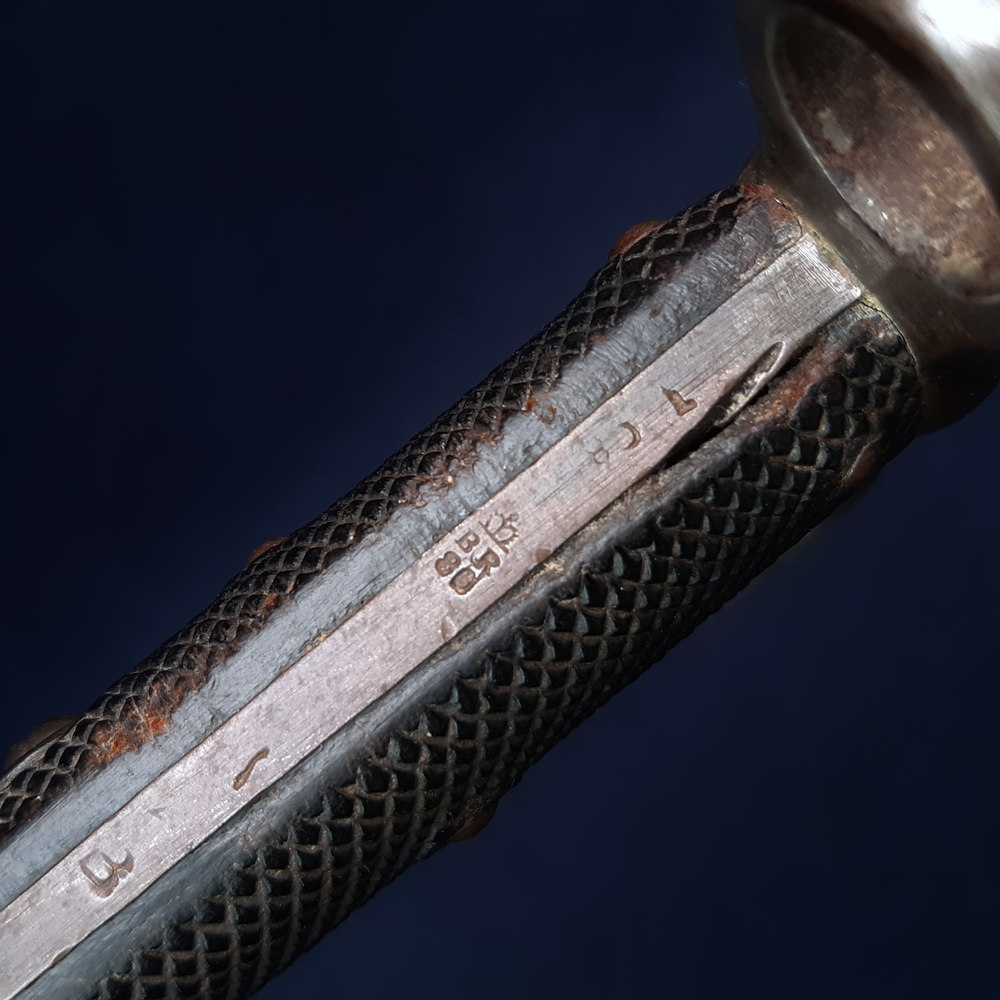
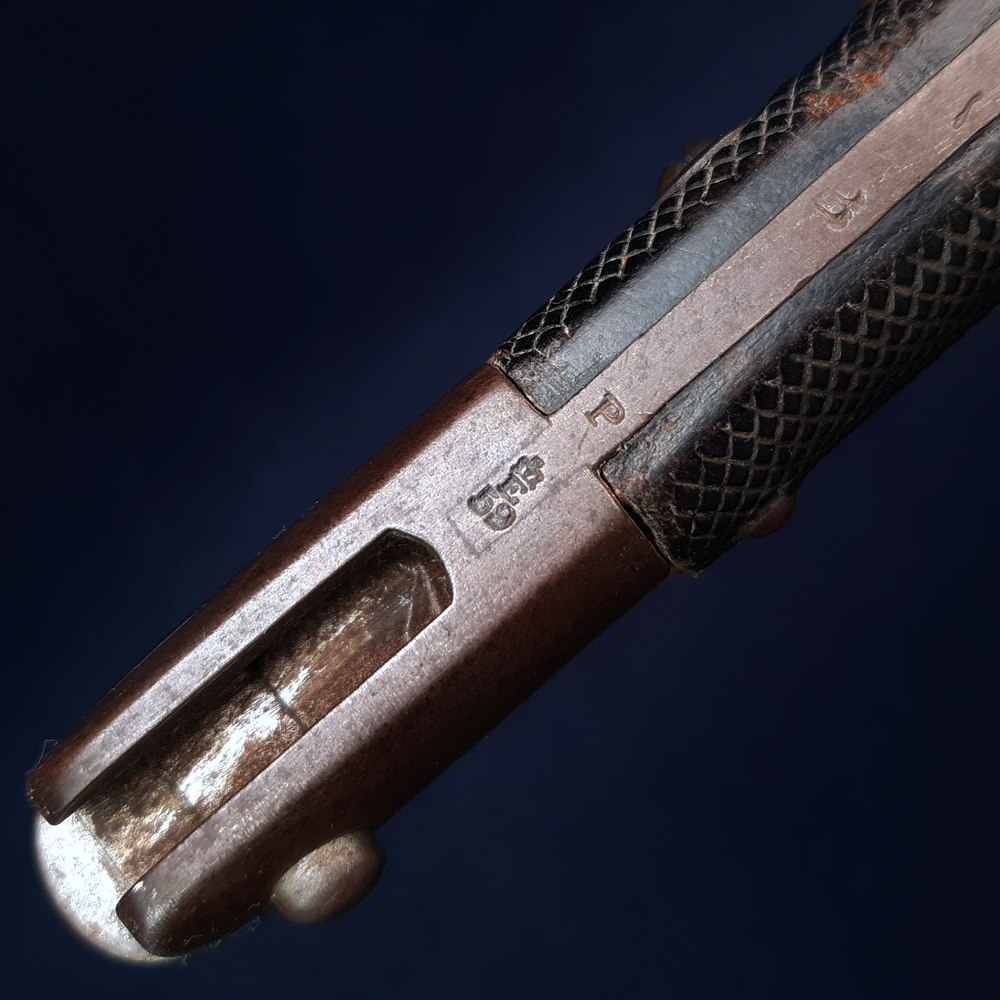
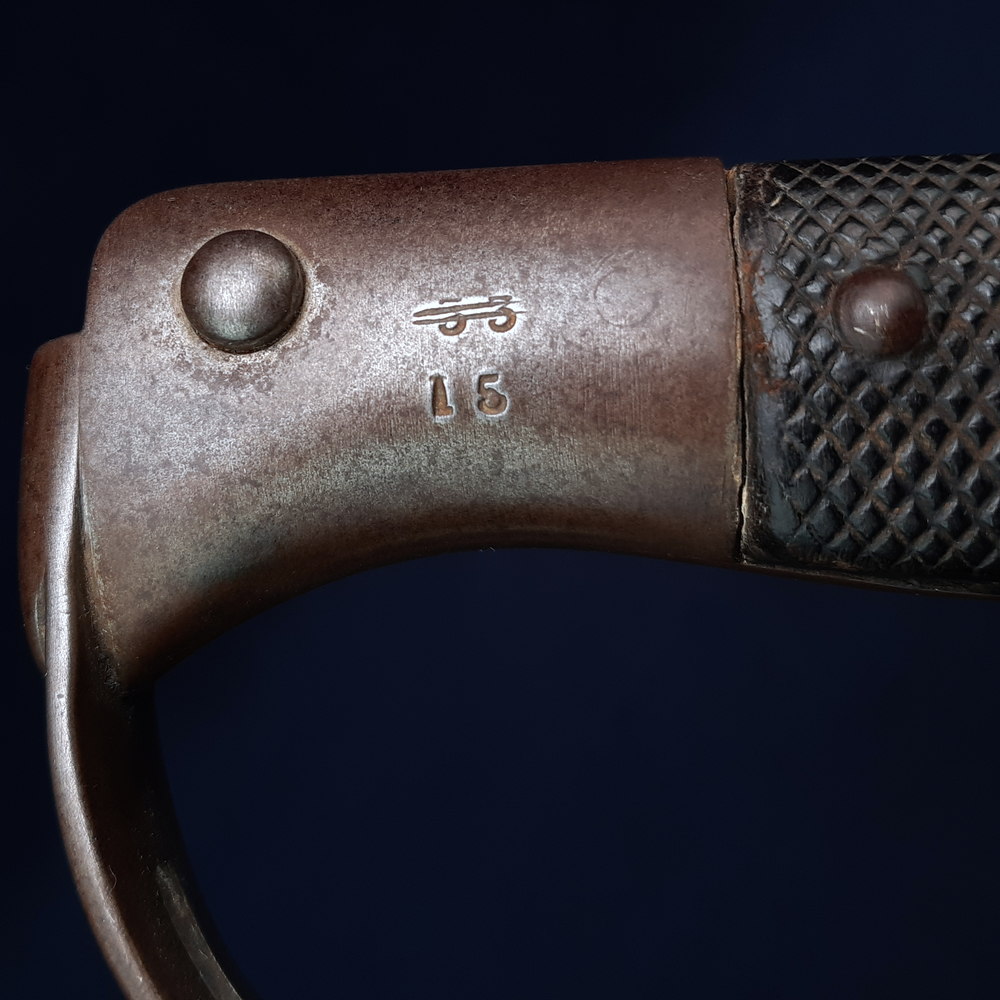
On the other side it is stamped with a broad arrow atop ‘WD’, meaning War Department property, another crown inspection mark with ‘E’ and an ‘X’ which indicates that the blade passed a manufacturer’s bending test. The spine of the blade has another Enfield stamp, a ‘W’ and an ‘R’. The exposed tang has another Birmingham repair stamp, ‘1’, ‘08’, ‘B’ and ‘P’. The pommel is stamped near the mortise slot with another Enfield crown inspection mark, and near the locking button with serial or rack numbers ’33’ (this later cancelled with strikethroughs) and ‘15’.
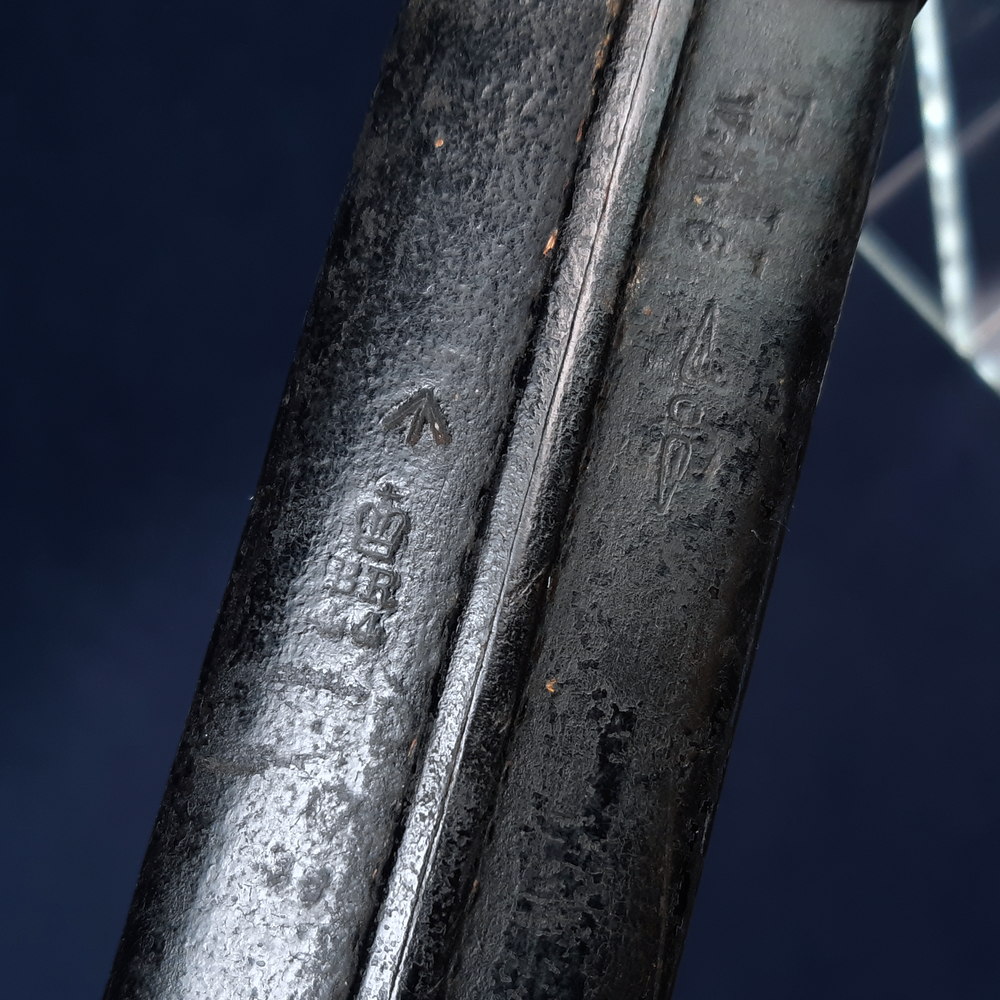
The leather of the scabbard is stamped next to the seam with a broad arrow, another Birmingham repair mark with ‘BR’ over ‘44’ and another faint crown inspection mark. On the other side it is stamped with ‘W.A.C.’, the ‘C’ double stamped, and another mark which has been cancelled with an ornate strikethrough (a circle and two teardrop shapes).
When mounted to a carbine-length Martini Henry rifle the 1879 Pattern bayonet gave a soldier good overall reach, and with its substantial hilt it could also serve as a fighting sword. Its saw-toothed back would have found use in brush-cutting, like other similar designs popular during the 19th century. Production of the bayonets at Enfield continued until 1890.
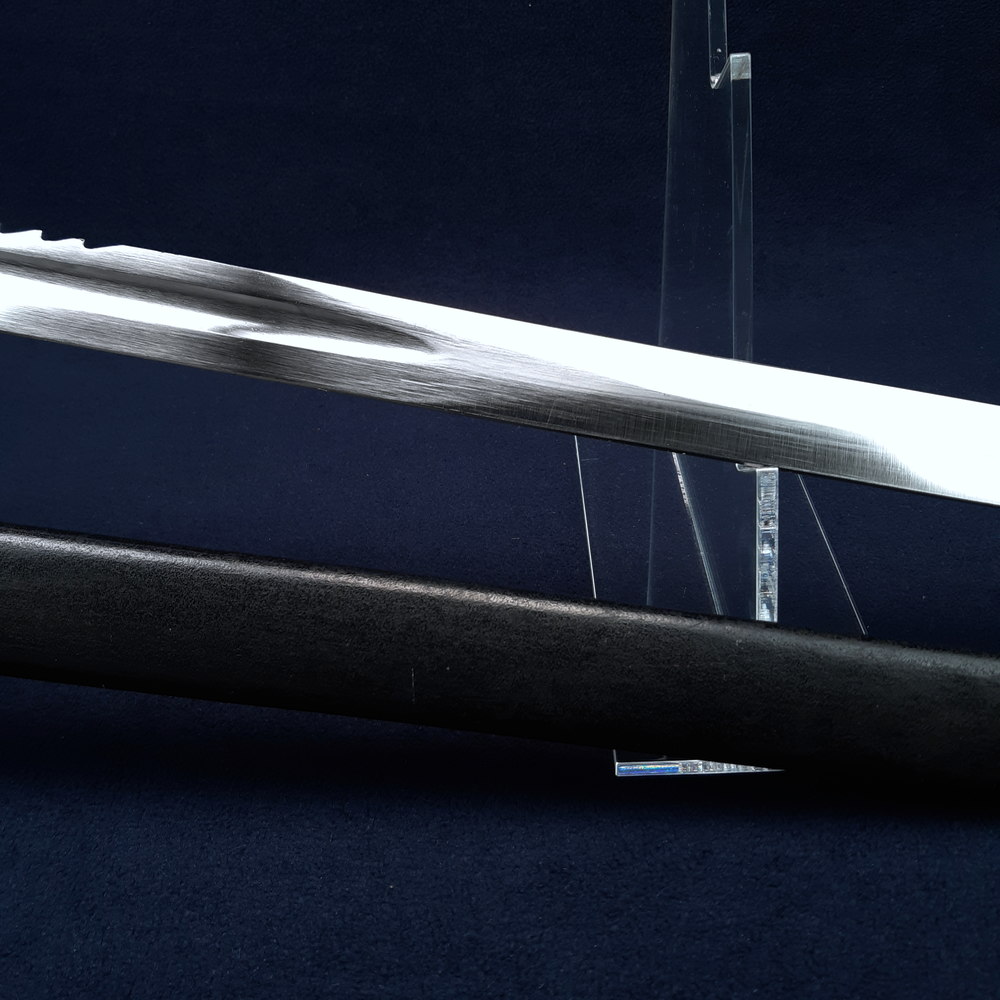
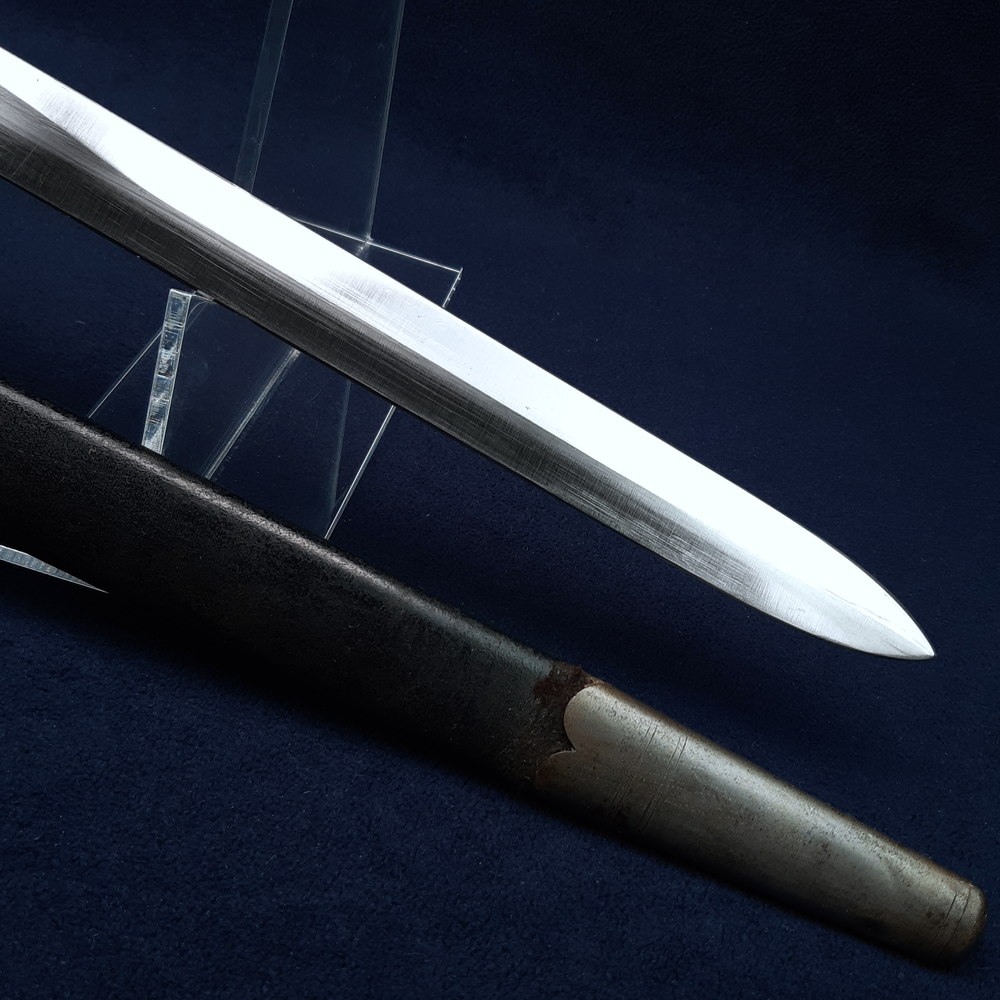
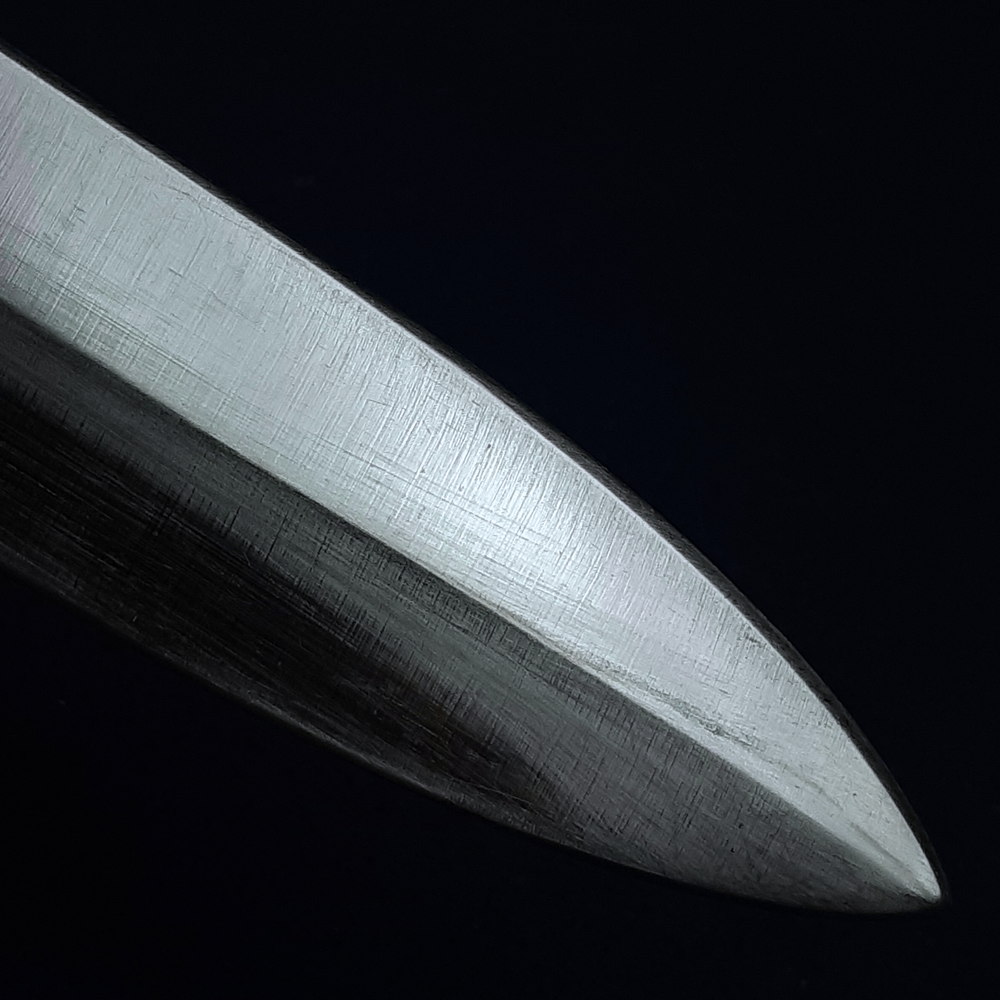
The blade has a bright polished finish with only a few tiny spots of patination. The tip of the blade has been sharpened and may have been reshaped, noting that the blade is about ¼ inches shorter than standard. The sawblade is excellent, with no broken teeth and only the uppermost tooth having any significant tip wear. The leather grips have very little handling wear, a few chips and abrasions to the edges of the scales where they contact the exposed tang. The hilt and steel pieces of the scabbard have a lightly patinated finish overall with some spots of darker patination. The exposed tang and pommel have even moderate patination. The chape piece of the scabbard has some small dents.
One fold has occurred in the scabbard leather just above the chape piece, which has resulted in a crease on the front face and a crack to the leather on the rear face which opens slightly with the weight of the chape piece. This does not interfere with sheathing and drawing. Take care to support the scabbard when the blade is unsheathed to prevent the crack opening and propagating.