British Lee Enfield 1907 Pattern Bayonet, Ampleforth College Officers Training Corps
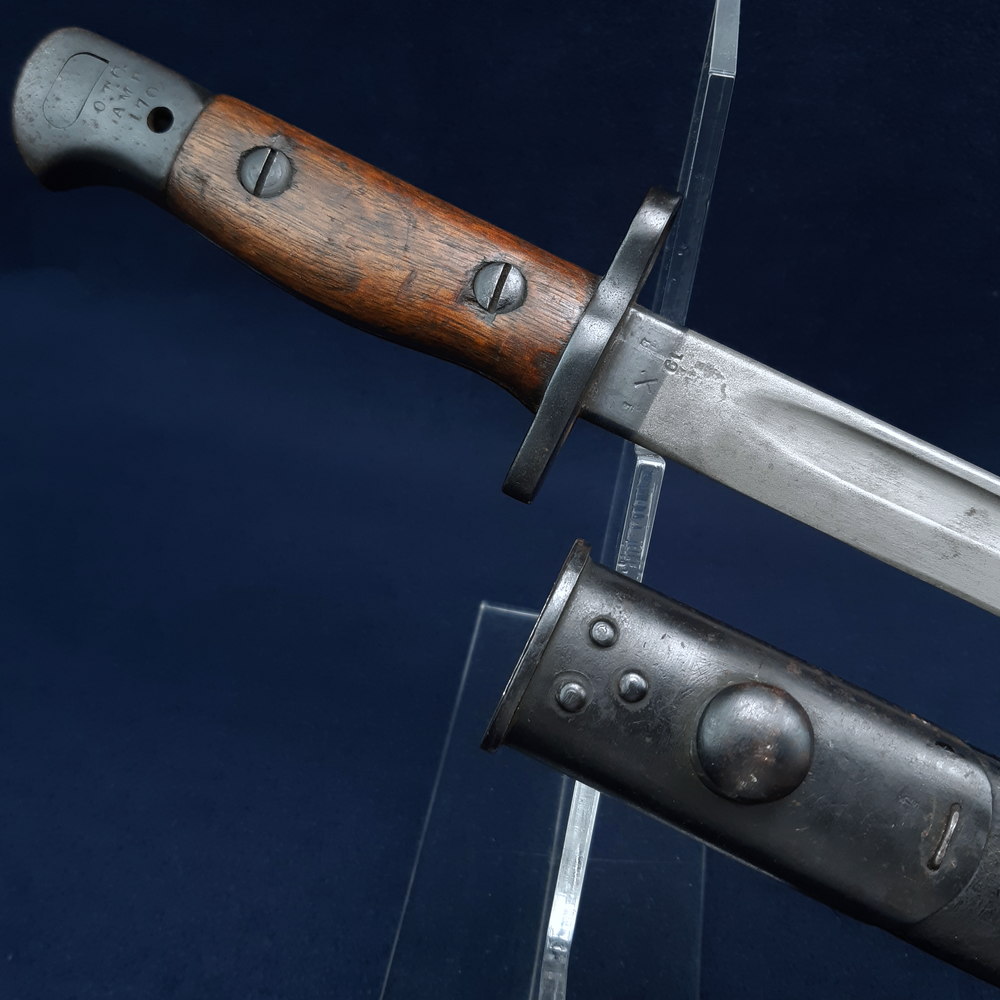
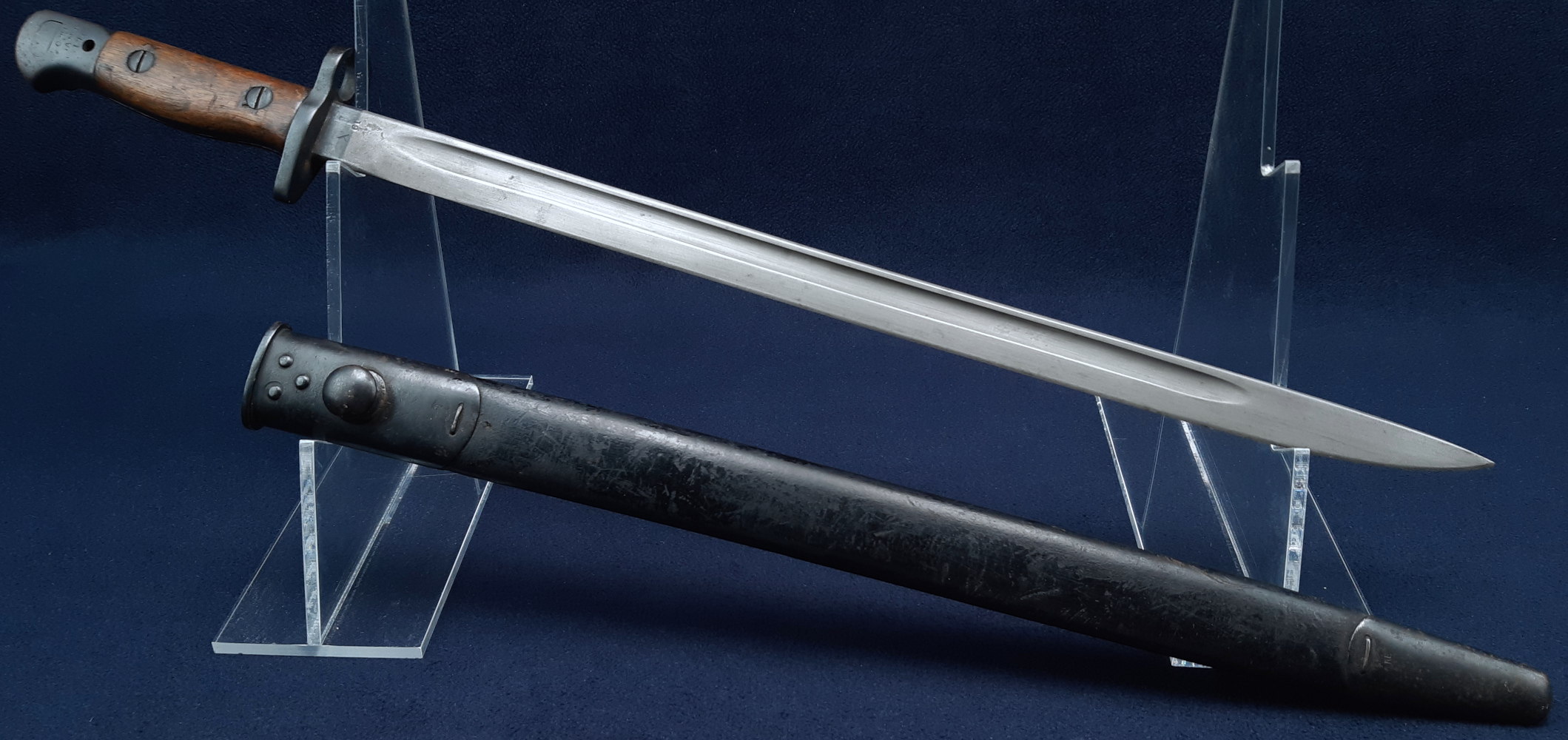
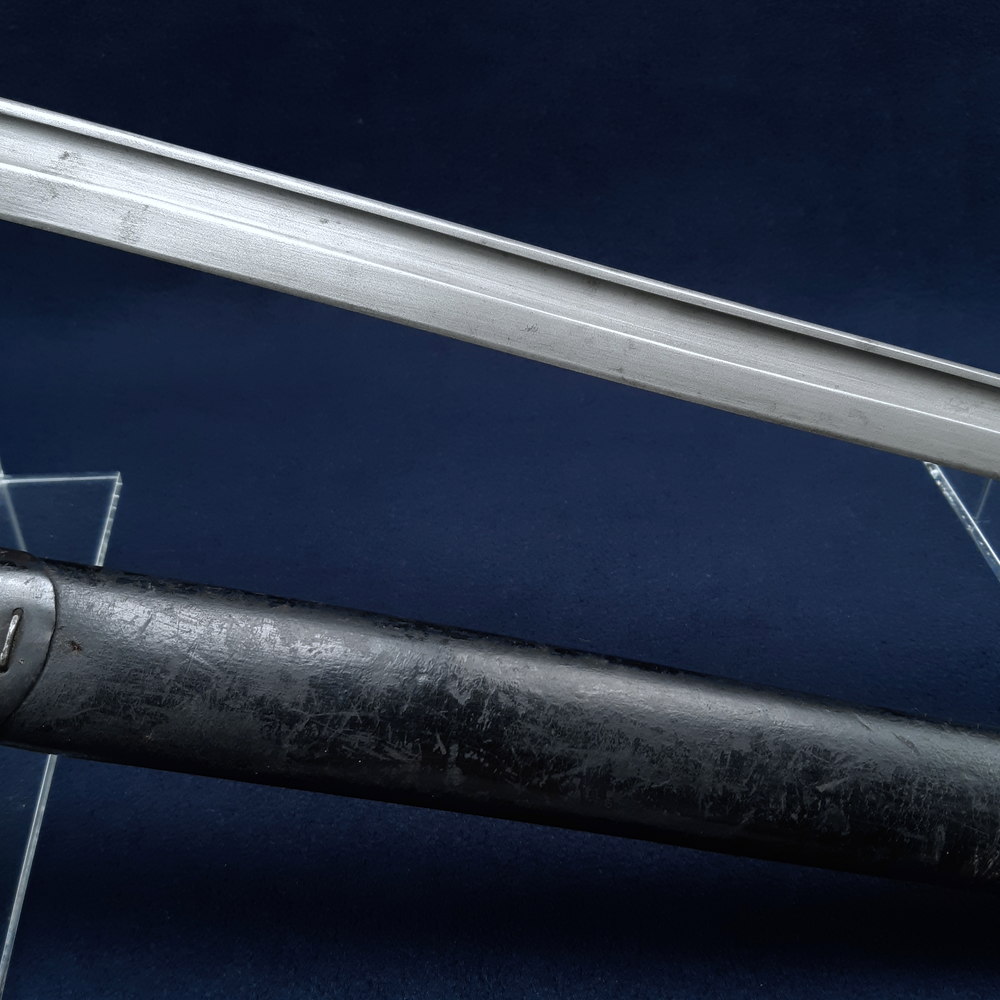
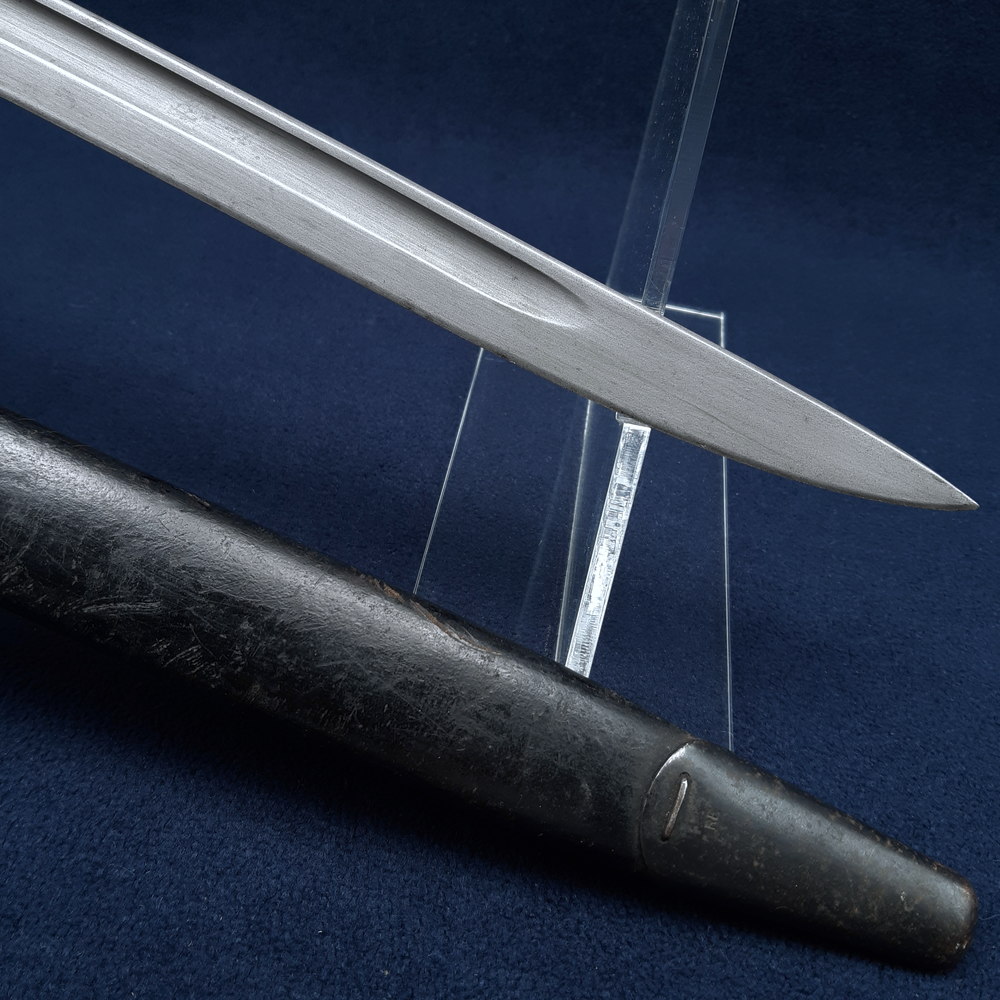
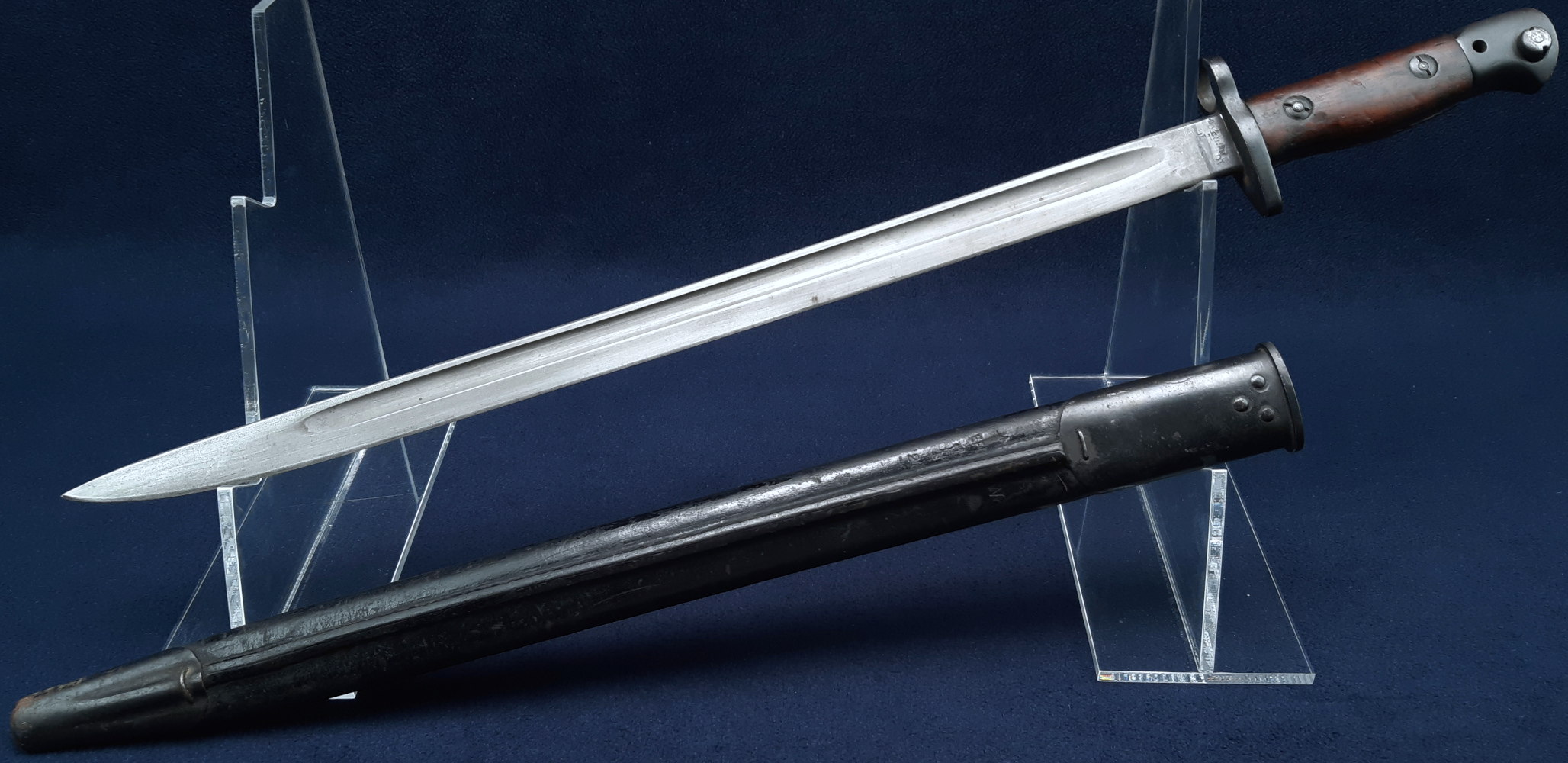
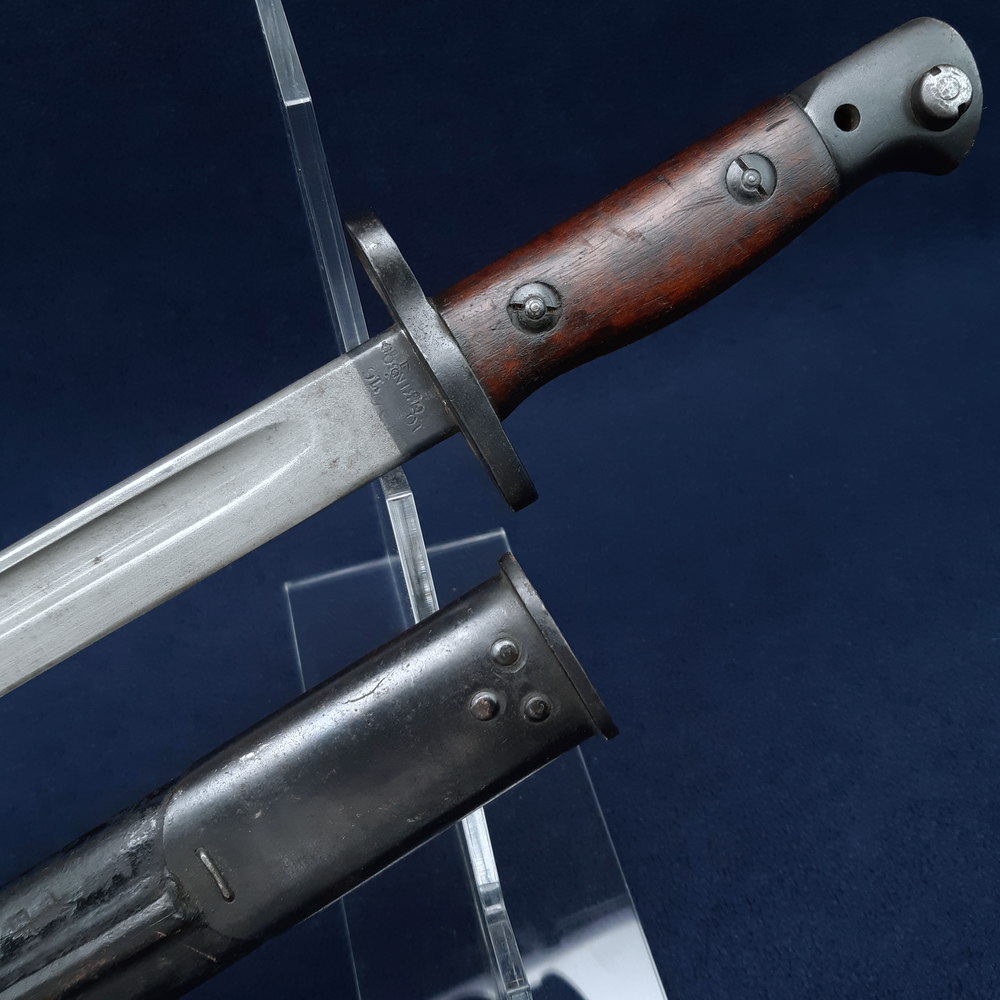
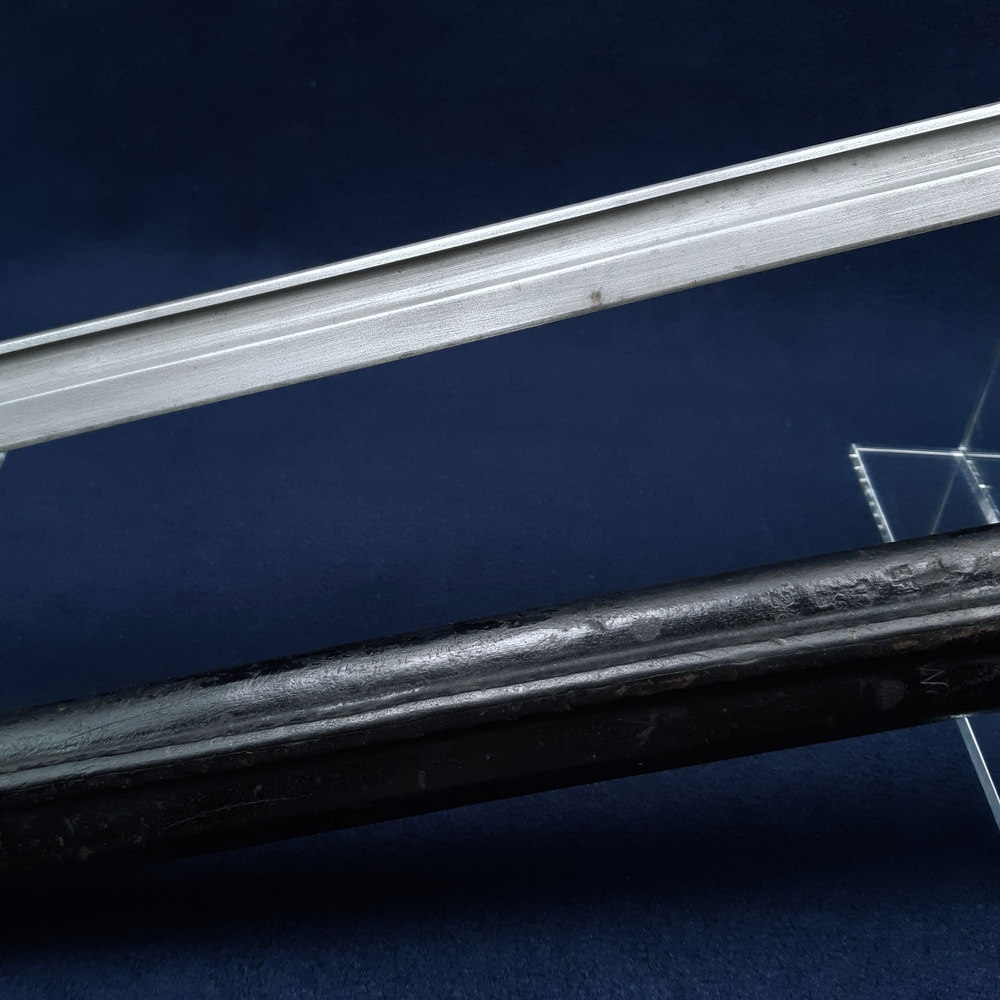
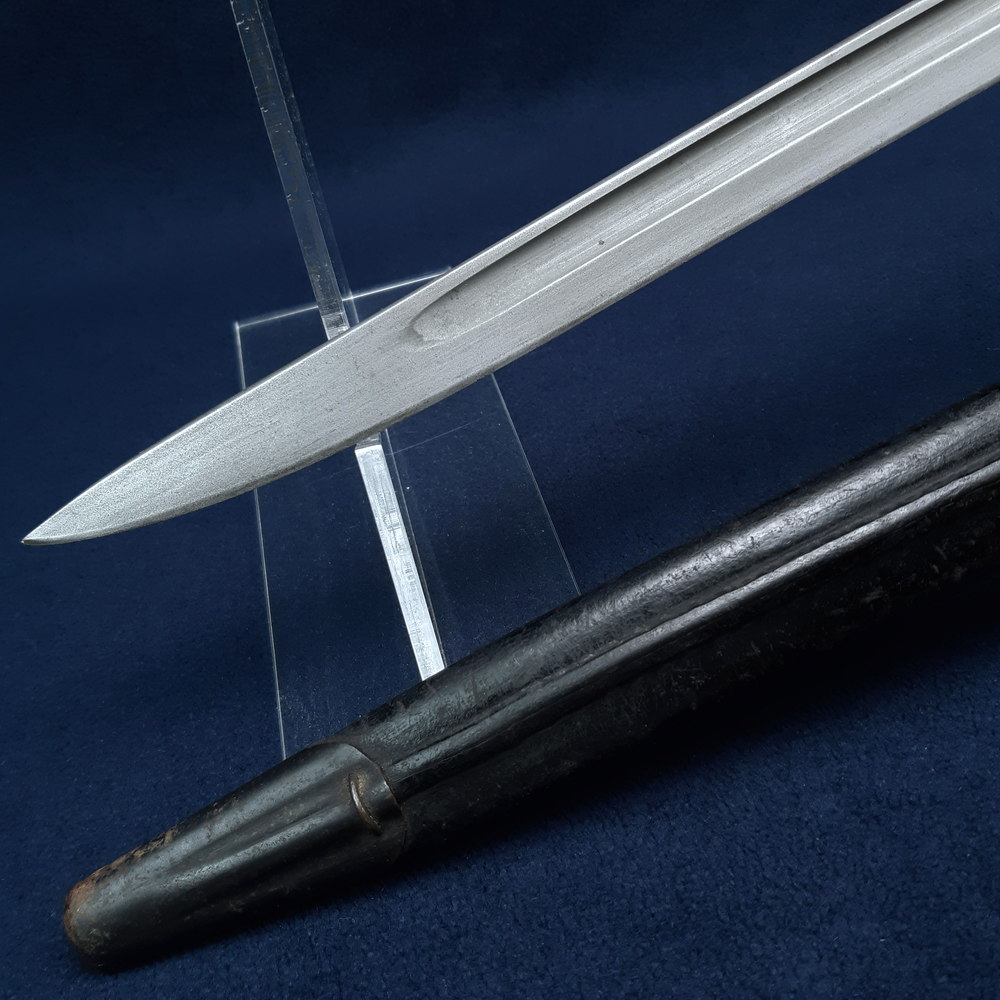
Straight single-fullered knife blade, steel hilt with muzzle ring, wood slab grips secured by two screws, steel beaked pommel with oil hole and locking button. Black leather No. 1 Mk 2 scabbard with steel locket & circular frog stud and steel chape piece.
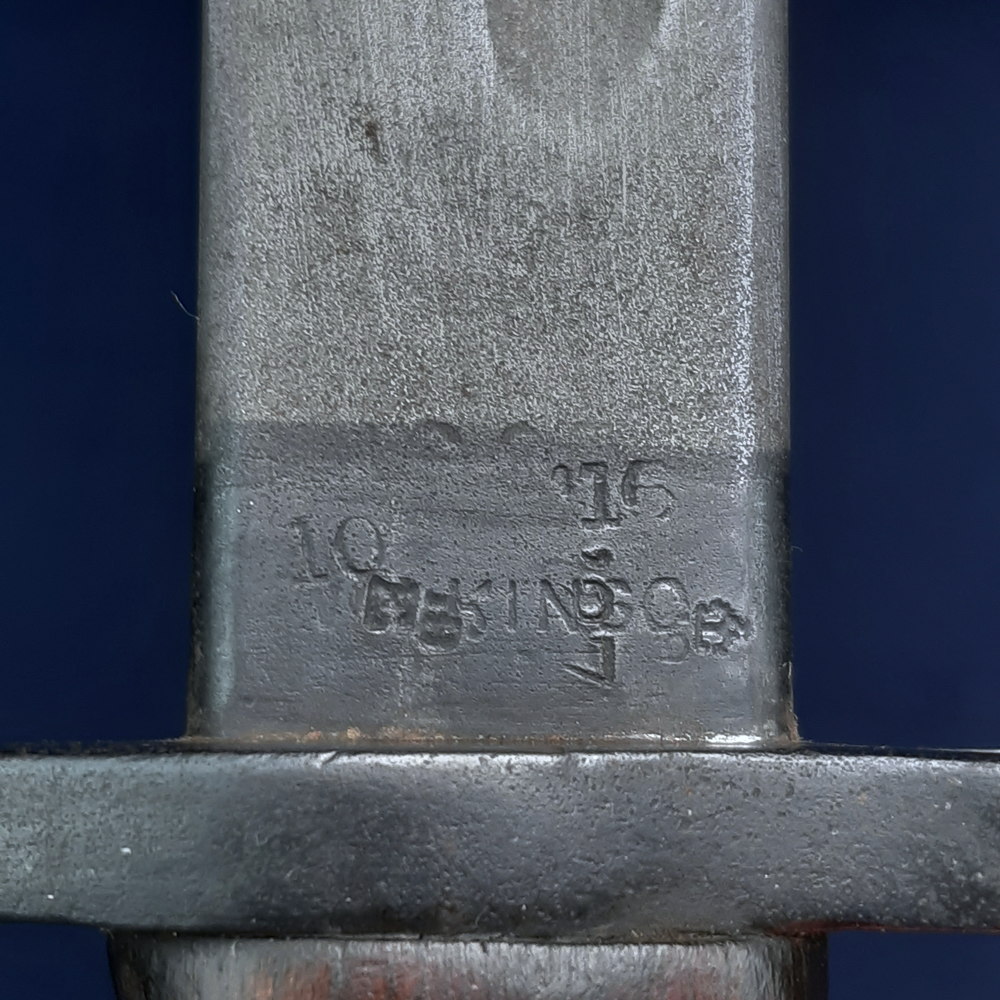
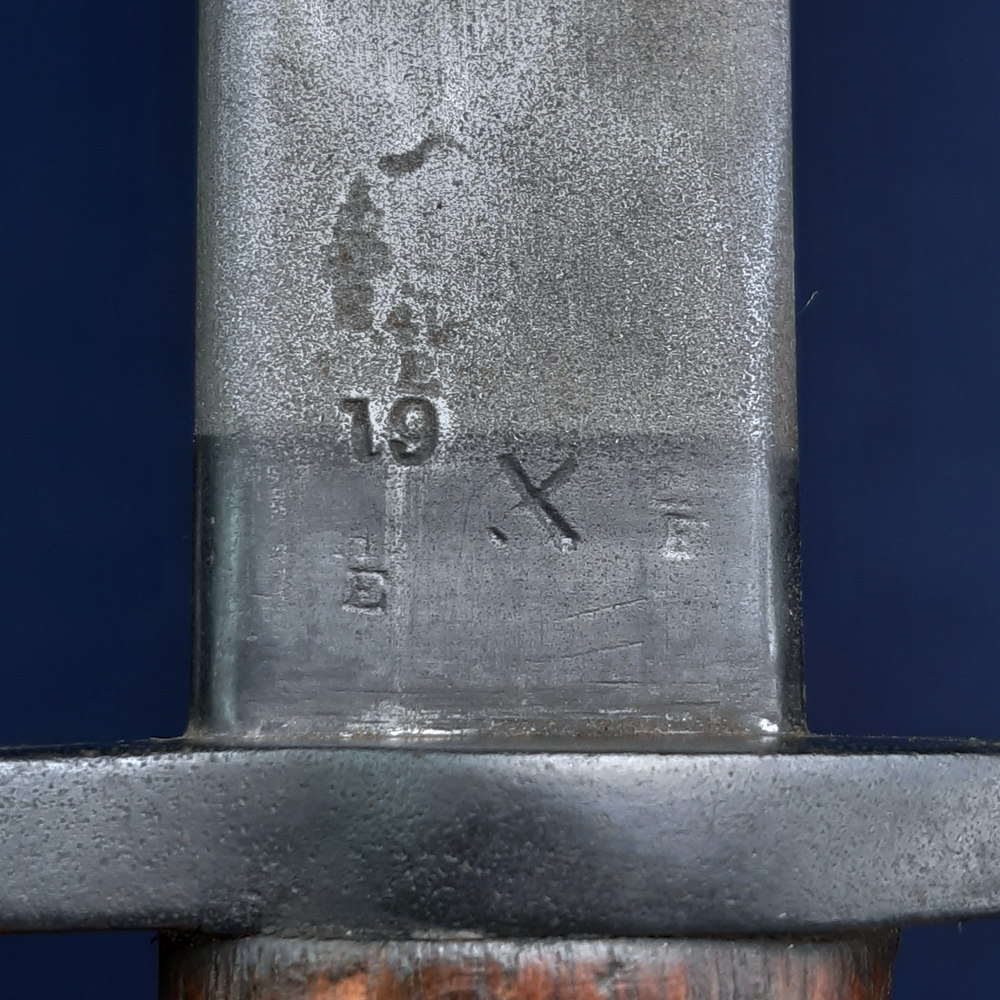
The ricasso is stamped on one side with a crown over ER, 1907 (the pattern) ‘10 16’, indicating the manufacture date of November 1916, the manufacturer’s mark ‘WILKINSON’, two crown inspection stamps with ‘E’ indicating the Royal Small Arms Factory at Enfield, and a reissue stamp dated ’27. On the other side it is stamped with a ‘broad arrow’ War Department stores mark, four more crown inspection stamps with ‘E’, a reissue stamp ’19 and an ‘X’ indicating that it passed a manufacturer’s bending test.
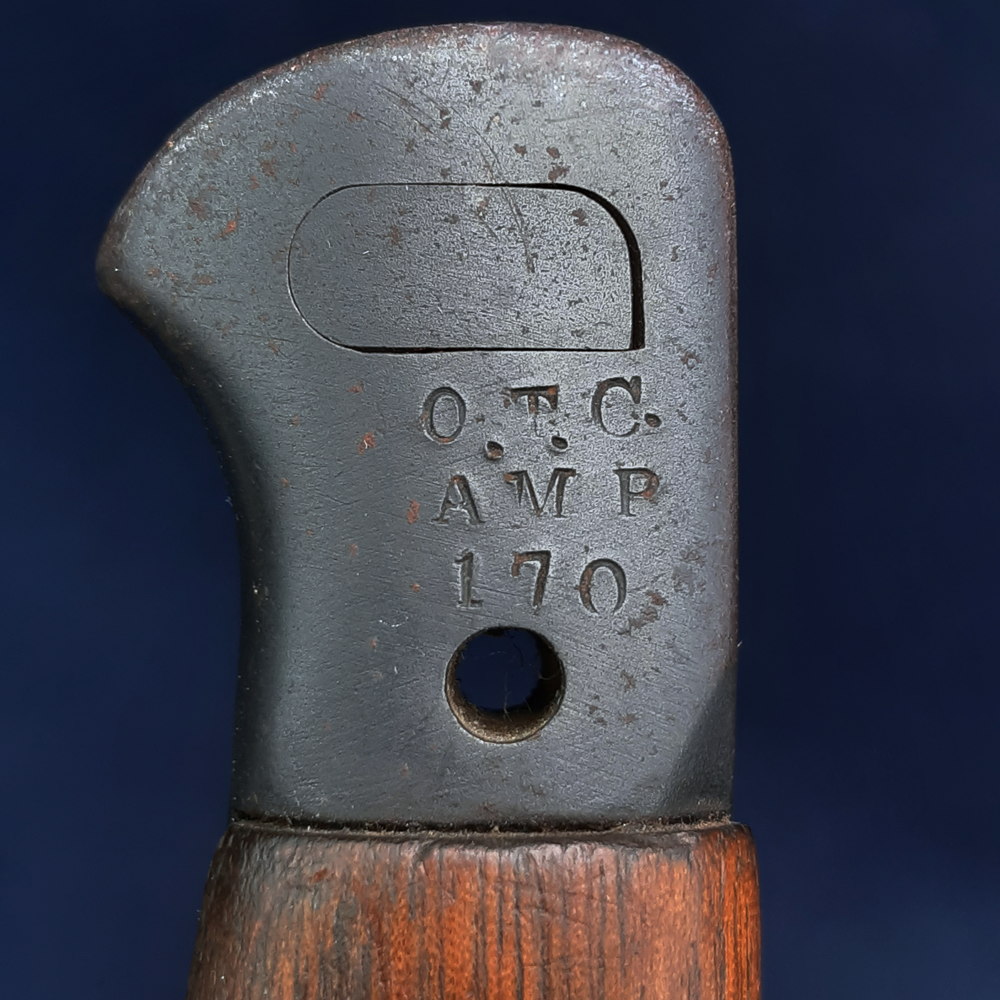
The pommel is stamped with ‘O.T.C’ over ‘AMP’ over ‘170’. This indicates that this was bayonet number 170 used by the Ampleforth College OTC (Officers’ Training Corps).
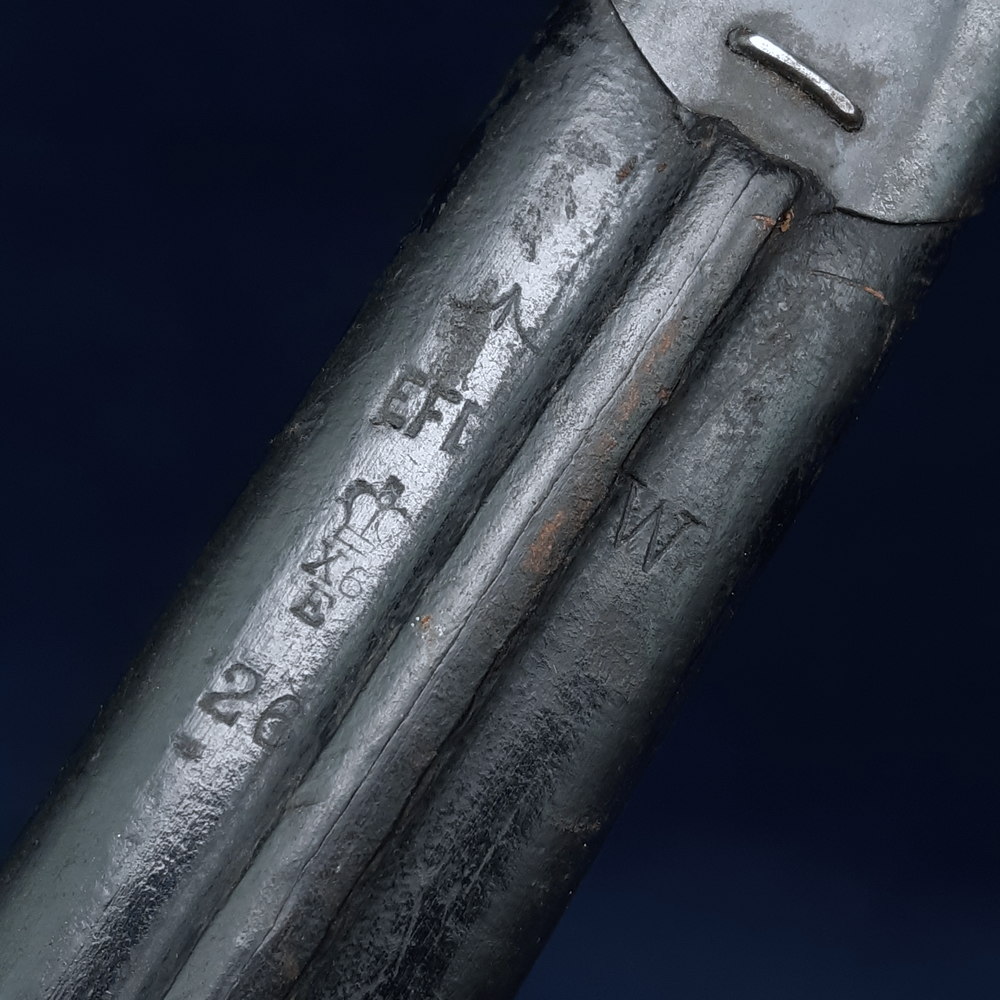
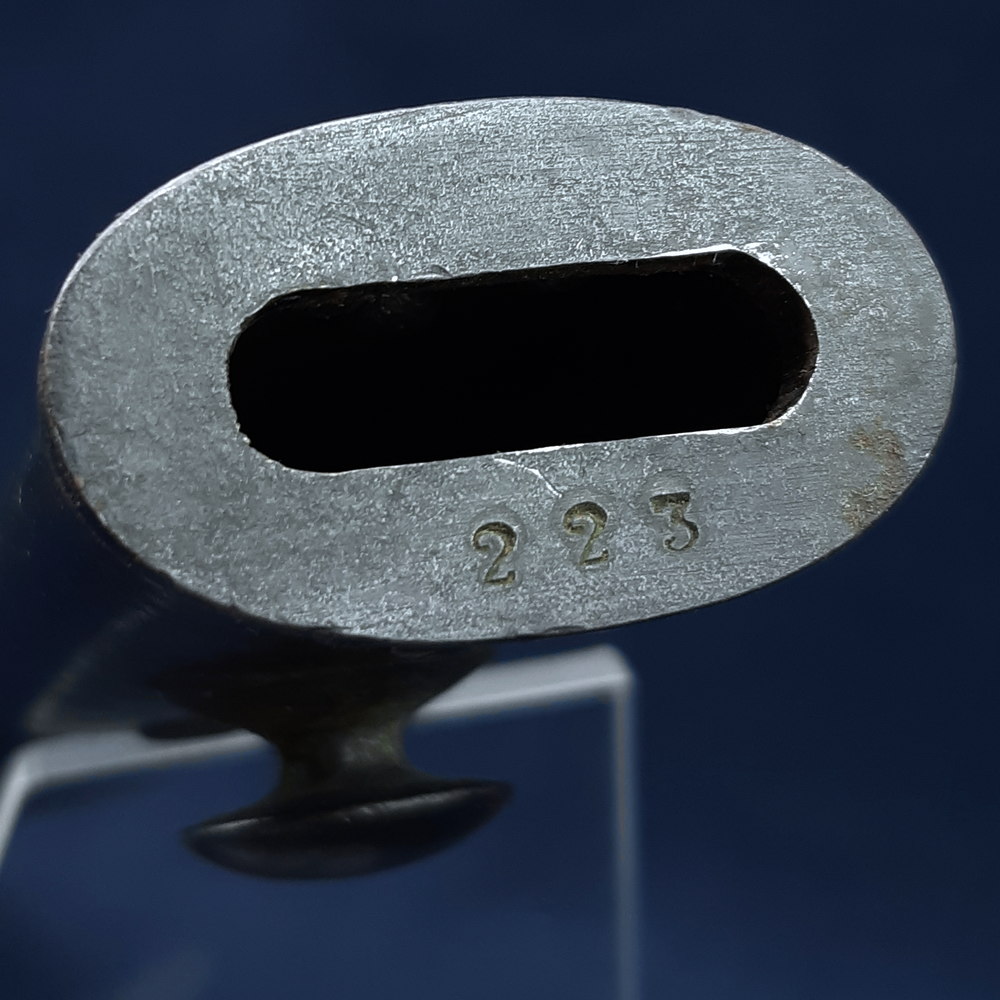
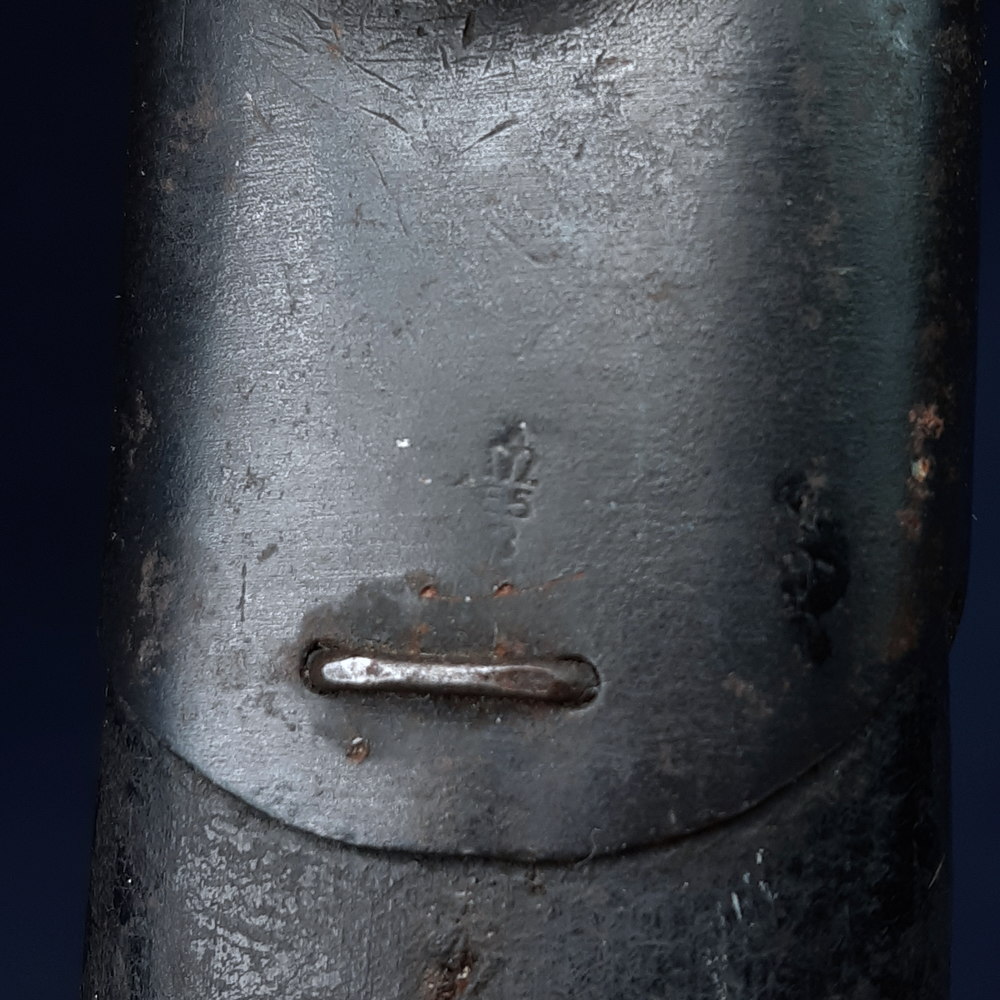
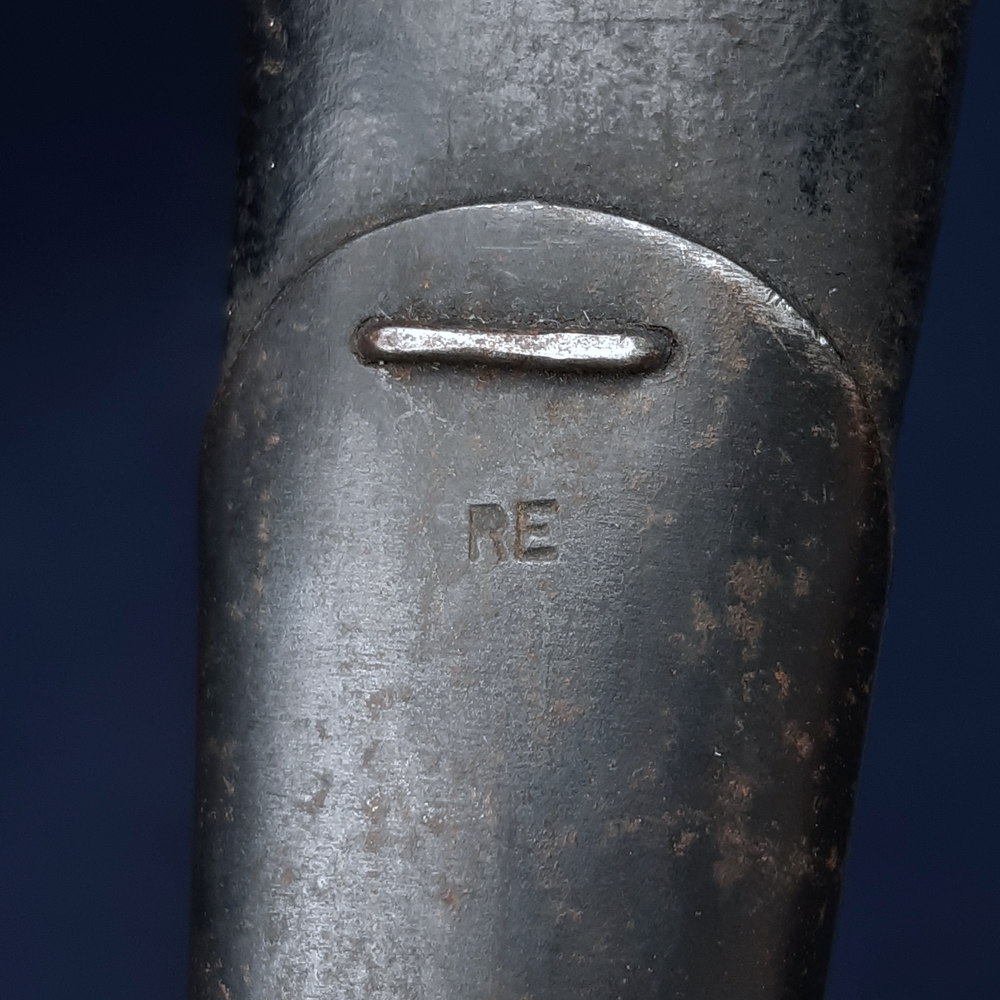
The leather of the scabbard is stamped next to the seam on one side with another broad arrow, the manufacturer’s mark ‘EFD’ for Enfield, another crown inspection mark with ‘E’, and the manufacture date ’26. On the other side of the seam is stamped a letter ‘W’ indicating that the scabbard leather was made with a waxed finish. The throat piece of the scabbard is stamped at the mouth with the serial number ‘223’, and next to the staple with another crown inspection mark. The chape piece is stamped next to the staple with ‘RE’, indicating that this component was manufactured by Remington in the United States.
Most of the blade markings are somewhat rubbed yet are blued over, with the exception of the ’27 reissue stamp which looks crisper. Combining this fact with the 1926 manufacture date of the scabbard suggests to me that this bayonet may have been officially refurbished in around 1927 involving refinishing of the blade and fitting of a new scabbard.
A large number of volunteer units sprang up across the United Kingdom during the late 1850s after a national appeal by the Secretary of State for War, due to a perceived threat of invasion of Britain by France. Oxford and Cambridge universities were quick to join in with the formation of their own units of Rifle Volunteers, and some schools also followed suit from 1860. As years went by the number of school volunteer units only increased until by 1898 there were 39, with another surge of interest due to the Boer War nearly doubling that number by 1902.
These units provided early experience for young men who would then be in a good position to move up to the university units and perhaps a military career afterward. There was lively competition between Corps for shooting prizes in particular – although it may be said that success came in part with a school’s willingness to spend on equipment and training.
The Officers’ Training Corps were established in 1906 as part of the wide-ranging Haldane Reforms to the British Army’s structure. The OTCs were intended to alleviate the shortage of trained officers in the various volunteer units (Militia, Yeomanry, Volunteer Force and Reserve of Officers) by forming a system of junior training units in public schools and senior ones in universities. Some of the junior OTCs were formed out of the existing school Cadet Corps, which by this date numbered more than fifty, while senior OTCs were often formed from the university units.
Ampleforth College’s OTC was established in 1911, relatively late and with no previous history of Cadet activity at the school. 9 boys from its OTC were gazetted as Army officers from its founding up to 1914.
During WW1 the OTCs became training units for supplying officers to the regiments, an OTC Certificate generally being considered full qualification to become an officer, although some individuals chose for various reasons to enlist in the ranks. Ampleforth OTC supplied 24 officer recruits and 15 other ranks between August 1914 and March 1915.
During WW2 a group of related officers who trained in the OTC together at Ampleforth in the 1920s came to play key roles in the British special forces – David Stirling and his brother William joined the SOE then were founding members of the SAS, while their cousin Simon Fraser, 15th Lord Lovat, led 4 Commando at Dieppe and the Special Service Brigade at the Normandy landings.
The Ampleforth College Corps still exists today as part of the Combined Cadet Force (CCF), with Army and RAF contingents. Under the modern Army structure it serves as a leadership and training organisation, teaching a number of military skills but with no obligation to go on to full military service.
The blade has a matt parkerised finish with some small spots of light patination. No damage to its edge, which is sharp, while its tip is very fractionally rolled. The blued band at the shoulder of the blade is intact although as noted may have been refinished during its service life. The hilt, exposed tang, pommel and scabbard fittings are blued with some light rubbing on raised edges, most notably the locking button. Some very small spots of rust patination on the pommel end. A few small dents to the wood grips. The leather scabbard body has some light dents and surface abrasion to the otherwise glossy waxed finish. All the scabbard’s stitching remains intact.