British WW1 1913 Pattern Bayonet, Dated 1917 by Remington
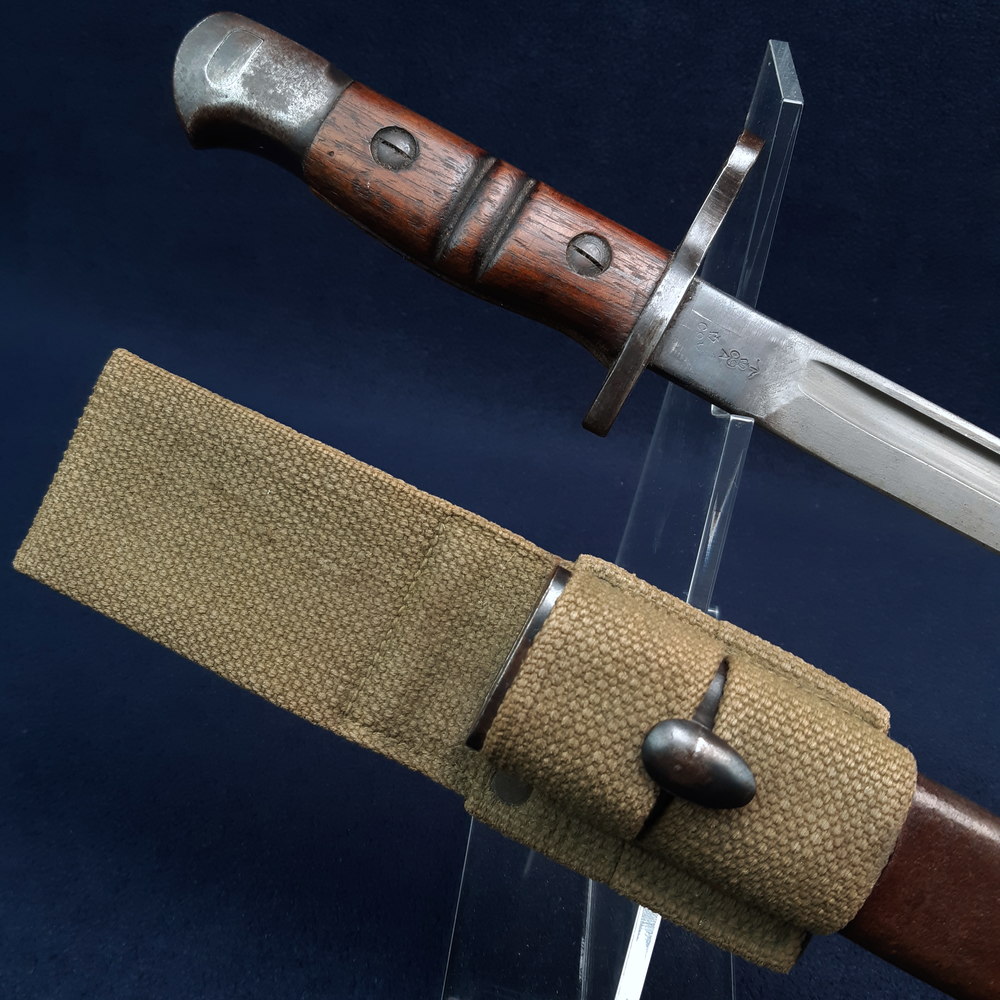
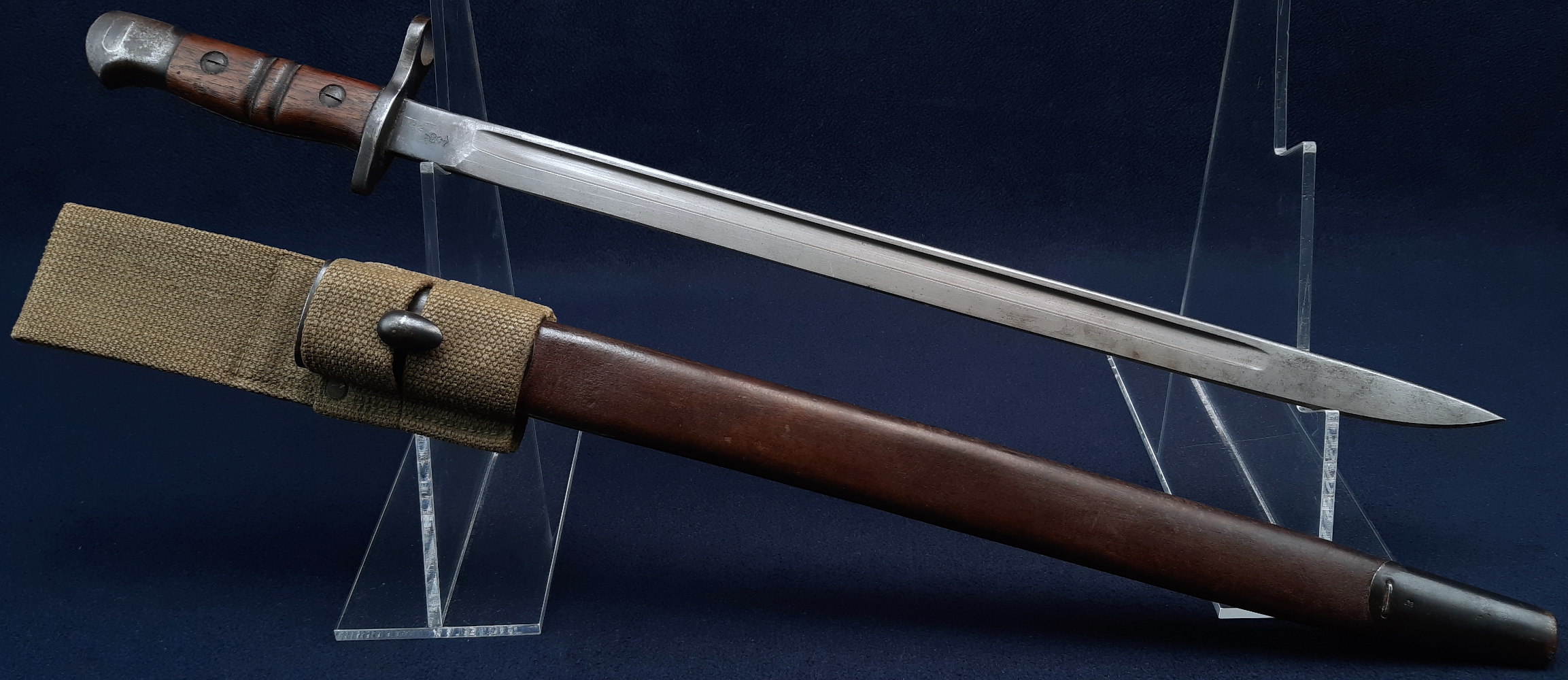
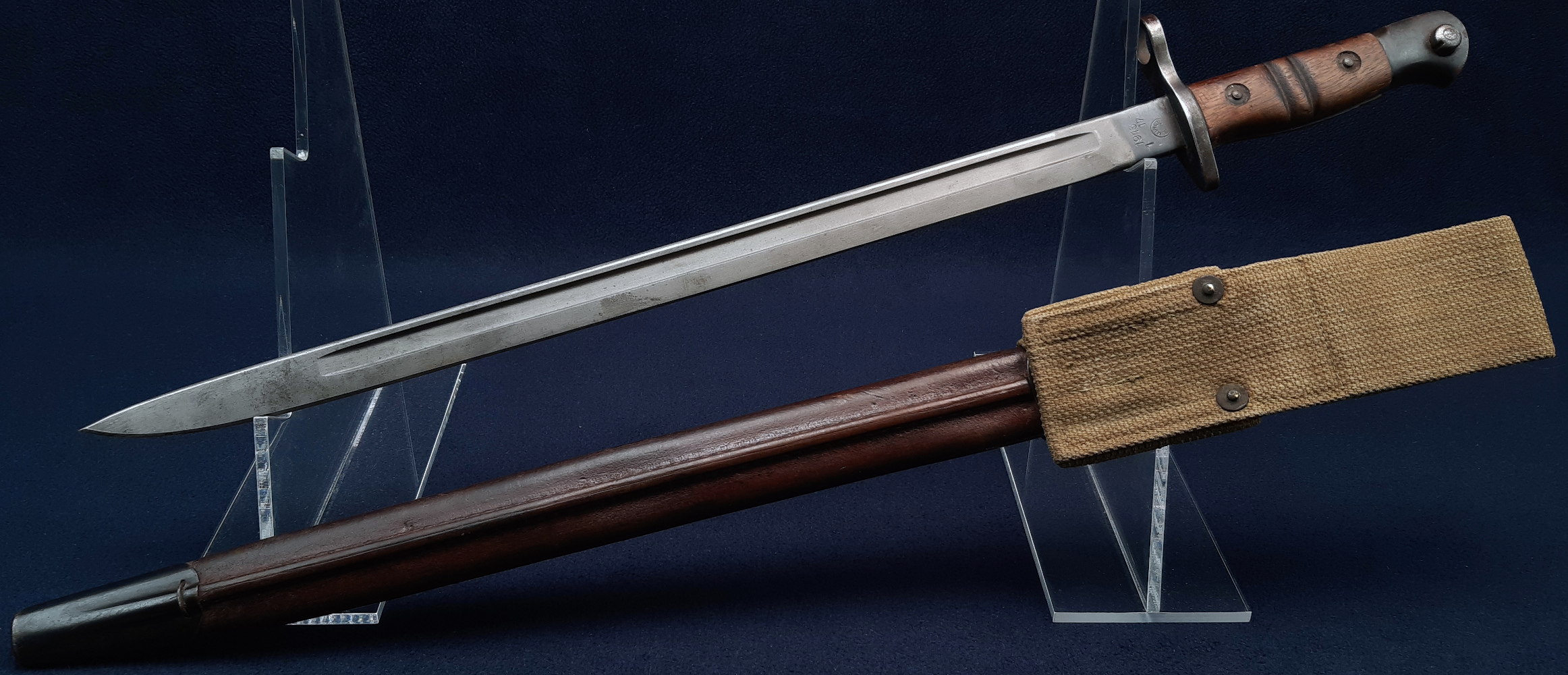
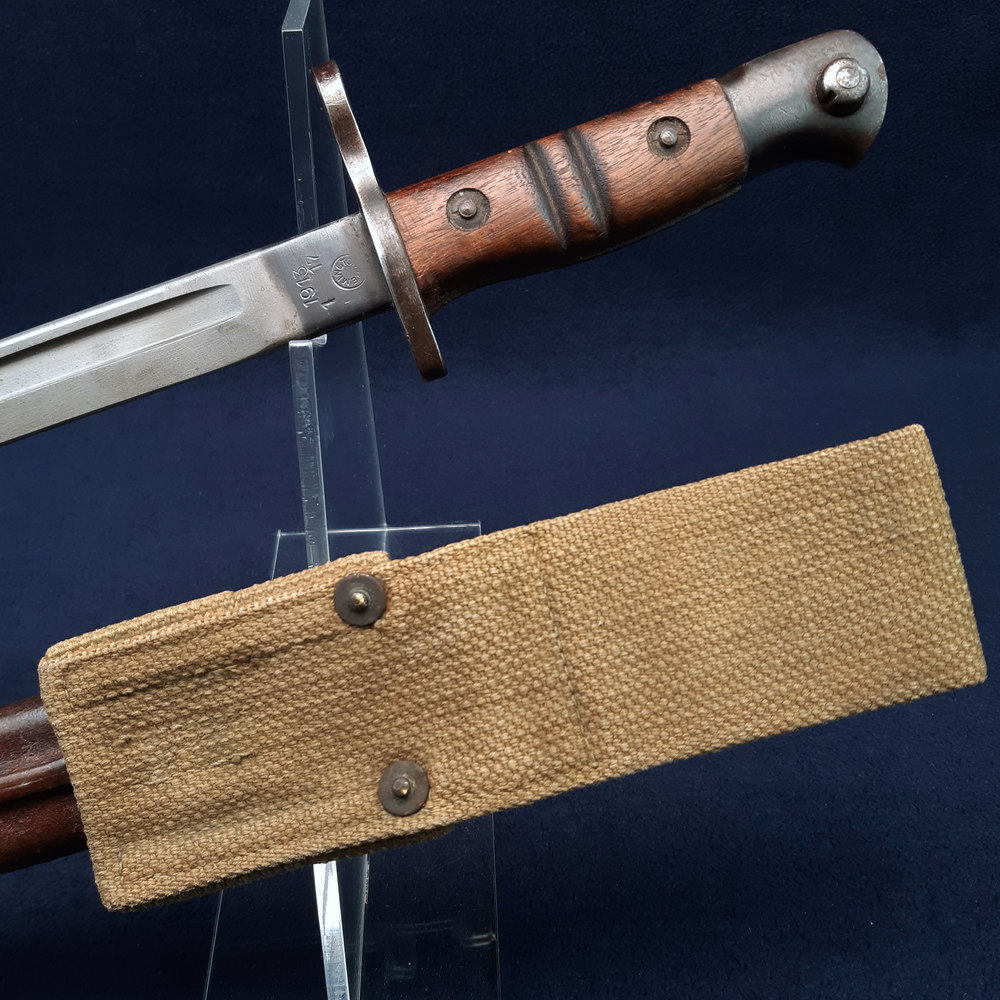
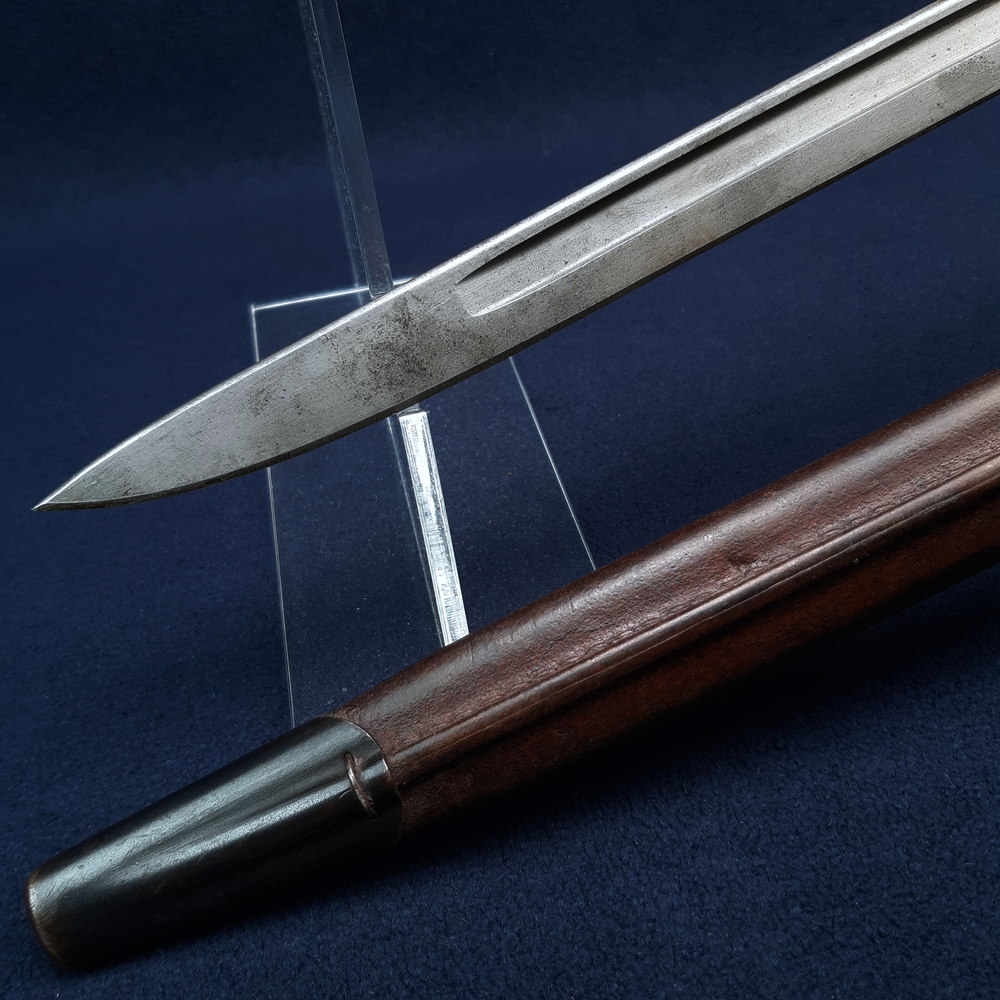
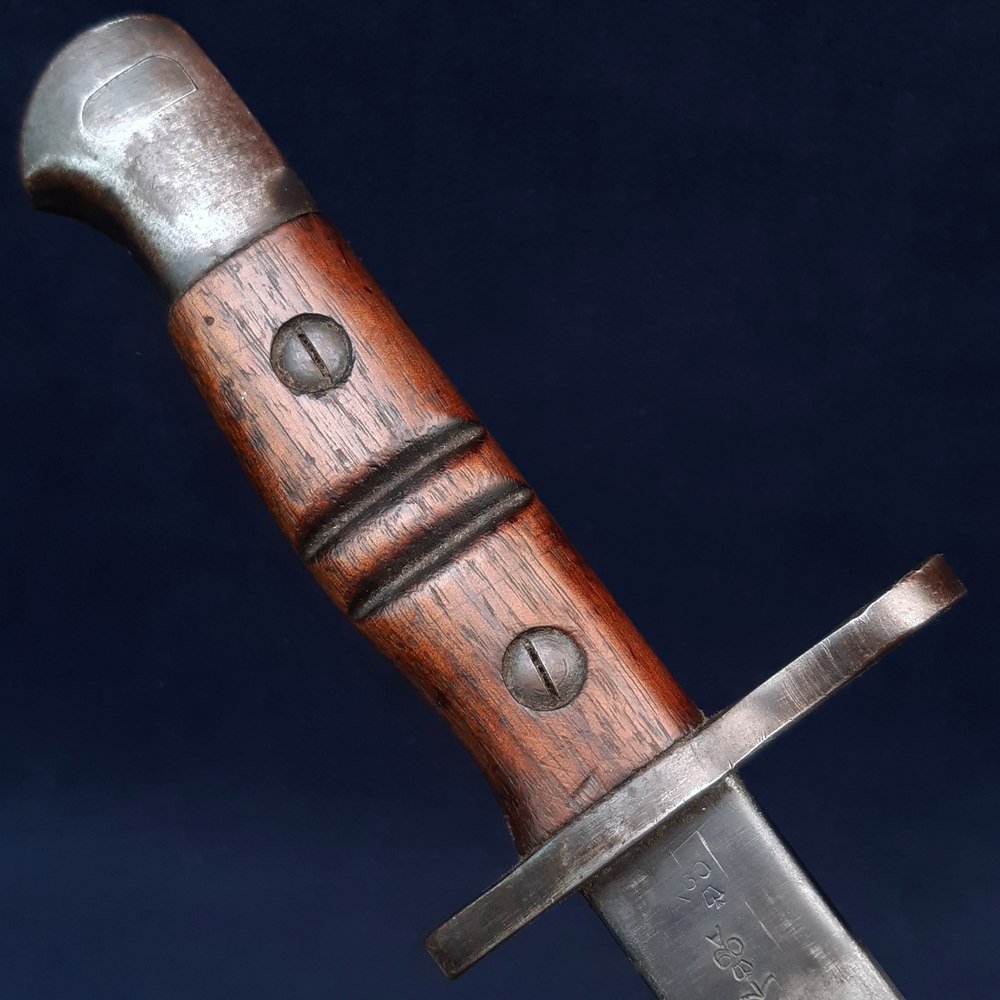
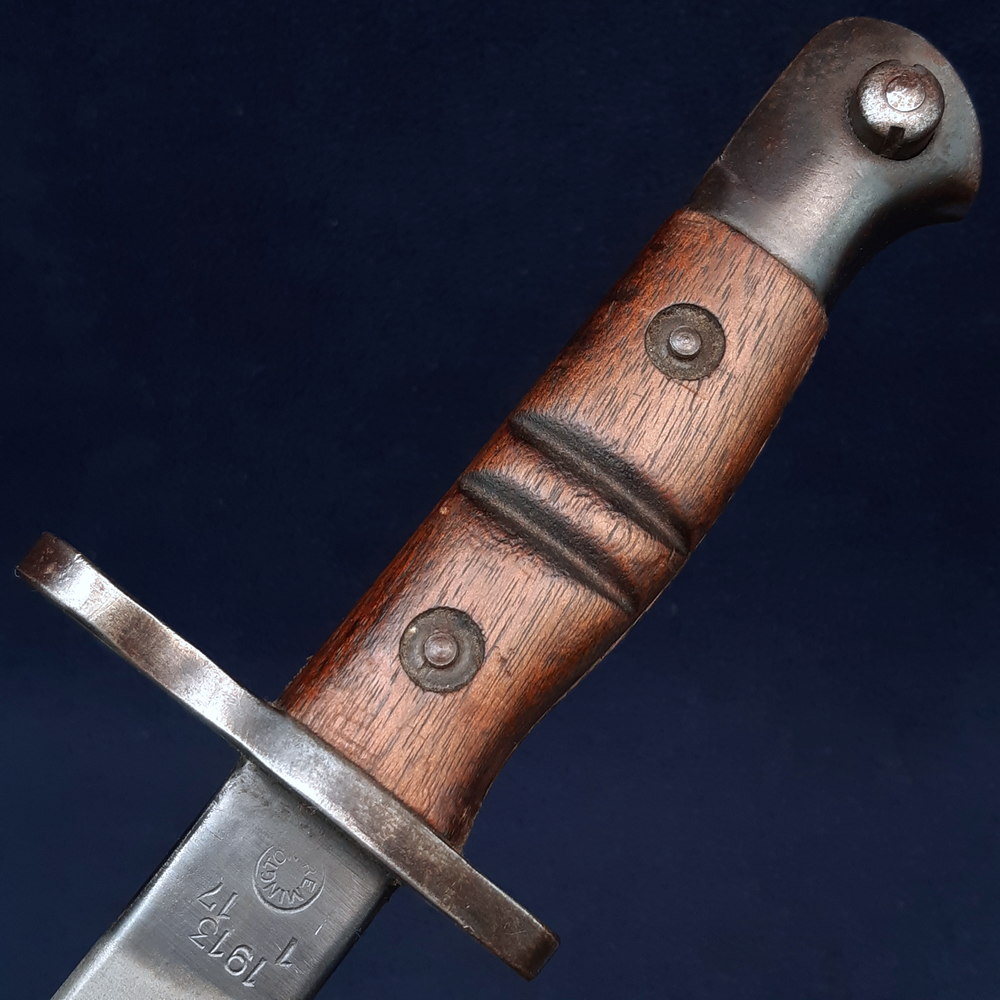
Straight single-fullered knife blade, steel hilt with muzzle ring, wood slab grips with characteristic pair of cut grooves on each slab, secured by two screws. Steel beaked pommel and locking button. Brown leather scabbard with steel locket & chape piece, the locket with teardrop frog stud. Olive green 1908 Pattern canvas frog, slightly shorter than standard at 7.5 inches long rather than 8.25 (a known variant - see example 123, p31, Bayonet Belt Frogs Part I by Carter).
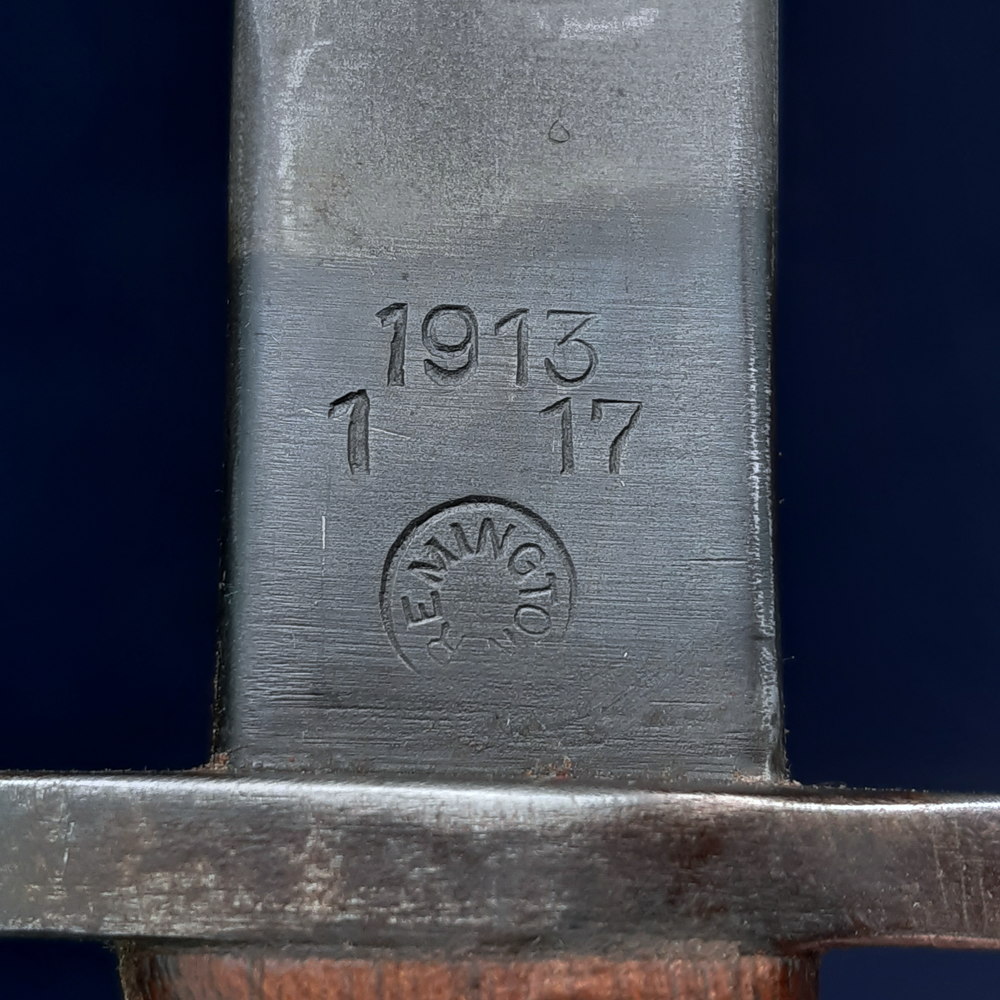
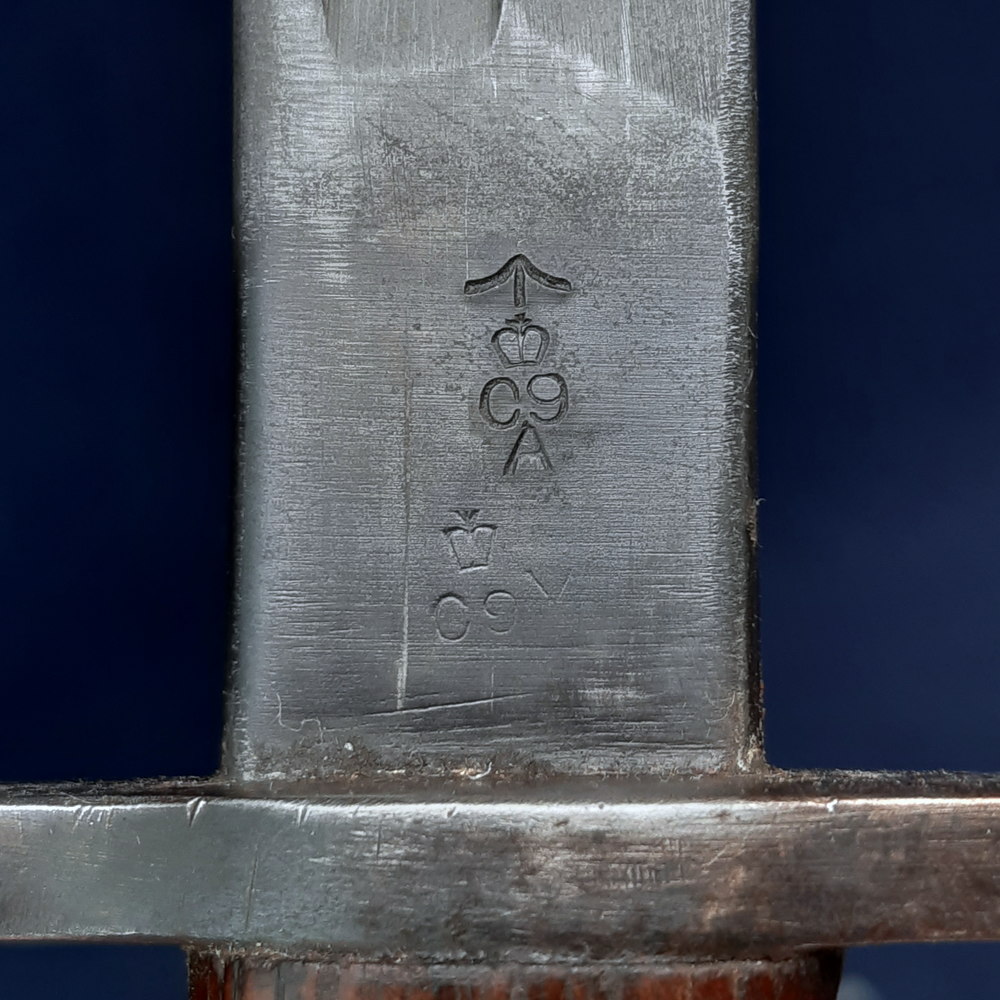
The ricasso is stamped on one side with ‘1913 1 17’, indicating that it is the 1913 Pattern, manufactured in January 1917, and the maker’s mark ‘Remington’ within a circle. On the other side it is stamped with a ‘broad arrow’ War Department stores mark, two crown inspection marks with ‘A’ for America and an ‘X’ indicating that the blade passed a manufacturer’s bending test.
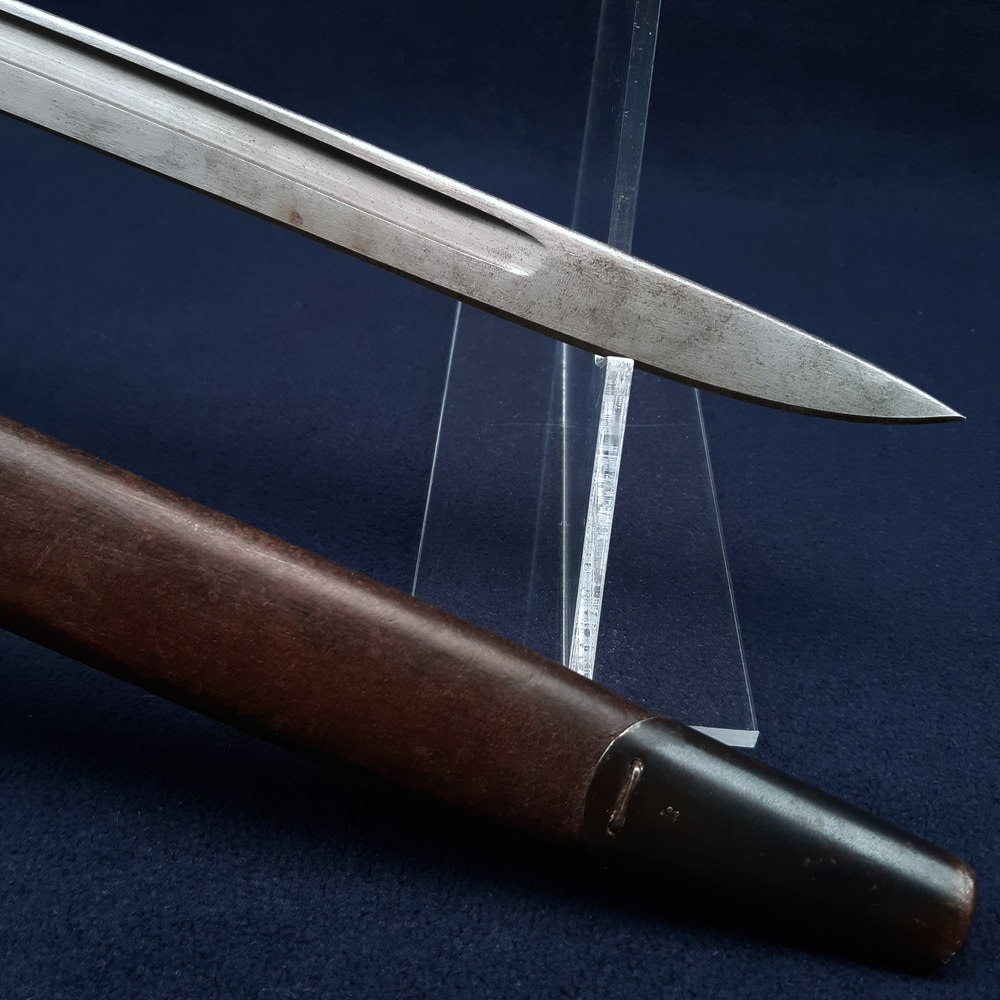
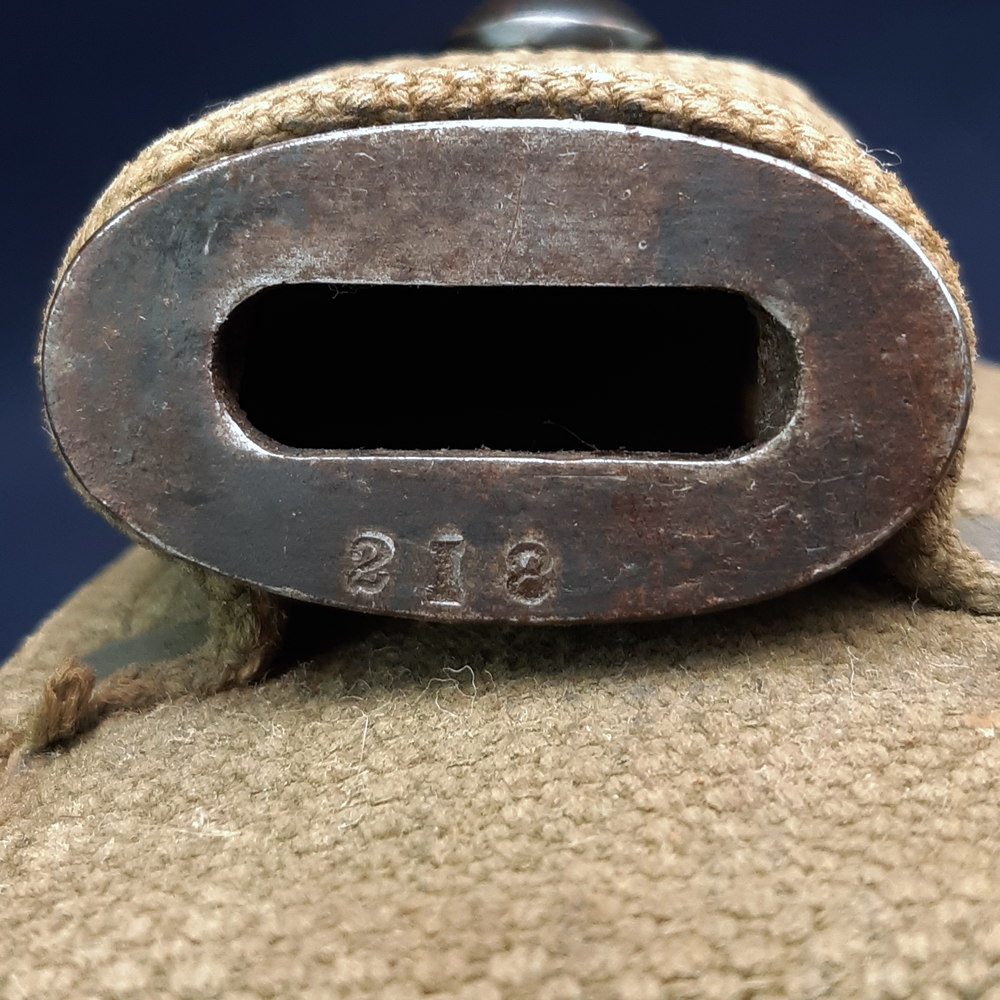
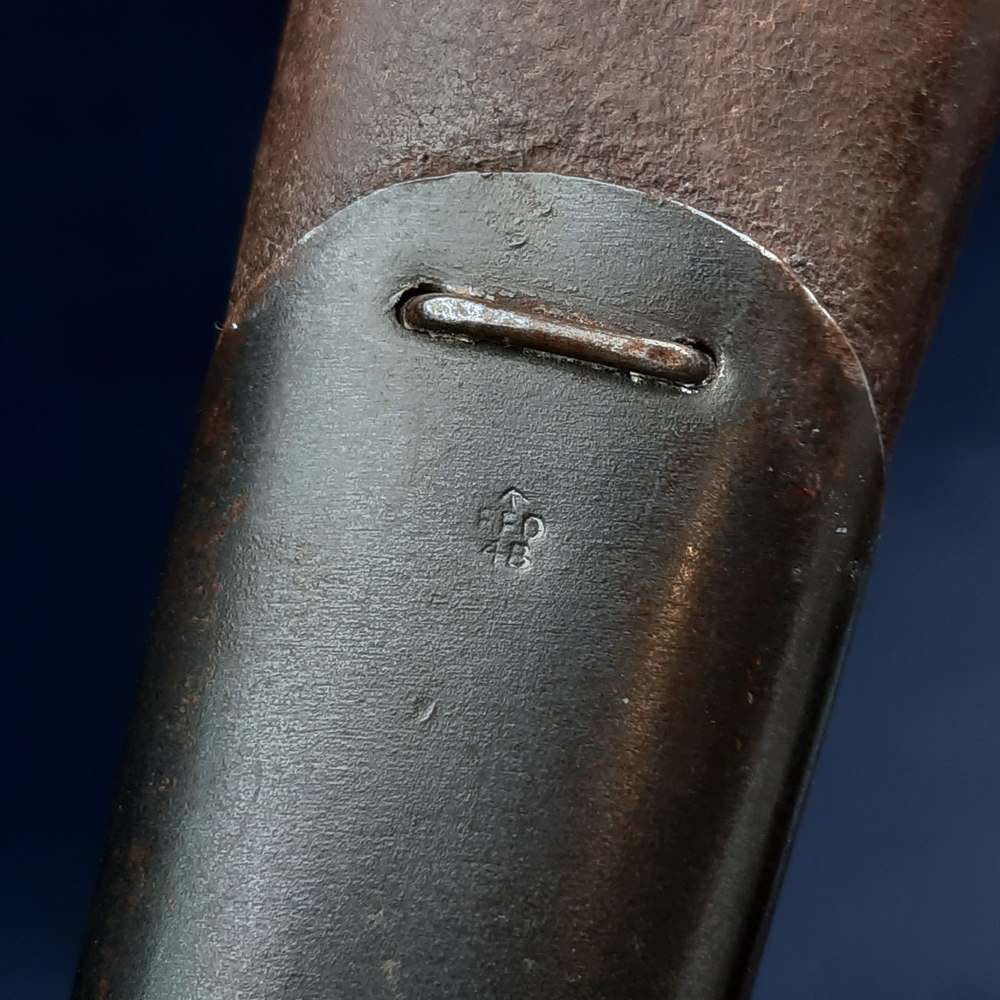
The leather section of the scabbard is stamped next to the seam with another broad arrow and the manufacture date ’14. The throat piece of the scabbard is stamped at the mouth with ‘218’. The chape piece of the scabbard is stamped with a broad arrow, ‘EFD’ for the Royal Small Arms Factory at Enfield and ‘48’.
Inspired by the German Mauser M98 rifle, the experimental Pattern 1913 Enfield was intended to be the next generation British infantry rifle, firing the new .276 cartridge. The outbreak of war curtailed its development and the well-established SMLE was retained in service instead. However with an urgent need for rifles the government opted to redesign the 1913 to take the existing .303 cartridge, calling this new rifle the Pattern 1914 (NB: the bayonet’s design did not require modifications, therefore it remained the ‘1913 Pattern’ bayonet). The production of these rifles and their bayonets was contracted to American manufacturers – an early handful were made by Vickers but it was clear that British plants were best left to make the SMLE.
Remington was the largest manufacturer of the 1914 Pattern and its associated bayonet, producing 1,243,000 of the bayonets between 1916 and 1917. The 1914’s design was vindicated in that it proved to be more accurate than its predecessor and it was deployed principally as a sniper rifle, the Winchester-made rifles in particular thought to be of high quality, suitable for fitting with telescopic sights. It saw service again during WW2 as rear echelon equipment, e.g. with the British Home Guard, although some were again used in a sniper configuration.
The 1913 Pattern should not be confused with the M1917 Enfield, also known as the ‘American Enfield’, which was essentially the same rifle design, this time adopted by the Americans and rechambered in their own .30-06 Springfield cartridge. Its bayonet was also essentially the same as the British model, but with US service marks and a ‘1917’ pattern stamp.
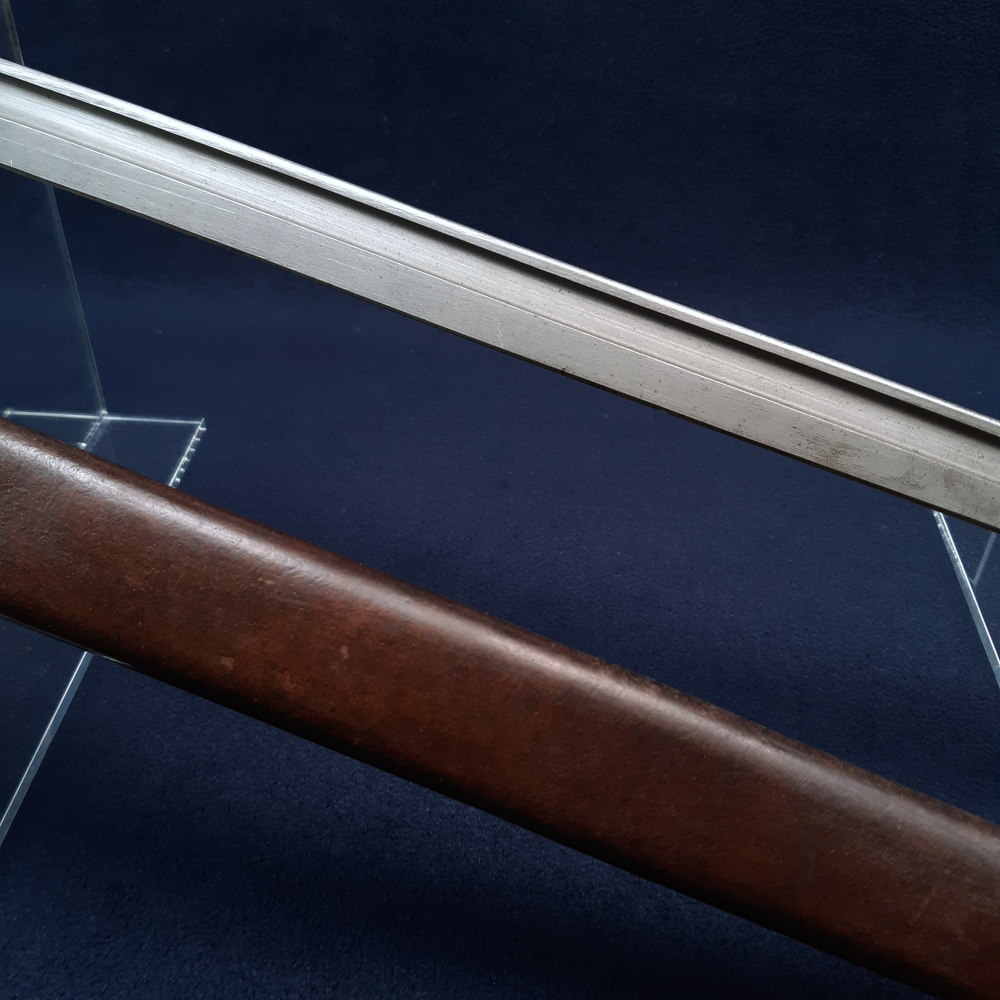
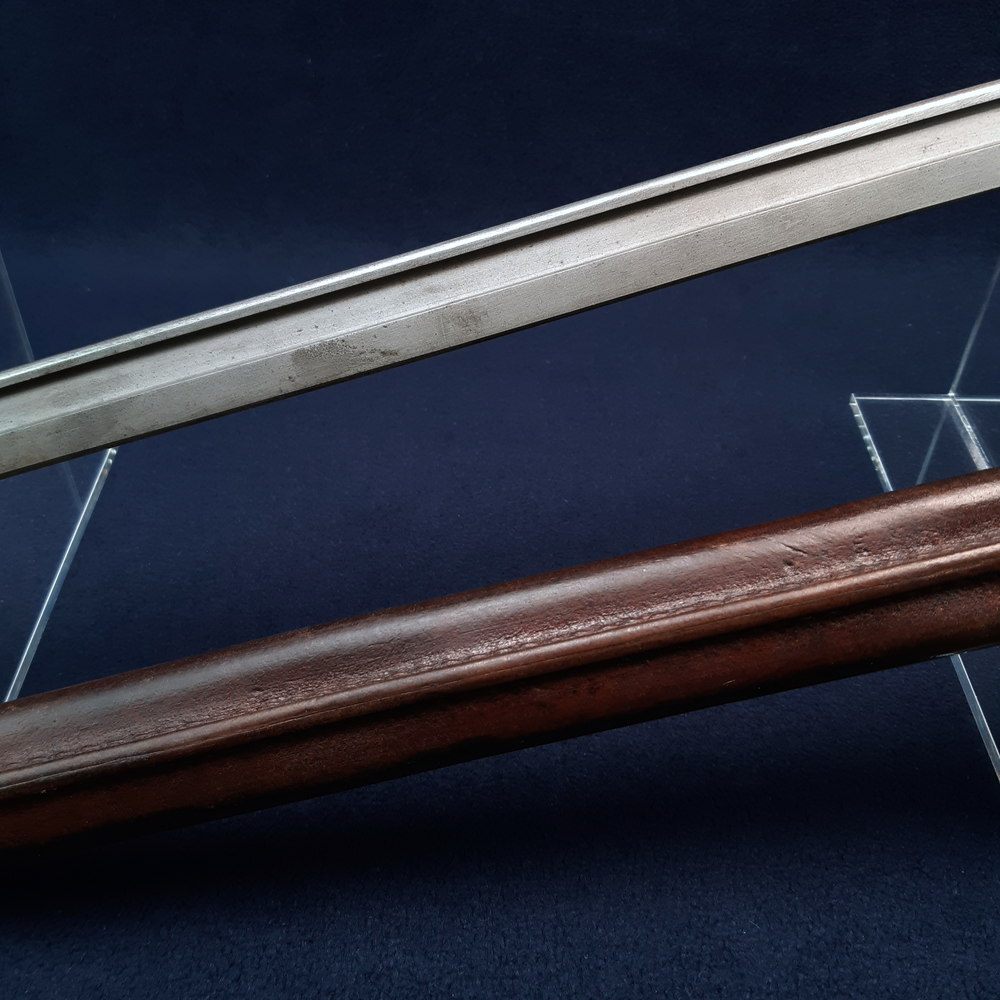
The blade is sharp with no edge damage. It retains its original grey parkerised finish and blued area at the ricasso, with only a few small spots of patination. The hilt, exposed tang and pommel have a blued finish with some rubbing at raised edges revealing bright steel. The wood grips are very good with only a couple of small dents. The scabbard fittings are likewise blued and retain nearly all of this finish, with rubbing only at the tip of the chape and a little on the frog stud, exposing bright steel. The leather body of the scabbard has only some very small dents and spots of abrasion, all of its stitching is intact. The canvas frog has no fray and is free of staining. Its rivets, which I think are brass, have dulled. It is well fitted to the scabbard and I have not removed it to look underneath at the throat piece.