British 18th Century Naval Cutlass, With 19th Century Conversion
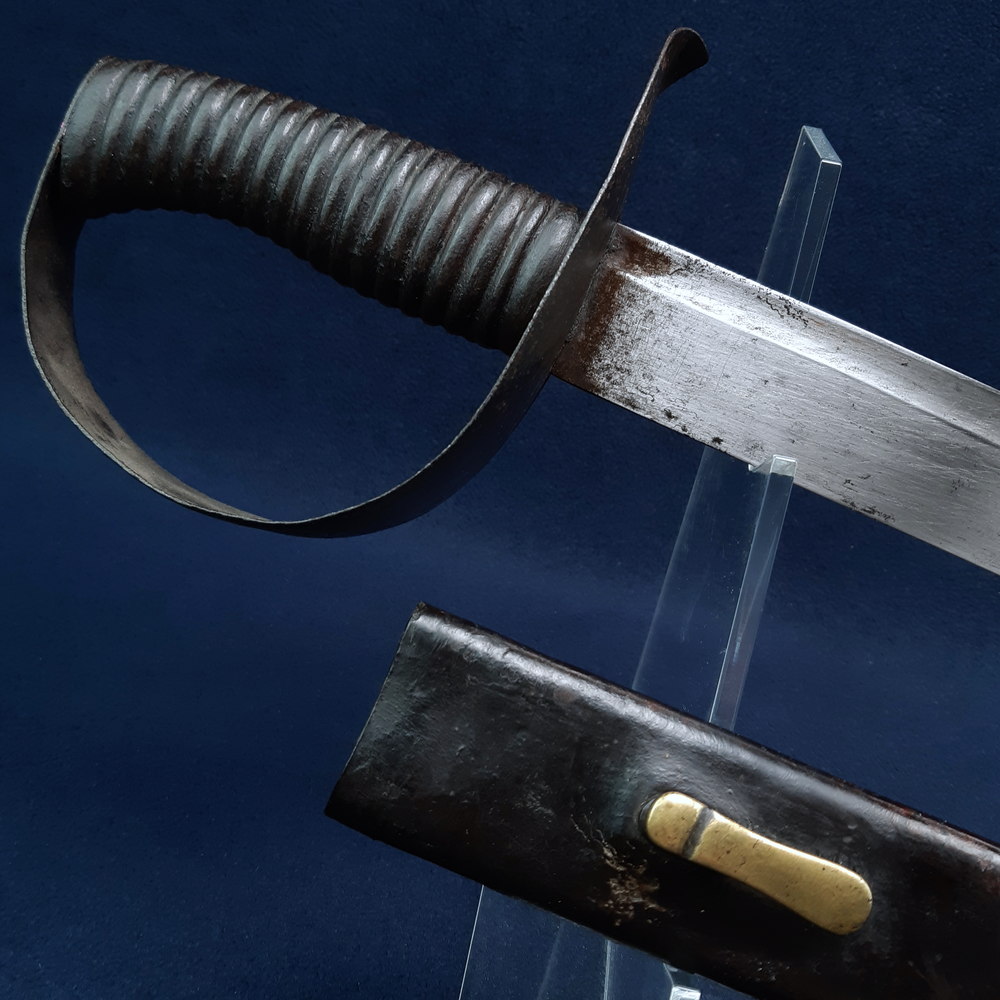
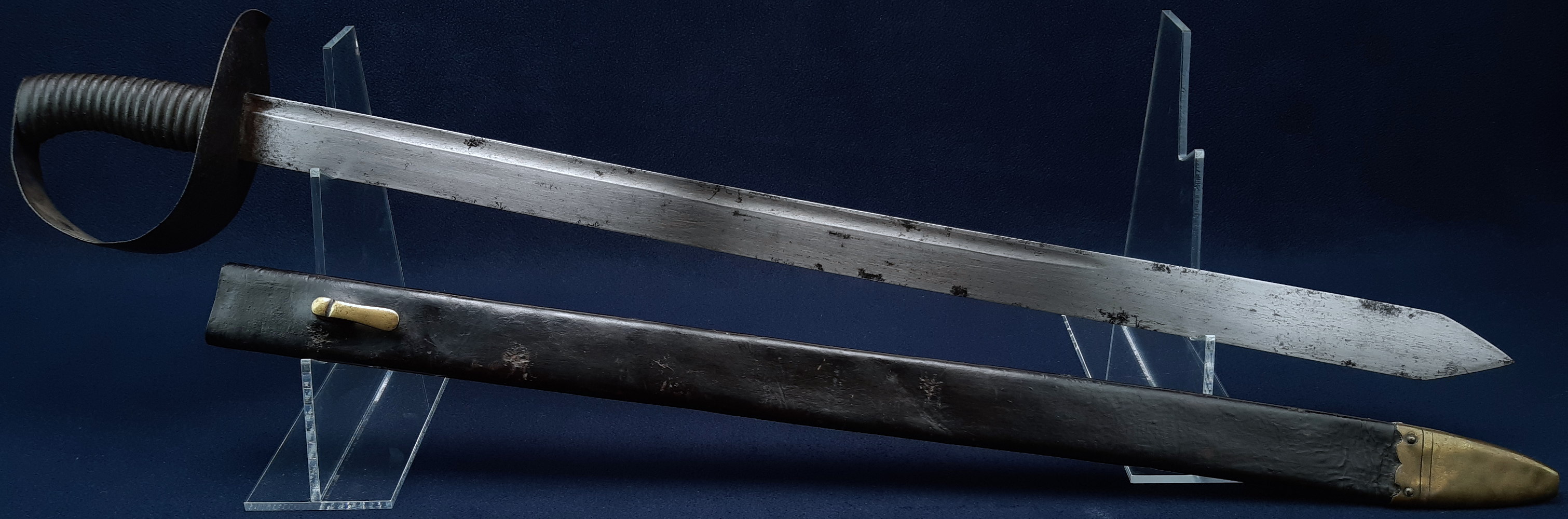
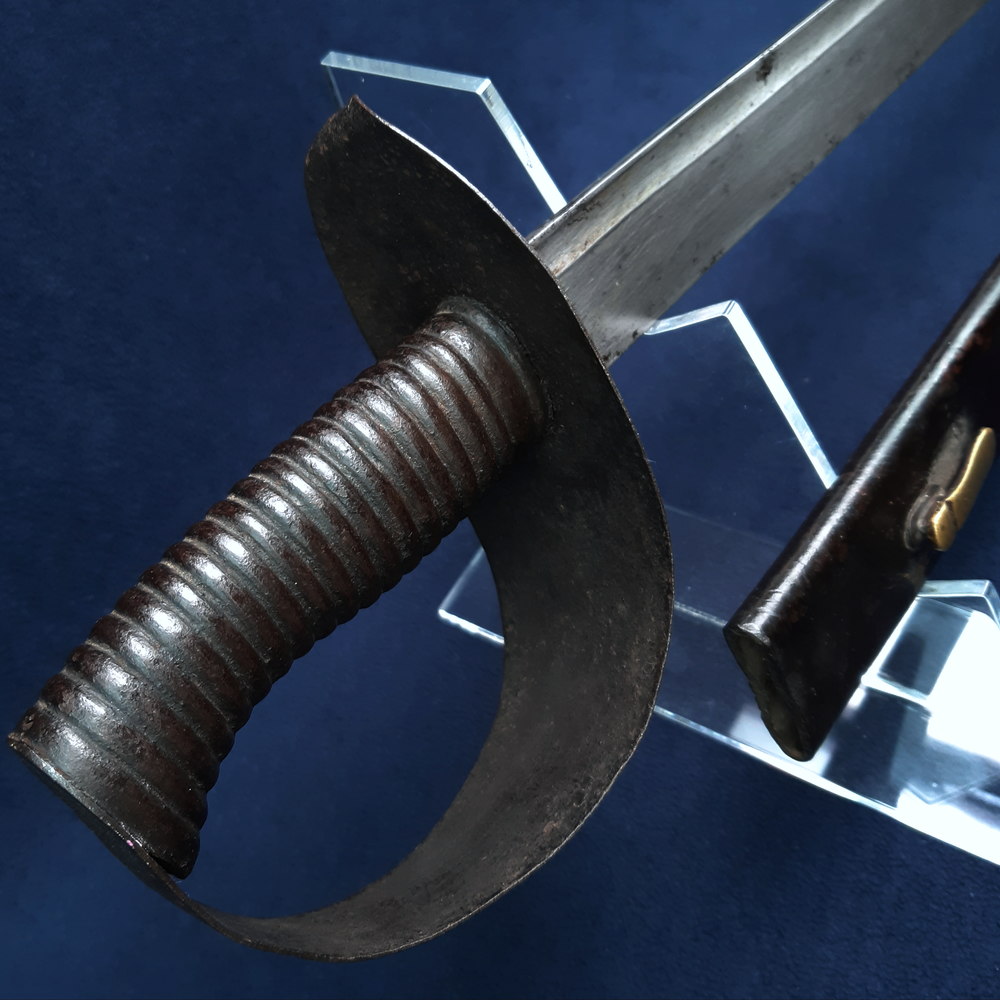
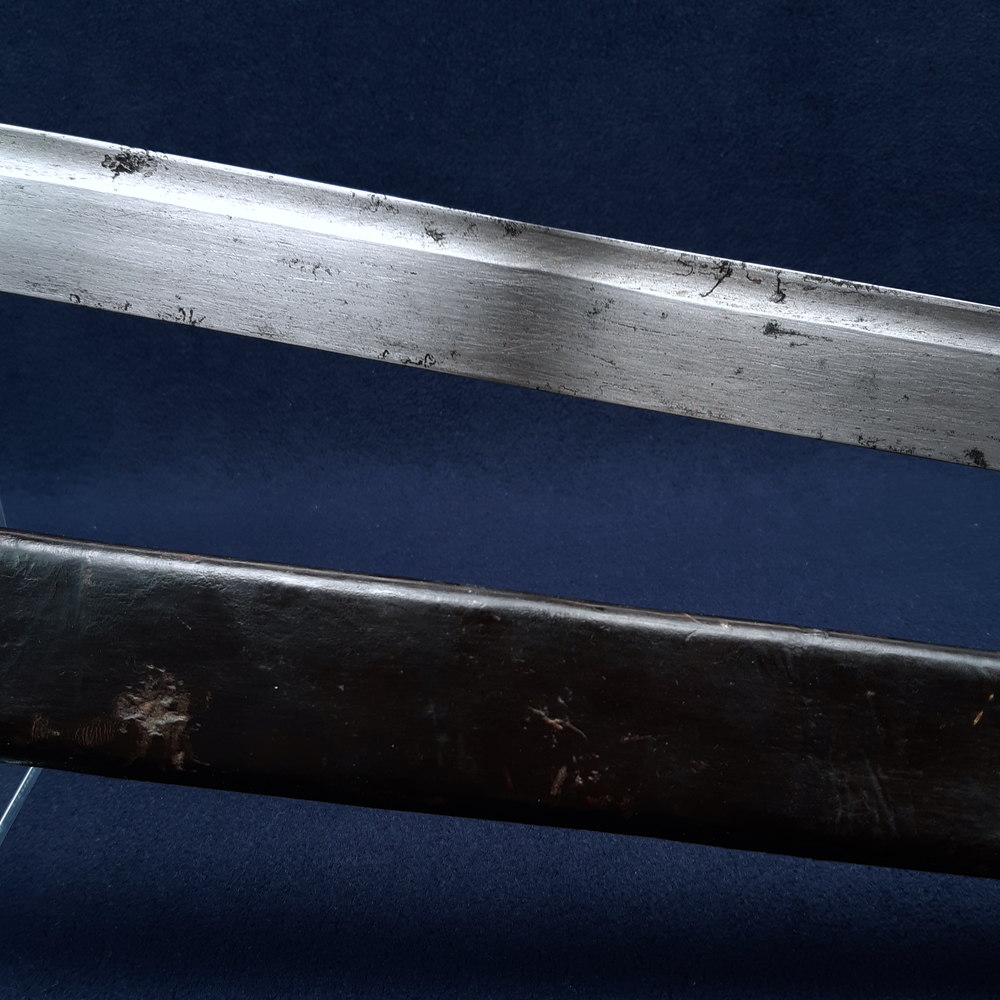
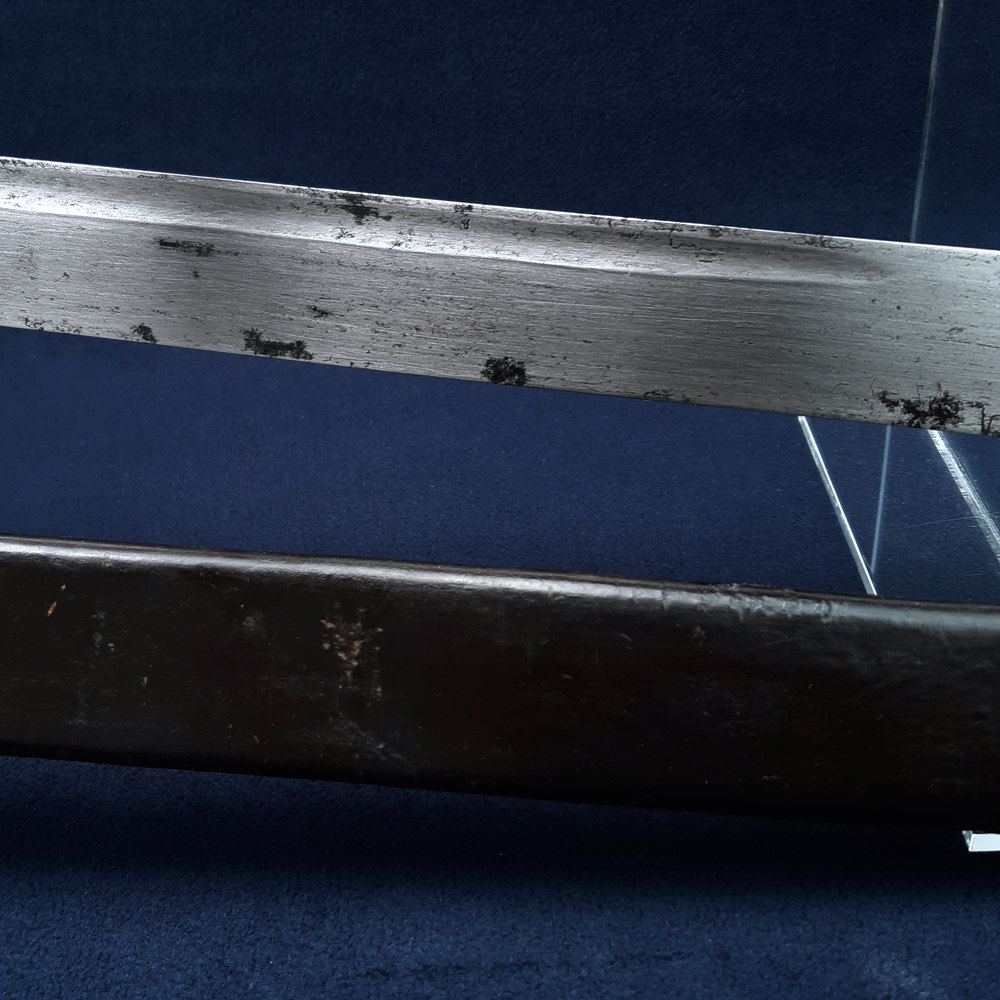
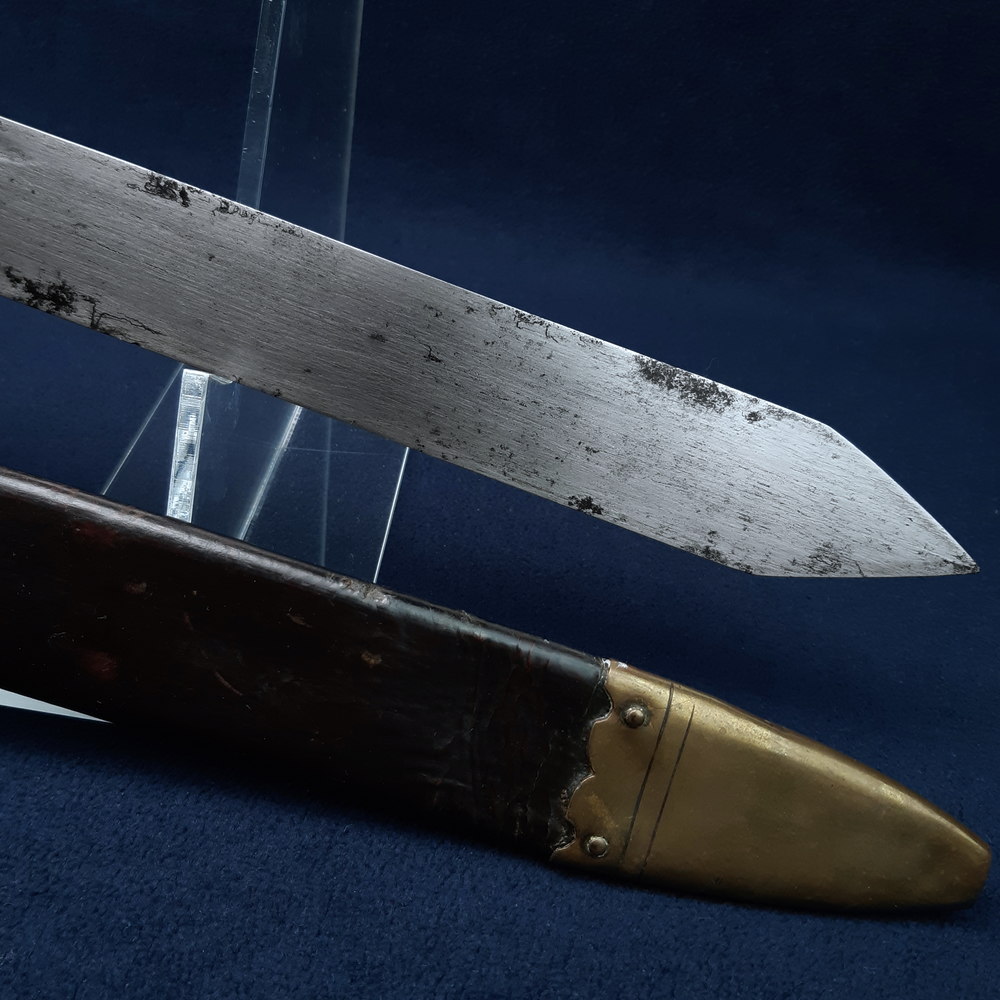
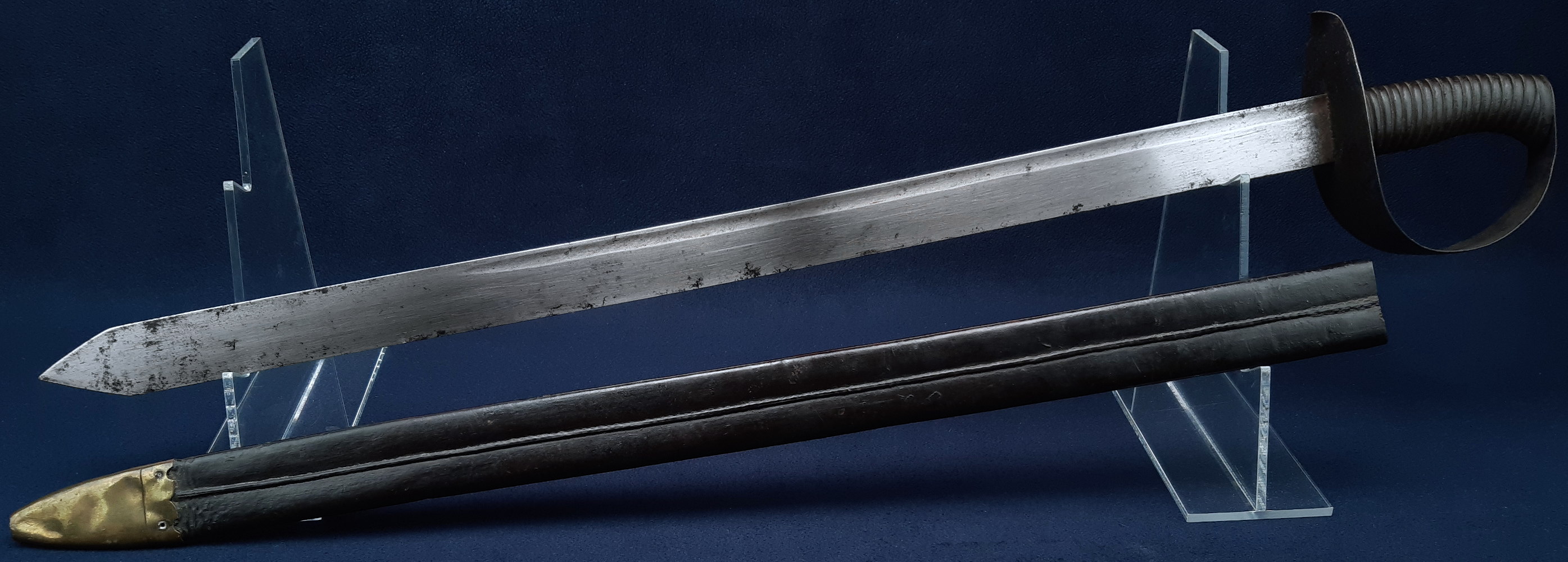
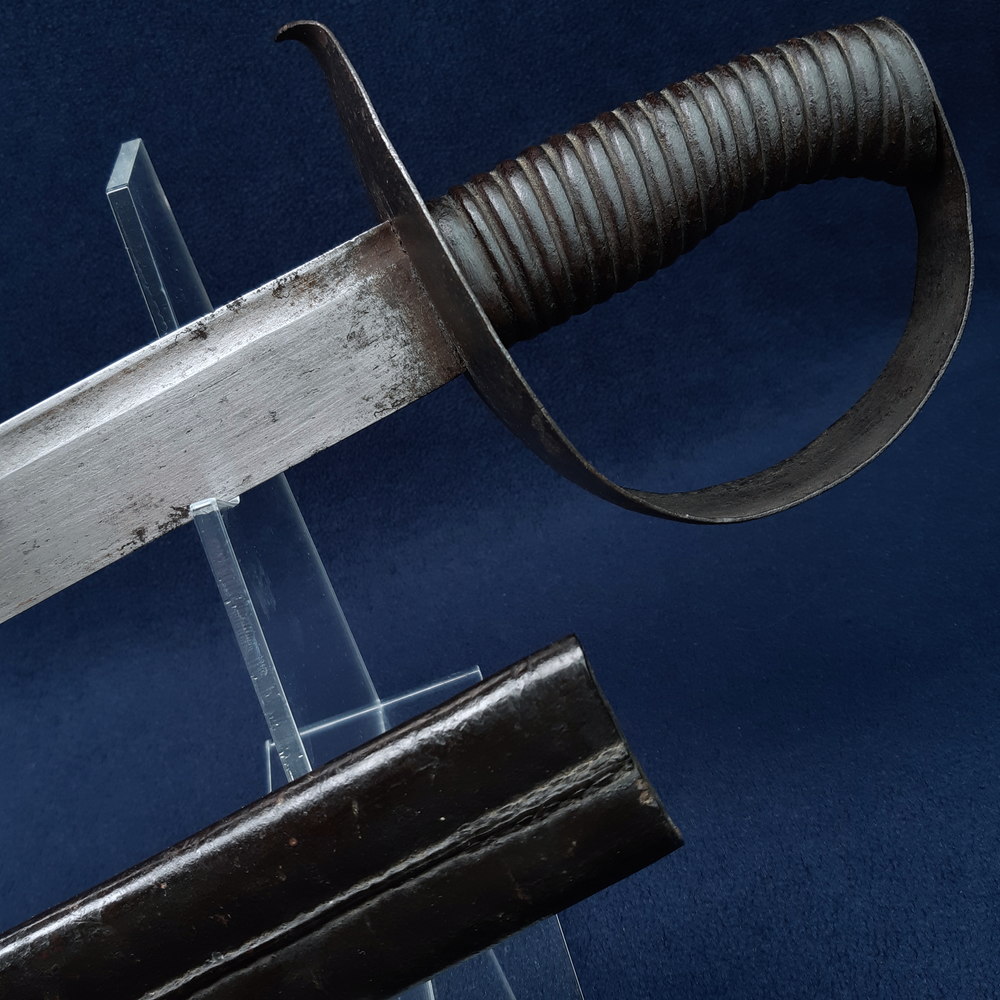
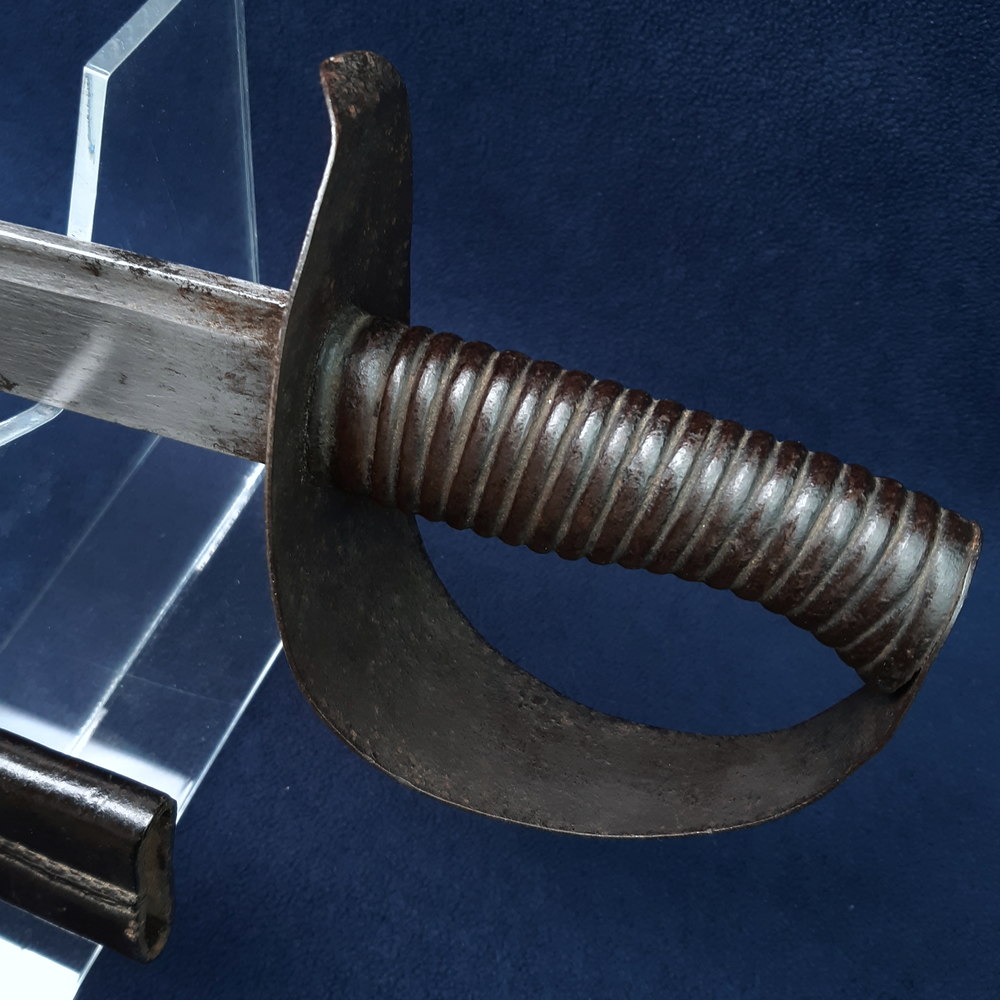
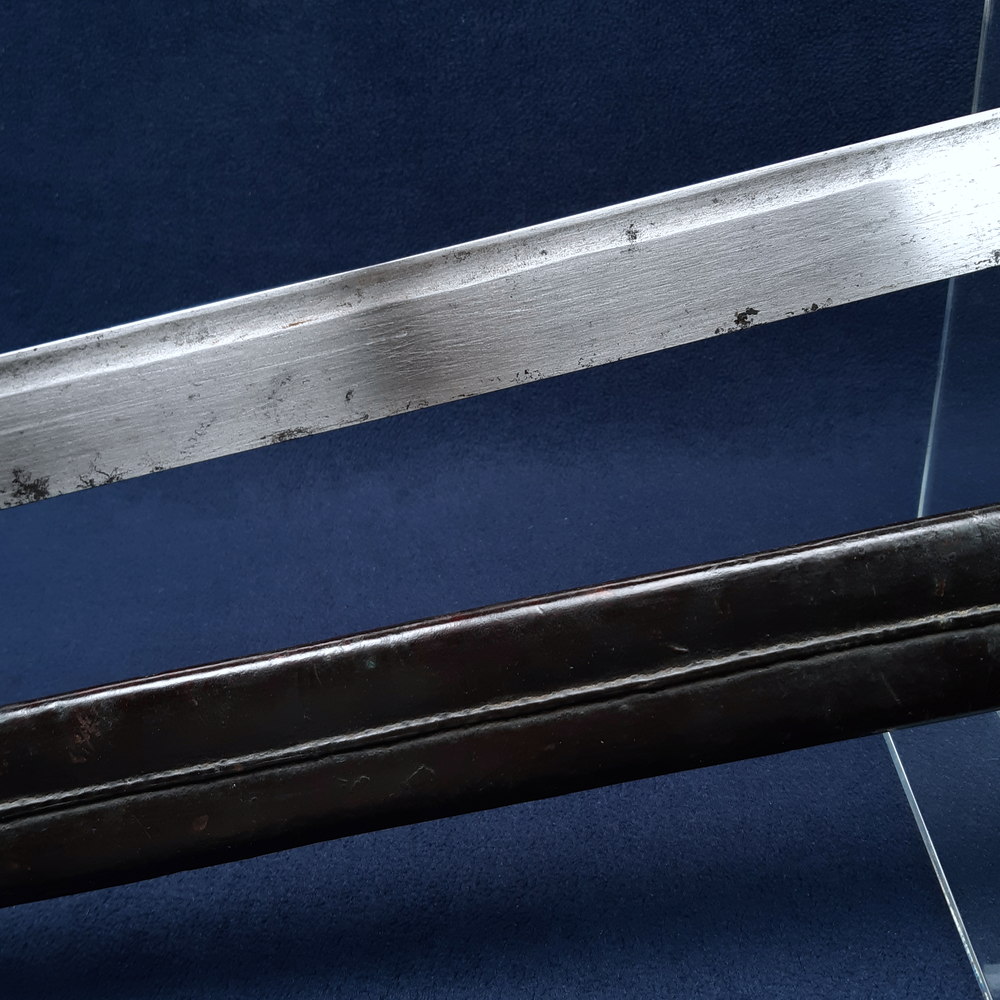
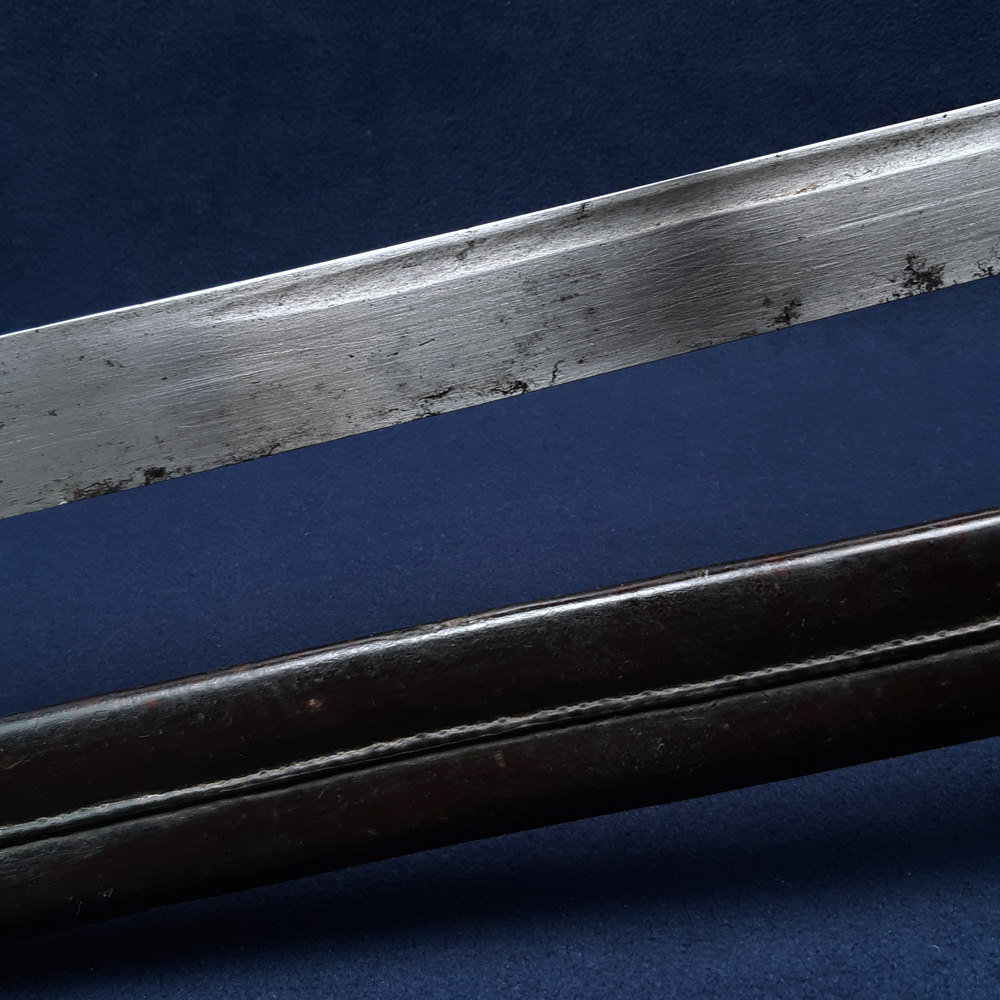
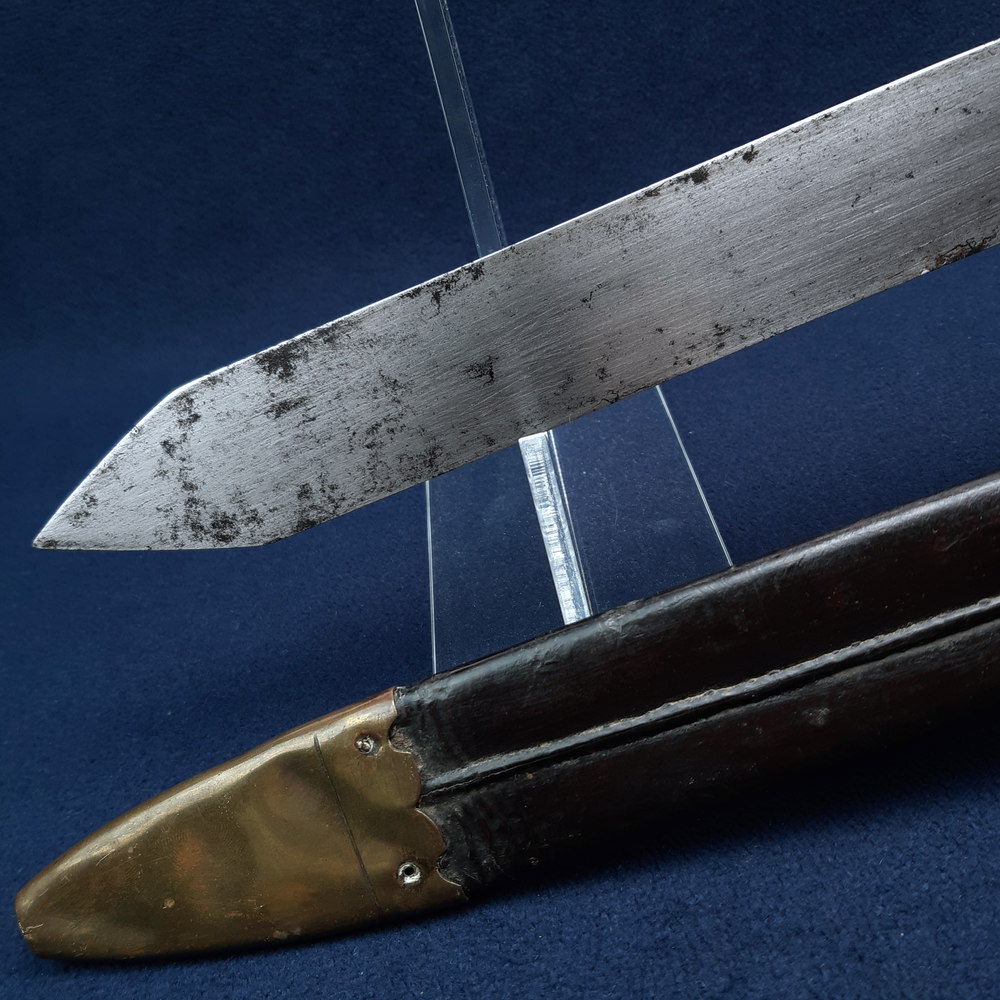
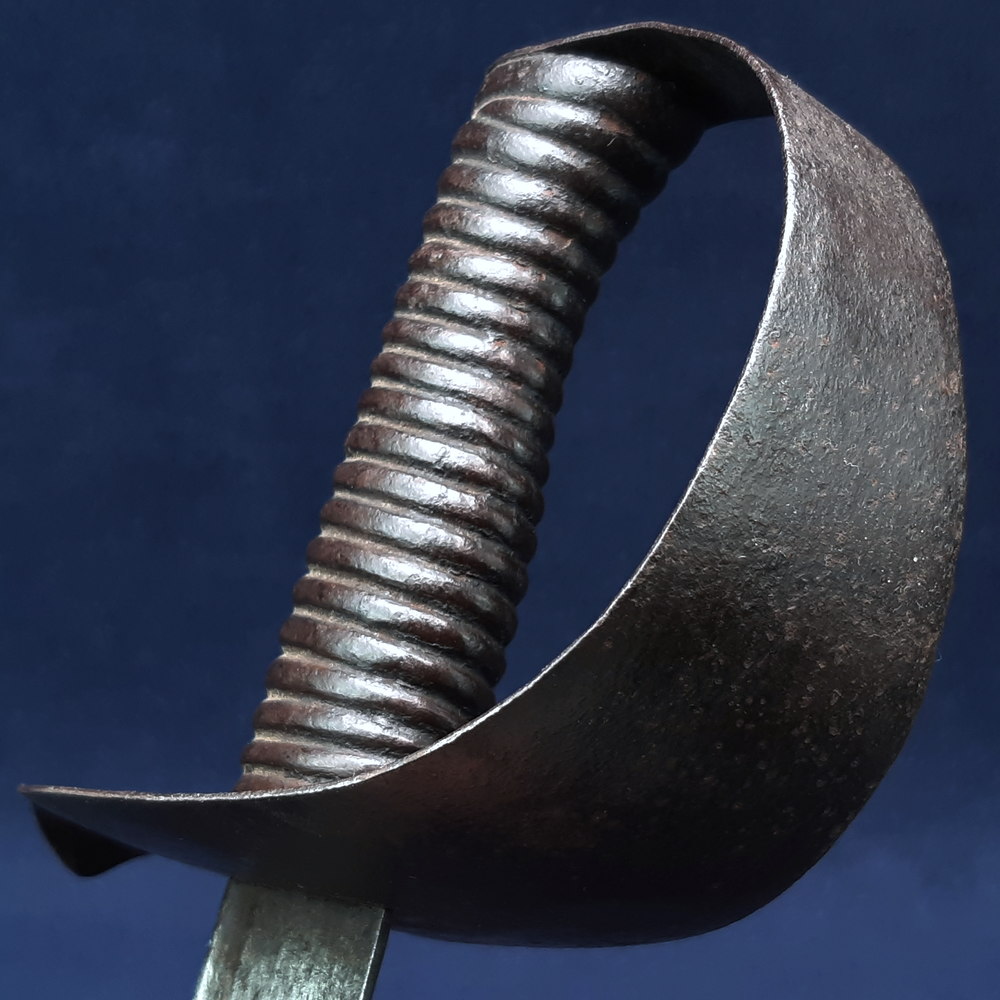
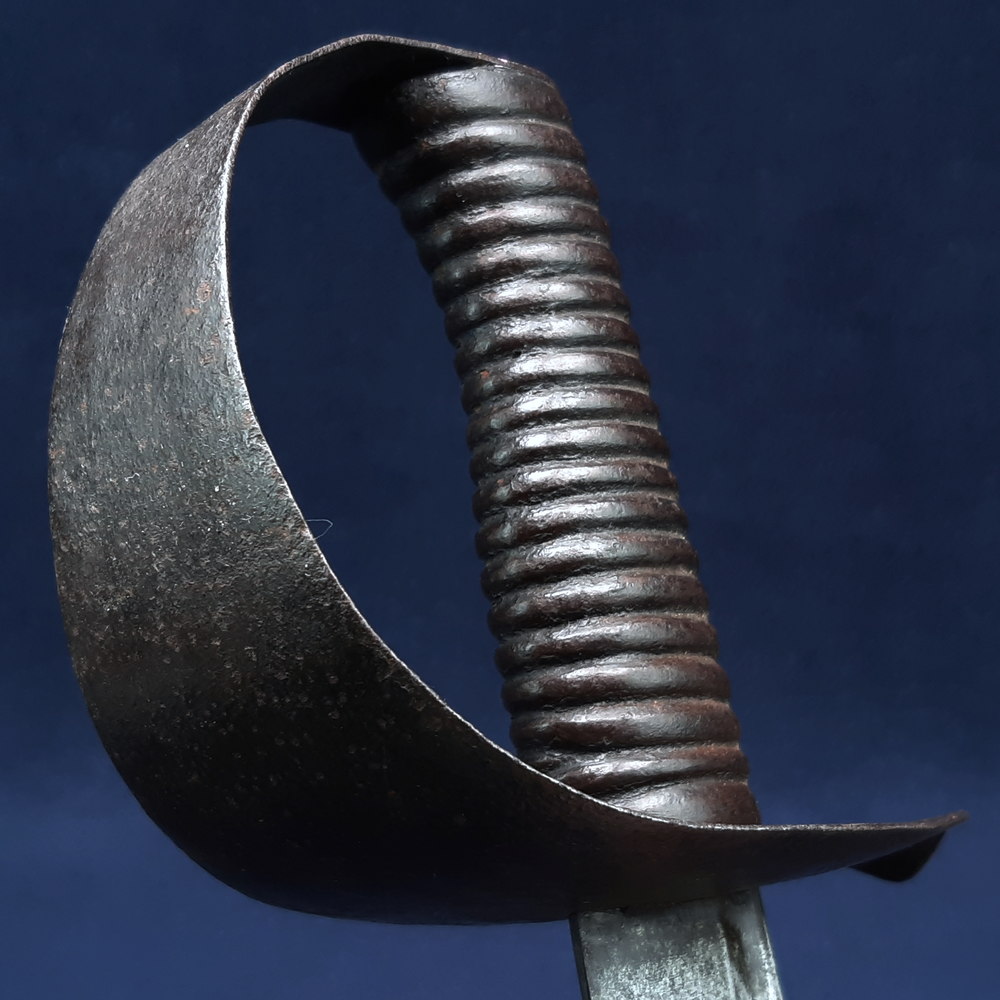
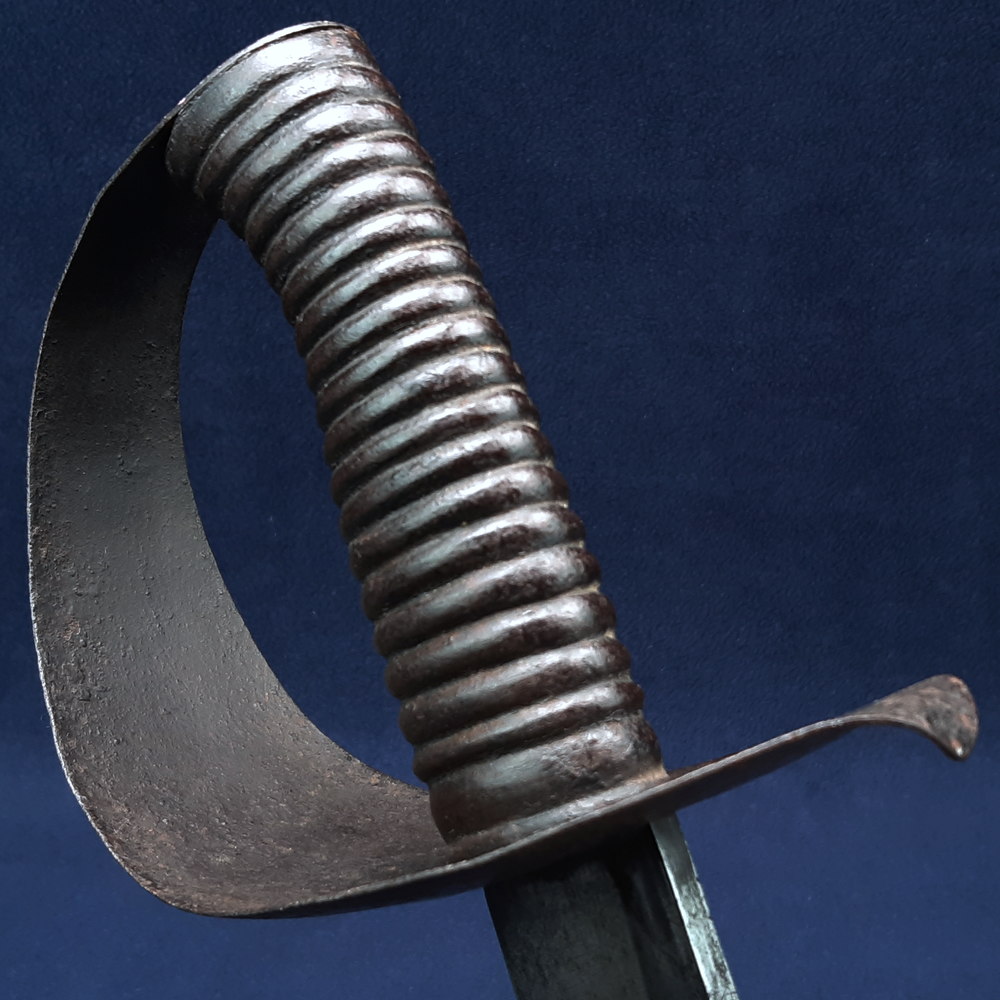
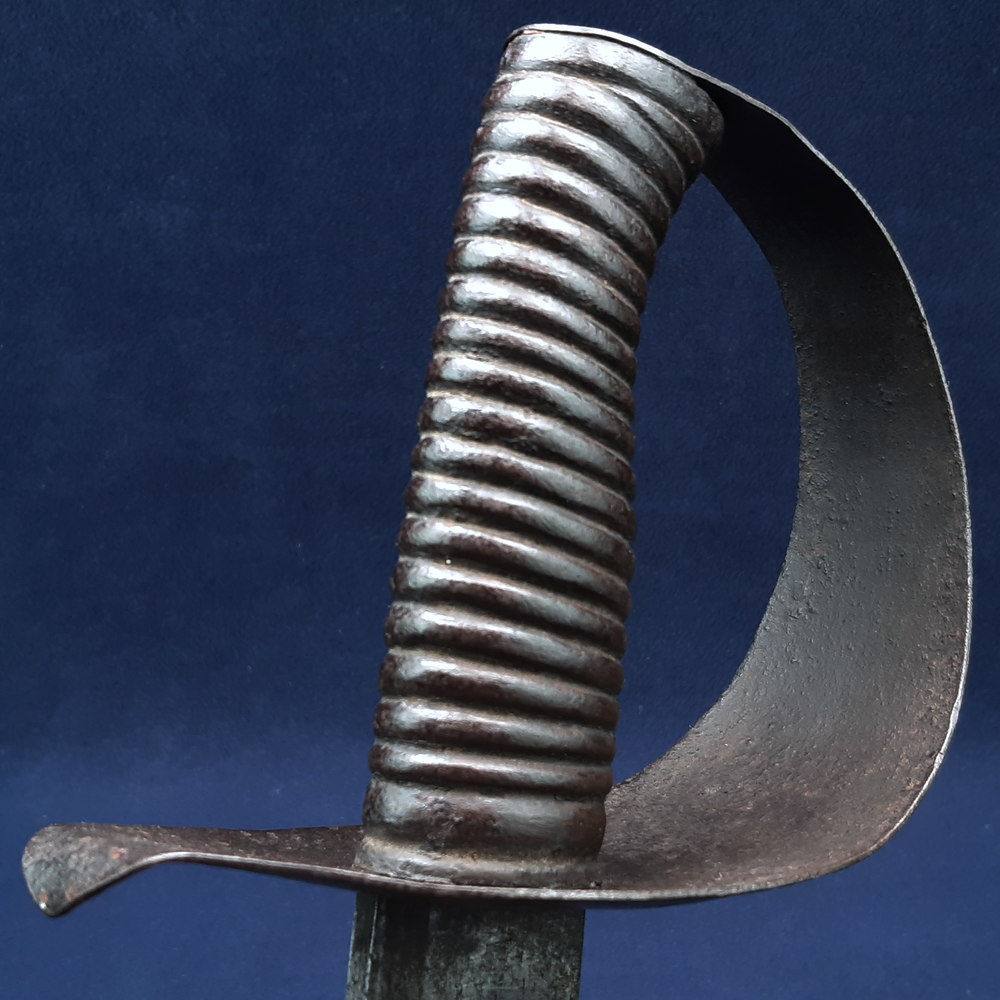
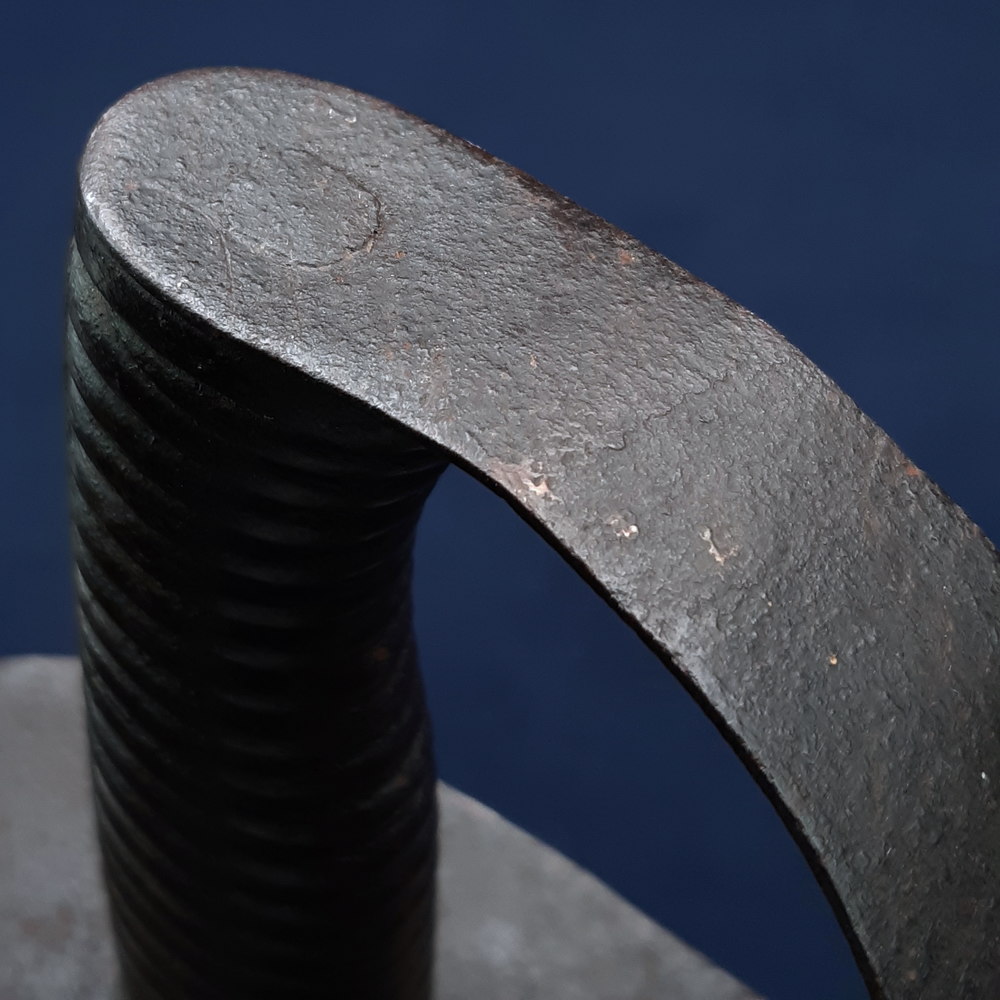
Straight backsword blade with single narrow fuller next to the spine and triangular point. Steel strap guard with black japanned finish, directly peened with no separate pommel piece. Ribbed cast iron grip, likewise japanned. Black leather scabbard with brass chape piece, inset brass frog hook near the throat. Blade 26 7/8 inches in length, the cutlass 31 5/8 inches overall.
The iron grip on this piece is I believe a 19th century component, probably originating with a sword design that is thought to have been introduced for the Coastguard as examples have been found preserved in Customs Houses. The very consistent ribbed iron grip, with a curving, somewhat ergonomic profile, is perhaps the most characteristic feature of these otherwise eclectic swords.
There are a number of Coastguard examples held at the Royal Armouries, the curator Philip Lankester noting seven different blade variations (A to G), including Type B, which are thought to be cut-down blades of the short-lived ‘1814 Pattern’ (a variation on the 1804 cutlass with a curved blade), and Type G which are thought to be shortened 1853 Pattern cavalry trooper’s blades.
The Coastguard swords were probably put together cheaply from various available parts which might have been decades old at the point of production, making precise dating of the type (and therefore of the iron hilt) very difficult – the Armouries settled on a range of 1825-1860 and believes their production may have taken place over many years within that range. See Royal Armouries Type Specimen IX.7495, IX.7483 for the Type B, IX.7542 for the Type G.
The grip was last seen on swords carried by orderlies of the Army Hospital Corps, issued to them around 1861. These might even have been reused Coastguard swords, although they seem more consistent in form.
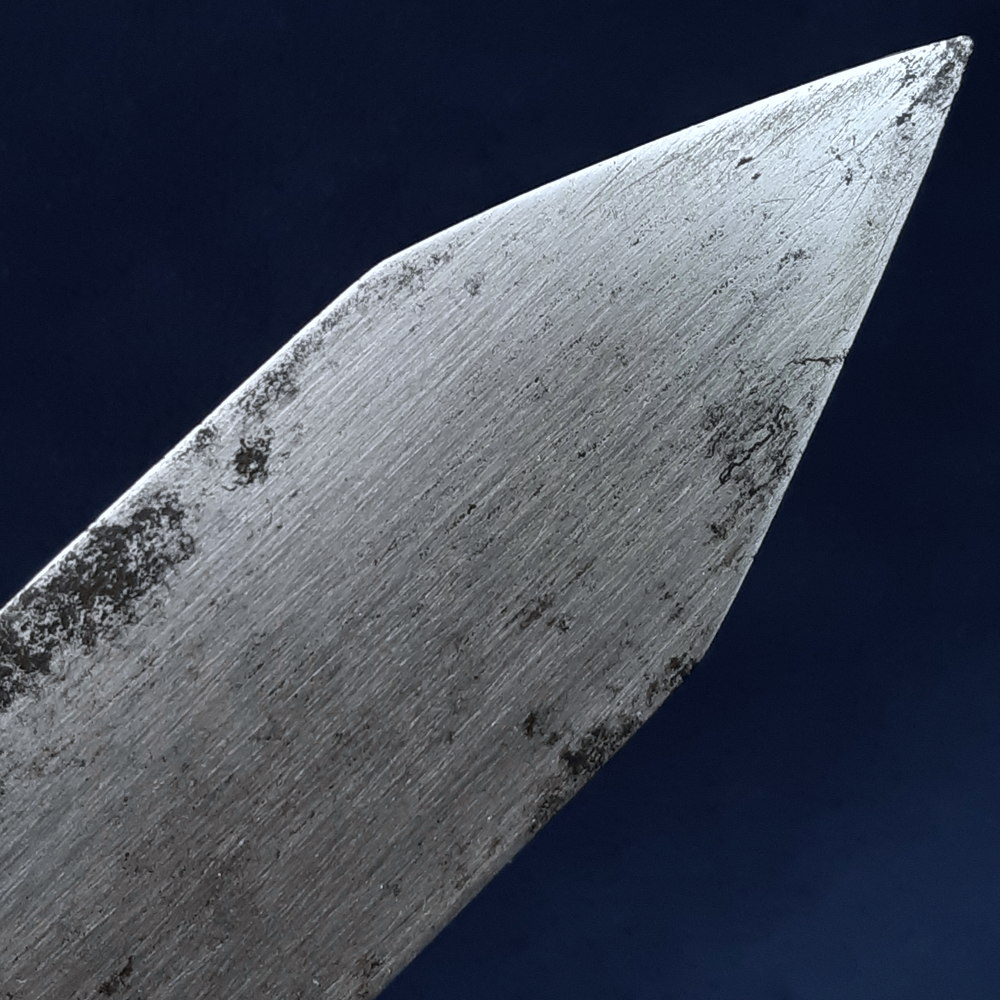
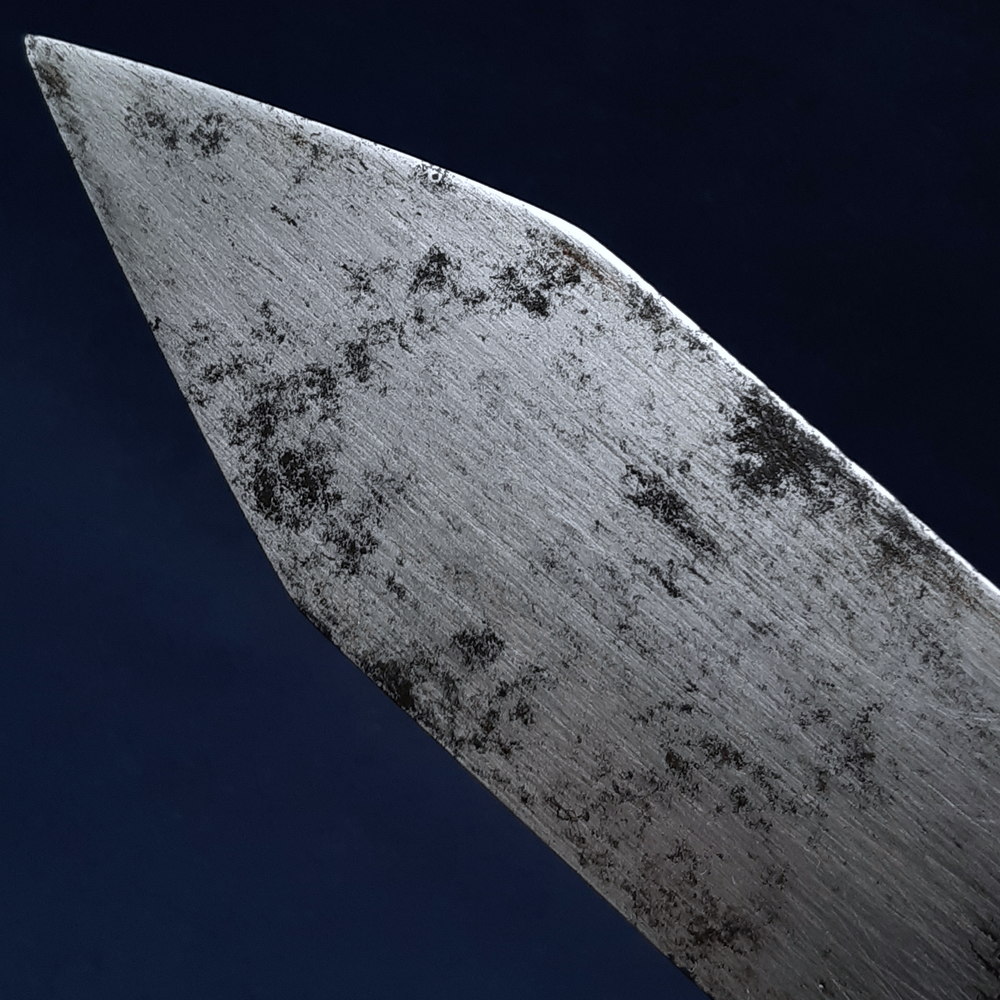
The blade and guard of this piece, however, are of a much earlier type: cutlasses with a backsword-style blade were common in the 18th century, until the introduction of the 1804 Pattern cutlass which used an unfullered blade, coinciding with the sharp decline in use of backswords in general during the very early 19th century. The simple strap guard is also common in British (and American) pre-regulation cutlasses of the 18th century, coexisting with the ‘figure-eight’ guard and other more exotic types. The blade has almost certainly been repointed as no 18th century original I have seen uses this chisel-like triangular point, though I have seen it on a 19th century cutlass which was shortened from its standard length (and modified to a simple strap-like guard…). Despite being reshaped the blade is entirely unsharpened.
Taking these features together I think it is quite likely that this sword started life as a pre-regulation cutlass of the 18th century, with a straight backsword blade measuring perhaps as long as 29 inches. It was then converted in the 19th century, probably post the introduction of the 1845 Pattern. Any reduction in length would have been achieved by cutting back the tip, which necessitated repointing. The original grip was replaced – this may well have been an upgrade as many 18th century cutlasses used very crude near-cylindrical grips of bare wood or iron sheet over wood.
The scabbard may be 18th century, its brass hook is definitely the right style, but if so it has been reduced in length as it exactly fits the blade. The brass chape piece is to my eye more 19th century in style, being similar (but not identical!) to early 1845 Pattern scabbard chapes including the paired brass rivets and scalloped top edge. Very few 18th century cutlasses are found with scabbards so there is little to compare with, while the few 1804 Pattern scabbards I have seen had either no chape piece at all, simply a formed tip to the leather body, or occasionally a roughly trapezoidal brass piece with a flatter tip than on this example.
All in all these changes would have transformed a more than 50 year old cutlass into something closer in form to the contemporary 1845 Pattern. It bears no military markings and was perhaps for a merchant vessel. It is even possible that this was a Coastguard sword, although it lacks the brass stirrup hilt seen on all the recognized examples of that type. It would seem very unlikely for it to be a modern assembly of old parts – the grip, hilt and peen all show the same aged japanning that must therefore have been applied after the sword was assembled. An unusual piece open for interpretation, not one for strict Pattern collectors but well-preserved and solid.
The blade will fully sheath, albeit with a fair bit of friction against the leather, so take care not to apply too much force. All the scabbard’s stitching is intact.
The blade is bright with patches of cleaned pitting, which affects the edge in places. The very tip of the blade has rolled (<1mm). The hilt and grip retains almost all of its black paint, some very minor flaking and wear e.g. at the bowl edges. The brass fittings of the scabbard are free of dents and have an even patina. The leather of the scabbard remains flexible with some surface-level cracking and light rubbing in places, its stitching is open along most of its length.