British WW1 1912 Pattern Cavalry Officer's Sword of 2nd Lt Frank D'Arcy Blofeld, 2nd Life Guards, KIA France 1915
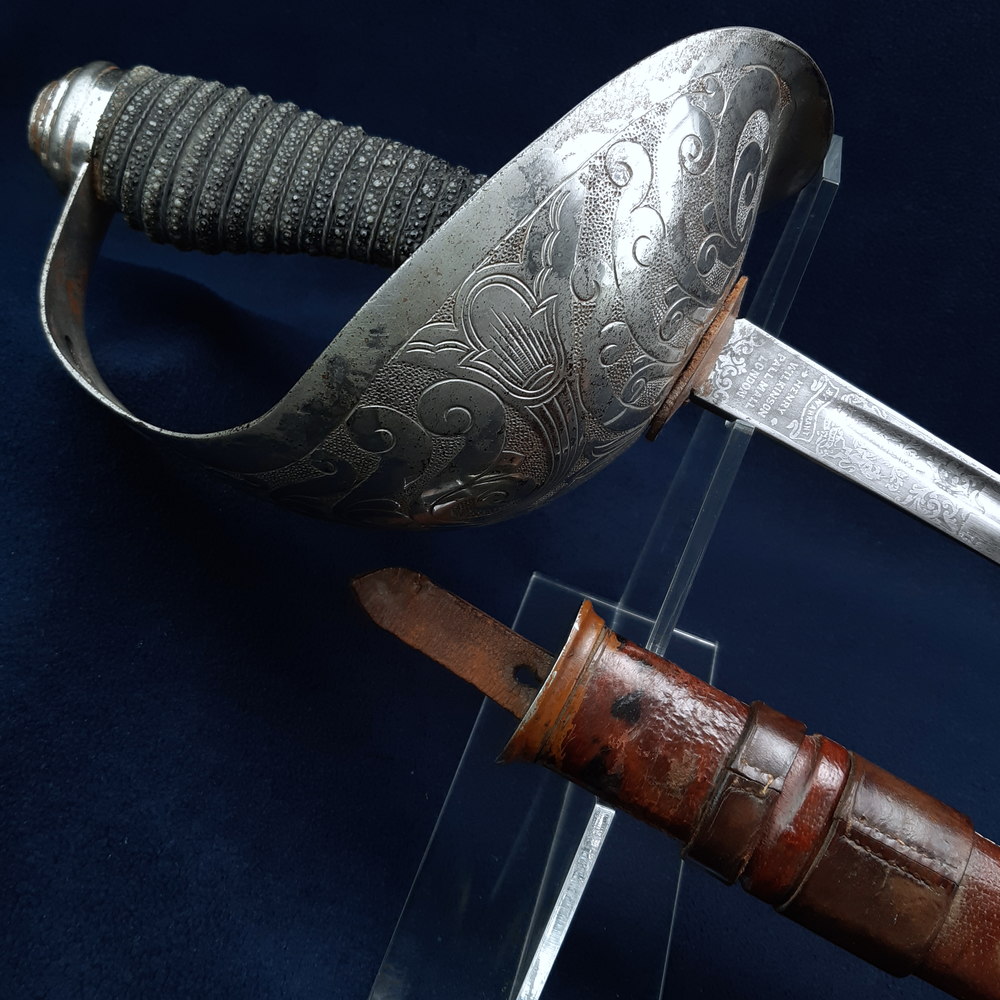
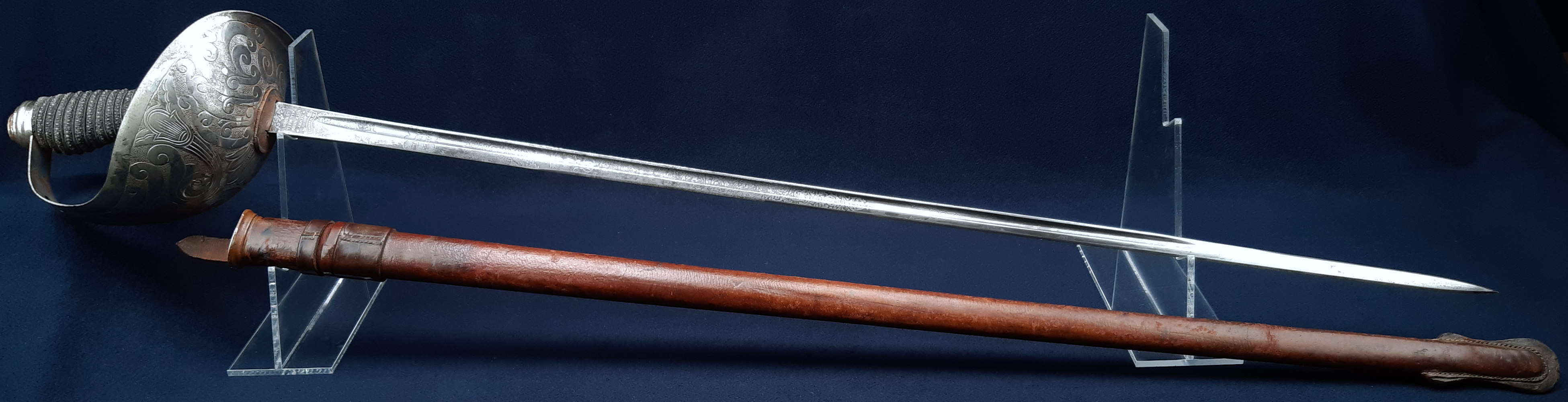
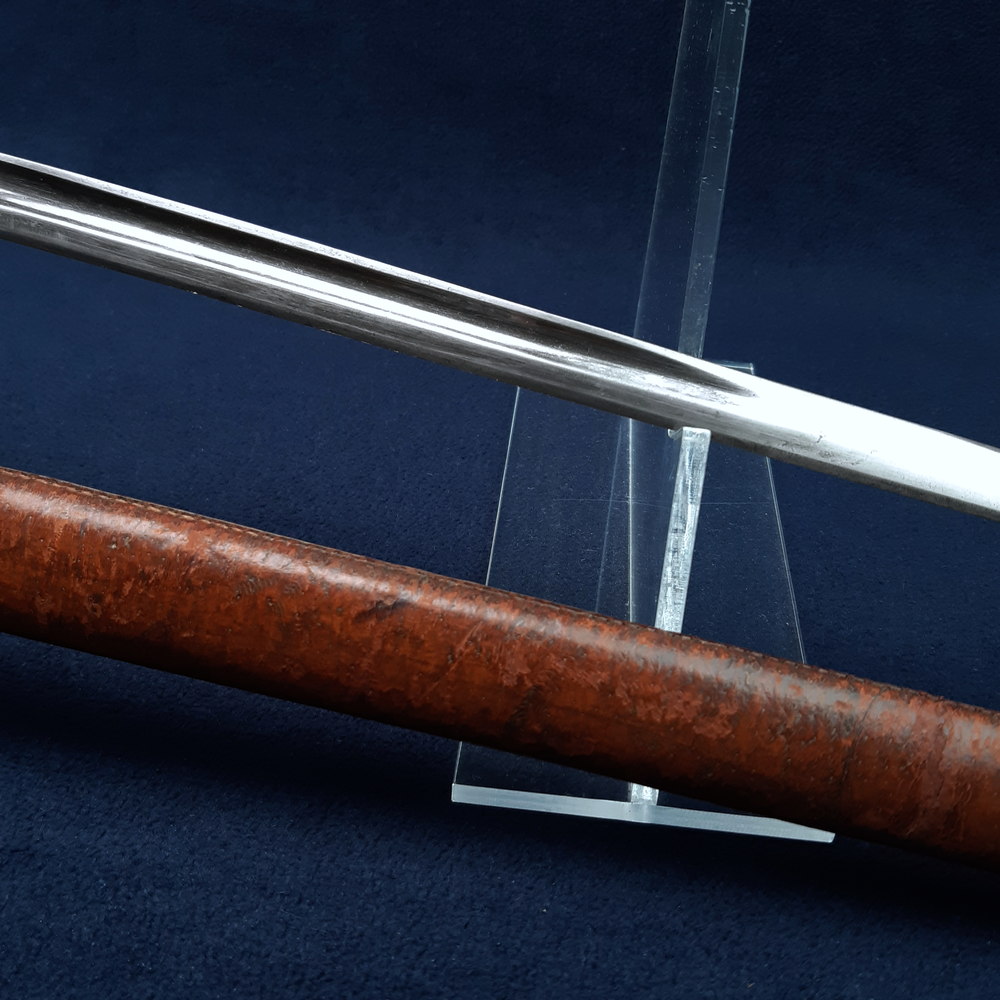
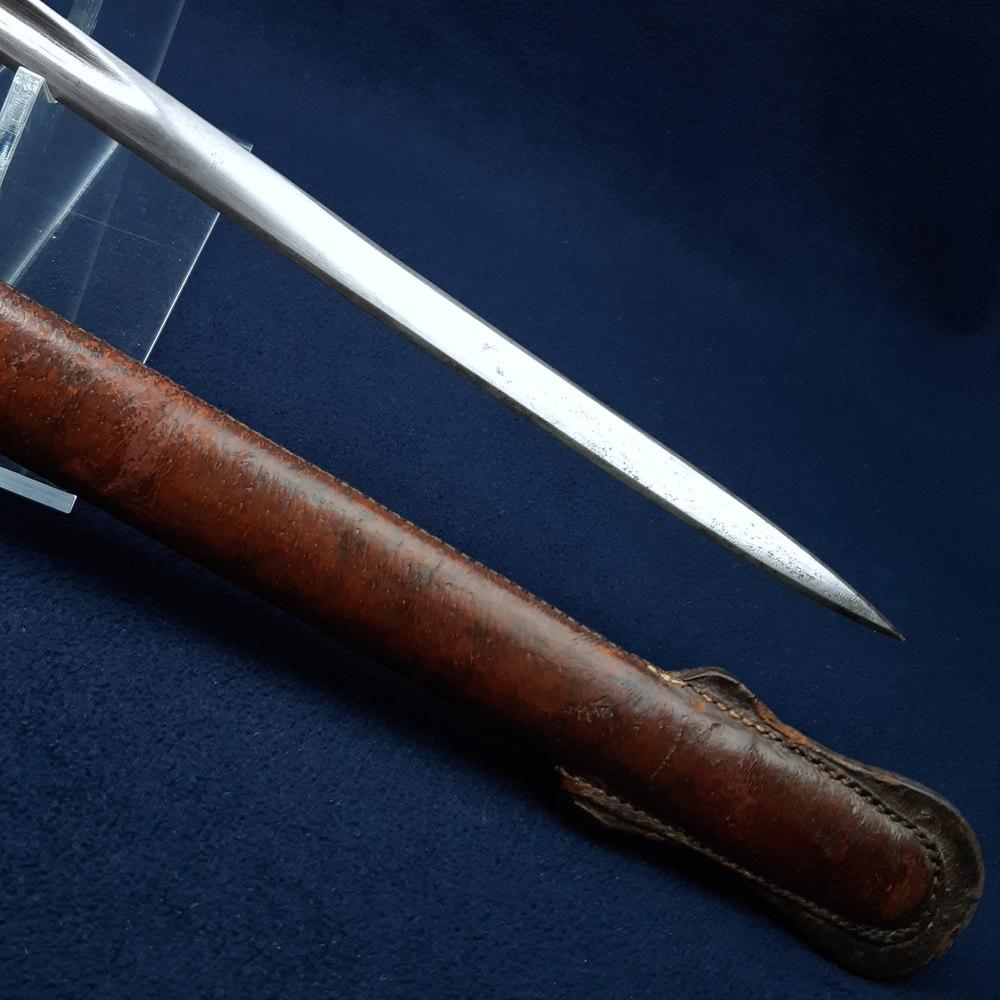
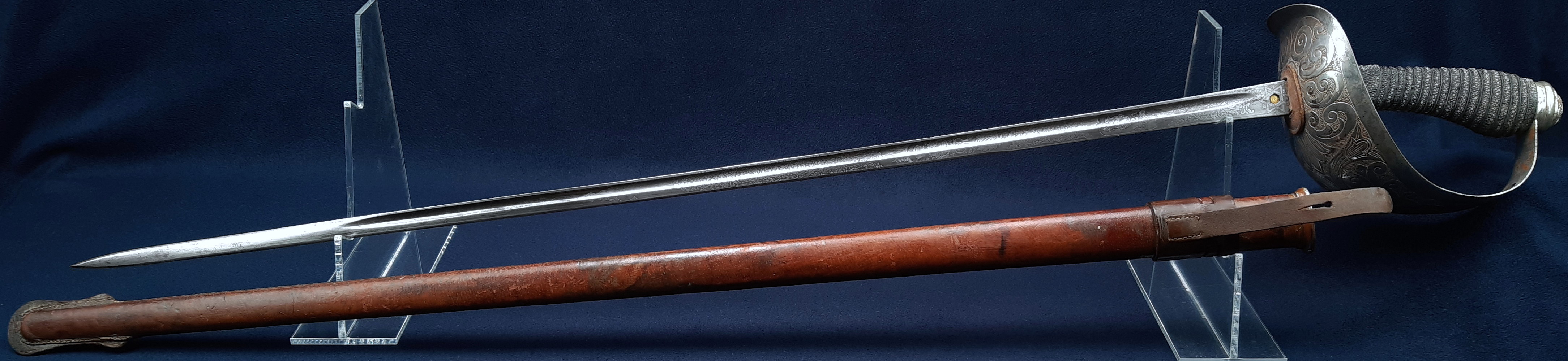
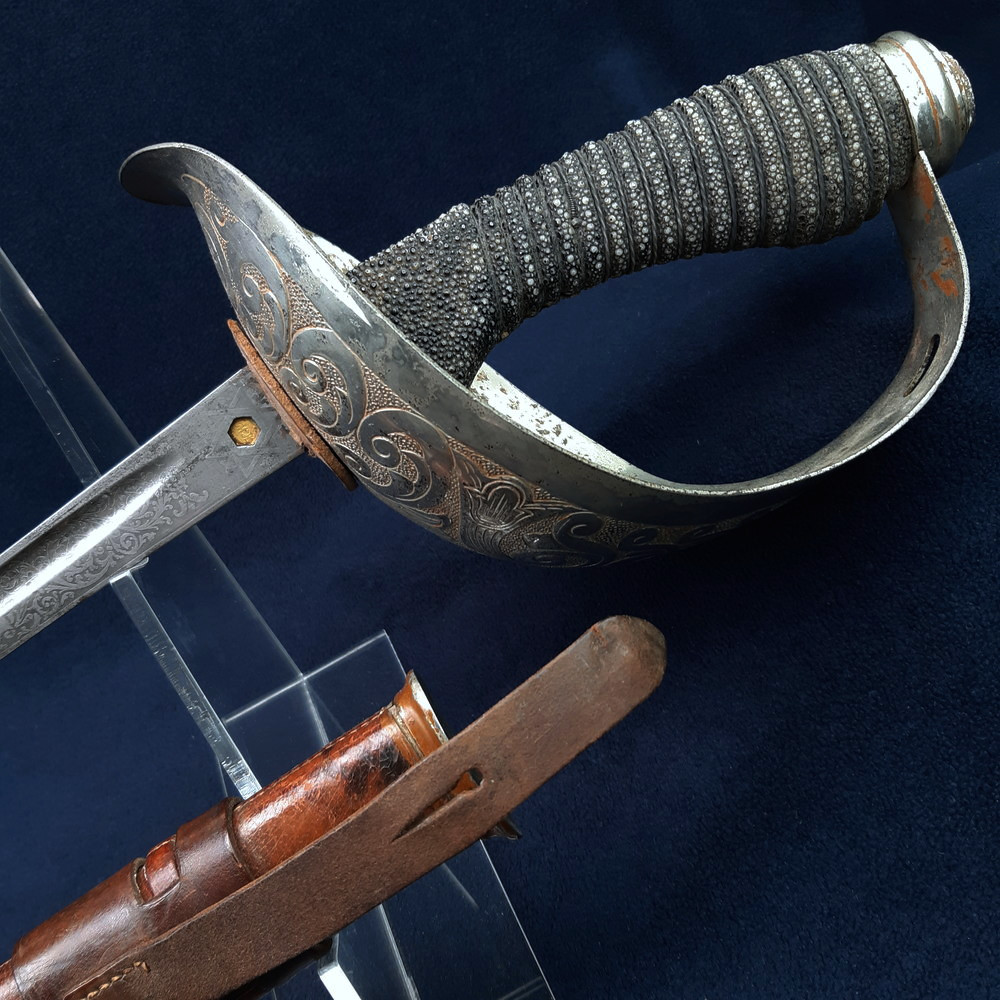
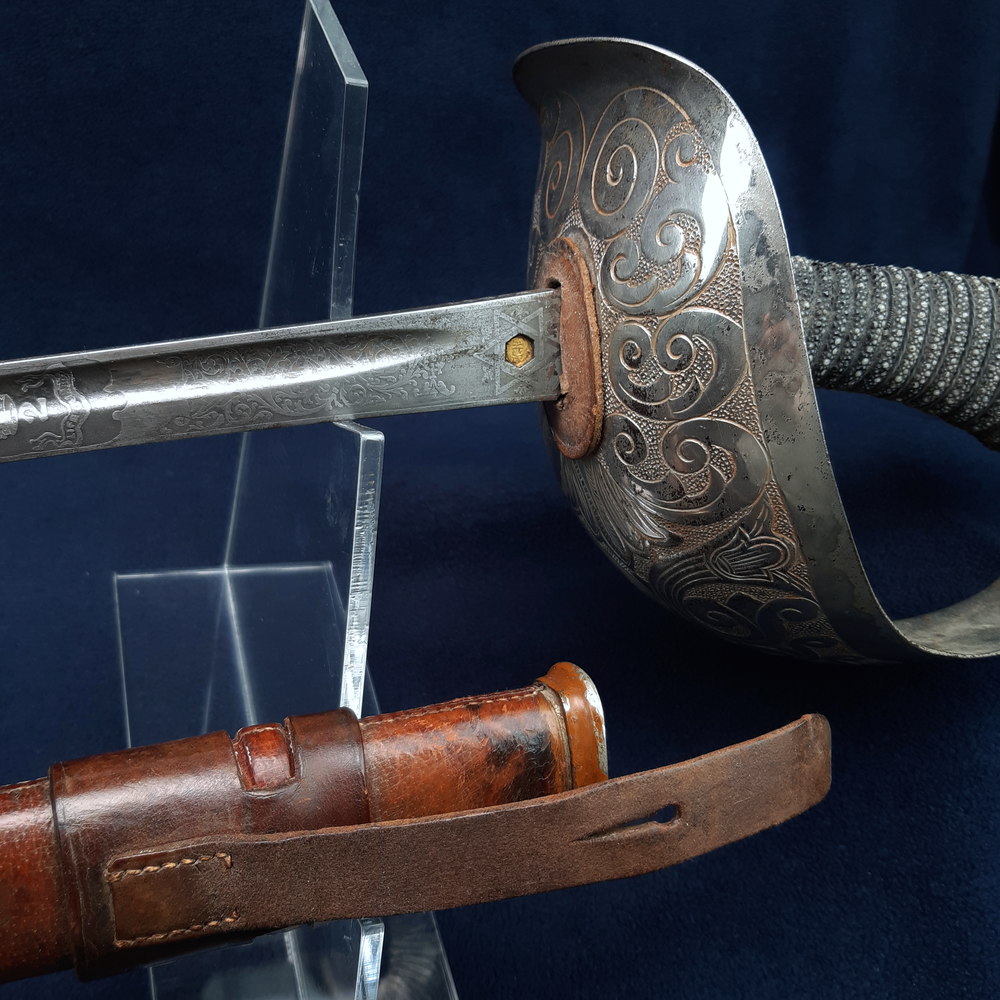
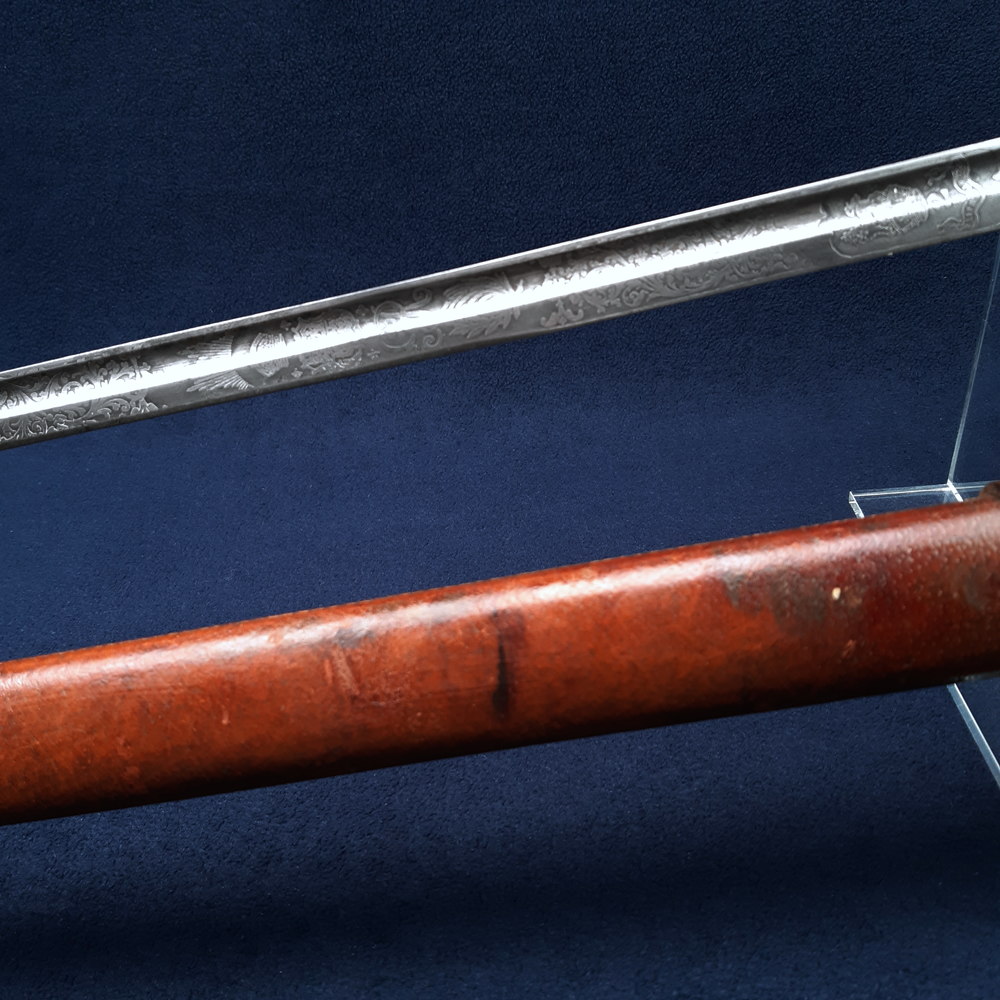
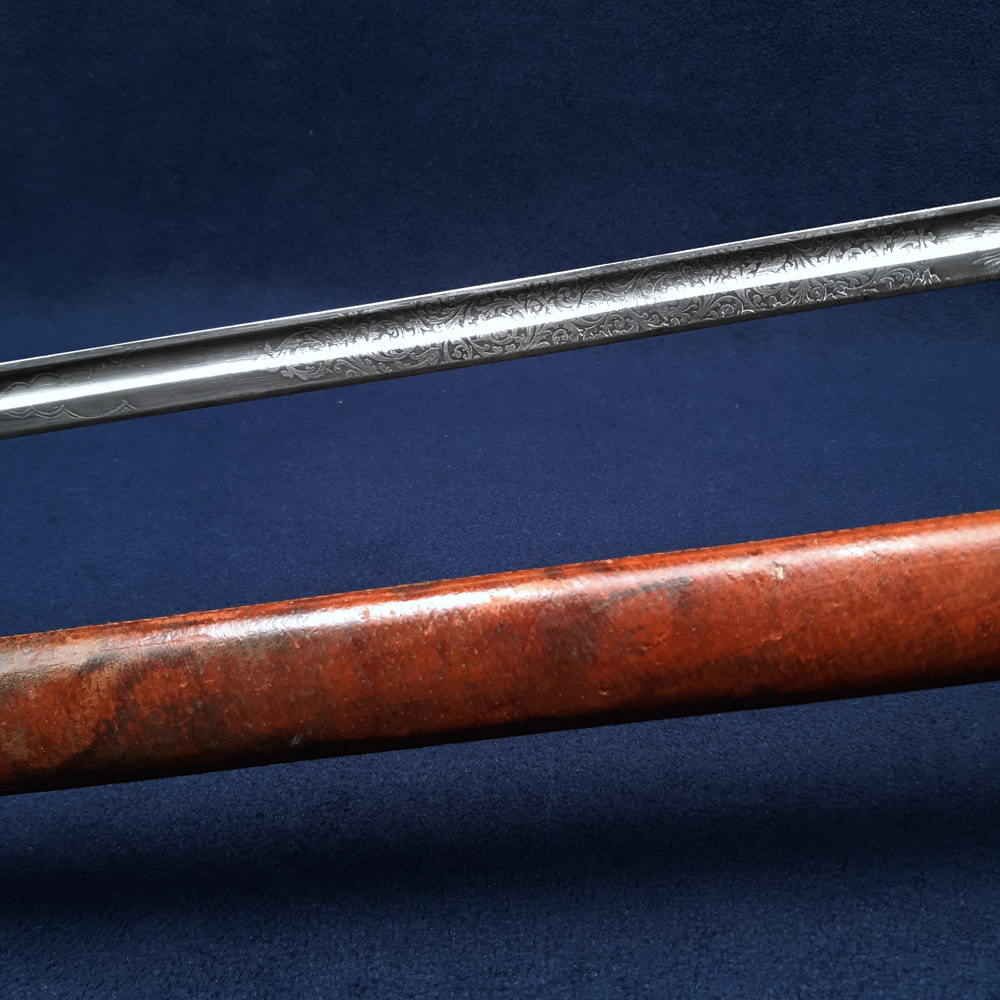
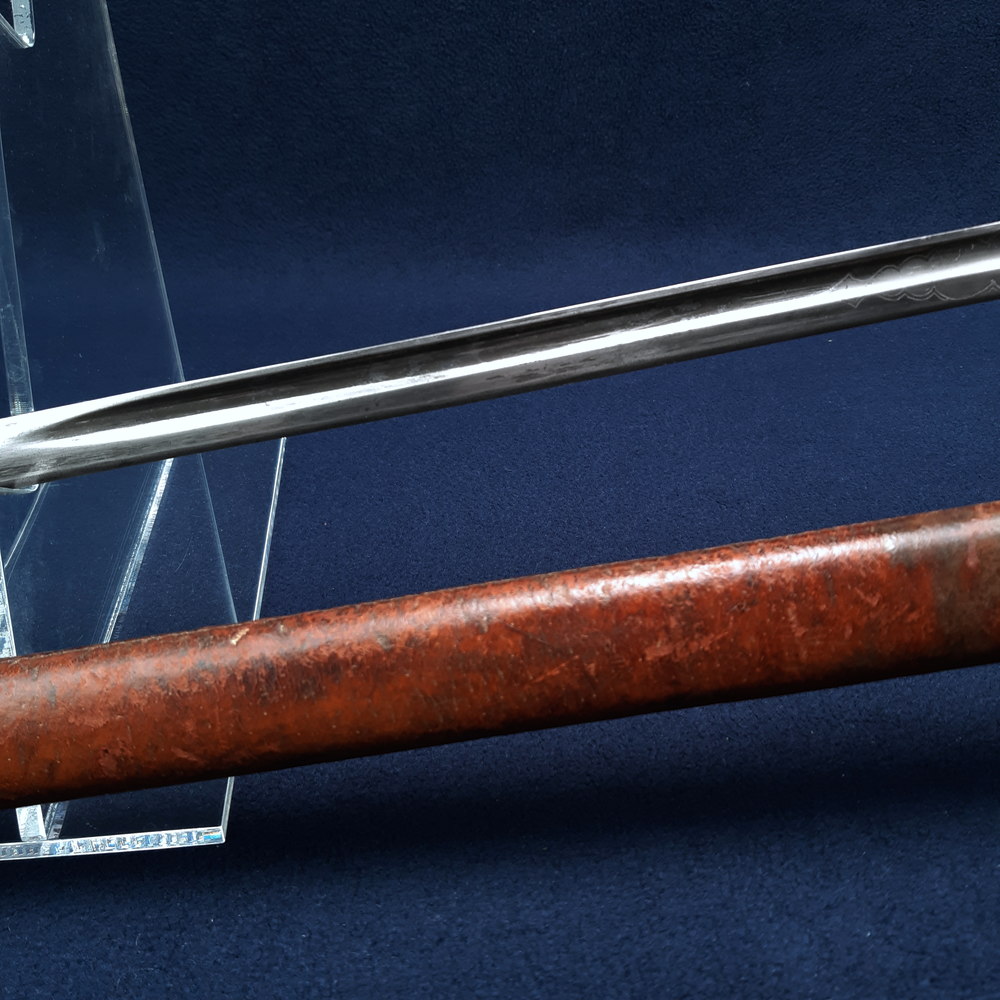
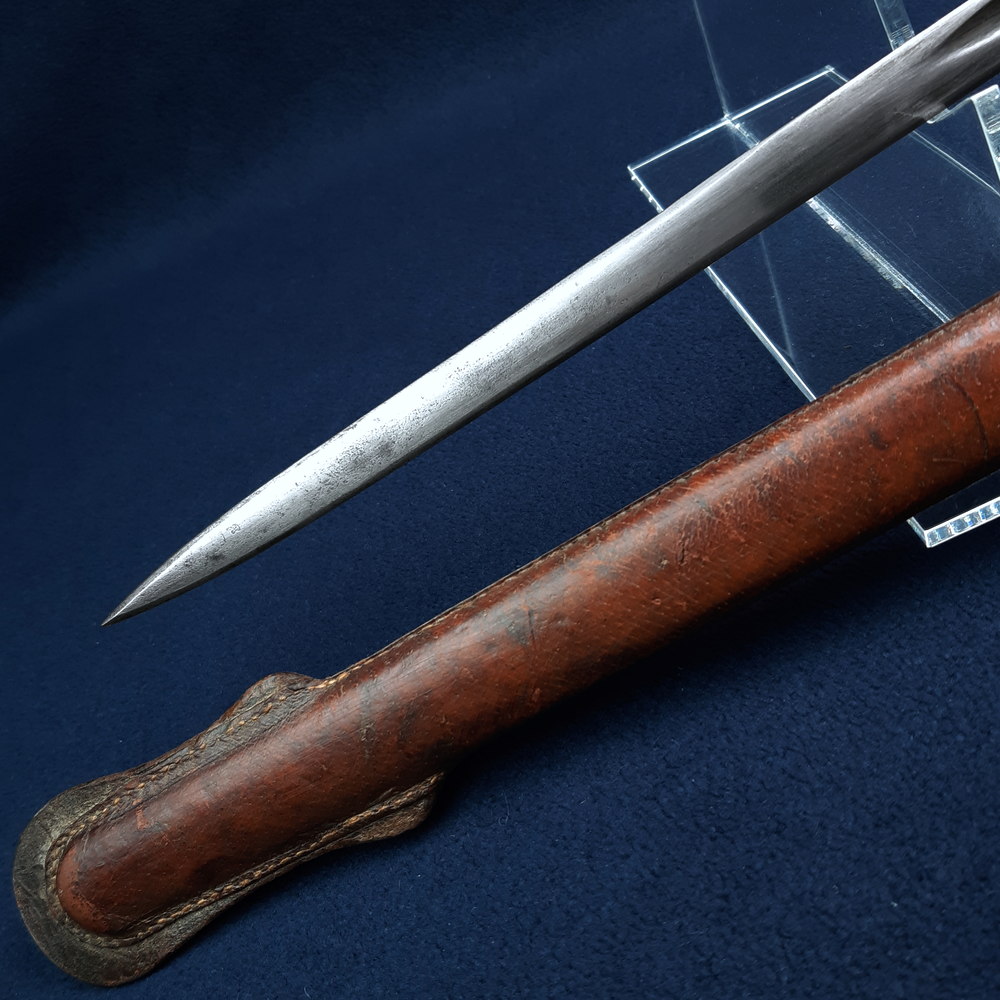
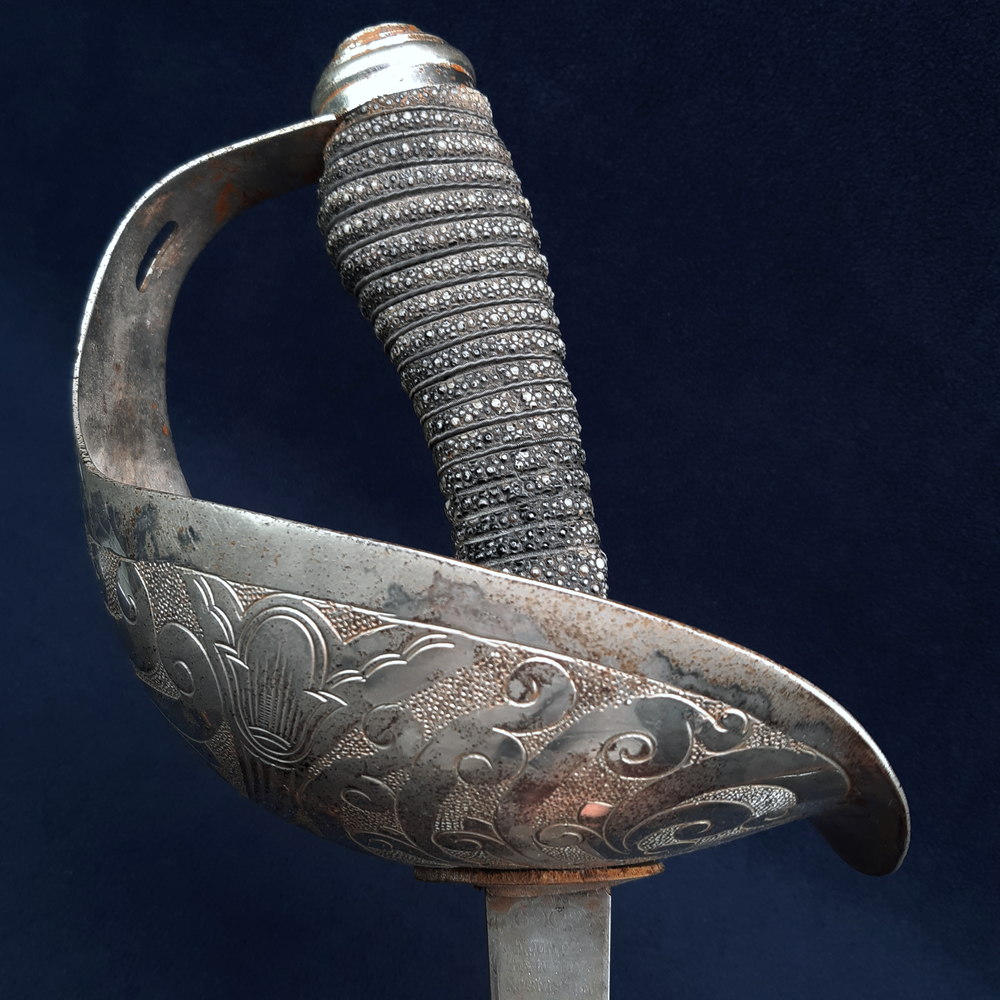
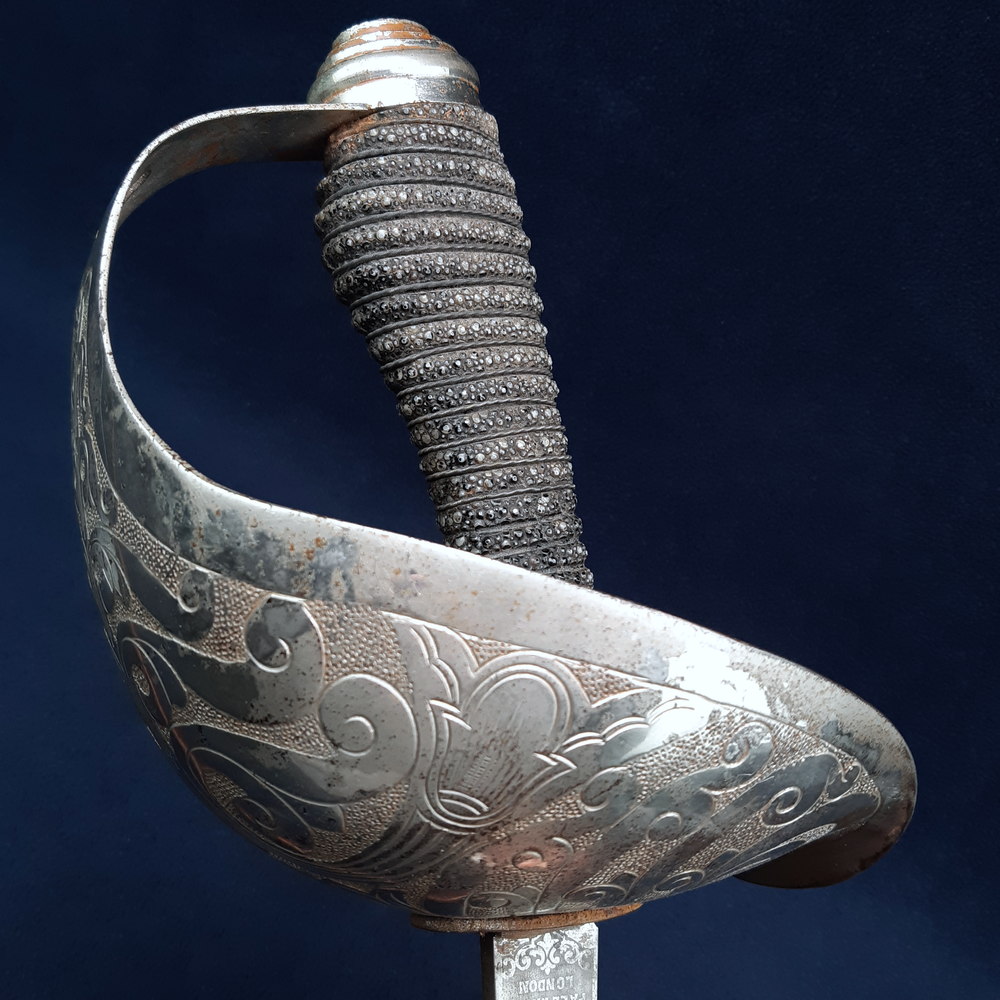
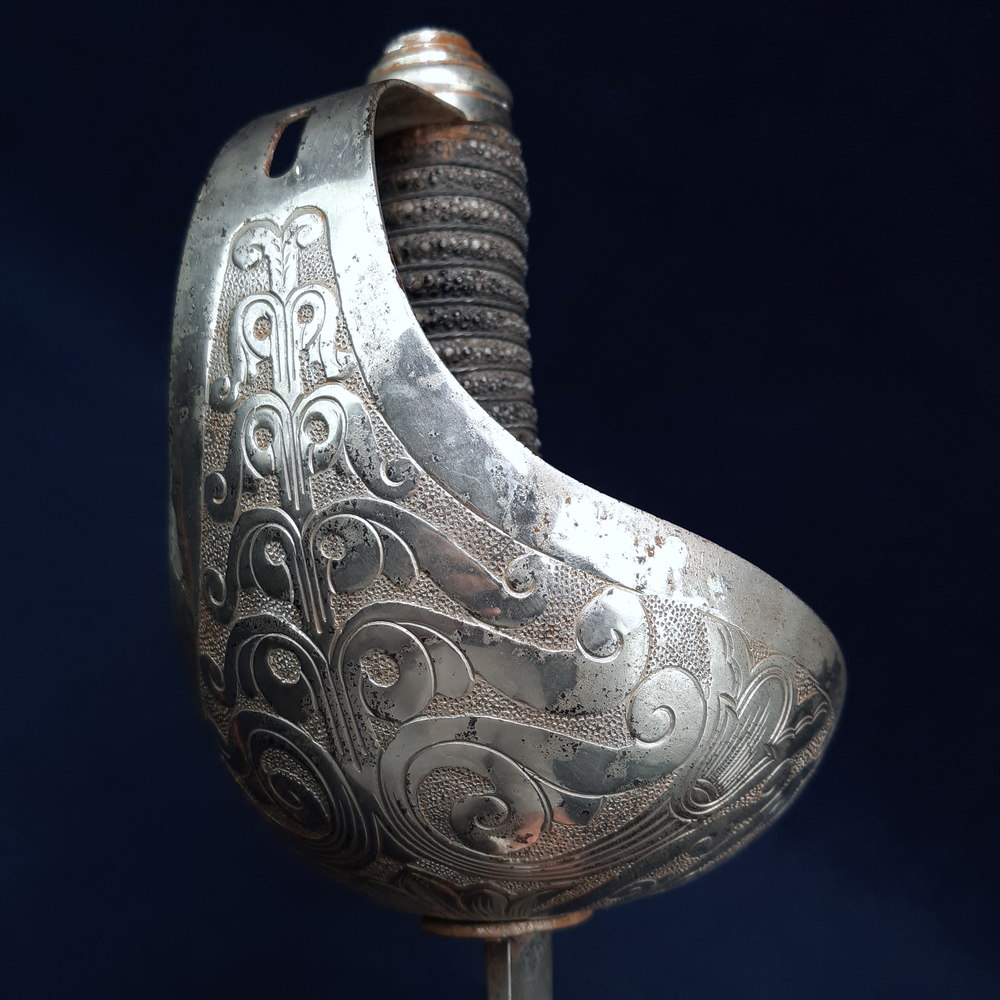
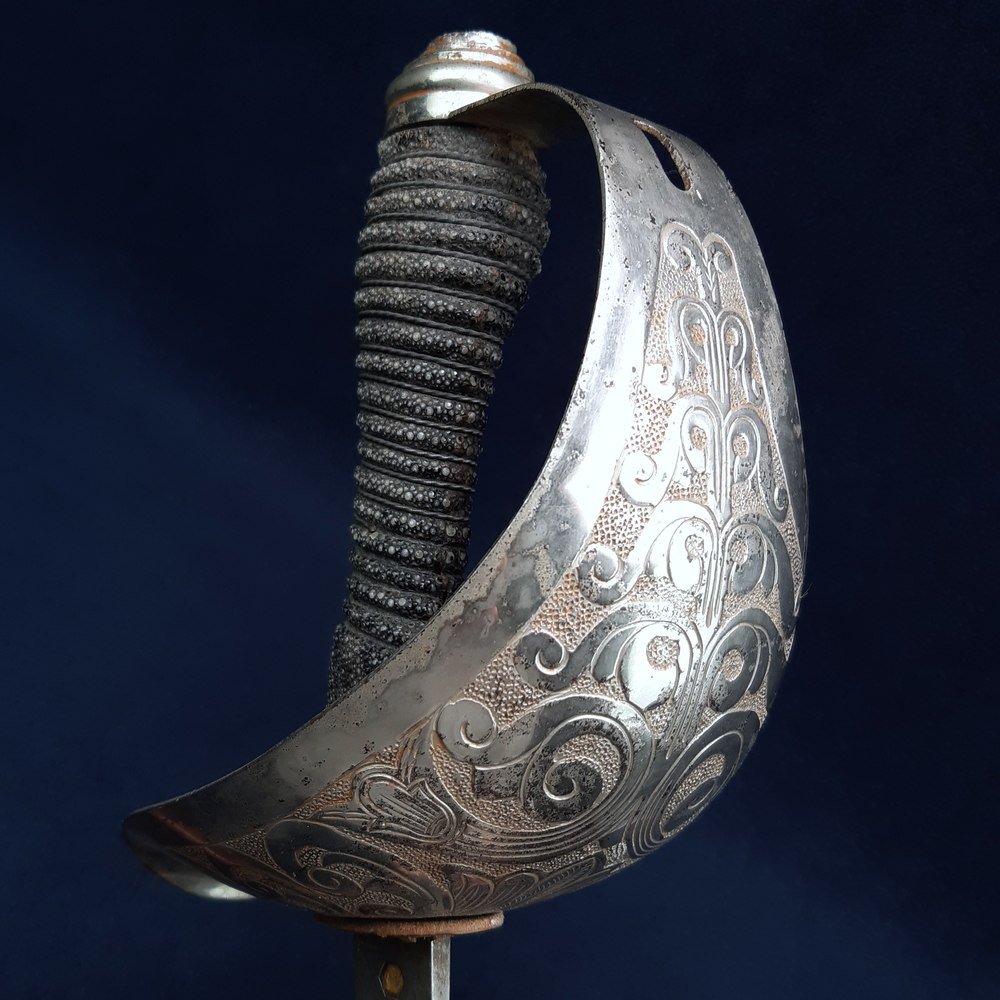
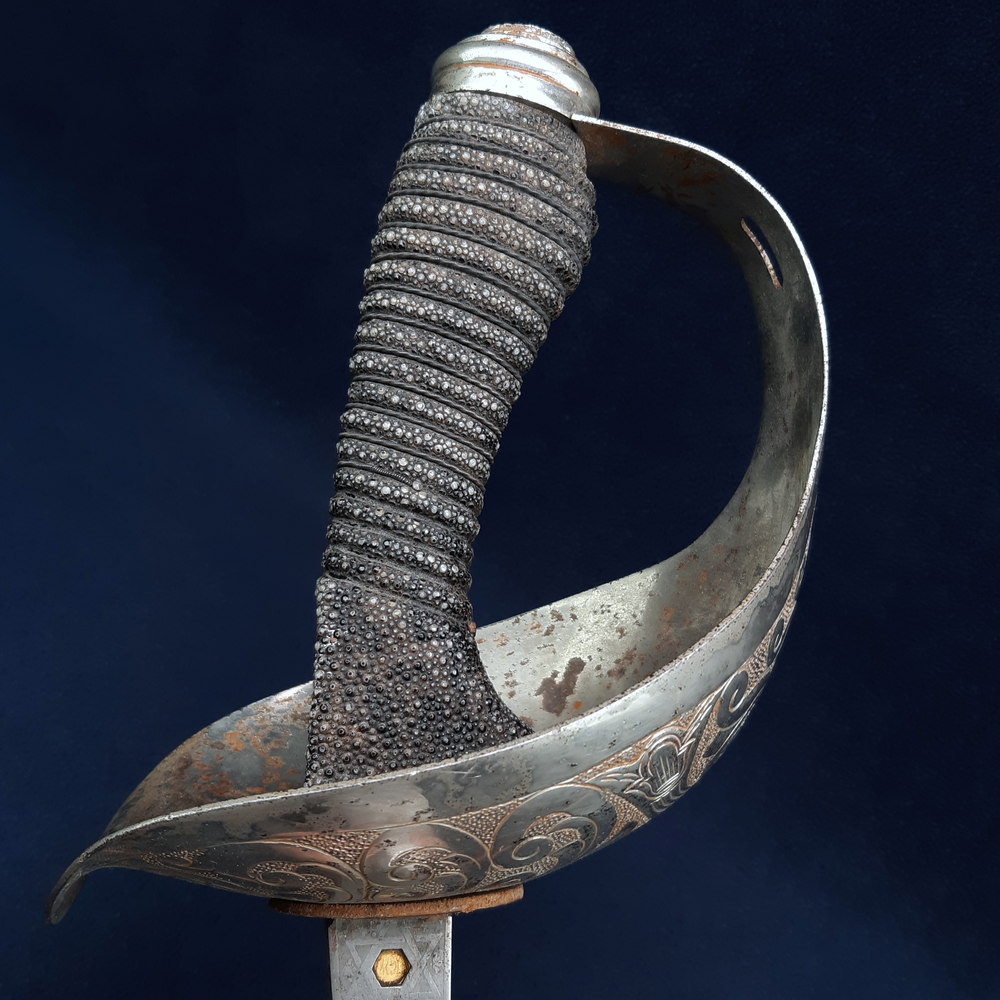
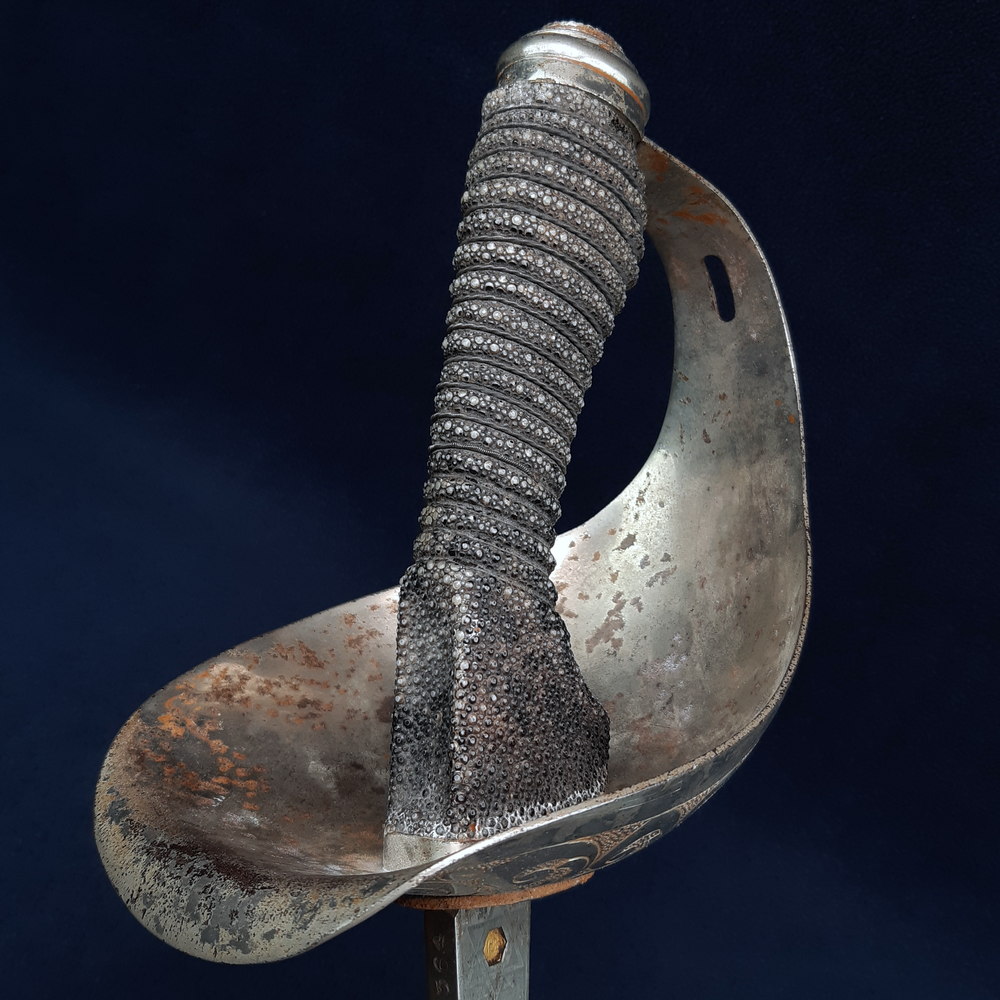
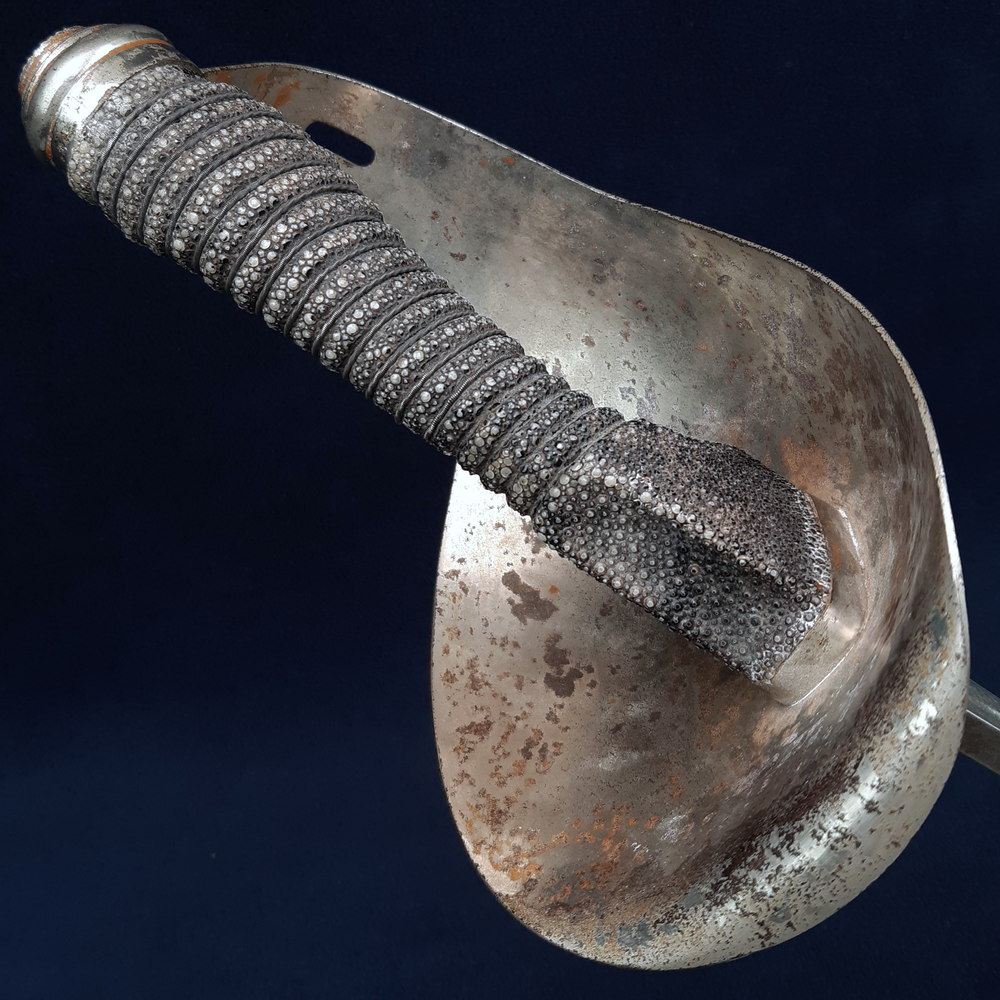
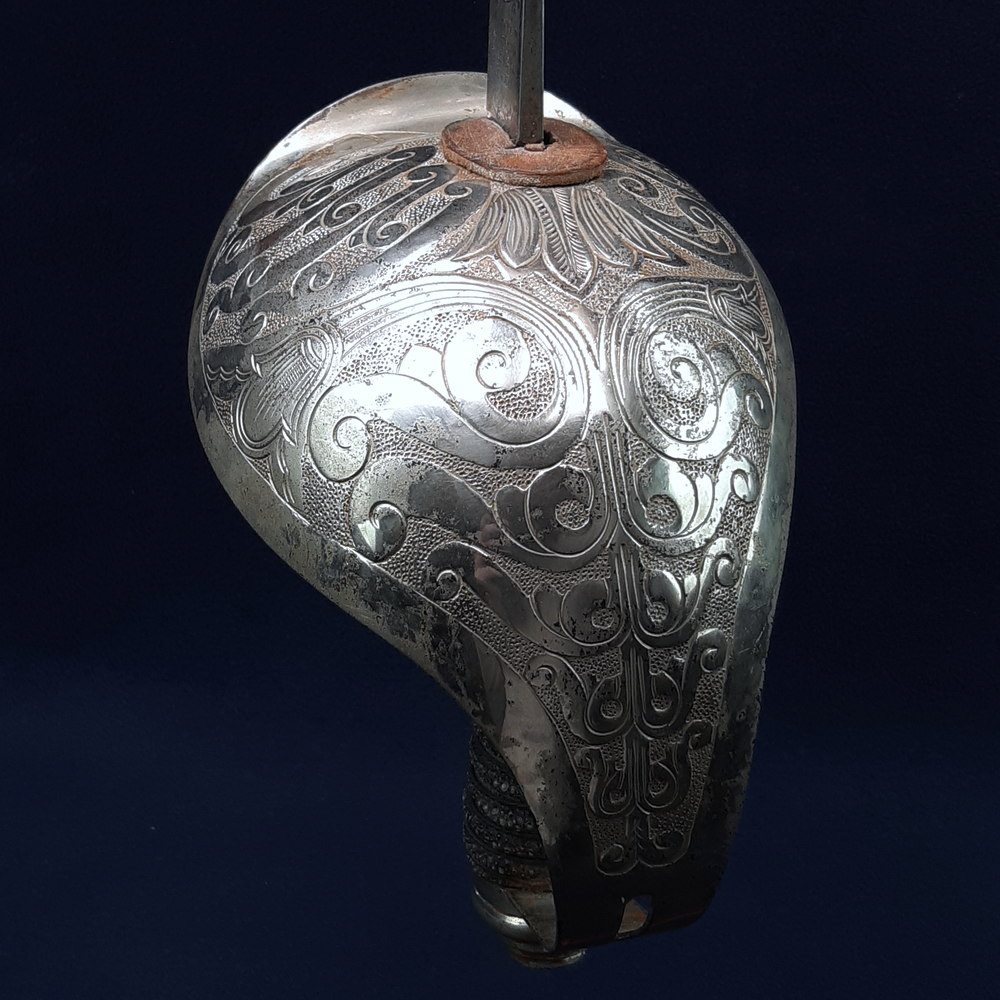
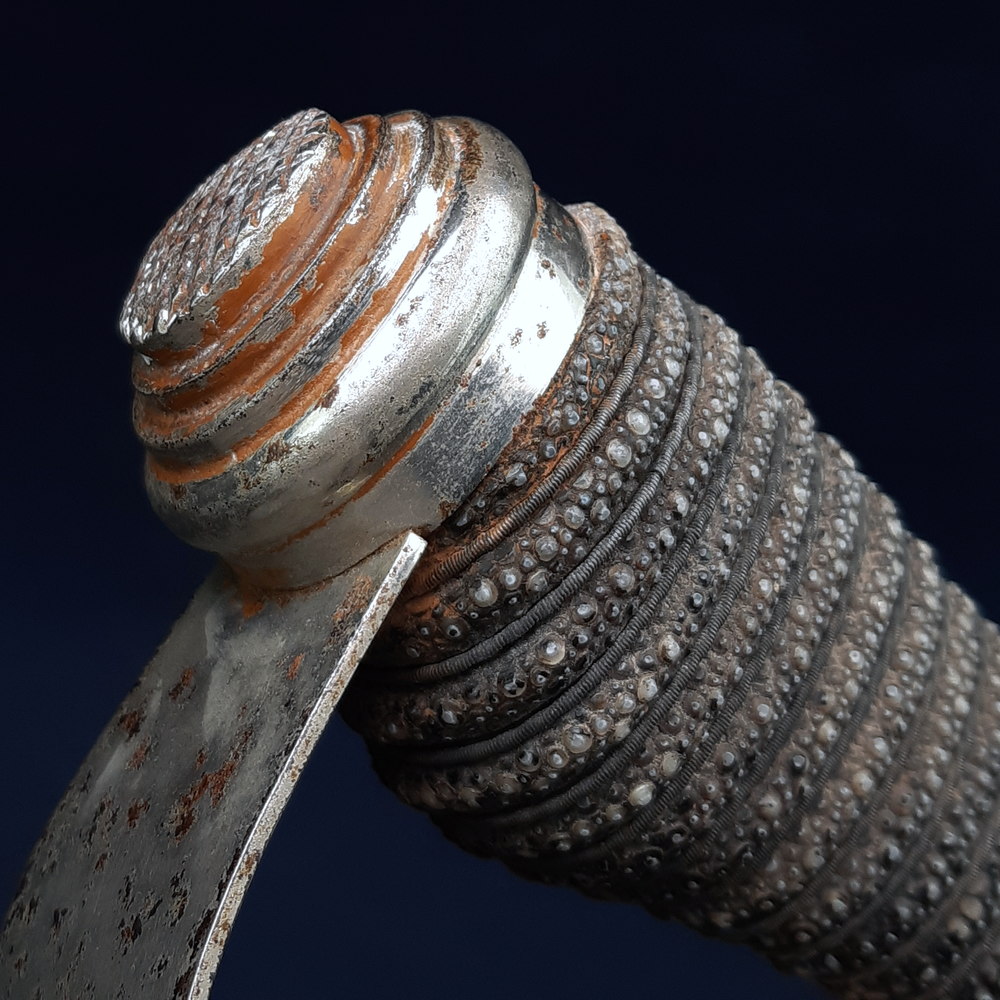
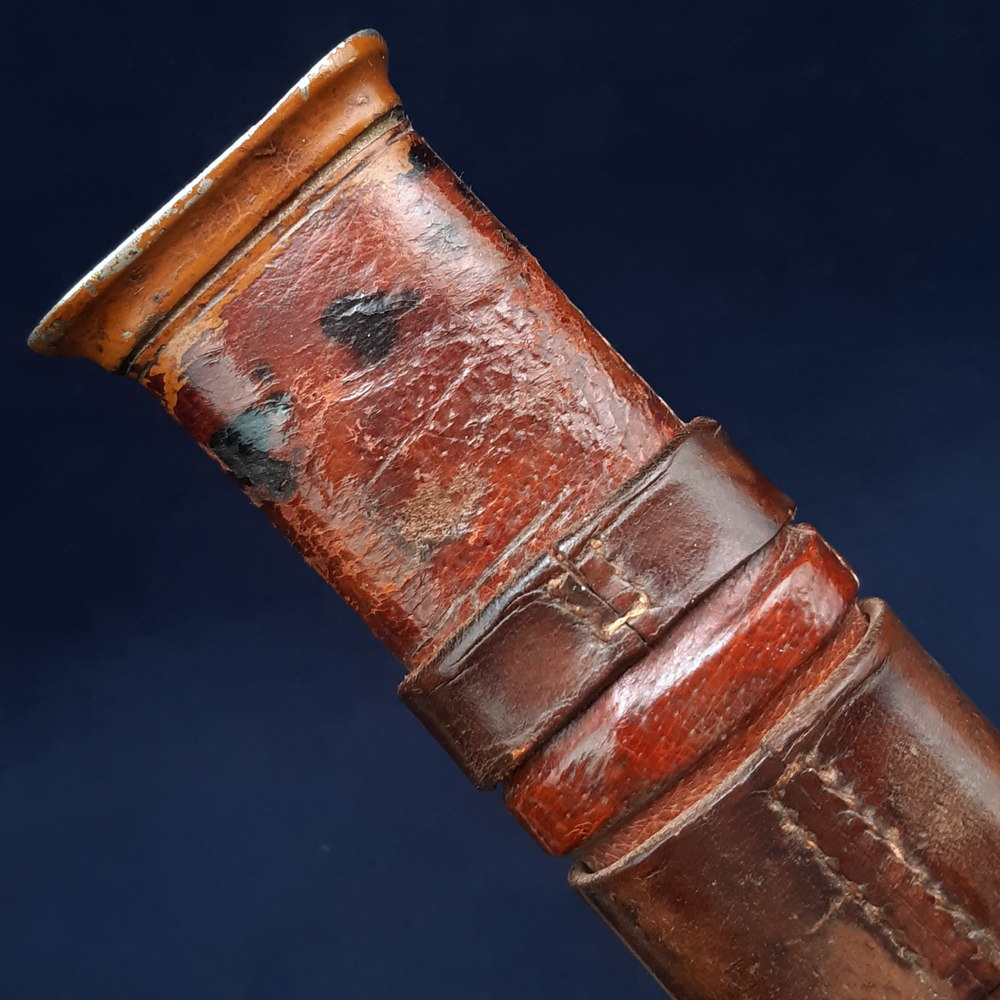
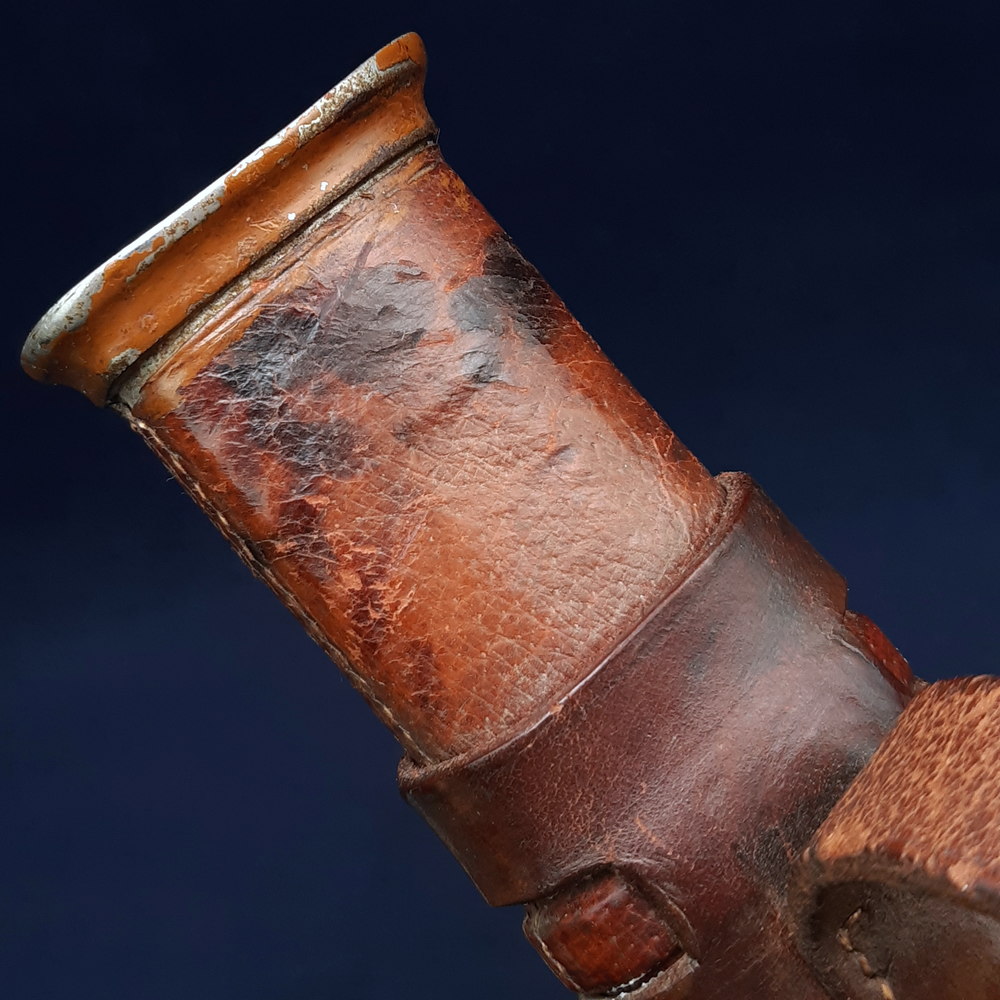
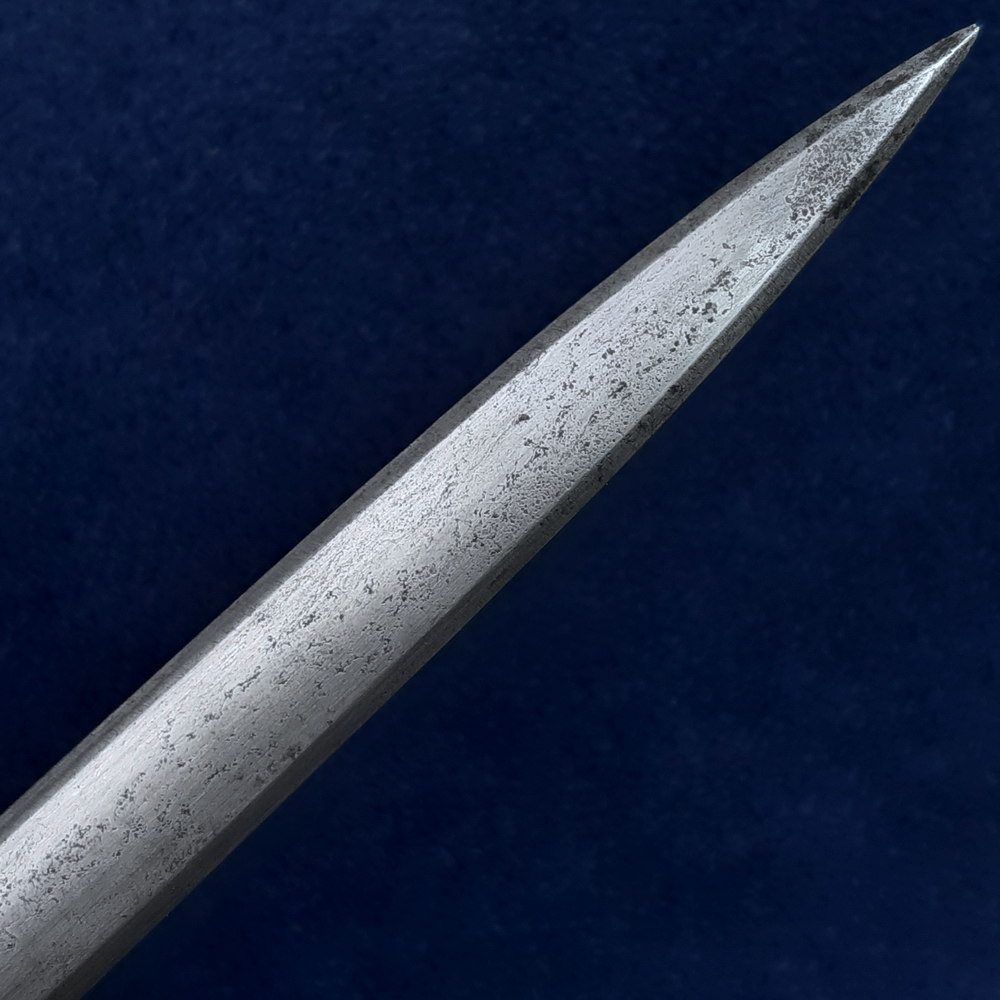
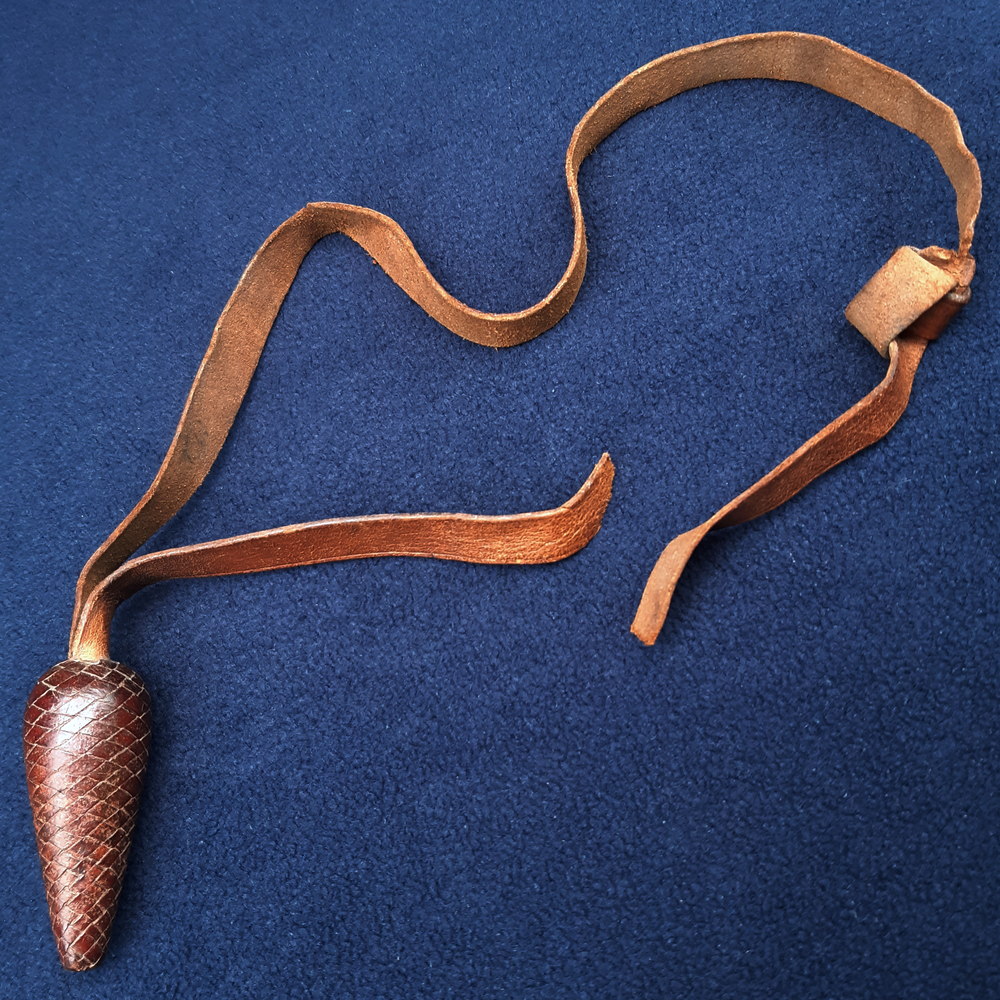
Straight single-fullered blade, basket hilt of nickel-plated steel embossed with scrollwork design. Brown leather washer, spiral-grooved grip of wood covered with shagreen bound with wire. Stepped plated steel pommel. Wood-lined brown leather field service scabbard with plated steel mouth and leather frog strap. Blade 35 inches in length, the sword 42½ inches overall. Brown leather field sword knot with acorn, not attached to sword due to its condition.
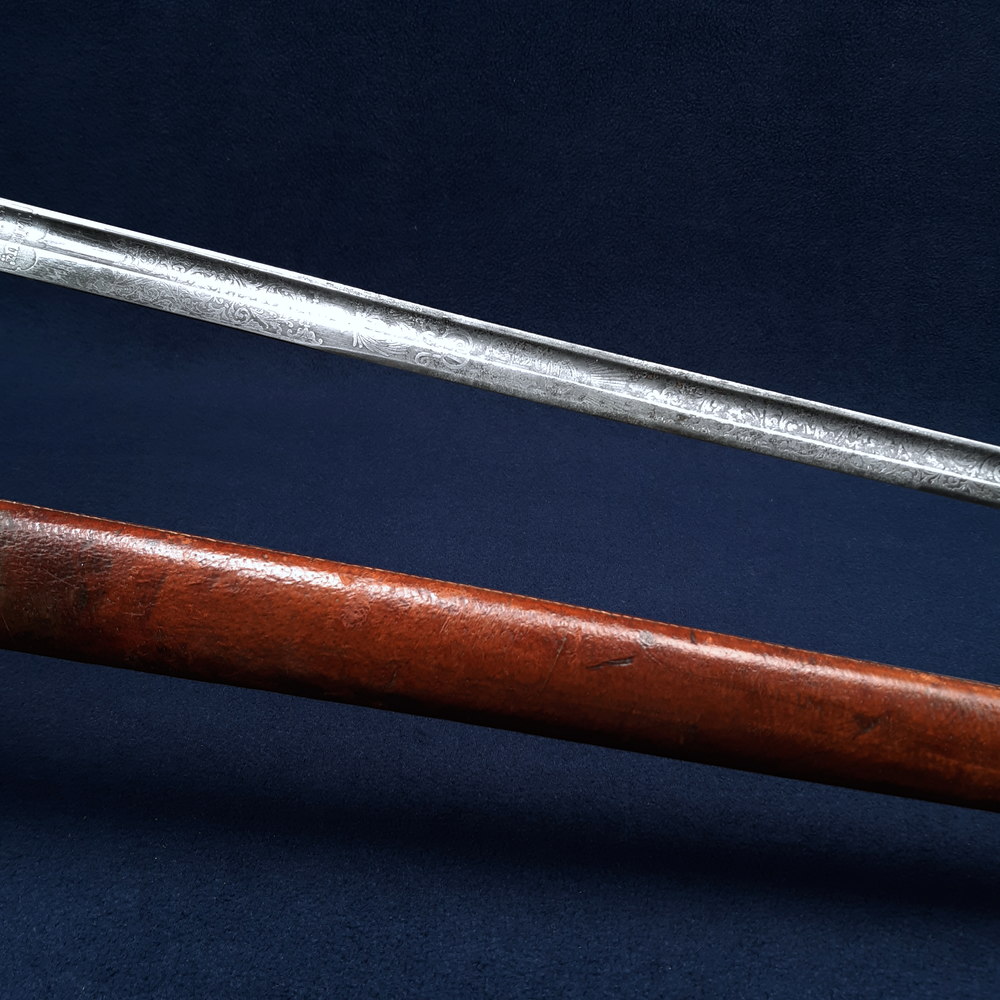
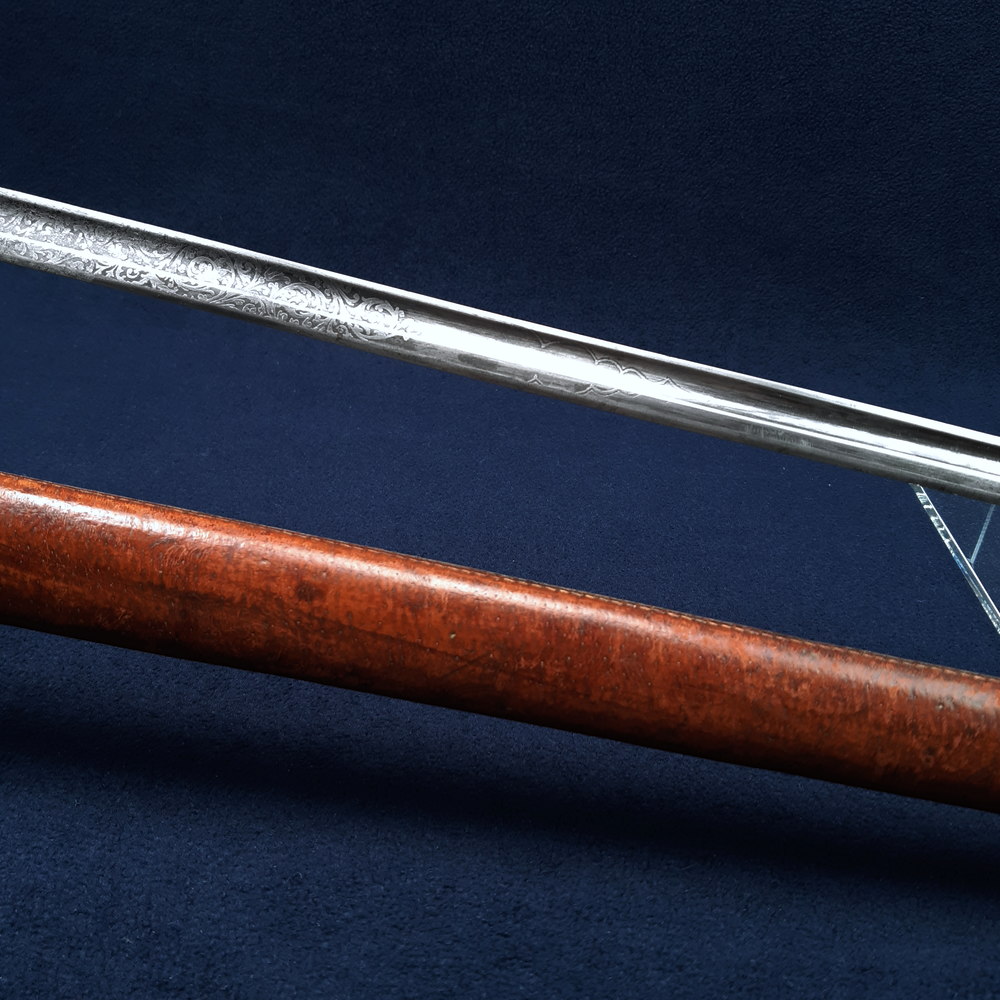
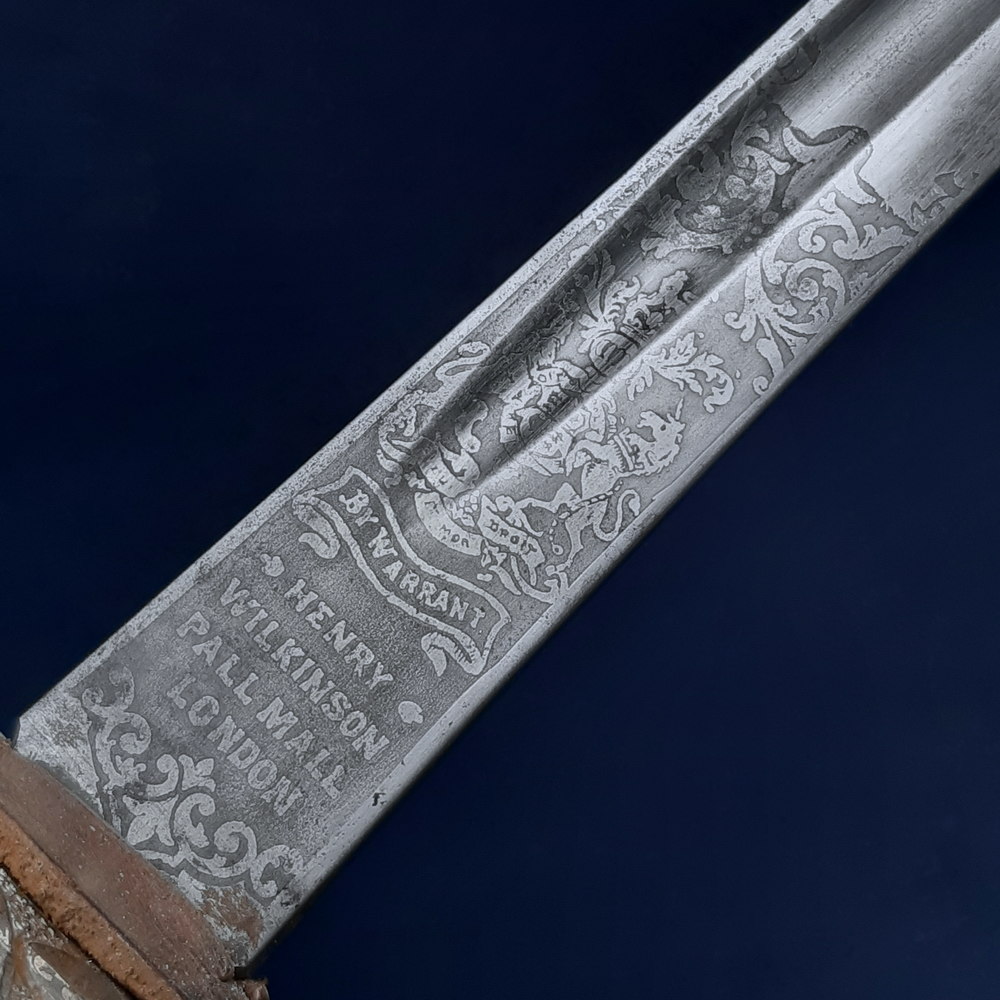
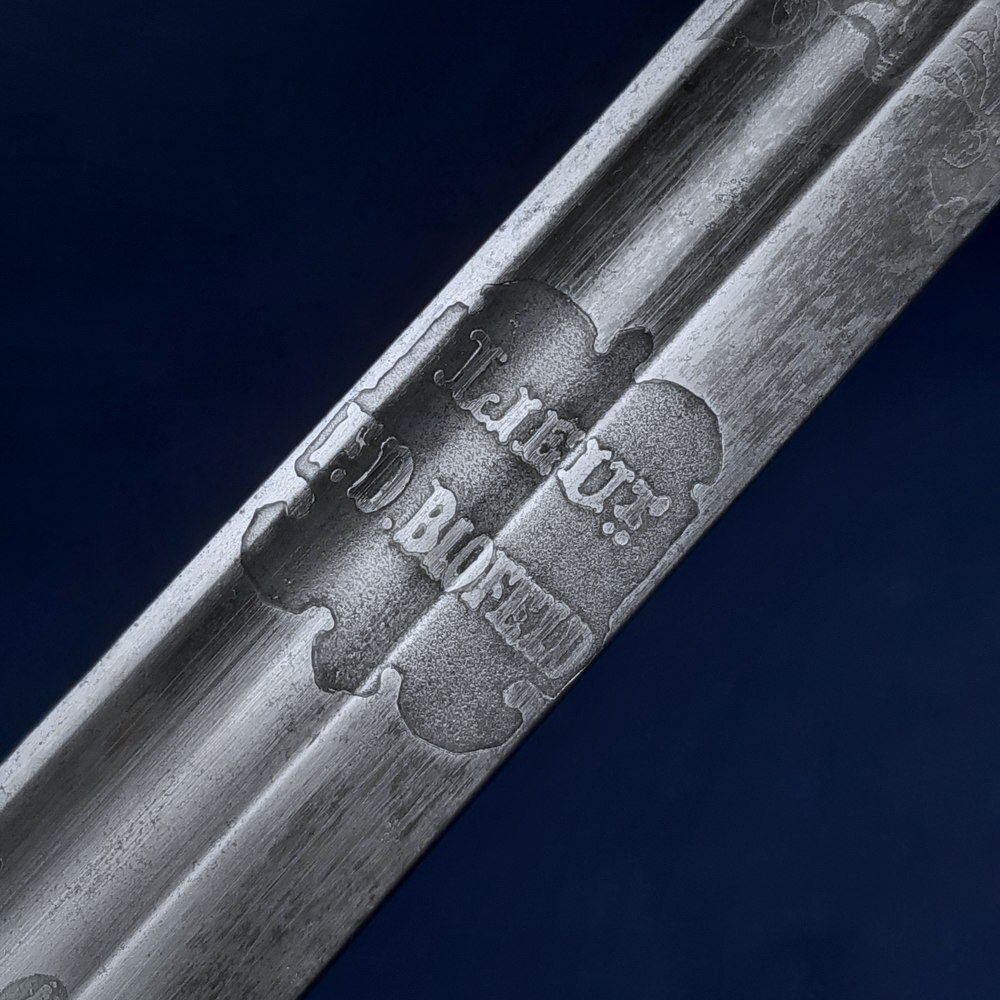
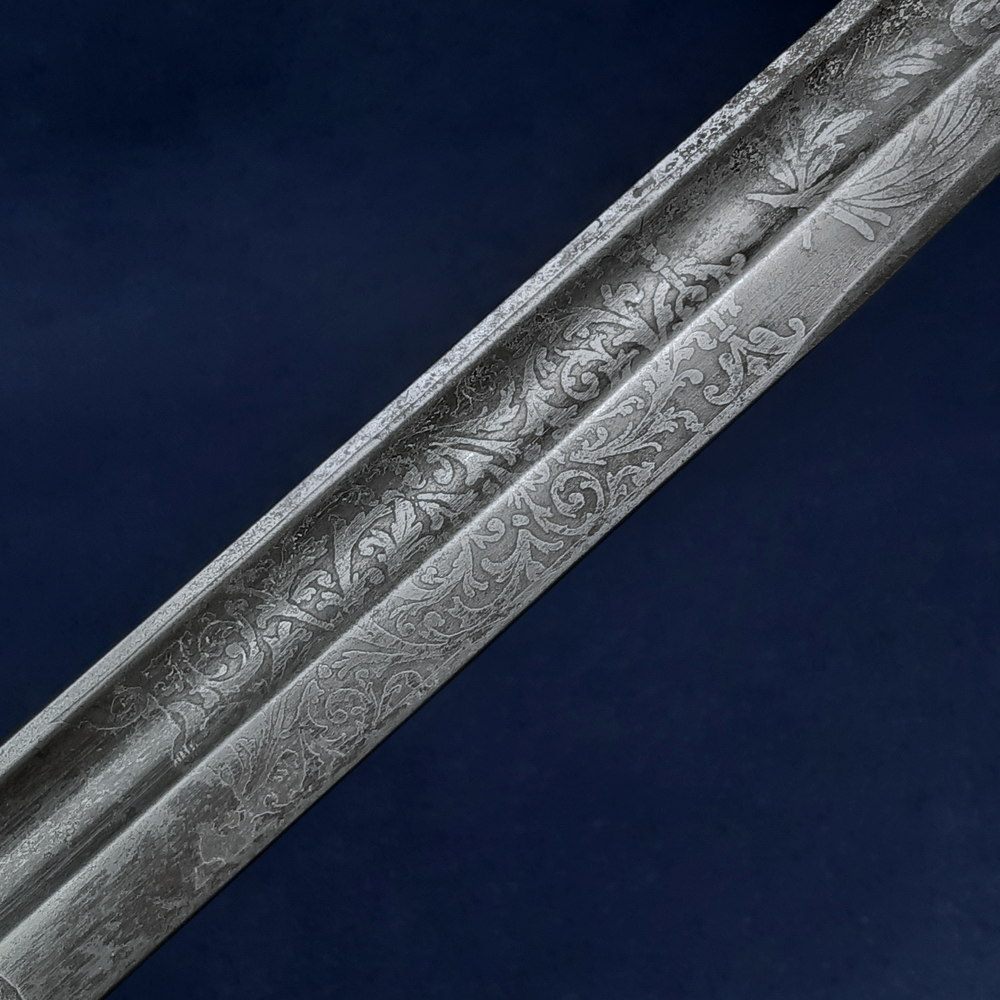
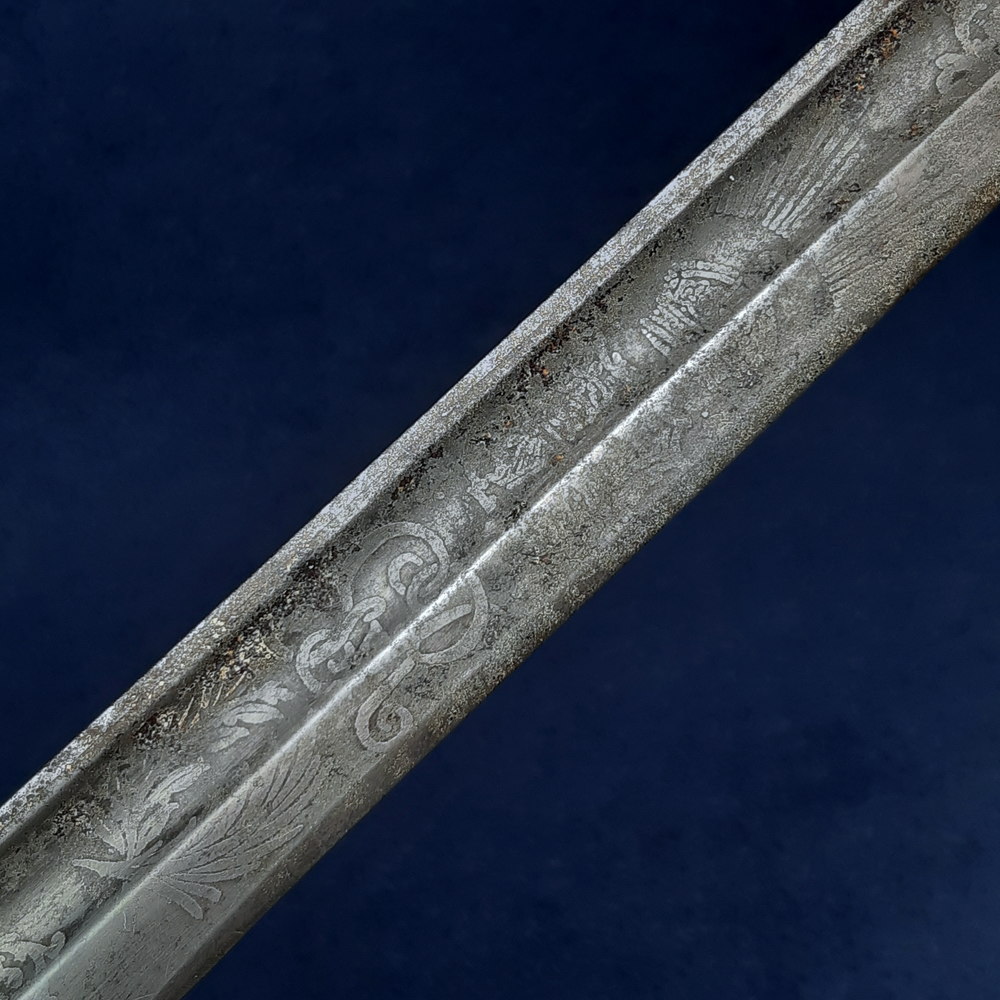
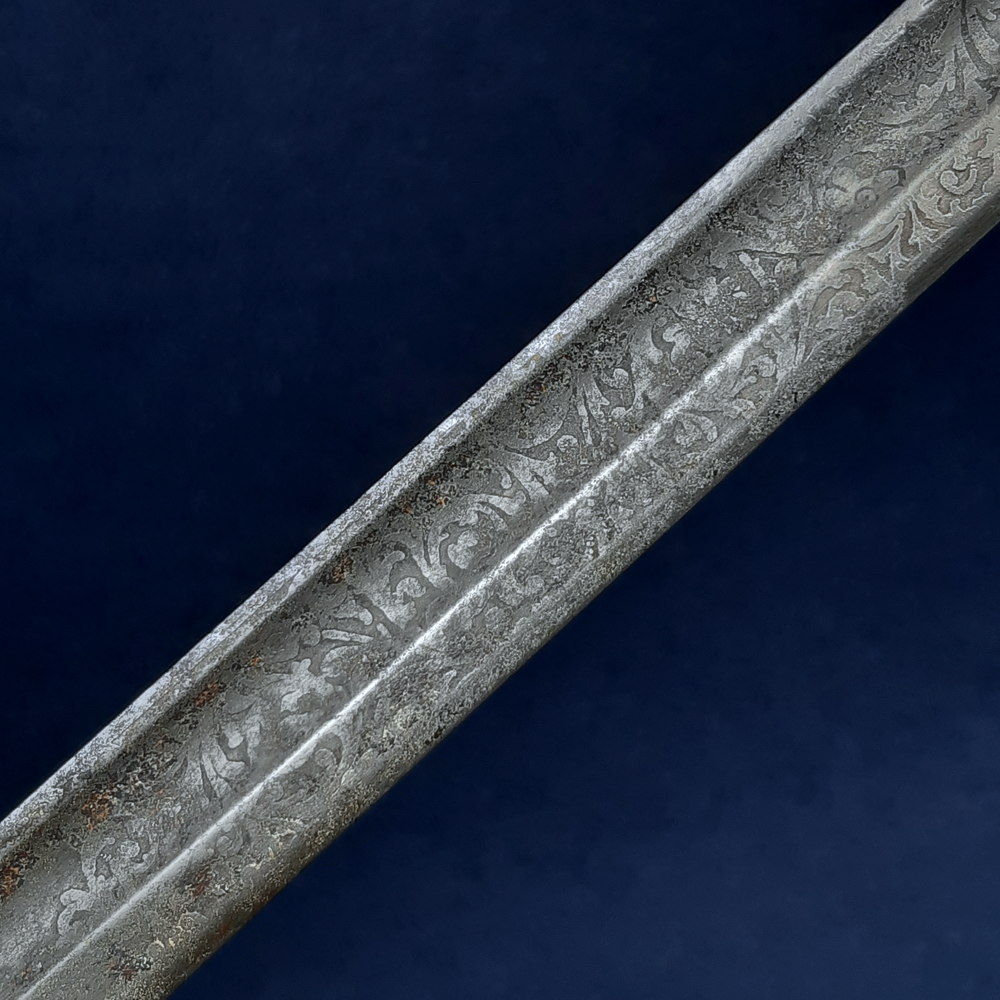
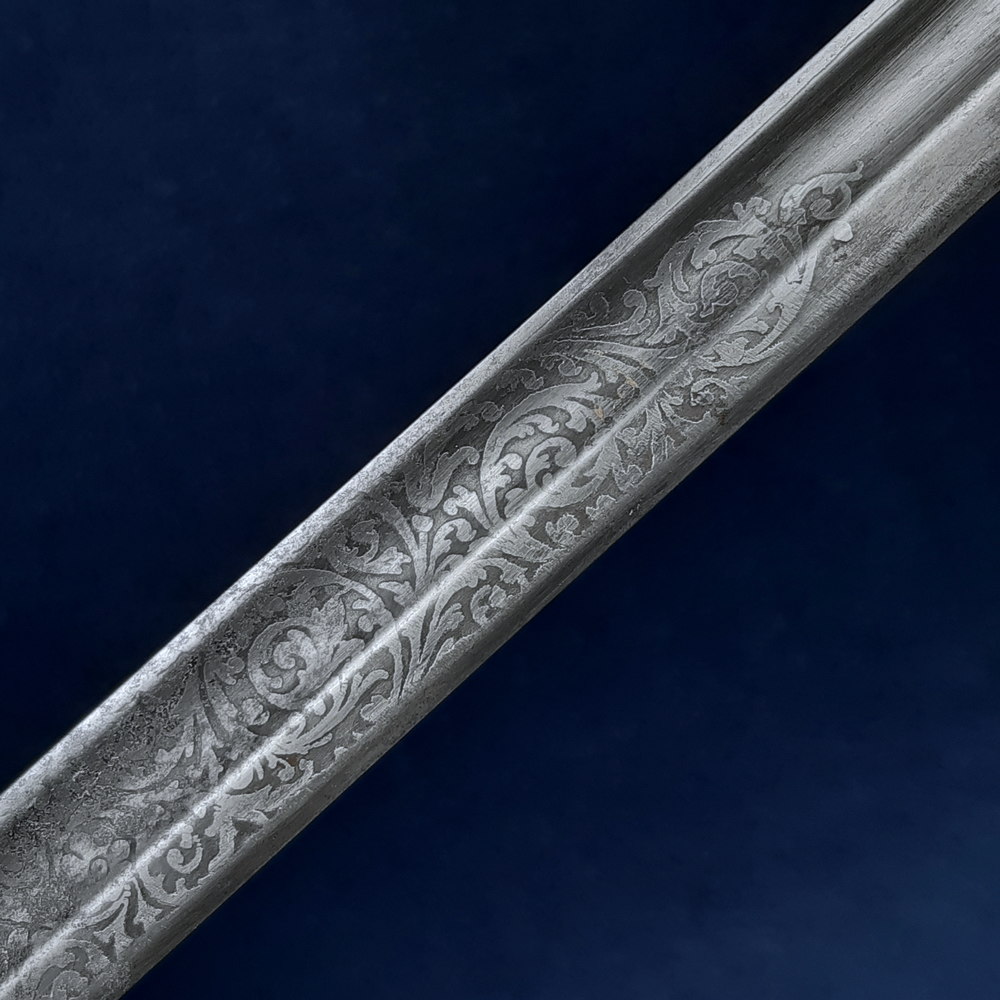
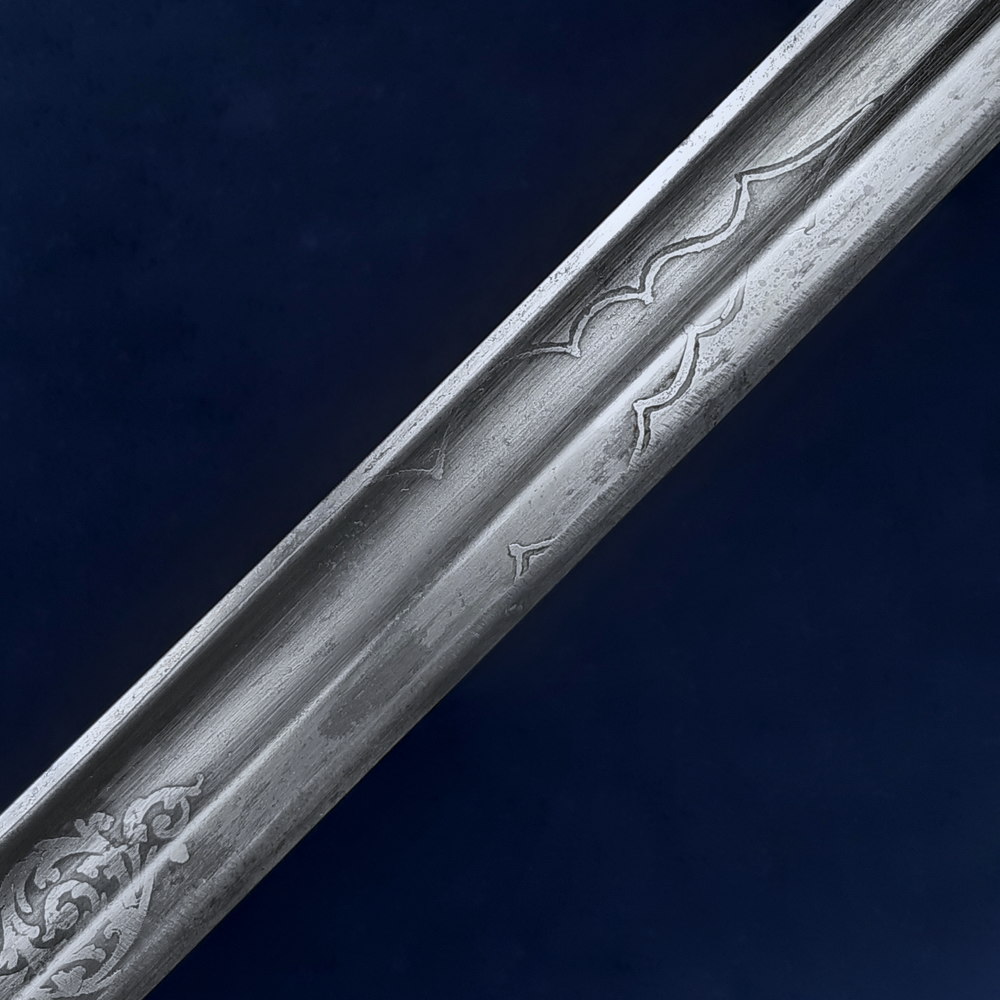
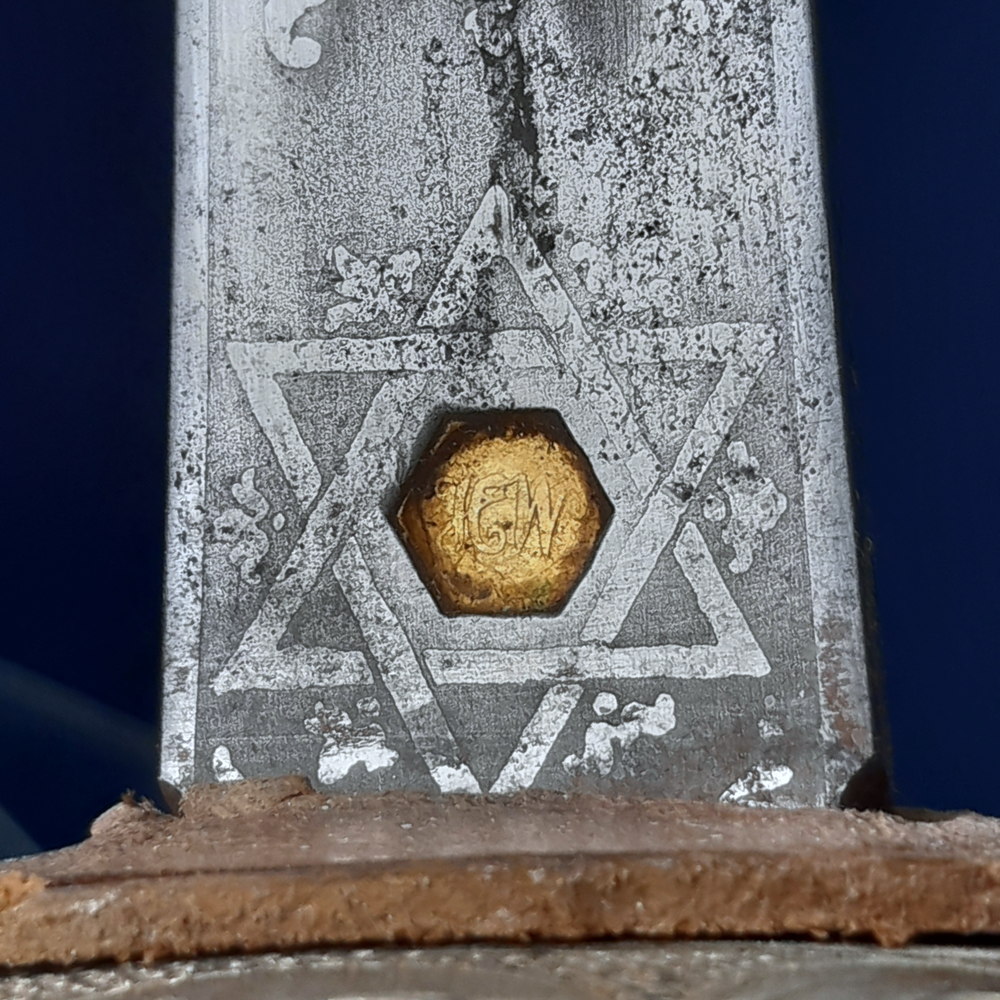
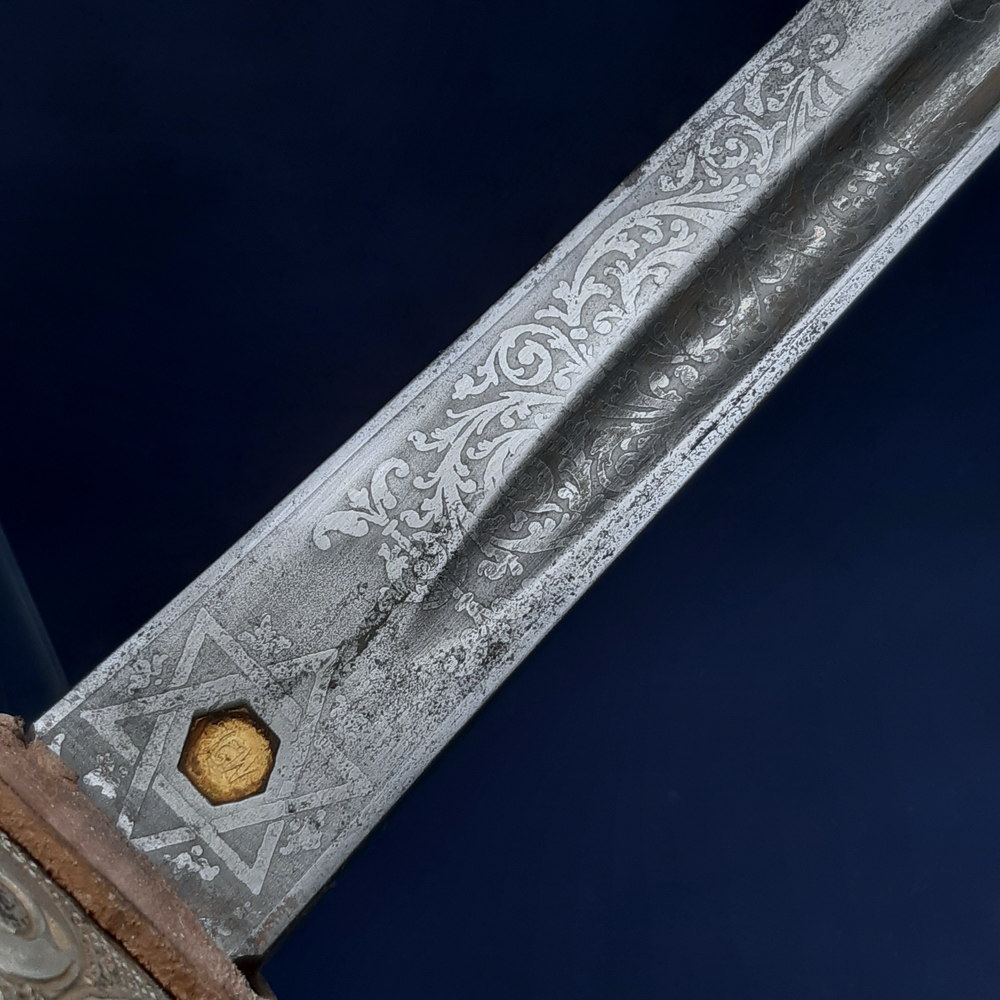
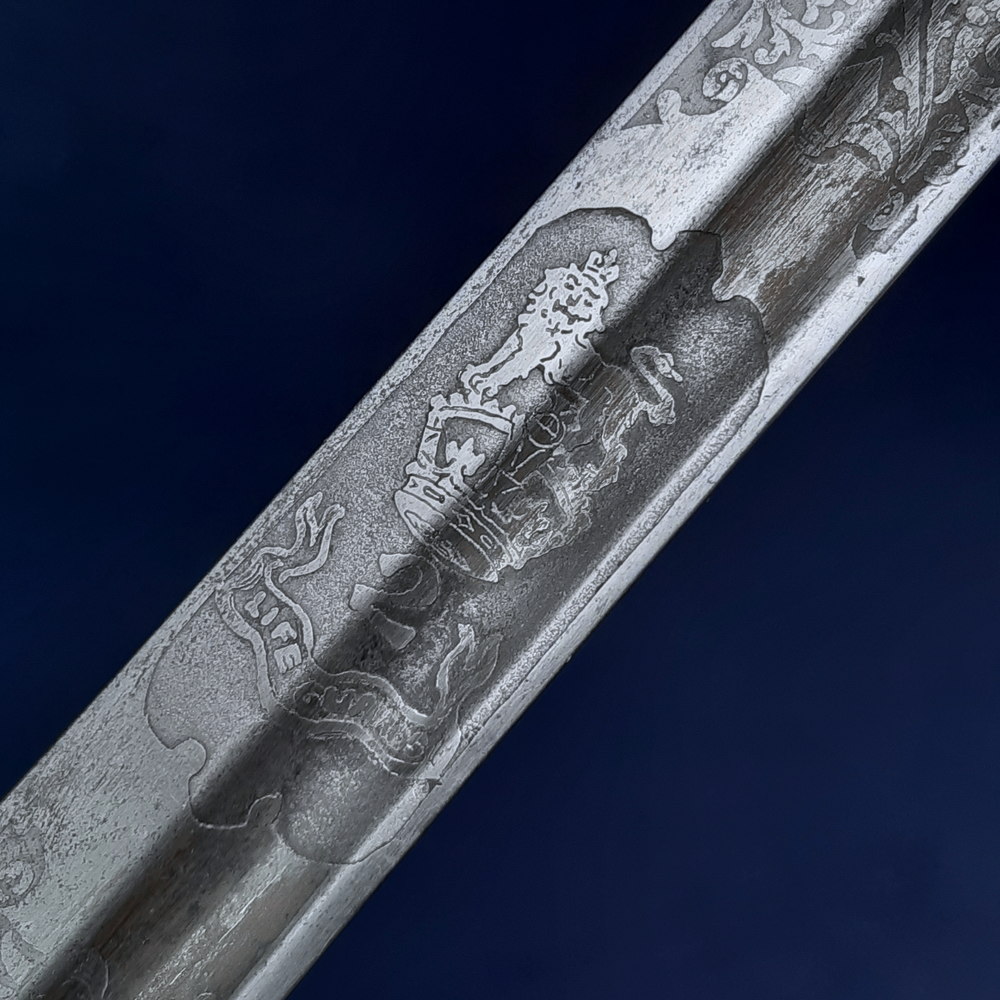
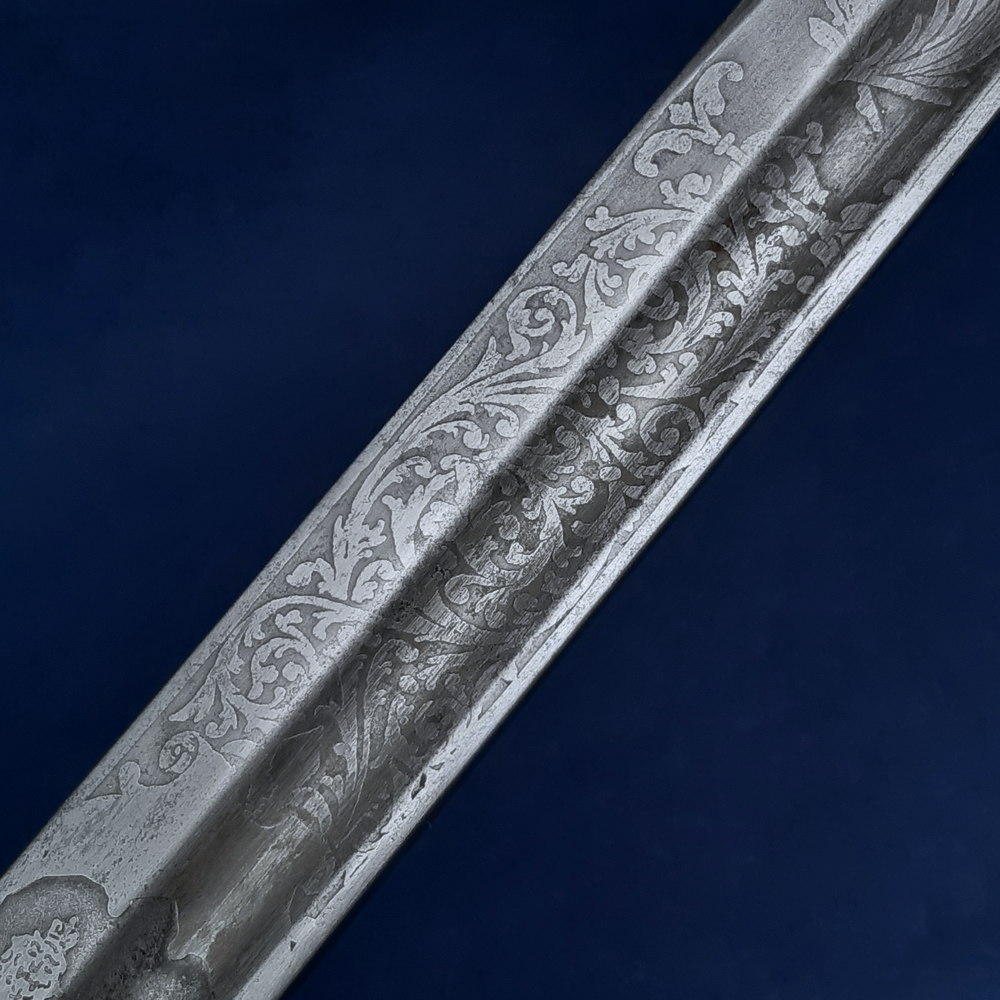
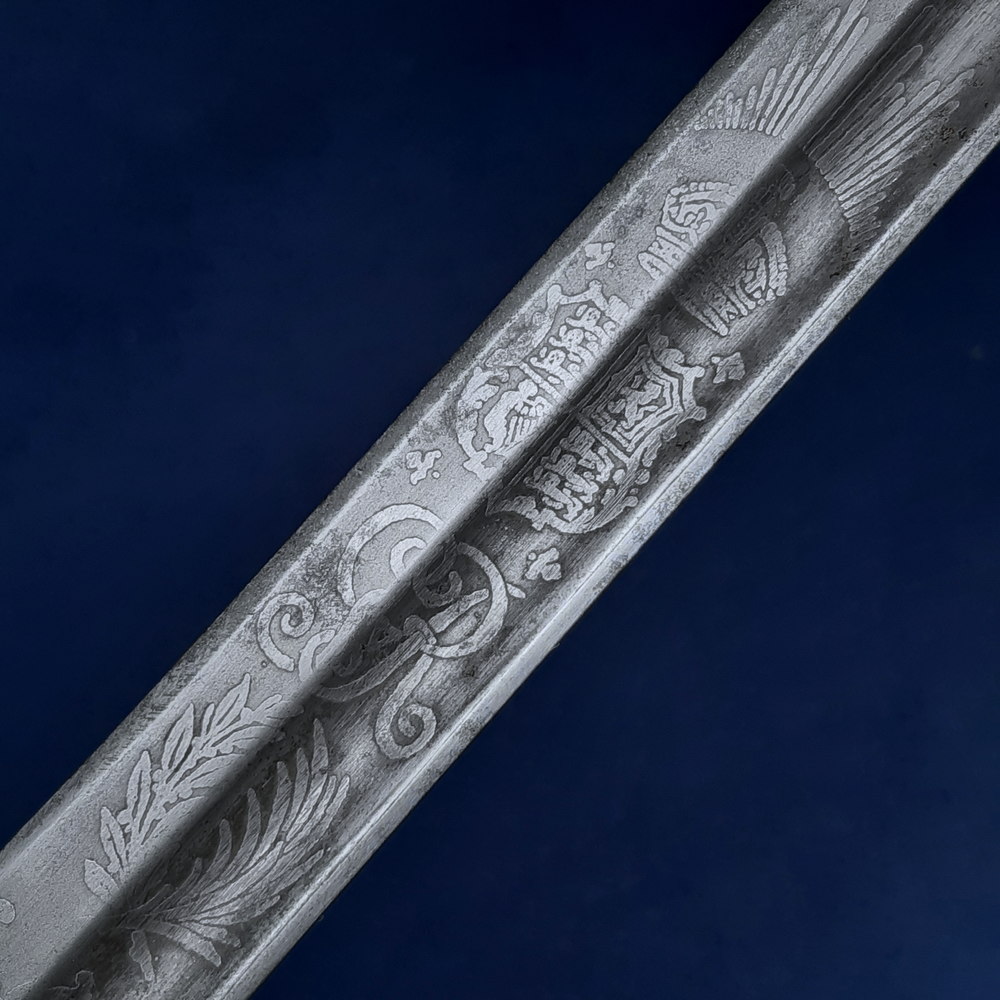
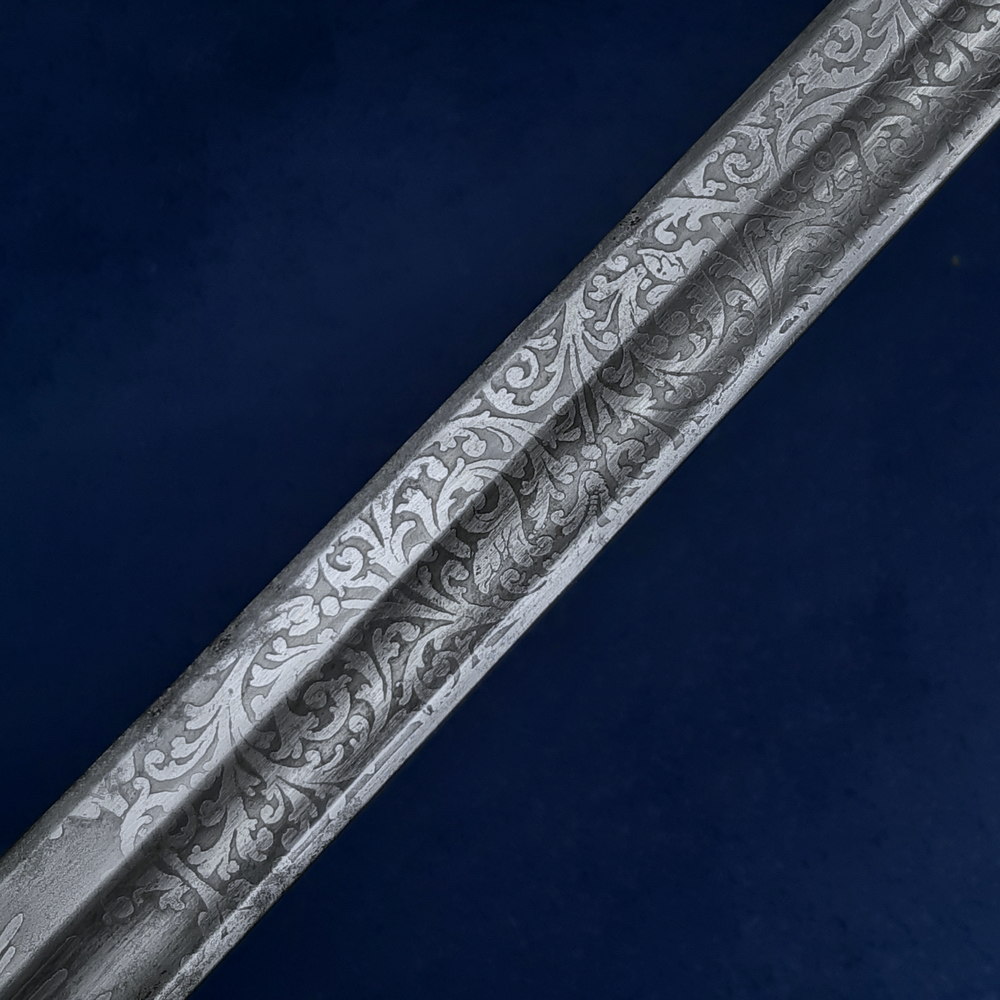
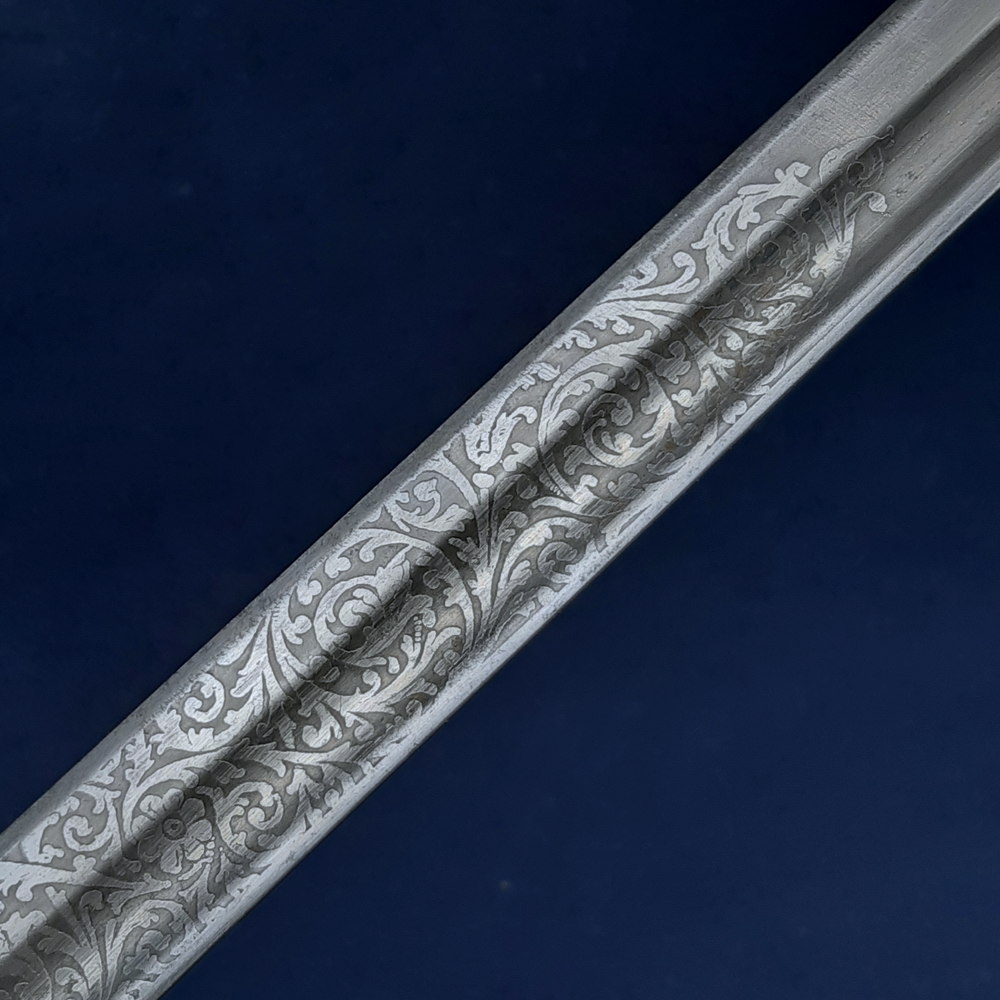
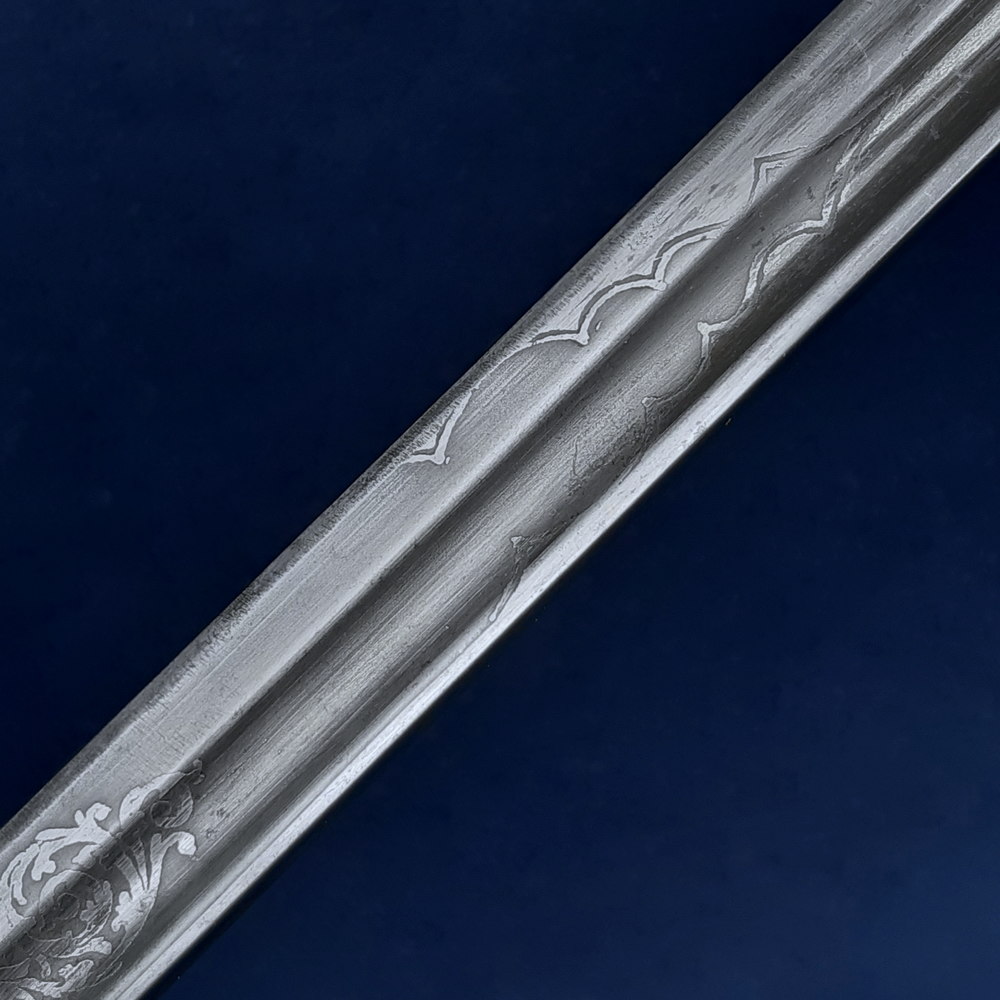
The blade is etched at the forte on one side with the maker’s mark ‘HENRY WILKINSON PALL MALL LONDON’ with the royal coat of arms and scroll reading ‘BY WARRANT’ above. There is a space for the optional etching of the owner’s initials, which has been filled with ‘LIEUT. F. D. BLOFELD’ within a cartouche. At the ricasso on the other side is a hexagonal brass proof slug set within an etched six-pointed star – the hexagonal proof slug was used from 1905 onwards to denote Wilkinson’s best quality blades. Above this on the same side is etched a cartouche containing a 2nd Life Guards regimental badge, consisting of a lion surmounting a crown and the number 2, beneath which is ‘LIFE GUARDS’ within a scroll. The blade is further etched on both sides with the royal crown and cypher of George V, a wreath of laurel and palm, and foliate motifs.
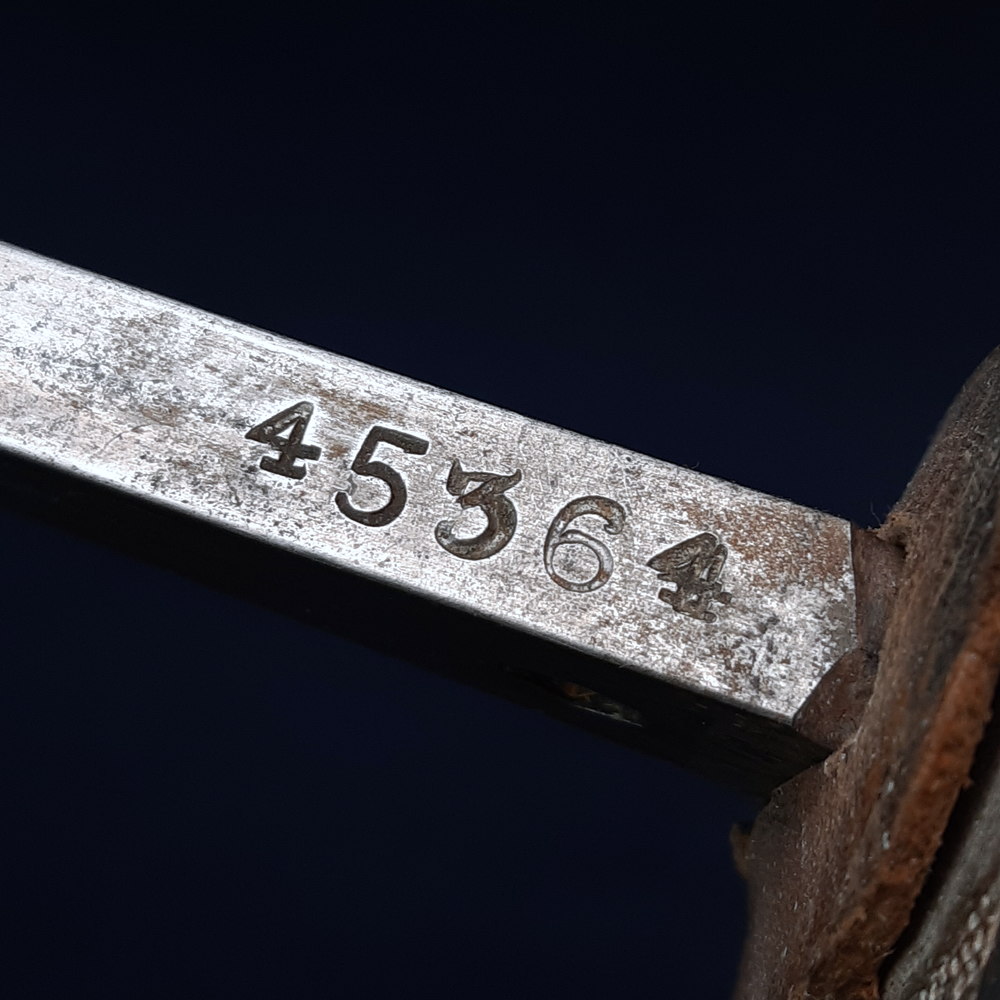
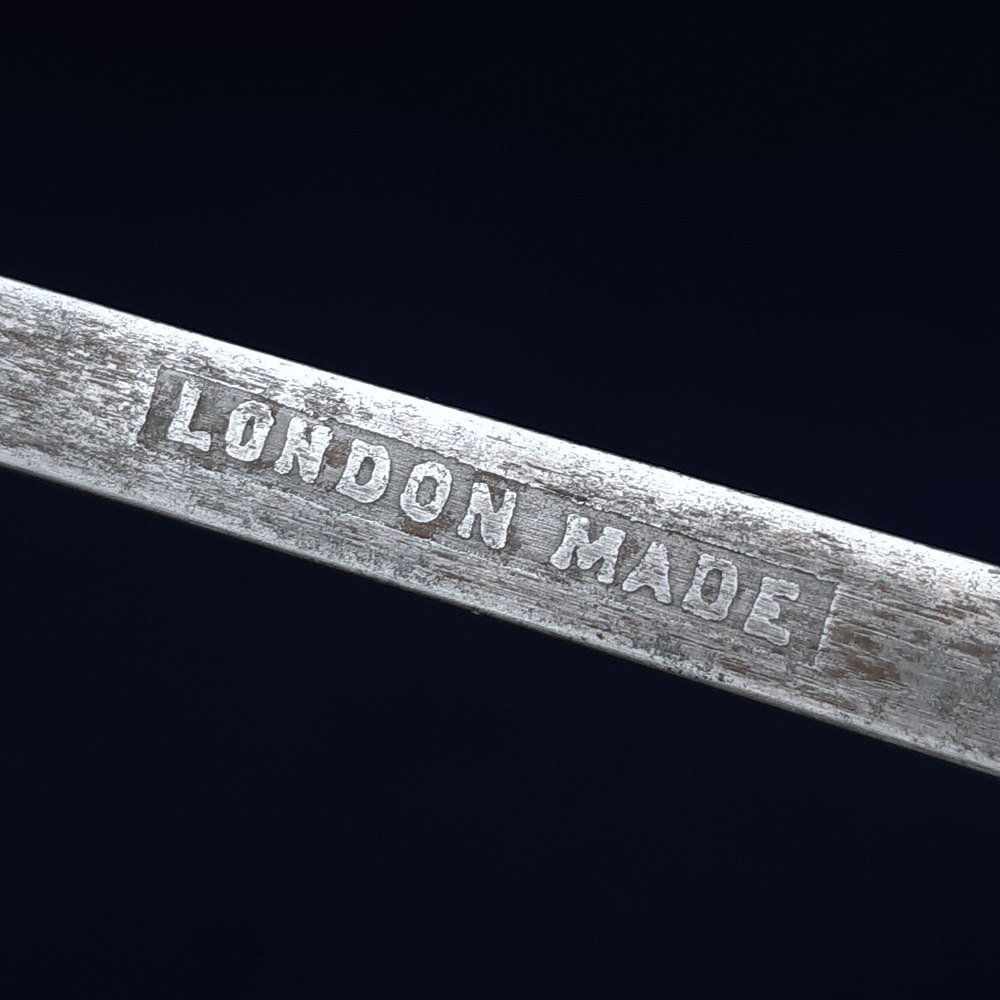
The spine of the blade is stamped at the ricasso with the Wilkinson serial number ‘45364’, which indicates that it was made in the year 1914 - double stamping is visible on the last digit. The spine is also etched with ‘LONDON MADE’.
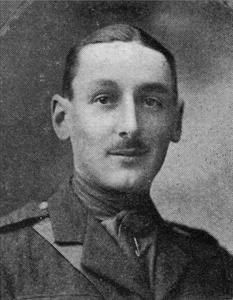
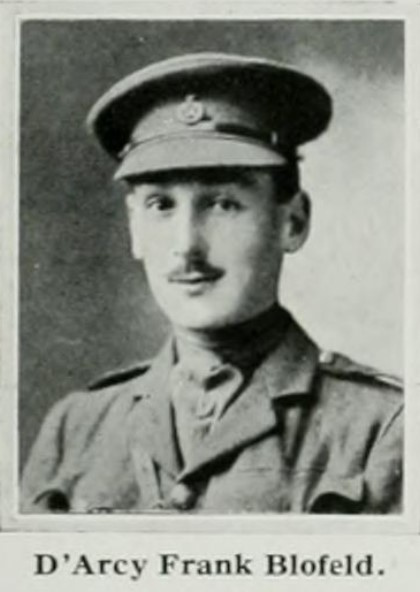
Frank D’Arcy Blofeld was born in 1890 at Upper Montague Street in Bloomsbury, London, son of Frank Blofeld, a merchant of produce imported from British colonies, and his wife Leslie. He attended school at Eton and served for three years with the Eton College Volunteers, a unit based at the school which at the time was a volunteer battalion of the Oxford and Buckinghamshire Light Infantry. It was later rolled into the Officer Training Corps (OTC) system, predecessor to the modern-day Cadet Force.
Frank was interested in a military career but poor health prevented him from attending the military college at Sandhurst, and he instead spent several years in Argentina, where he took an interest in breeding and training polo ponies. He had always been a keen rider and huntsman, riding with the Devon & Somerset Staghounds and the West Somerset Fox Hounds as a boy and having membership of both the Cheltenham and West Somerset Polo Clubs with a five-goal handicap. When he returned to England from Argentina he lived in Gloucestershire and rode with the Cotswold Hunt.
When the First World War broke out Frank enlisted with the local Gloucestershire Yeomanry, his riding experience naturally suiting him to the cavalry. In September 1914 he was gazetted as a 2nd Lieutenant in the 3rd Reserve Regiment of Cavalry, then transferred to the Household Cavalry in October, joining the 2nd Life Guards which had deployed to Flanders two week earlier. This matches with the sale date of this sword.
Frank’s regimental transfer can be explained by the situation of the Household Cavalry regiments: all three were depleted, having earlier contributed men to the ‘Household Cavalry Composite Regiment’ for service in France which took casualties during the Retreat from Mons. By August 1914 only around 150 men of the three regiments remained in barracks in England, but rather than amalgamate the regiments into another composite unit General Allenby ordered each to be brought up to a strength of 410 other ranks, and for each to also form a Reserve Regiment as reinforcement.
This expansion could only be accomplished by drafting reservists from other regiments and by fairly liberal promotions to supply the required NCOs. This influx of men from an assortment of regiments caused some cultural issues but allowed the Household regiments to operate under their individual banners within a full Brigade of cavalry. Under the circumstances officers with the extensive experience in horsemanship Frank had would have been much sought after.
It took until October for the expanded regiments to be ready for deployment, and soon after their arrival they experienced heavy fighting on the Ypres Salient in the First Battle of Ypres, defending ground against numerically superior German infantry. They were able at times to use their horses to good effect, allowing rapid changes of position and surprise charges on exposed German units, and the 7th Brigade, which contained the three Household regiments, earned the nickname of the ‘Fire Brigade’: always called out at short notice to rescue some dire emergency. As of November 5th 1914 that Brigade had been attrited to just over 600 men fit for combat.
On November 7th Frank joined his new regiment in Flanders, which badly needed the help – the day before the brigade had been rushed in to the village of Klein Zillebeke to plug a gap against a German advance and pushed back the enemy with a spirited bayonet charge through woodland and close quarters fighting in the neighbouring village of Zwarteten, losing their commanding officer, Major Dawnay, and 2nd Lt Petersen in the attack.
By November 22nd the First Battle of Ypres was winding down and the Household regiments were able to rest. Frank was able to return to England for 72 hours leave just before Christmas. In January of 1915 the Household regiments underwent training and reorganisation, including the creation of machine-gun and bombing units. They occupied trenches again near Ypres from the 3rd to the 19th February, after which Frank was granted a week’s leave, but was recalled after only four days.
While they had served well as ad-hoc infantry the Household Cavalry remained cavalry and were intended to be deployed as such – in fact they spent the entire Battle of Neuve Chapelle (the 10th to 13th March) standing by, mounted in their saddles from before dawn to after dusk. They were awaiting the order to push forward and exploit a gap in the enemy lines, for which traditional cavalry was still extremely useful and which could have been devastating (as shown by successful use of the tactic later in the war against both the Germans and the Ottomans in different theaters) but a sufficient breakthrough was never made.
In May the 7th Brigade, including at this time the 1st and 2nd Life Guards but not the Royal Horse Guards, was back to fighting dismounted. On the 12th May 1915 they were directed to once again move up and hold trenches on the Salient against an expected attack, part of a section stretching from the Ypres-Zonnebeke Road to the Ypres-Menin Road. Frank was killed in action on this day – according to Duvigny’s Roll of Honour ‘he and four other officers were killed instantaneously by an explosive shell’.
His commanding officer wrote of Frank that “As a horsemaster he was in-valuable to me, and the fact that he had been chosen for duty in which he met his death, proves that his Squadron leader relied on him.” He is commemorated on Panel 3 of the Menin Gate Memorial as well as by a brass plaque commissioned by his parents in their local church, St George’s Church in Dunster, Somerset, and a memorial to fallen parishioners at St Catherine’s Church, Staverton, Gloucestershire.
The final pattern of officer’s sword used by the British cavalry which is still in use today, the 1912 Pattern was based upon the 1908 Pattern trooper’s sword, with the same long straight blade designed purely for thrusting, an ergonomic grip which naturally placed the hand in position to ‘give point’ at an opponent, and a large hilt to protect the whole hand, all in line with the growing consensus among theorists at the time that thrusting with a sword was far more combat-effective than cutting, and that a cavalryman’s sword needed sufficient reach to engage lancers hand-to-hand. Privately purchased by the officer, these swords would have originally had two scabbards – a ‘field service’ scabbard of leather over wood, plus a nickel-plated steel scabbard like that of the trooper’s model, but with two loose hanging rings, for wear in full dress.
The blade has been sharpened, with a keen and visibly ground edge running most of the blade’s length. It also bears traces of brown field paint: this can be seen on the inside of the guard, tiny flecks in crevices on the outside of the guard, the recesses of the pommel, and the throat piece of the scabbard. Some overspill can even be seen on areas that were not actively painted, like the grip and the leather of the scabbard just next to the throat piece.
Such paint was often applied to cavalry swords during the First World War as camouflage, and to reduce reflection off the polished metal which could give away a unit’s position. Painting does not seem to have been done pre-emptively or according to a central plan – rather it was done ad hoc by deployed soldiers themselves. Even leaving out what we know of this sword’s owner, the odds of a camouflaged sword having been carried on a campaign would be very high.
Swords seem to have been painted a single colour, with no patterning. The colour chosen generally matches the terrain of the theatre in which a unit served but was probably also dependent on availability. Some were overpainted with a different colour later. As with many such examples most of the field paint on this sword has been removed after the fact, perhaps by Frank’s next of kin.
Despite the sword evidently being readied for battle in France its owner most likely never got a chance to use it in action or demonstrate his skills as a horseman: as noted above the Life Guards fought their actions as infantry during his period of service and were left disappointed at Neuve Chappelle the one time they saddled up.
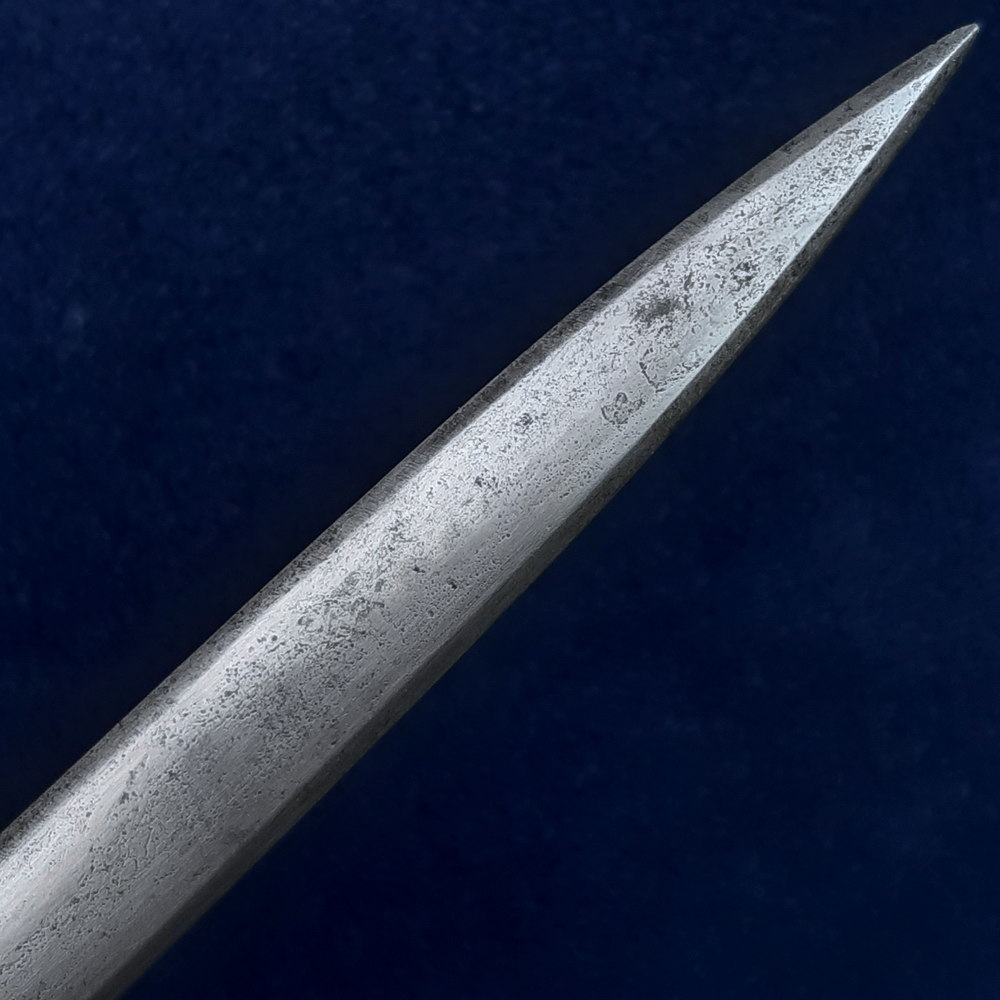
The sword is solidly peened with no movement to its parts. The blade’s edge has been sharpened with no nicks or chips, its point is likewise intact and sharp. Some areas of light patination to the blade, including on the spine. There is an area on one face of the blade spanning about 7 inches of notable frosting, mottled patination and some small areas of light pitting, which impacts the royal cypher and some of the foliate etching on that side – this is not present on the other side and does not impact any of the personalised etching.
The outside of the hilt retains most of its nickel plating, with some wear along the edges of the guard exposing bright steel and some speckled flaking exposing tiny spots of patinated steel. The inside of the hilt has spotted patches of loss to the nickel plating exposing steel which is darkly patinated and in places pitted. Take care: there are also small patches of the original field paint mixed in with these which must be closely inspected to tell apart. The pommel is similar, retaining most plating with spots of wear, and field paint remains in the recesses of the ‘steps’.
The shagreen grip is in good condition with no scale loss, very light handling wear and no evidence of much shrinkage. A couple of loops have been lost from the wire grip binding at the hilt end – the loose end to the wire has been held down with a steel tack placed in its groove. There is a similar steel tack left at the end of the channel where the wire should have originally run to, so this repair may be period. The remaining wire is secure with only slight movement to some loops. The sword knot has a break in one place and significant cracking, preventing it from being tied on to the sword.
The scabbard leather has some light dents and staining, some surface abrasion and one fine surface-level crack at the chape end. All of its stitching is intact, slight opening of the seam at the chape end.