British 1876 Pattern Socket Bayonet, Egyptian Conversion for the Citadel Martini-Enfield, Dated 1888
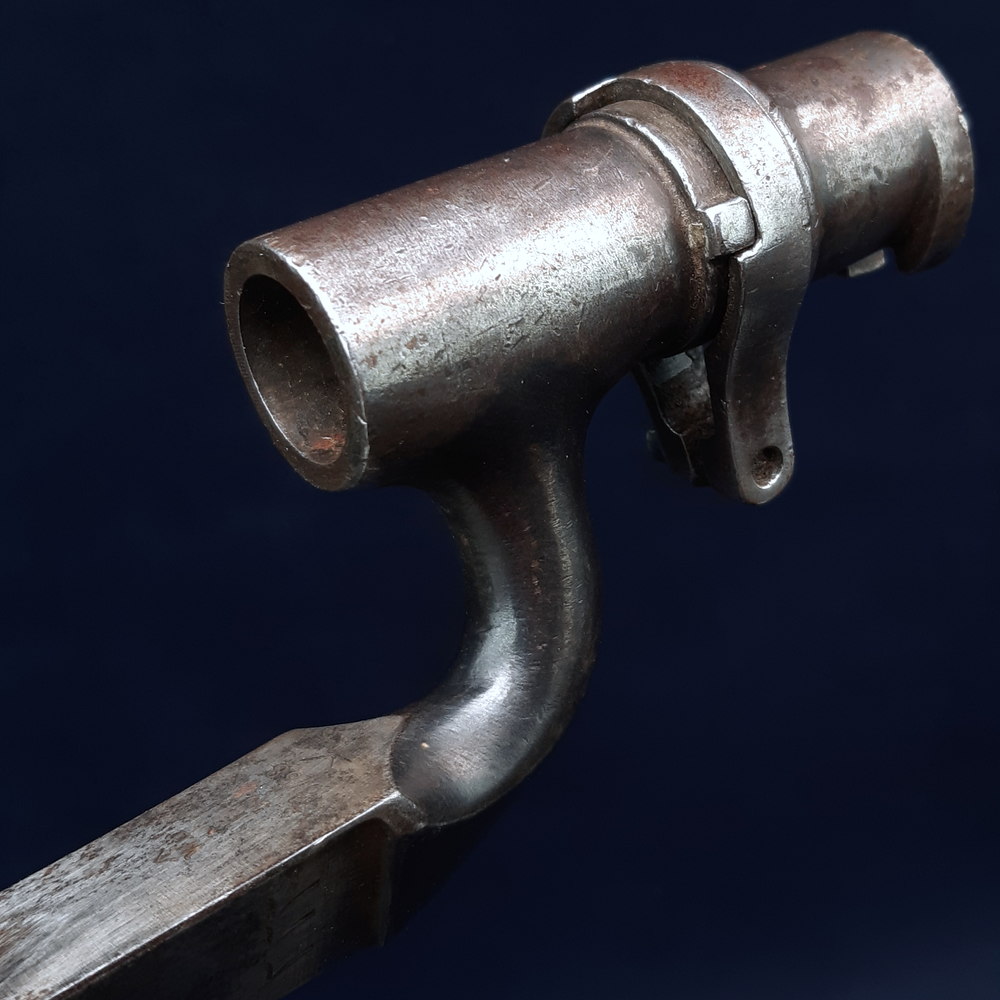
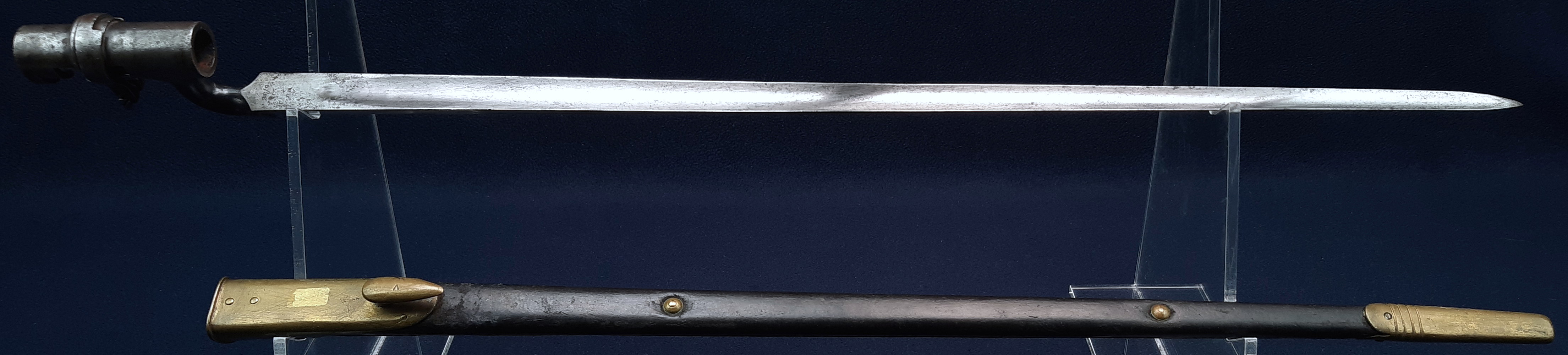
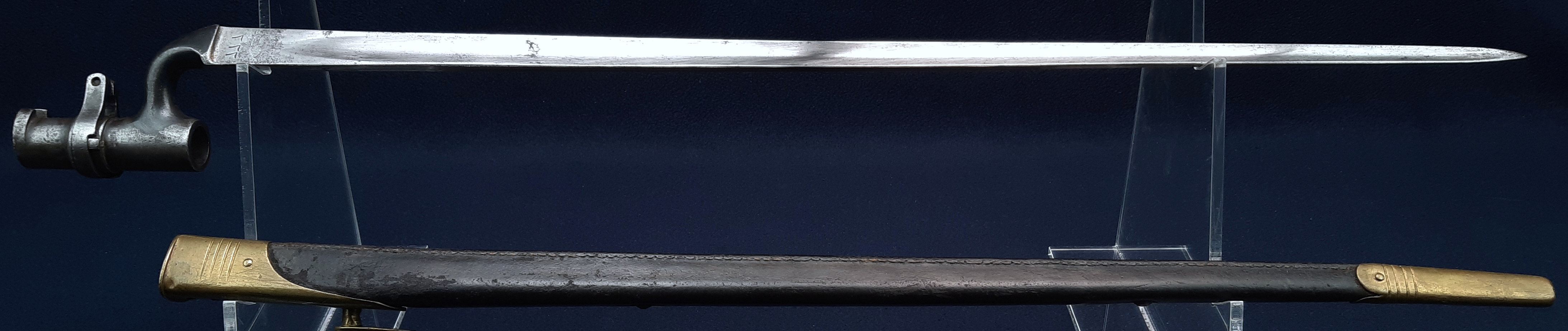
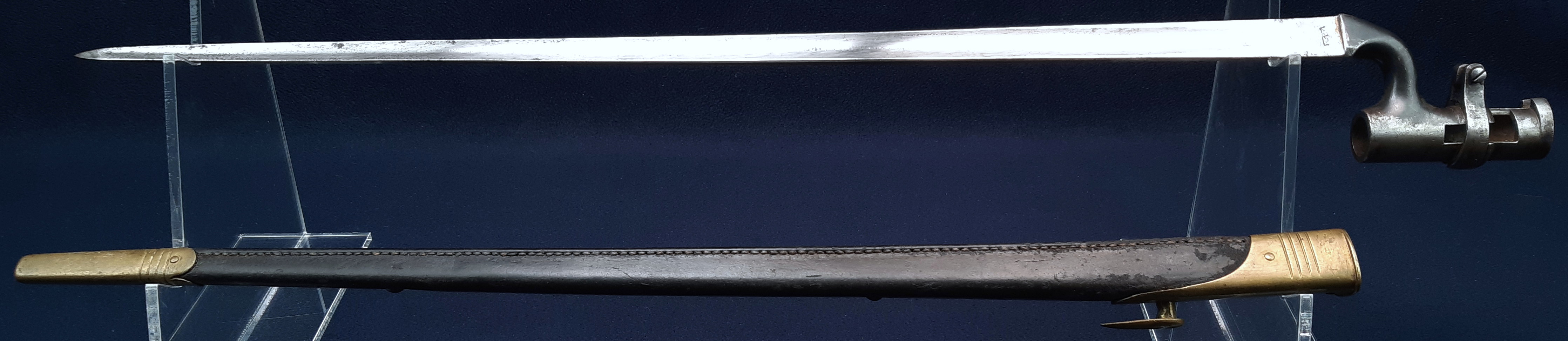
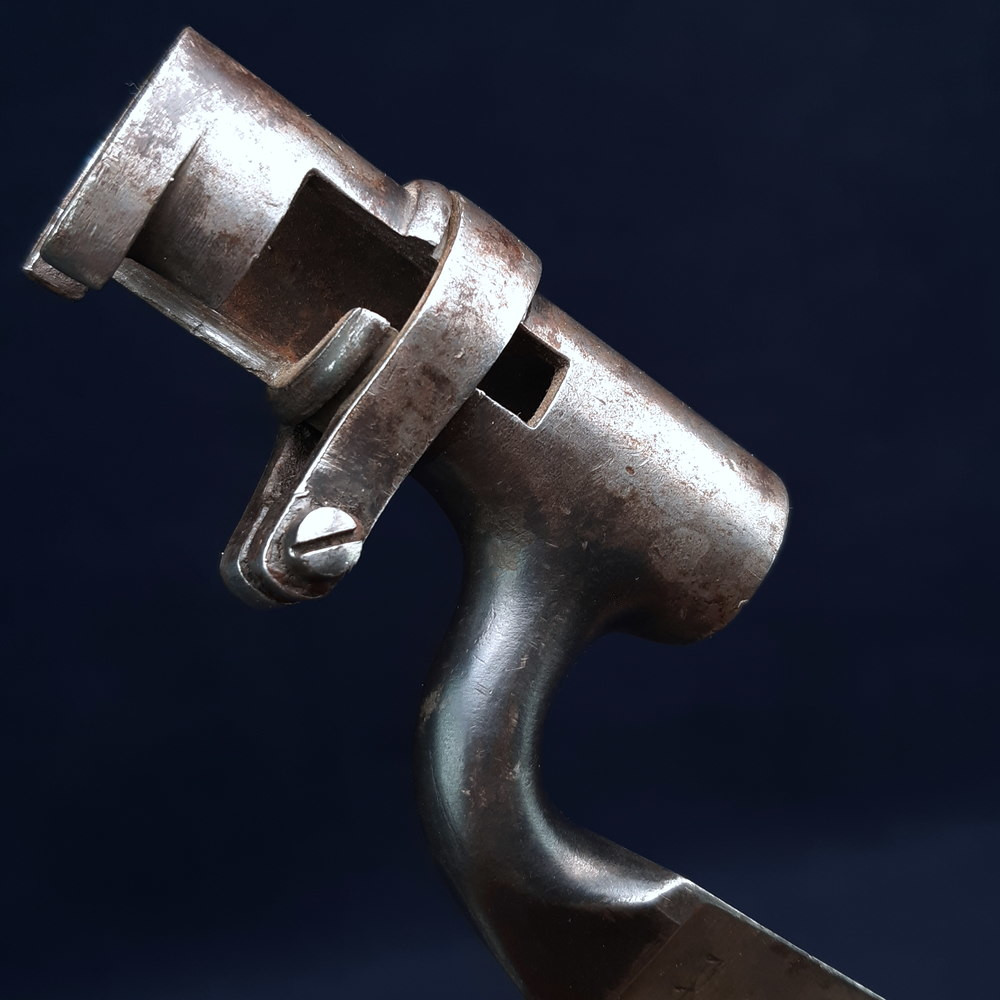
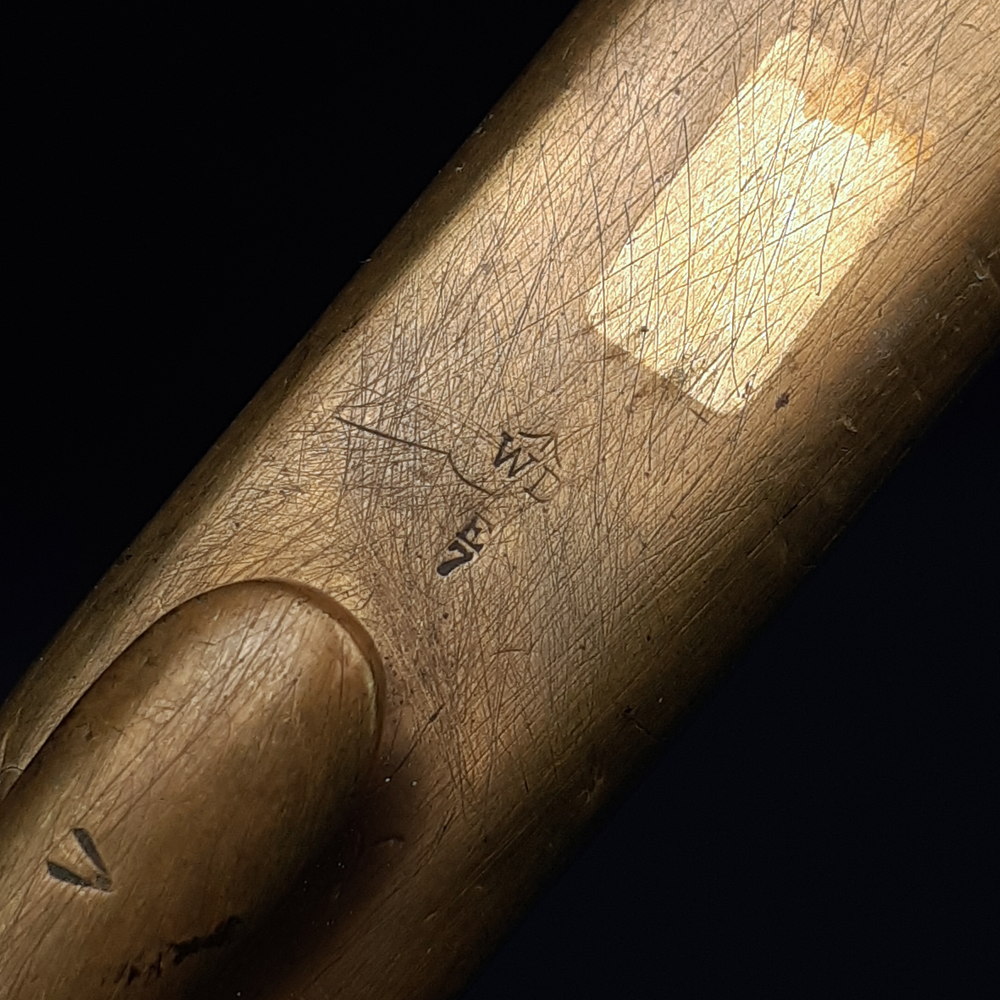
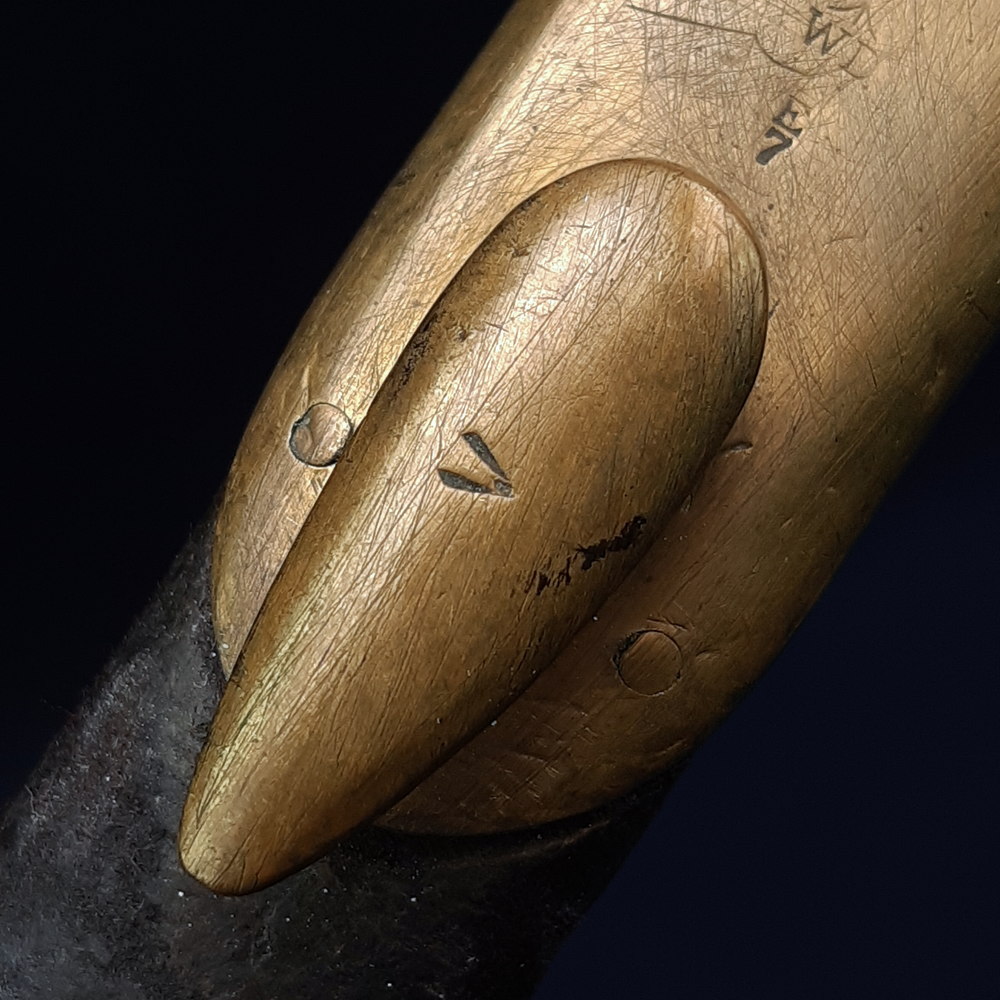
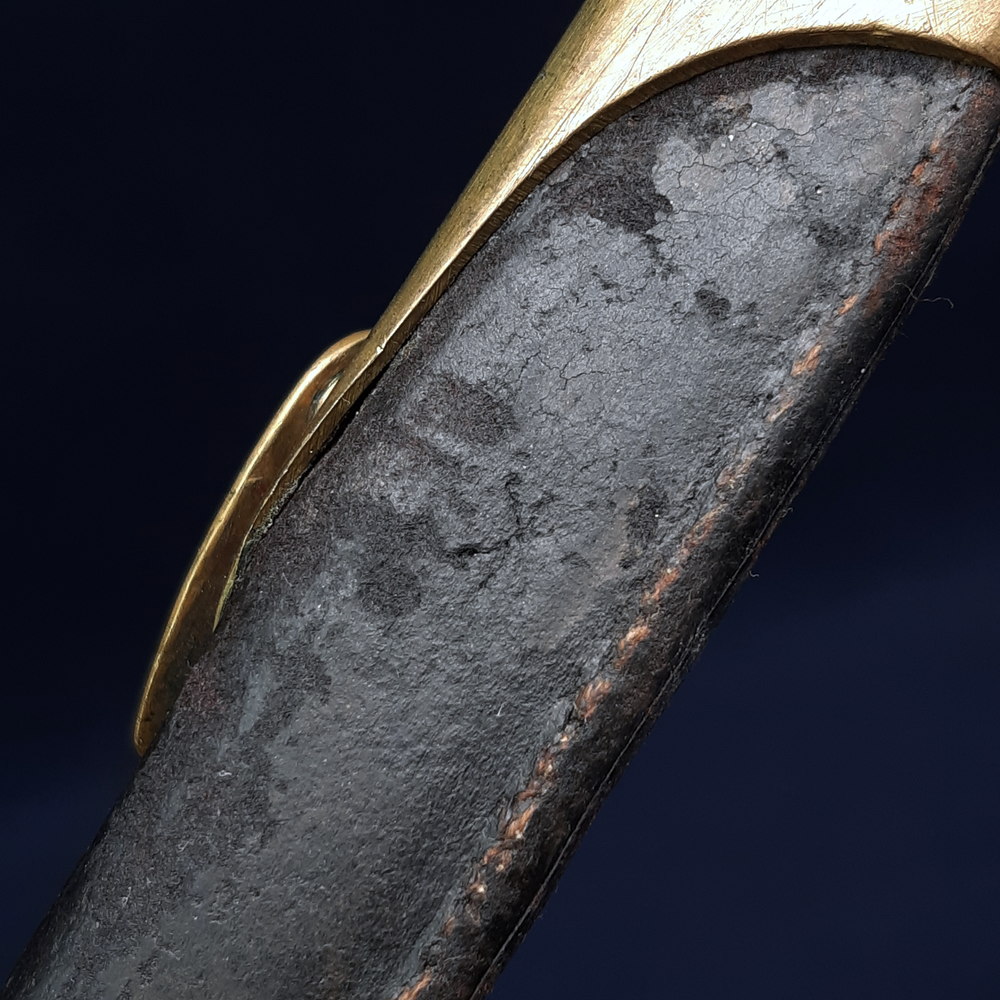
Socket bayonet for the Egyptian .303 conversions of the Martini-Henry rifle, with fullered triangular blade and black leather scabbard with brass throat and chape pieces, the throat piece with teardrop frog stud. Blade 22 inches in length, muzzle ring diameter 16.5mm.
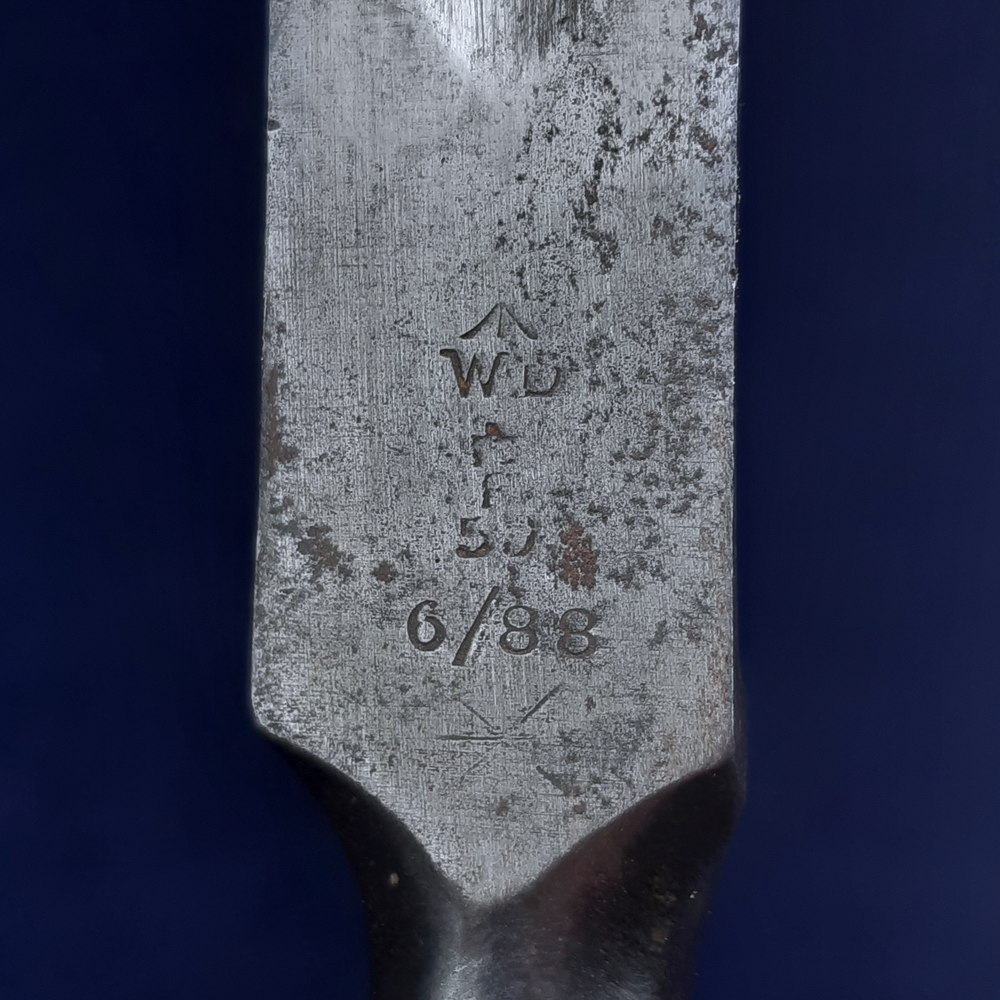
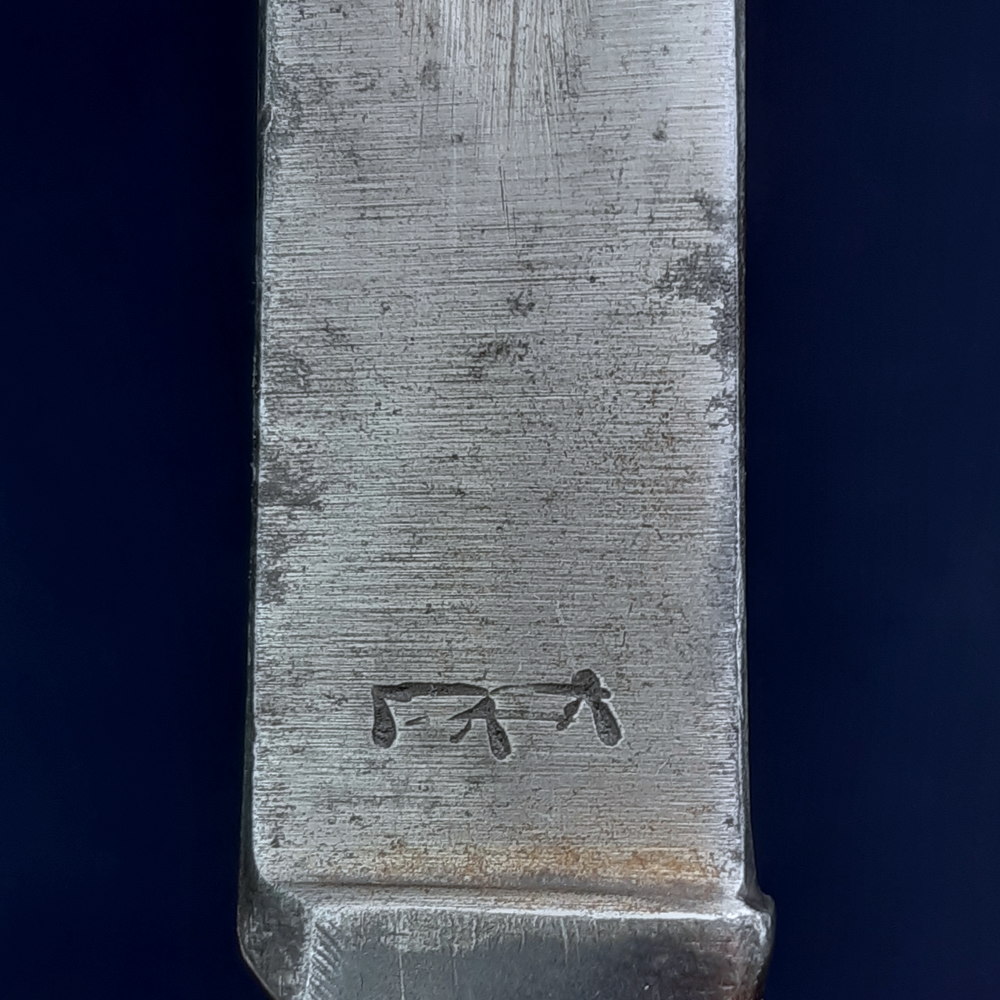
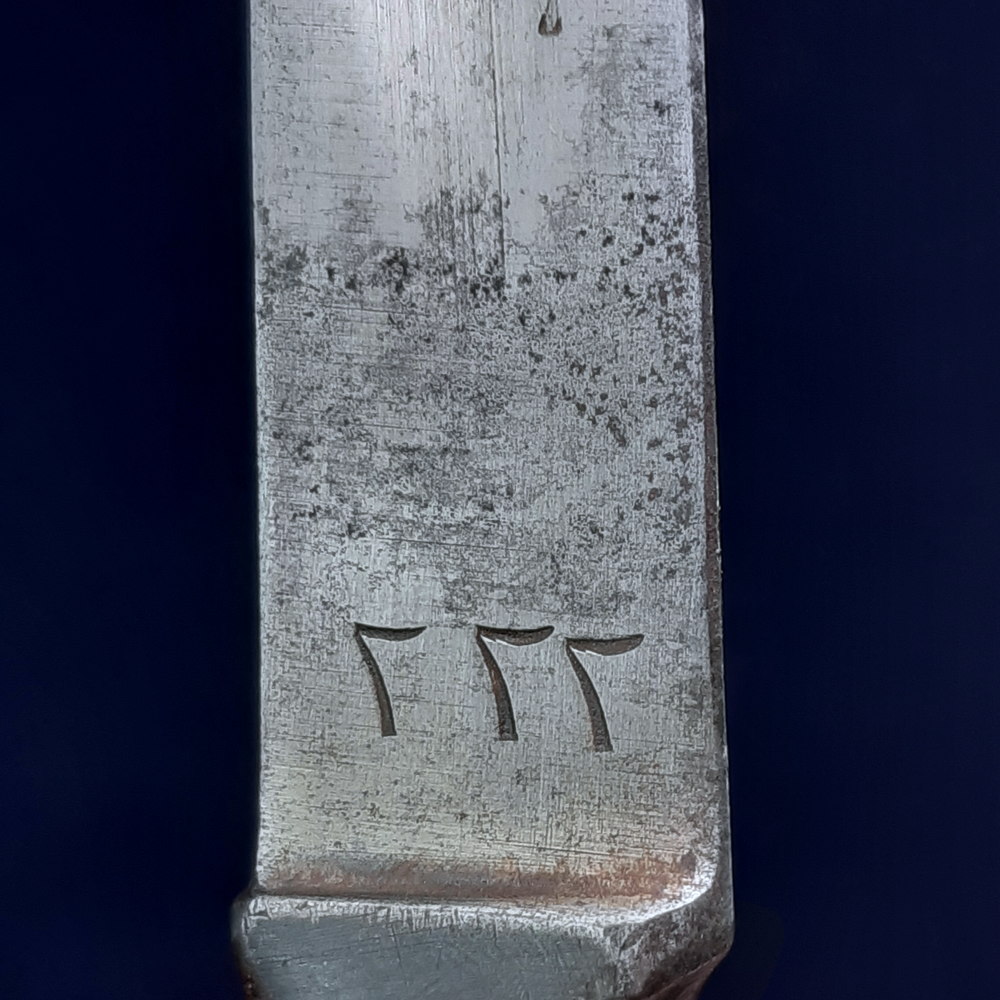
The blade is stamped at the forte on its broadest face with a broad arrow and ‘WD’ War Department mark, a crown inspection stamp with ‘E’ for the Royal Small Arms Factory at Enfield, the manufacture date ‘6/88’ for June 1888, and two broad arrows point-to-point indicating equipment that was declared obsolete or to be sold off. Another face of the blade is stamped at the forte with an Egyptian mark: the numerals ۲۲۲. This is the Eastern Arabic numeral system (common to Farsi, Urdu, Pashto, Arabic and Kurdish) and means ‘222’, probably a serial number. The third face of the blade is stamped with some indistinct markings, probably more numerals, which have been cancelled with strikethroughs.
The throat piece of the scabbard is stamped with another broad arrow and ‘WD’ War Department mark, and another crown inspection stamp with ‘E’. The frog stud is stamped with what may be a broad arrow. The leather scabbard body is stamped with two broad arrows point-to-point.
Following the Anglo-Egyptian War of 1882 Britain gained effective political control of Egypt and to maintain order across the country it supplied local police and guard units with small arms. By 1903 the British army was rapidly reequipping with magazine-fed rifles and single-shot rifles like the Martini-Henry were available in large quantities.
Martini frames were shipped to Egypt along with the tooling necessary to fit new barrels, converting them to fire the .303 cartridge instead of the original .577/.450. The rifles were rebuilt at the Arsenal of the Cairo Citadel between 1903 and 1908 by Egyptian gunsmiths and were issued to Egyptian police and prison guards.
The converted rifles needed suitable bayonets – this is one of the 1876 Pattern socket bayonets also modified at the Citadel in the same period to fit the slimmer barrel and higher sights of the .303 conversions. This required modification of the sight bridge on the socket – in this case a channel has been cut through it to allow the sight to pass. The bayonets typically bear both their original British markings and added Egyptian ones.
The blade is bright with some patches of light patination and speckled cleaned light pitting in one fuller. Its tip is intact. The socket was originally blued, this finish is present on the shank but has mostly rubbed off the socket except in recessed areas.
The throat piece of the scabbard has some scratches. A previous owner also applied an adhesive label to it which created a visibly brighter patch on the brass. Some rubbing to the scabbard leather, all of its stitching is intact.